Neck

What Causes Pins and Needles?

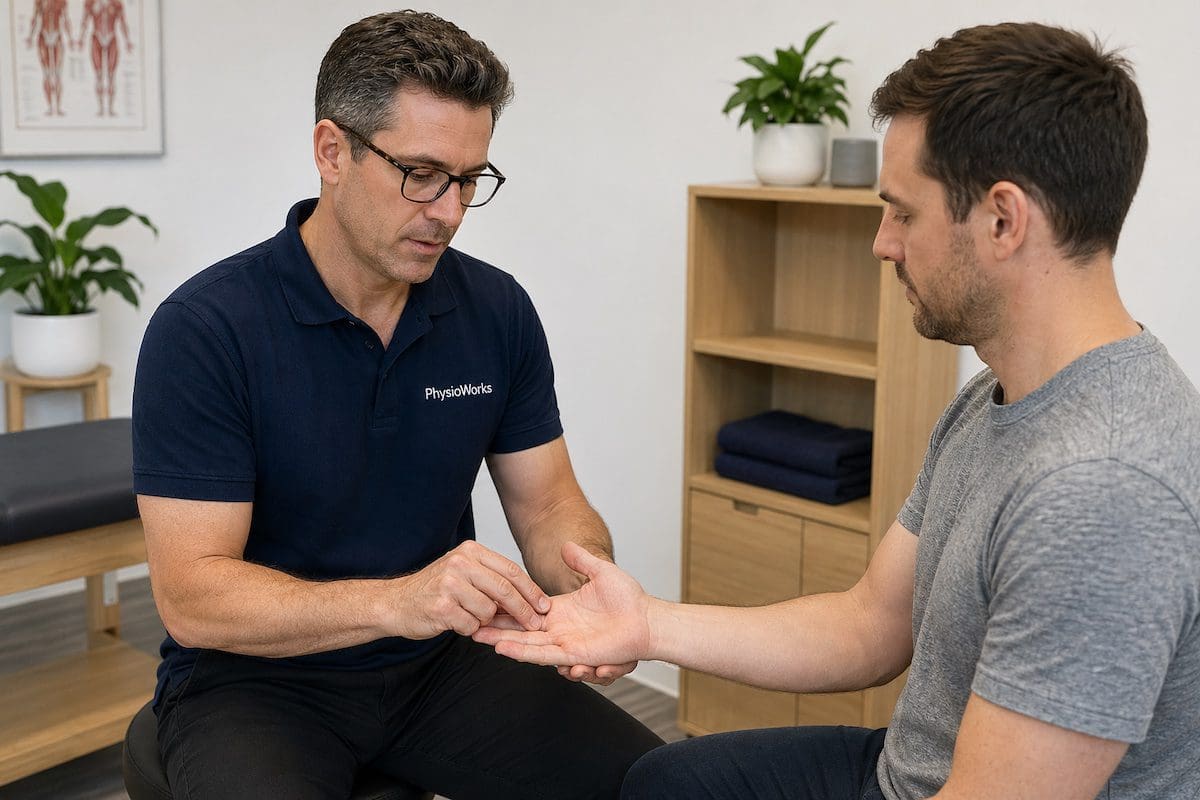
physiotherapist assessing hand tingling and pins and needles nerve symptoms

A physiotherapist checks sensation to help identify the cause of pins and needles.

Pins and needles usually happen when nerve signals are disrupted by pressure, irritation, or reduced blood flow around a nerve. Symptoms may feel like tingling, buzzing, prickling, burning, or an “electric” sensation.

Many episodes settle after you move position. However, repeated tingling may involve a pinched nerve, spinal nerve irritation, local nerve compression, or a broader nerve condition.

Quick answer: what causes pins and needles?

  • Brief pressure: common after sitting, sleeping, or leaning awkwardly.
  • Spinal nerve irritation: may cause tingling down an arm or leg.
  • Local nerve compression: can affect the hand, wrist, elbow, foot, or ankle.
  • Medical nerve conditions: may cause ongoing tingling in both feet or hands.

What Causes Pins and Needles?

Pins and needles occur when a nerve cannot send signals normally. This may happen from temporary compression, irritation near the spine, pressure on a nerve in the limb, or a wider condition affecting nerve health.

The pattern matters. Tingling in one hand may suggest a different driver from tingling down one leg or tingling in both feet.

Common Causes of Pins and Needles

Most causes fit into four broad groups. Some are simple and short-lived. Others need a clear assessment, especially when symptoms repeat or worsen.

1) Temporary Pressure on a Nerve

Simple pressure can cause short-lived tingling. Examples include sleeping on your arm, leaning on your elbow, sitting with crossed legs, or staying in one position too long.

Once pressure eases, sensation often returns within minutes. This type is usually not concerning if it fully settles and does not keep returning.

2) Neck or Back Nerve Irritation

Nerves exit the spine through small openings. If spinal joints, discs, or surrounding tissues irritate a nerve root, symptoms may travel into the arm, hand, leg, or foot.

Common examples include cervical radiculopathy from the neck and sciatica from the lower back. A bulging disc may also contribute to nerve irritation.

3) Local Nerve Compression in the Arm or Leg

Nerves can become compressed away from the spine. This may occur around the wrist, elbow, shoulder, hip, ankle, or foot.

Repetitive gripping, keyboard work, vibration exposure, awkward tool use, and sustained positions may increase irritation. If symptoms link with work or repeated loading, repetitive strain injury (RSI) may be part of the picture.

4) Broader Nerve Conditions

Some tingling reflects a wider nerve health issue. This may start in the toes or fingers and slowly progress. It may affect both sides rather than one clear pathway.

Potential causes include diabetes, vitamin B12 deficiency, thyroid conditions, alcohol-related nerve irritation, some medications, and peripheral neuropathy. Healthdirect provides a helpful Australian overview of peripheral neuropathy.

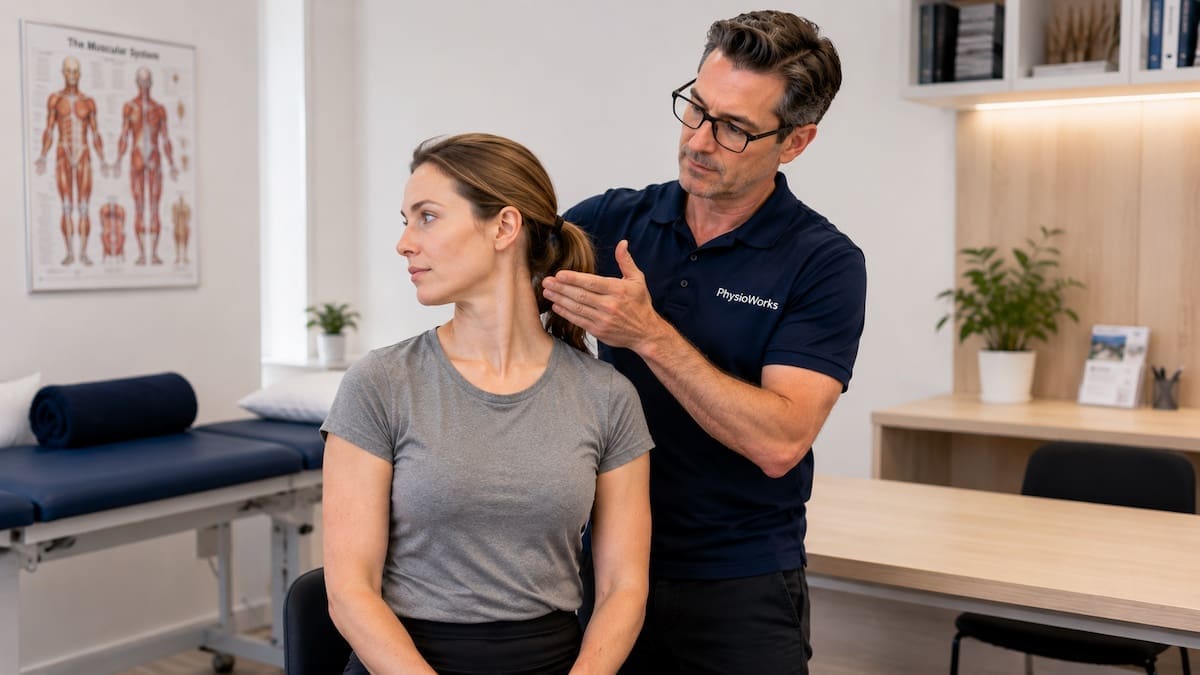
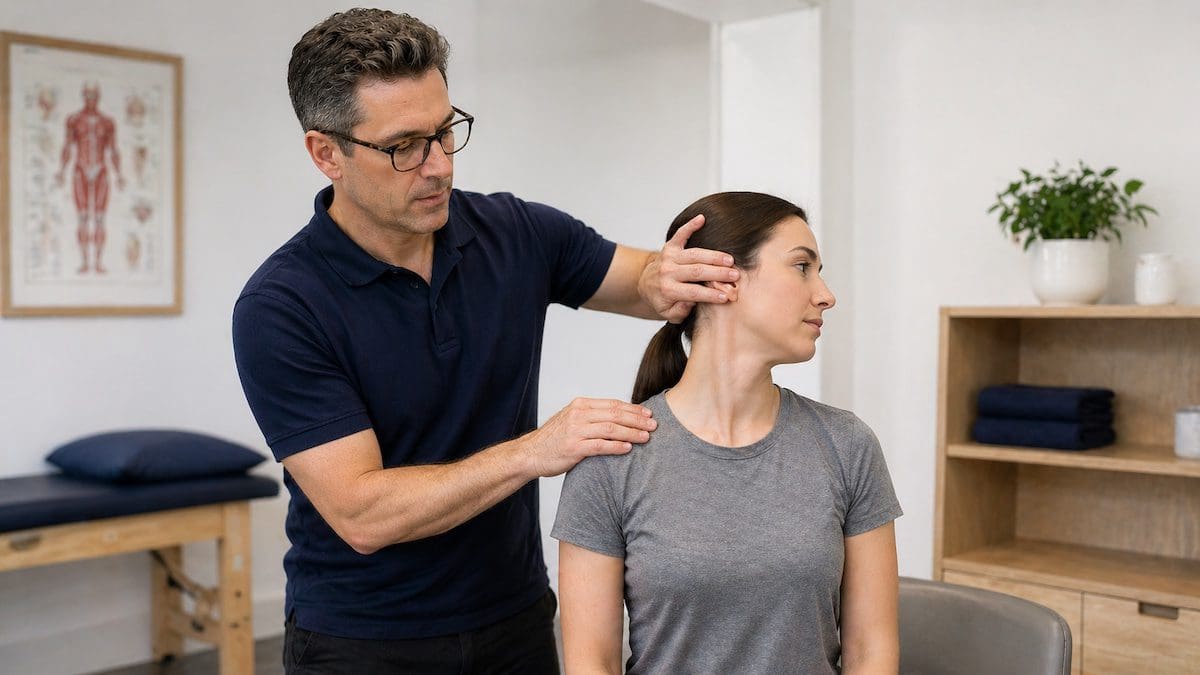
neck movement test assessing nerve irritation causing pins and needles symptoms

Specific neck movements may reproduce nerve symptoms and help identify their source.

When Are Pins and Needles Normal?

Short-lived pins and needles after an awkward position are common. They usually settle soon after you move, change posture, or remove pressure from the nerve.

However, symptoms deserve attention when they persist, return often, spread, or follow the same pathway through the arm, hand, leg, or foot.

When Should You Worry About Pins and Needles?

You should book an assessment if pins and needles last longer than expected, keep returning, spread, or occur with numbness, weakness, grip changes, or balance changes.

Book an assessment if you notice:

  • tingling lasting more than 30–60 minutes after changing position
  • symptoms returning in the same fingers, toes, arm, or leg
  • tingling spreading up or down the limb
  • reduced feeling, reduced grip, or muscle weakness
  • symptoms after a fall, collision, or significant injury

When Should You Seek Urgent Medical Care?

Seek urgent medical care if pins and needles occur with sudden neurological symptoms. These signs may indicate a serious medical condition that needs immediate assessment.

Seek urgent help for pins and needles with:

  • face drooping, speech changes, or one-sided weakness
  • new severe headache, confusion, or sudden vision changes
  • loss of bladder or bowel control
  • numbness in the saddle area
  • rapidly worsening weakness in an arm or leg

Can Physiotherapy Help Pins and Needles?

Physiotherapy may help when pins and needles relate to posture, movement, spinal irritation, local nerve compression, or nerve sensitivity linked with loading.

Your physiotherapist may check sensation, strength, reflexes, spinal movement, limb movement, posture, and symptom behaviour. Treatment may include education, activity changes, nerve mobility work, spinal movement exercises, load management, and graded strengthening.

Activity and Load Considerations

Small changes can reduce nerve irritation. The best approach depends on whether symptoms come from posture, spinal irritation, local compression, or repeated loading.

  • Change posture regularly: avoid staying in one position too long.
  • Modify gripping and tool use: reduce sustained clenching and vibration where possible.
  • Check sleep posture: avoid prolonged neck rotation or sleeping with a bent wrist.
  • Build tolerance gradually: increase training, lifting, and work demands in stages.

What Should You Do if Pins and Needles Keep Coming Back?

Track where the tingling occurs, how long it lasts, and what triggers it. Then book an assessment if symptoms repeat, spread, or affect strength, sensation, coordination, walking, or grip.

If symptoms suggest a broader medical cause, your physiotherapist may recommend GP review. For a deeper overview, start with our Nerve Pain and Pinched Nerve guides.

Frequently Asked Questions

What causes pins and needles in hands?

Pins and needles in the hands may come from temporary pressure, neck nerve irritation, or local nerve compression around the wrist, elbow, or shoulder. Repetitive tasks, sleeping posture, and sustained gripping can also contribute.

What causes pins and needles in feet?

Pins and needles in the feet may come from pressure on a local nerve, lower back nerve irritation, footwear pressure, circulation issues, or peripheral neuropathy. Repeated or spreading symptoms should be assessed.

Is pins and needles a sign of a pinched nerve?

It can be. A pinched or irritated nerve may cause tingling, numbness, burning, or electric sensations down an arm or leg. Assessment can help identify whether symptoms come from the spine or a local compression point.

Can posture cause pins and needles?

Yes. Sustained postures can increase pressure or tension around nerves, especially in the neck, shoulder, elbow, wrist, back, or hip. Regular position changes often help reduce short-lived symptoms.

Can repetitive work cause pins and needles?

Yes. Repetitive gripping, tool use, keyboard work, or vibration exposure can irritate nerves over time. Symptoms may appear in the hand, wrist, forearm, or fingers depending on the affected nerve.

When should pins and needles be checked?

Pins and needles should be checked if symptoms persist, return often, spread, or occur with numbness or weakness. You should also seek assessment if symptoms start after trauma or affect walking, balance, grip, or coordination.

What to Do Next

Pins and needles often reflect nerve irritation rather than permanent nerve damage. Still, repeated or spreading tingling needs a clear plan.

If your symptoms keep returning, spread, or come with weakness or numbness, book a physiotherapy assessment. Your clinician can help clarify whether the driver is spinal irritation, local nerve compression, or a broader issue needing medical review.

Book your appointment – 24/7

Choose your preferred PhysioWorks clinic and book online.

Pain Products

These pain products are commonly used by our physiotherapists to provide comfort and pain relief.

View all pain relief products

Follow PhysioWorks

Get free physiotherapy tips, exercise videos, recovery advice, and blog updates.

Facebook Instagram YouTube B X Email PhysioWorks

Related Information

References

  1. Borrella-Andrés S, Marqués-García I, Lucha-López MO, et al. Manual therapy as a management of cervical radiculopathy: a systematic review. Biomed Res Int. 2021;2021:9936981. doi:10.1155/2021/9936981.
  2. Kuligowski T, Skrzek A, Cieślik B. Manual therapy in cervical and lumbar radiculopathy: a systematic review of the literature. Int J Environ Res Public Health. 2021;18(11):6176. doi:10.3390/ijerph18116176.
  3. Mauermann ML, Staff NP. Peripheral neuropathy: a review. JAMA. 2026;335(3):255-266. doi:10.1001/jama.2025.19400.

Unsupportive Pillow Signs

physiotherapist demonstrating correct pillow height and neck alignment

Waking with neck pain may signal poor pillow support.

Unsupportive pillow signs include waking with neck pain, morning stiffness, headaches, restless sleep, or needing to fold your pillow for extra height. These signs often appear gradually as the pillow loses height, shape, and support.

A suitable pillow helps keep your head, neck, and spine in a comfortable sleeping position. If your pillow has become flat, lumpy, sagging, or more comfortable elsewhere, it may be time to review your pillow and your neck pain pattern.

Quick Check: Is Your Pillow Letting You Down?

  • You wake with neck pain, stiffness, or headaches.
  • You fold, punch, or stack pillows for support.
  • Your pillow looks flat, lumpy, or sagging.
  • You sleep better on a different pillow.
  • You wake often or struggle to find a comfortable position.

What Are the Main Unsupportive Pillow Signs?

The main unsupportive pillow signs are morning neck pain, stiffness, headaches, poor sleep quality, and needing to constantly adjust your pillow. A pillow should support your neck without forcing your head too high or letting it drop too low.

Other signs include a pillow that no longer returns to shape, feels uneven, or no longer matches your usual sleeping position. If several signs are present, it may be worth reviewing both your pillow and your neck health with a physiotherapist.

How Can an Unsupportive Pillow Cause Neck Pain?

An unsupportive pillow can cause neck pain by placing your head and neck in a poor position for several hours. This may load the joints, discs, muscles, and nerves around the cervical spine.

If your pillow is too high, your neck may bend sideways or forward. If it is too low, your head may drop and strain the opposite side. Over time, this may contribute to morning stiffness, muscle tightness, headaches, or symptoms spreading into the shoulders or arms.

physiotherapist demonstrating correct pillow height and neck alignment

Correct pillow height keeps your neck in a neutral position.

Why Do Some Pillows Trigger Morning Headaches?

Some pillows may contribute to morning headaches by increasing tension around the upper neck and base of the skull. This area can refer pain into the head, especially if you already have cervicogenic headaches or recurring neck stiffness.

Pillow height, shape, firmness, and sleep position all matter. A pillow that suits one person may not suit another. For this reason, a “one size fits all” pillow rarely works well for persistent neck pain or headache patterns.

When Should You Seek Urgent Medical Advice?

Seek urgent medical advice if neck pain follows a fall or accident, or if you notice arm weakness, numbness, severe headache, dizziness, fever, unexplained weight loss, or changes in balance or walking.

When Should You Replace Your Pillow?

You should replace your pillow when it loses shape, feels uneven, no longer supports your neck, or your sleep feels better away from home. Many good pillows last around three to four years, while lower-quality pillows may lose support much sooner.

Also consider replacement if your symptoms have changed. For example, a previous pillow may stop suiting you after a neck injury, shoulder pain episode, posture change, or change in sleeping position.

How Can a Physiotherapist Help With Pillow-Related Neck Pain?

A physiotherapist can assess your neck movement, posture, sleep position, shoulder mobility, and pillow setup. This helps identify whether your pain is mainly pillow-related or linked with an underlying neck condition.

Your physiotherapist may suggest a better pillow height, neck exercises, manual therapy, posture changes, or a broader neck pain relief plan. For some people, combining neck treatment with sleep therapy for pain and better sleep may also help.

How Do You Choose a Better Pillow?

A better pillow should support your neck’s natural curve and suit your body size, shoulder width, and sleep position. Side sleepers often need more height than back sleepers. Stomach sleeping usually places more strain on the neck.

For more detail, read our Best Pillow For Sleep: Physiotherapist Guide. You can also browse our pillows and cushions if you are ready to compare options.

ABC Radio Interview Regarding Pillow Selection

Listen to this ABC Radio interview for practical pillow selection advice.

Frequently Asked Questions

What are the main signs of an unsupportive pillow?

Main signs include waking with neck pain, morning stiffness, headaches, restless sleep, needing to fold or punch your pillow, and sleeping better on a different pillow.

Can a bad pillow cause neck pain?

A bad pillow may contribute to neck pain if it places your head and neck in a poor position for long periods. This may increase strain on your neck joints, muscles, discs, and nerves.

How often should you replace your pillow?

Many good pillows last around three to four years. Replace yours earlier if it becomes flat, lumpy, sagging, or no longer supports your neck comfortably.

Can a pillow cause headaches?

An unsuitable pillow may contribute to neck-related headaches by increasing tension around the upper neck and base of the skull, especially if neck stiffness is already present.

Who can help me choose the right pillow?

A physiotherapist can assess your neck, posture, shoulder width, sleeping position, and symptoms. They can suggest a pillow height and style that better suits your body and sleep habits.

What to Do Next

If neck pain, headaches, or poor sleep keep returning, book a physiotherapy assessment. Your physiotherapist can assess your neck, review your sleeping position, and help you choose a pillow that suits your body.

The right combination of neck care, pillow selection, and practical sleep advice may improve comfort and reduce repeated morning symptoms.

comfortable sleep with proper pillow neck support

A supportive pillow helps improve comfort and sleep quality.

Book your appointment – 24/7

Choose your preferred PhysioWorks clinic and book online.

Pillow Support Products

View all pillow products

Follow PhysioWorks

Get free physiotherapy tips, exercise videos, recovery advice, and blog updates.

Facebook Instagram YouTube B X Email PhysioWorks

Severe Neck Pain: When to Worry and What to Do

severe neck pain physiotherapy assessment cervical spine movement and symptom evaluation

Assessing severe neck pain safely and identifying warning signs

Severe neck pain can feel alarming, especially when it is sharp, persistent, worsening, or clearly different from a typical muscular flare-up. Most cases are not dangerous. However, some severe neck pain patterns need urgent medical care rather than simple self-management.

This guide explains when severe neck pain is more likely to be mechanical, when it needs a physiotherapy assessment, and when it should be treated as medically urgent. For broader background, start with our neck pain guide, which explains common causes of neck symptoms and related treatment pathways.

Quick guide: what your symptoms may mean

  • Usually less urgent: local neck pain, stiffness, symptoms that ease with gentle movement, and no arm or neurological symptoms.
  • Needs assessment soon: arm pain, recurrent flare-ups, headaches, symptoms lasting more than 1–2 weeks, or pain interfering with sleep or daily activity.
  • Needs urgent medical care: trauma, severe headache, fever, weakness, numbness, dizziness, balance change, or bowel or bladder change.

When Should You Worry About Severe Neck Pain?

You should worry about severe neck pain when it keeps worsening, follows trauma, spreads into the arm, or comes with neurological or systemic symptoms. These patterns are less typical of a simple muscular strain and more likely to need prompt medical or physiotherapy assessment.

Severe neck pain also deserves closer attention when it significantly limits sleep, driving, work, concentration, or normal hand function. Pain intensity alone does not always mean danger, but the symptom pattern and associated signs matter a lot.

Is Your Severe Neck Pain More Likely Mechanical or Urgent?

Severe neck pain is more likely mechanical when it stays local to the neck, changes with posture or movement, and gradually eases over several days. It becomes more urgent when it appears after trauma, keeps escalating, or comes with fever, headache, weakness, numbness, dizziness, or loss of coordination.

If you are not sure where your symptoms fit, it can help to compare them with related pages on neck pain causes, stiff neck, and neck arm pain.

Red flags: seek urgent medical care

  • Recent fall, collision, sporting trauma, or other significant injury
  • Sudden severe headache or rapidly worsening headache
  • Fever, chills, vomiting, or feeling acutely unwell
  • Weakness, numbness, pins and needles, or clumsy hand use
  • Poor balance, unusual coordination problems, or difficulty walking
  • Severe neck stiffness with nausea, light sensitivity, or confusion
  • Loss of consciousness or major neurological change
  • New bowel or bladder disturbance

What Are the Red Flags for Severe Neck Pain?

Red flags for severe neck pain include major trauma, sudden severe headache, fever, vomiting, dizziness, new weakness, numbness, poor coordination, or changes in bladder or bowel control. These symptoms may point to a condition that needs urgent medical review rather than routine self-care.

If severe neck pain is paired with headache, fever, and marked stiffness, conditions such as meningitis must be considered. Healthdirect notes that meningitis can present with a very bad headache, a stiff sore neck, nausea, vomiting, light sensitivity, and confusion. Read Healthdirect’s meningitis overview.

What Causes Severe Neck Pain?

Severe neck pain can arise from several different sources, including muscle strain, facet joint irritation, disc injury, whiplash, nerve irritation, and age-related cervical degeneration. Some people also experience severe pain from a sudden postural overload or a rapid increase in physical stress.

  • Mechanical pain: muscle overload, joint irritation, or posture-related flare-up
  • Traumatic pain: whiplash, cervical sprain, or fracture after significant force
  • Nerve-related pain: disc or foraminal irritation causing arm symptoms
  • Medical red flags: infection, inflammatory disease, vascular issues, or spinal cord compression

For more detail, read about neck pain causes and cervical radiculopathy. These pages help explain why some symptoms stay local while others spread into the arm or hand.

How Do You Know If Severe Neck Pain Is Nerve-Related?

Severe neck pain may be nerve-related when it travels into the shoulder, arm, forearm, or hand and comes with tingling, numbness, burning, heaviness, or weakness. That symptom pattern is more consistent with cervical nerve irritation than with local muscular pain alone.

If this pattern sounds familiar, read more about cervical radiculopathy and neck arm pain. These pages explain why symptoms can spread beyond the neck and when assessment becomes more important.

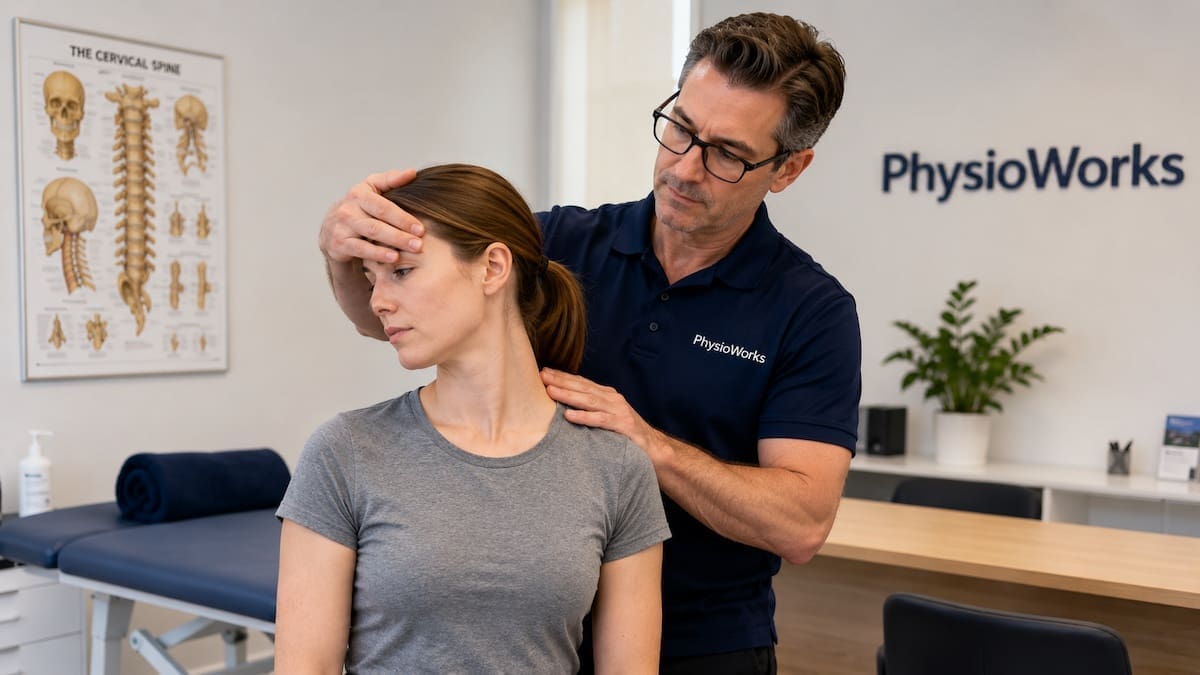
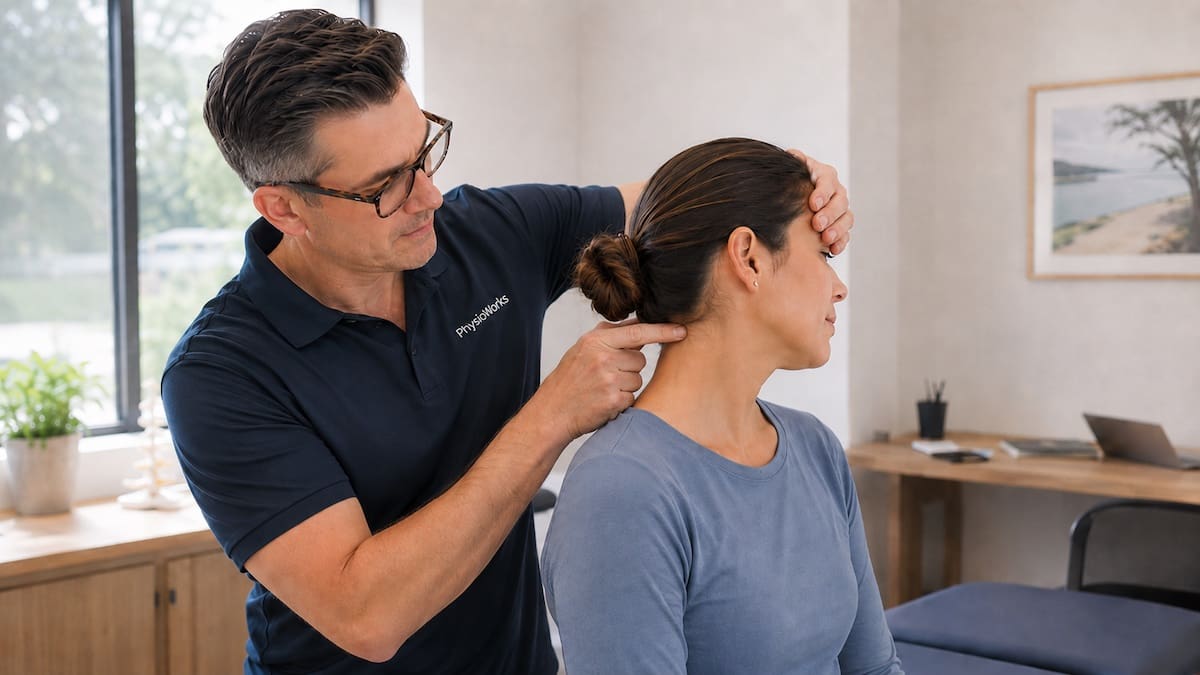
neck pain neurological assessment arm strength and nerve function physiotherapy test

Assessing movement and nerve-related symptoms

Can Physiotherapy Help Severe Neck Pain?

Physiotherapy may help severe neck pain when the main driver is mechanical, load-related, or nerve-irritation-related rather than medically urgent. Treatment often combines assessment, education, symptom modification, movement retraining, hands-on care, and a staged exercise plan.

Your physiotherapist may guide you toward neck physiotherapy, neck exercises for pain relief and prevention, or broader musculoskeletal physiotherapy depending on what is driving your symptoms. For some people, a joint treatment approach may also form part of the plan.

Physiotherapy usually works best when treatment matches the true cause. If the neck is stiff and painful without major red flags, the pattern may be more consistent with a stiff neck flare-up than with a dangerous condition. A graded rehab approach is often more useful than complete rest.

Should You Go to Hospital or See a Physio?

You should go to hospital for severe neck pain if it follows significant trauma or comes with major neurological symptoms, a sudden severe headache, fever, vomiting, confusion, or collapse. These symptom patterns are beyond routine self-management and need medical assessment urgently.

You should consider physiotherapy when symptoms appear mechanical, persistent, recurrent, or nerve-related without those urgent red flags. If symptoms started after a crash or sudden acceleration-deceleration injury, Healthdirect also explains common whiplash symptoms and management.

What Should You Do If Severe Neck Pain Is Not Improving?

If severe neck pain is not improving after several days, or if it keeps interfering with sleep, work, driving, or arm function, book an assessment. Ongoing or worsening symptoms usually need a clearer diagnosis and a more specific management plan.

Where symptoms are unclear, the Australian Healthdirect Symptom Checker can help guide urgency. However, severe symptoms with red flags should not be delayed for online advice alone.

What Should You Do Next?

If your symptoms are mild and clearly mechanical, keep the neck gently moving, reduce aggravating loads for a few days, and avoid staying in one posture too long. Use the related pages above to narrow down whether your symptoms look more like local neck pain, nerve irritation, or a stiffness flare-up.

If you are unsure, book a physiotherapy assessment. If red flags are present, seek urgent medical care immediately.

neck pain recovery improved posture after physiotherapy assessment and treatment

Returning to more comfortable neck movement after treatment

Book your appointment – 24/7

Choose your preferred PhysioWorks clinic and book online.

Neck Products

These neck products are commonly used by our physiotherapists to improve strength, posture, movement, plus assist home exercise programs.

View all neck products

Follow PhysioWorks

Get free physiotherapy tips, exercise videos, recovery advice, and blog updates.

Facebook Instagram YouTube B X Email PhysioWorks

References

  1. Blanpied PR, Gross AR, Elliott JM, et al. Neck pain: revision 2017 clinical practice guidelines. J Orthop Sports Phys Ther. 2017;47(7):A1-A83. doi:10.2519/jospt.2017.0302
  2. Kreiner DS, Hwang SW, Easa JE, et al. An evidence-based clinical guideline for the diagnosis and treatment of cervical radiculopathy from degenerative disorders. Spine J. 2011;11(1):64-72. doi:10.1016/j.spinee.2010.10.023
  3. Cohen SP, Hooten WM. Advances in the diagnosis and management of neck pain. BMJ. 2017;358:j3221. doi:10.1136/bmj.j3221

Neck Treatment

neck treatment comes in all shapes and forms

Neck treatment usually starts with a clear diagnosis, symptom relief, and a plan to restore movement, strength, and confidence. The right approach depends on whether your pain relates to posture, a joint problem, muscle tension, nerve irritation, a headache pattern, or an injury such as whiplash.

If you want the broader diagnosis guide first, visit our neck pain page. Many people with persistent symptoms also benefit from understanding related issues such as text neck, neck arm pain, or cervical radiculopathy.

Quick answer: Most neck treatment plans combine advice, movement, exercise, load management, and hands-on care where appropriate. The goal is to settle pain, improve neck and upper back function, and reduce the chance of your symptoms returning.

Neck treatment often includes

  • Clear diagnosis and symptom assessment
  • Pain relief and movement restoration
  • Exercise and strengthening
  • Posture and load advice
  • Home care strategies
  • Flare-up prevention planning

What is neck treatment?

Neck treatment is the assessment and management of neck pain, stiffness, headache-related neck symptoms, or nerve-related arm symptoms. It may include education, activity modification, neck physiotherapy, posture advice, exercise, and hands-on techniques based on the cause of your pain.

What causes neck pain that needs treatment?

Neck pain needing treatment often comes from muscle overload, joint irritation, reduced movement, poor desk setup, awkward sleep positions, stress, trauma, or age-related change. Sometimes the neck is only part of the problem, especially when headaches, upper back stiffness, or arm symptoms are also present.

  • Stiffness after sleep or desk work
  • Pain with turning, looking up, or driving
  • Headaches linked to neck tension
  • Pain spreading into the shoulder blade or arm
  • Recurring flare-ups during work, training, or study

How is neck treatment assessed?

Good neck treatment starts with finding out what is driving your pain. A physiotherapist will usually review your symptom pattern, posture, neck movement, strength, headache behaviour, nerve signs, and aggravating tasks such as desk work, lifting, sport, or sleeping positions.

This is also where related contributors are checked. For example, some people need help with posture correction, while others need advice on work setup, loading, or home exercises to improve control through the neck and upper thoracic spine.

Common stages of neck treatment

  1. Settle pain: reduce aggravation and calm irritable tissues.
  2. Restore movement: improve neck and upper back mobility.
  3. Rebuild strength: improve neck, shoulder blade, and postural support.
  4. Progress activity: return safely to work, sleep, driving, exercise, and sport.
  5. Prevent flare-ups: use a simple long-term management plan.

How do you treat neck pain?

Neck treatment usually combines symptom relief with active rehabilitation. Treatment may include manual therapy, soft tissue techniques, mobility work, strengthening, and a graded return to normal work, sleep, training, and daily activities.

Most people do best when passive treatment is paired with a clear exercise plan. Research and clinical guidelines continue to support exercise as an important part of managing ongoing neck pain, while public health guidance also notes that physiotherapy, stretching, and short-term massage may help many people with neck symptoms.

Common parts of a neck treatment plan

  • Reduce pain and muscle guarding
  • Restore neck and upper back movement
  • Improve neck, shoulder blade, and postural strength
  • Reduce aggravating loading errors at work or sport
  • Build a simple self-management and flare-up plan

Common neck pain drivers

  • Poor sustained posture
  • Desk or phone overload
  • Joint or muscle irritation
  • Reduced upper back mobility
  • Stress-related tension
  • Whiplash or other trauma

Common treatment strategies

  • Movement and mobility work
  • Exercise progression
  • Load modification
  • Posture and workstation advice
  • Hands-on symptom relief
  • Home management planning

How does load management help neck pain?

Load management is an important part of neck treatment. It means adjusting your work, training, study, phone use, sleep setup, or lifting demands so your neck can settle while still staying active. The goal is not complete rest. Instead, treatment usually involves a gradual progression back to normal activity without repeatedly overloading sensitive tissues.

This approach often works best when combined with exercise, movement breaks, and posture advice. If your symptoms build during desk work or device use, our text neck and posture correction pages may also help.

Can posture changes improve neck treatment results?

Yes, posture changes can improve neck treatment results when poor sustained positions are part of the problem. However, posture is rarely the only issue. Most people improve more when posture advice is combined with movement breaks, strengthening, and better work or phone habits rather than simply trying to sit perfectly all day.

If posture is a clear contributor, our posture correction guide and neck stretches page can help support your plan between appointments.

What helps neck pain at home?

Home care often matters just as much as in-clinic care. Short, regular movement breaks, a smart exercise routine, better sleep setup, and a sensible return to activity can all support recovery. Your pillow can also matter if you regularly wake with stiffness or pain.

You may find these pages useful while working through your symptoms: how to choose the right pillow, neck massage, and neck surgery FAQs.

Simple home tips for neck pain

  • Change positions regularly rather than staying still too long
  • Use short movement breaks during desk or phone work
  • Restart exercise gradually after a flare-up
  • Check whether your pillow is helping or worsening morning stiffness
  • Follow your exercise plan consistently, even when symptoms start to improve

When should you worry about neck pain?

You should worry about neck pain if it follows major trauma, causes worsening arm weakness, severe numbness, fever, unexplained weight loss, major night pain, or a severe headache unlike your usual pattern. Those features need urgent medical review rather than routine self-management.

Seek urgent medical attention if your neck pain follows significant trauma, comes with worsening arm weakness, severe numbness, fever, unexplained weight loss, difficulty walking, or a severe new headache.

Related neck pain pages

Neck treatment FAQs

What is the best treatment for neck pain?

The best treatment for neck pain depends on the cause. Many people improve with a mix of diagnosis, education, exercise, posture or load advice, and hands-on care where appropriate. Persistent or recurring pain usually responds better to an active plan than to passive treatment alone.

How long does neck treatment take to work?

Some neck pain settles within days, while more persistent cases may need a few weeks of guided treatment and self-management. Recovery often depends on the cause, how long symptoms have been present, work or training demands, sleep, and how consistently the home plan is followed.

Should I rest or keep moving with neck pain?

In most cases, gentle movement is better than complete rest. Short-term rest may help during a flare-up, but too much rest can increase stiffness and reduce confidence. A physiotherapist can show you how to keep moving without overloading the irritated tissues.

Can massage help neck treatment?

Massage may help reduce neck tension and give short-term symptom relief, especially when muscles are guarding or overloaded. It usually works best when combined with exercise, movement, and practical advice rather than being used as the only treatment.

Can a pillow make neck pain worse?

Yes, the wrong pillow can make neck pain worse if it leaves your neck twisted, unsupported, or stiff by morning. Side sleepers and back sleepers often need different pillow heights and firmness. The best pillow is the one that keeps your neck in a more neutral position.

When might neck pain need scans or specialist review?

Scans or specialist review may be needed when symptoms are severe, not improving as expected, follow trauma, or suggest significant nerve compression or another medical condition. Most straightforward neck pain does not need early imaging, but the decision should match the clinical findings.

What should you do next for neck treatment?

If your neck pain is recurring, limiting work, affecting sleep, or spreading into your arm or shoulder blade, book a physiotherapy assessment. A clear diagnosis can help you avoid guesswork and start the right neck treatment plan earlier.

PhysioWorks can help assess the source of your neck symptoms, explain what is likely driving them, and guide a treatment plan that suits your goals, workload, and activity level.

Neck pain that keeps returning usually improves faster when the cause is identified early and matched to the right treatment plan.

Book your appointment – 24/7

Choose your preferred PhysioWorks clinic and book online.

Follow PhysioWorks

Get free physiotherapy tips, exercise videos, recovery advice, and blog updates.

Facebook Instagram YouTube B X Email PhysioWorks

References

  1. El-Allawy A, Verhagen A, Corp N, et al. Clinical Practice Guideline: Nonspecific Neck Pain. J Orthop Sports Phys Ther. 2025;55(7):CPG1-CPG92. doi:10.2519/jospt.2025.0312.
  2. Teichert F, Petering RC, Menadue C, et al. Effectiveness of Exercise Interventions for Preventing Neck Pain: A Systematic Review With Meta-analysis of Randomized Controlled Trials. J Orthop Sports Phys Ther. 2023;53(10):1-16. doi:10.2519/jospt.2023.12063.
  3. Reynolds B, Bronfort G, Evans R, et al. Manual Physical Therapy for Neck Disorders: An Umbrella Review. Chiropr Man Therap. 2024;32(1):72. doi:10.1186/s12998-024-00574-7.
  4. Healthdirect Australia. Neck Pain. Accessed March 27, 2026.

What Causes Neck Pain Without Injury?

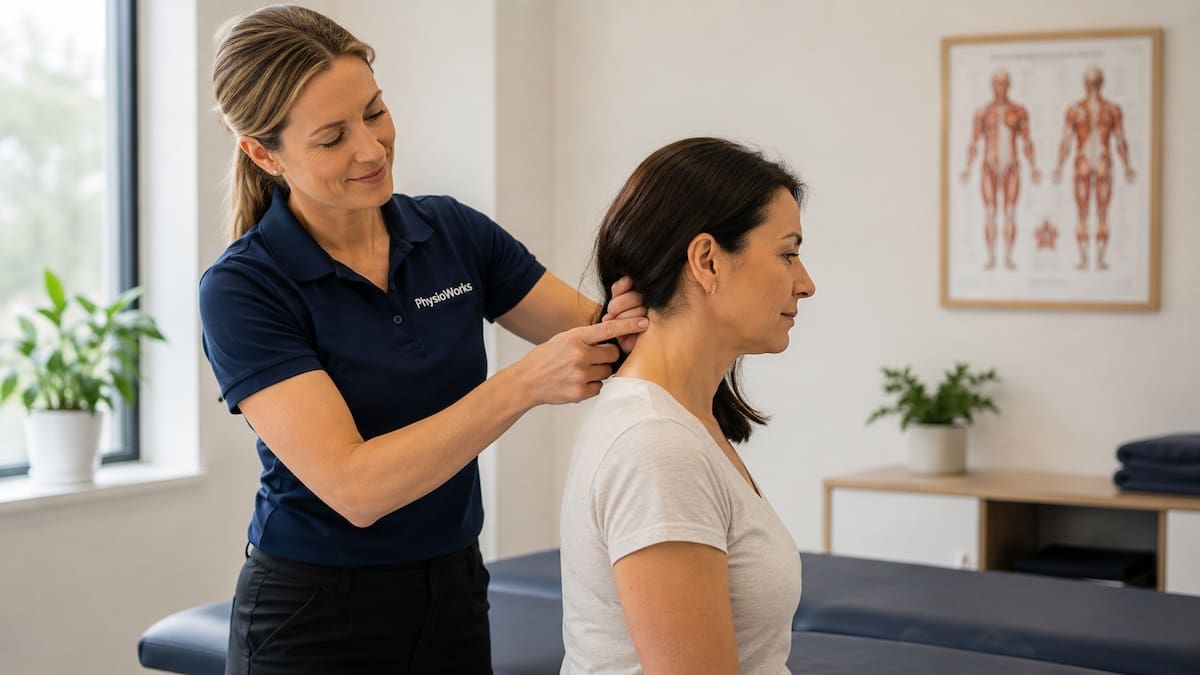
Neck pain without injury physiotherapy assessment during cervical movement testing

Neck pain without injury often relates to posture, movement, and daily habits.

Neck pain without injury often builds gradually rather than starting after one clear incident. Common causes include poor sustained posture, repeated desk or device use, awkward sleeping positions, stress-related muscle tension, reduced upper back movement, and irritation of the joints, muscles, or discs in the cervical spine. For the broader overview, start with neck pain.

In many cases, the problem is not one major injury. Instead, the neck becomes irritated after repeated low-level strain over time. That is why people often notice symptoms after long workdays, screen time, travel, poor sleep, or a period of increased stress rather than after a sporting injury or sudden accident.

  • often builds gradually rather than after one obvious injury
  • commonly worsens with desk work, device use, or poor sleep
  • may cause stiffness, headaches, or shoulder blade discomfort
  • needs closer assessment if pain spreads into the arm

What causes neck pain without injury?

Most neck pain without injury comes from a mechanical or postural pattern. This means symptoms usually change with posture, movement, sleep, work setup, and daily habits. Common contributors include muscle overload, stiff or irritated facet joints, poor neck posture, reduced upper back mobility, and repeated time spent in one position.

For example, many people develop symptoms after long hours at a desk, repeated phone use, laptop work, driving, or gaming. If that sounds familiar, read more about text neck and good neck posture.

Common causes of neck pain without injury

  • Poor sustained posture: especially during desk work, study, gaming, or device use.
  • Sleep position or pillow mismatch: when the neck stays bent, rotated, or unsupported overnight.
  • Muscle tension and overload: often affecting the upper trapezius, levator scapulae, and deep neck muscles.
  • Facet joint irritation: a common source of local neck pain and stiffness.
  • Upper back stiffness: reduced thoracic movement can increase strain on the neck.
  • Stress and muscle guarding: these often make symptoms feel more persistent.
  • Disc irritation or age-related change: this may contribute in some people, especially with recurring symptoms.

How does posture affect neck pain?

Posture matters because the neck copes poorly with long periods in one strained position. The issue is usually not one “bad posture” moment. Instead, discomfort tends to build when your head stays forward, your upper back rounds, and your neck muscles work harder for longer than they should.

Forward head posture can increase load through the cervical joints, discs, and muscles. Over time, that may contribute to ongoing neck pain, stiffness, shoulder blade pain, or headaches. If you want practical setup tips, see Good Neck Posture Tips and posture correction.

Can sleeping position cause neck pain without injury?

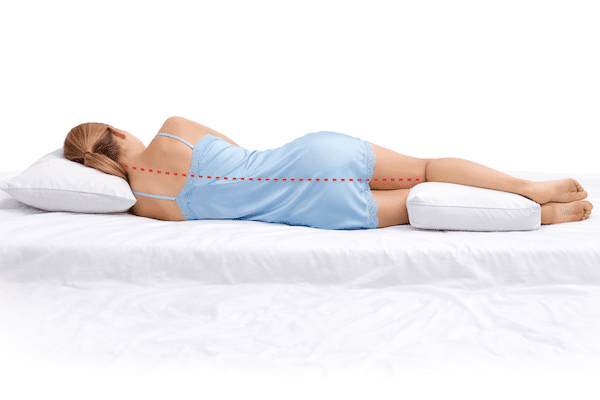
Yes. Sleeping position can contribute when your pillow height or sleep posture leaves the neck rotated, flexed, or unsupported for hours. Many people wake with morning stiffness, one-sided pain, or a “locked” feeling after sleeping awkwardly.

Most people do better with side sleeping or back sleeping when the pillow supports the neck without pushing the head too far forward. For more detail, read Best Sleeping Positions for Back and Neck Health and Best Pillow for Neck Pain.

What symptom patterns can neck pain without injury follow?

Neck pain without injury does not always feel the same. Some people mainly notice local stiffness and pain when turning the head, while others feel shoulder blade discomfort, headache, or pain that starts to travel into the arm.

  • Local neck stiffness: often linked with joint irritation, muscle tension, or poor sustained posture.
  • Headache pattern: upper neck irritation may refer pain into the base of the skull or head.
  • Arm symptoms: tingling, numbness, weakness, or pain below the shoulder may suggest nerve irritation and needs closer assessment.

Why does neck pain sometimes spread into the shoulder or arm?

Neck pain that spreads into the shoulder blade, shoulder, arm, or hand may suggest a more specific neck-related problem than simple local muscle tension. In some cases, irritated joints or nerves can refer pain away from the neck.

If you also notice tingling, numbness, pins and needles, or weakness, compare your symptoms with neck arm pain and cervical radiculopathy.

Can neck pain without injury cause headaches?

It can. Upper neck joints, muscles, and posture strain can refer pain into the head. This pattern is often described as a cervicogenic headache, especially when the headache seems linked to neck movement, neck stiffness, or prolonged posture.

If your headache seems to come with neck stiffness or pain at the base of the skull, read cervicogenic neck headache. If the neck feels locked or sharply stiff, compare your symptoms with stiff neck and cervical facet joint pain.

When should you worry about neck pain without injury?

Most neck pain without injury is not serious. However, you should seek prompt medical or physiotherapy assessment if symptoms are severe, worsening, spreading into the arm, or linked with neurological or systemic changes.

  • pain with arm tingling, numbness, or weakness
  • dropping objects or reduced grip strength
  • severe headache unlike your usual pattern
  • fever, feeling unwell, or unexplained weight loss
  • balance changes, clumsiness, or walking difficulty
  • pain that keeps worsening or does not settle

For a broader public-health overview of neck pain symptoms and warning signs, see Healthdirect’s neck pain guide.

How can physiotherapy help neck pain without injury?

Physiotherapy cervical mobilisation for neck pain improving joint movement and reducing stiffness

Hands-on treatment may help restore neck movement.

Physiotherapy can help by identifying what is driving the pain, settling irritated tissues, improving neck and upper back movement, and building better load tolerance. Treatment often includes education, exercise, posture changes, hands-on therapy, and a practical plan for work, sleep, driving, and training.

If you want the next-step guide, read Do I Need Physiotherapy for Neck Pain? or start with neck exercises for pain relief and prevention.

What can you do for neck pain without injury?

Early self-management often helps when symptoms are mild and recent. The aim is to reduce irritation without becoming overly protective or inactive.

  • change position regularly through the day
  • bring screens closer to eye level
  • take short posture breaks every 30 to 60 minutes
  • restart gentle neck movement within comfort
  • review your pillow and sleeping position
  • reduce aggravating phone or laptop posture

Frequently asked questions about neck pain without injury

Can you get neck pain without doing anything wrong?

Yes. Neck pain often builds gradually from repeated low-level stress rather than one obvious mistake. Long desk hours, poor sleep support, reduced movement variety, and stress can all add up over time.

Is neck pain without injury usually muscular?

Sometimes, but not always. Muscles are often involved, yet joints, discs, posture strain, and nerve irritation may also contribute. That is why persistent symptoms need a broader assessment.

Why is my neck pain worse in the morning?

Morning neck pain often points to sleep position, pillow mismatch, overnight muscle guarding, or sustained joint compression. If you regularly wake stiff or sore, your sleeping setup may be part of the problem.

Can stress cause neck pain without injury?

Yes. Stress can increase muscle tension, reduce movement variety, disturb sleep, and make the neck more sensitive. It usually acts as an aggravating factor rather than the sole cause.

Should I exercise with neck pain without injury?

Usually, yes. Gentle movement and graded exercise often help more than complete rest. The key is choosing the right type and dose for your symptoms.

Can poor posture alone cause neck pain?

Poor posture can be a major contributor, but it is rarely the only factor. Neck pain usually develops from a mix of posture load, reduced movement, muscle fatigue, stress, work setup, and recovery habits.

Is neck pain without injury permanent?

No. Most cases are not permanent. Many people improve with the right combination of movement, exercise, posture changes, sleep adjustments, and tailored physiotherapy advice.

What to do next

Neck pain recovery with physiotherapy showing improved posture and movement

Most neck pain improves with the right care.

If your neck pain is mild and recent, start with simple changes such as regular movement breaks, a better desk and phone setup, improved pillow support, and gentle neck exercises. However, if the pain keeps returning, affects sleep or work, or spreads into the arm, book an assessment so the cause can be identified properly.

Book your appointment – 24/7

Choose your preferred PhysioWorks clinic and book online.

Neck Products

These neck products are commonly used by our physiotherapists to improve strength, posture, movement, plus assist home exercise programs.

View all neck products

Follow PhysioWorks

Get free physiotherapy tips, exercise videos, recovery advice, and blog updates.

Facebook Instagram YouTube B X Email PhysioWorks

References

  1. Rasmussen-Barr E, Ang B, Brisby H, et al. Summarizing the effects of different exercise types in chronic neck pain: a systematic review and meta-analysis of systematic reviews. BMC Musculoskelet Disord. 2023;24(1):846.
  2. Healthdirect Australia. Neck pain - treatments, causes and related symptoms. Accessed April 7, 2026.
You've just added this product to the cart: