
Vertigo Physiotherapy
Vertigo Physiotherapy
Physiotherapy can help assess some common causes of vertigo and dizziness, including BPPV, vestibular problems and balance difficulties, while identifying when medical assessment may be more appropriate.



Supported positional testing can help identify BPPV and other movement-related patterns of vertigo.
Vertigo physiotherapy focuses on finding the pattern behind your symptoms and choosing treatment that matches the likely cause. Assessment may include positional testing for BPPV, eye and head-movement tests, balance assessment, walking assessment and screening for signs that require medical review.
Vertigo is a symptom rather than a diagnosis. It can feel as though you or the room is spinning, tilting or moving. Some episodes last only seconds. Others continue for hours or recur over days or weeks.
The timing, triggers and associated symptoms often provide important clues. For broader information about dizziness disorders, visit our vestibular physiotherapy hub or read about the four main types of dizziness.
How Can Physiotherapy Help Vertigo?
Vertigo treatment depends on what is causing the symptoms. Physiotherapy is particularly useful when assessment identifies a movement-related vestibular problem or a balance problem that can be rehabilitated.
Treatment may include:
- repositioning manoeuvres for confirmed BPPV
- vestibular rehabilitation therapy
- eye and head exercises to improve visual stability
- graded practice of movements that provoke dizziness
- balance and walking retraining
- falls-risk assessment and practical safety advice
- neck assessment when neck pain or restricted movement is relevant
- medical referral when the findings suggest another cause
A repositioning manoeuvre can be highly relevant for BPPV, but it does not treat every cause of vertigo. Likewise, general balance exercises may improve steadiness but do not reposition displaced inner-ear crystals. Assessment helps determine which approach fits the presentation.
Who May Benefit From Vertigo Physiotherapy?
Consider a physiotherapy assessment if you experience:
- brief spinning when rolling in bed, lying down or looking up
- dizziness triggered by head movement
- poor balance or unsteady walking
- blurred or bouncing vision during head movement
- motion or visual sensitivity
- ongoing unsteadiness after an inner-ear illness
- neck pain associated with non-spinning dizziness
- recurrent symptoms without a clear pattern
A physiotherapist can assess common movement-related and vestibular patterns while screening for warning signs. Medical assessment may be more appropriate when symptoms suggest a neurological, hearing, cardiovascular or other medical cause.
What Happens During a Vertigo Physiotherapy Assessment?
Your physiotherapist will first clarify what the sensation feels like, when it began, how long each episode lasts and what appears to trigger it.
They may ask about:
- head-position triggers
- nausea or vomiting
- falls or severe imbalance
- migraine or headaches
- neck pain
- hearing changes, tinnitus or ear pressure
- medicines and other health conditions
- weakness, numbness, vision changes or speech problems
Testing depends on your symptoms and safety needs. It may include observation of eye movements, positional testing for BPPV, eye and head coordination, neck movement, standing balance, walking and an appropriate neurological screen.
If the findings do not fit a condition suitable for physiotherapy, your physiotherapist may recommend medical assessment before treatment begins.
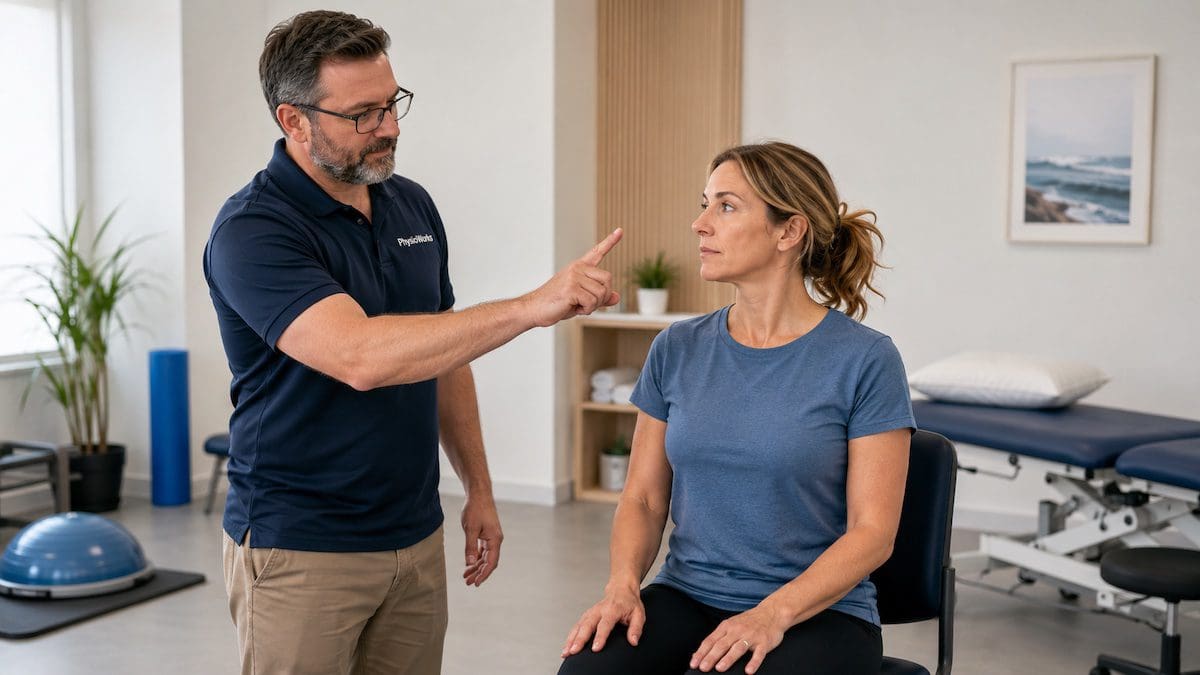
Eye, head and gaze-stability testing can help guide vestibular rehabilitation.
Is BPPV likely?
Positional testing may reproduce vertigo and reveal a characteristic eye-movement response.
Is balance affected?
Eye, walking and balance tests can identify areas that may benefit from rehabilitation.
Is medical care needed?
Neurological, hearing or other concerning symptoms can change the safest next step.
Which Conditions Can Cause Vertigo or Dizziness?
Vertigo has several possible causes. The most useful clues often come from what triggers an episode, how long it lasts and whether other symptoms occur.
- Benign paroxysmal positional vertigo (BPPV): often causes brief spinning after rolling in bed, lying down, looking up or bending forward.
- Vestibular neuritis: may cause sudden, longer-lasting vertigo, nausea and poor balance.
- Vestibular migraine: may cause vertigo, motion sensitivity or visual sensitivity, with or without headache.
- Ménière’s disease: may cause vertigo attacks with hearing changes, tinnitus or pressure in one ear.
- Persistent postural-perceptual dizziness (PPPD): more often causes rocking, swaying or ongoing unsteadiness than short bursts of spinning.
- Cervicogenic dizziness: can involve non-spinning dizziness associated with neck pain or restricted neck movement.
Other medical conditions and some medicines can cause similar symptoms. Treatment should therefore follow an assessment rather than the sensation of spinning alone.
Why Can Moving Your Head Trigger Vertigo?
Your inner ears, eyes and neck provide information that your brain uses to keep your vision clear and your body balanced.
With BPPV, tiny calcium carbonate particles become displaced into part of the inner ear where they interfere with normal movement signals. Certain head positions can then trigger a brief burst of vertigo and characteristic involuntary eye movements called nystagmus.
However, head movement can also aggravate symptoms associated with vestibular migraine, reduced vestibular function, PPPD and neck-related dizziness. Episode duration, associated symptoms and examination findings help distinguish these patterns.
Advanced Vestibular Assessment at Clayfield
Some presentations are recurrent, persistent or less typical. In selected cases, further observation of eye movements may help clarify the pattern.
At our Clayfield clinic, infrared goggles may be used during selected vestibular assessments. Removing visual fixation can make subtle involuntary eye movements easier to observe.
This type of assessment may be considered when:
- vertigo repeatedly returns
- symptoms do not follow a typical BPPV pattern
- more than one balance canal may be involved
- previous repositioning manoeuvres have not resolved the symptoms
- another vestibular disorder may be contributing
Not everyone requires infrared-goggle assessment. Your history and initial examination guide whether it is likely to add useful information.
How Long Does Vertigo Last?
The duration varies because vertigo is a symptom with several possible causes.
- BPPV typically causes spinning lasting seconds.
- Vestibular neuritis can cause severe symptoms lasting hours or days.
- Vestibular migraine and Ménière’s disease can cause recurrent attacks.
- Balance difficulties or motion sensitivity can persist for weeks or months in some people.
Recovery may also be influenced by general health, falls risk, migraine, neck problems, medicines, activity levels and how long symptoms have been present.
When Does Vertigo Need Urgent Medical Care?
Many episodes of vertigo are not caused by an emergency. However, sudden vertigo can occur with stroke and other serious conditions.
What Should You Do While Waiting for Assessment?
Reduce activities where an unexpected episode could cause injury. Avoid driving, climbing ladders, working at unprotected heights or operating machinery while symptoms remain unpredictable.
Move carefully when getting out of bed. Use stable support when needed and keep walking areas well lit.
Avoid repeatedly attempting online repositioning manoeuvres when the cause is uncertain. The appropriate manoeuvre depends on the diagnosis and, for BPPV, the affected ear and canal.
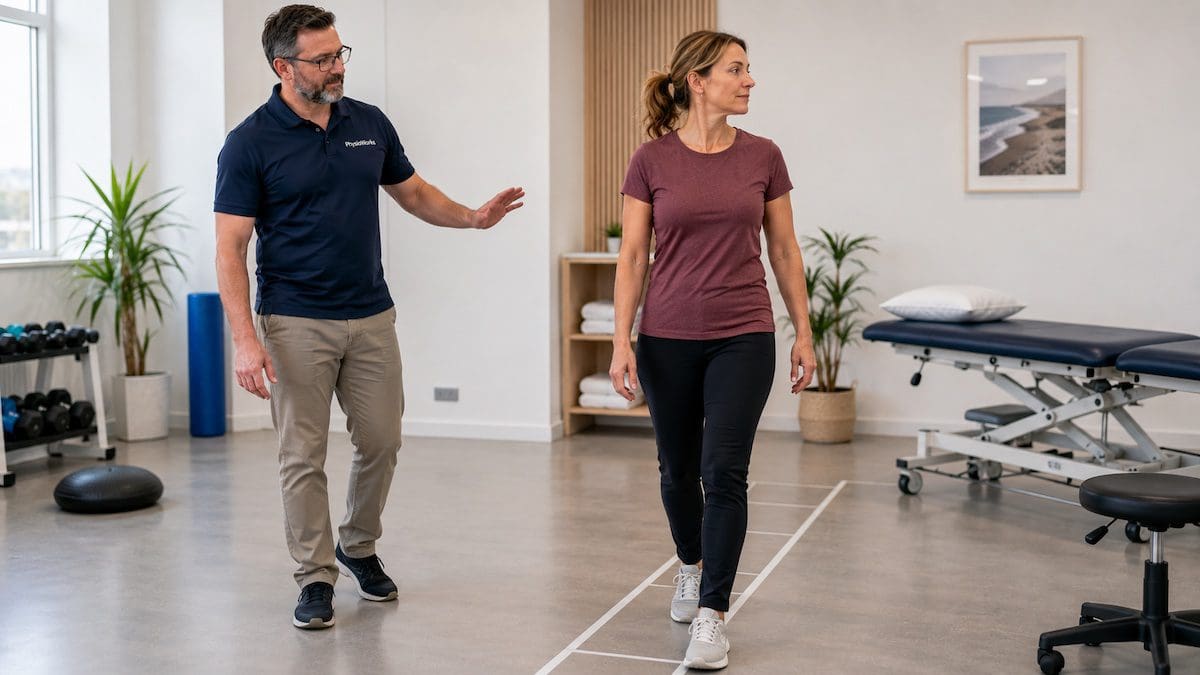
Walking and balance rehabilitation can help rebuild confidence after vertigo.
Vertigo Physiotherapy FAQs
Can physiotherapy help vertigo?
Yes, physiotherapy may help when treatment matches the cause. Repositioning manoeuvres can help confirmed BPPV, while vestibular rehabilitation may help some people with reduced vestibular function, motion sensitivity or balance problems.
What does a physiotherapist do for vertigo?
A physiotherapist can assess symptom triggers, eye movements, positional responses, head and eye coordination, balance and walking. Treatment may include BPPV manoeuvres, vestibular exercises, balance rehabilitation or referral for medical assessment.
Can physiotherapy treat BPPV?
A physiotherapist with appropriate vestibular training can assess for BPPV and use a suitable canalith-repositioning manoeuvre when the findings support that diagnosis. The manoeuvre depends on the affected ear and semicircular canal.
How many physiotherapy sessions might vertigo need?
The number of appointments depends on the cause, symptom duration, balance problems, falls risk and response to treatment. Some BPPV presentations improve quickly, while persistent vestibular or balance problems can require a staged rehabilitation program.
Can I perform an Epley manoeuvre at home?
The Epley manoeuvre can help a particular form of BPPV, but it is not suitable for every cause of vertigo. The correct technique depends on the affected ear and canal. Seek advice if the diagnosis is unclear, symptoms are severe or recurrent, or significant neck, vascular or mobility problems may affect the manoeuvre.
When should vertigo be assessed urgently?
Call 000 when sudden vertigo occurs with facial drooping, new weakness or numbness, speech or swallowing difficulty, double vision, severe unusual headache, collapse, chest pain, marked loss of coordination or a new severe inability to walk. Sudden hearing loss also requires urgent medical assessment.
Book a Vertigo Physiotherapy Assessment
If vertigo, dizziness or poor balance affects walking, work, driving, exercise or confidence, an assessment can help clarify the pattern and identify the safest next step.
Choose the PhysioWorks clinic and appointment pathway that suits you below. For persistent, recurrent or unusual symptoms, reception can also help identify an appropriate physiotherapist and location.
Choose your clinic and appointment pathway
Select a PhysioWorks clinic to continue to live booking, an appointment request or reception assistance.
Related Vertigo and Dizziness Information


References
- Bhattacharyya N, Gubbels SP, Schwartz SR, et al. Clinical Practice Guideline: Benign Paroxysmal Positional Vertigo (Update). Otolaryngol Head Neck Surg. 2017;156(3_suppl):S1-S47.
- Hall CD, Herdman SJ, Whitney SL, et al. Vestibular Rehabilitation for Peripheral Vestibular Hypofunction: An Updated Clinical Practice Guideline. J Neurol Phys Ther. 2022;46(2):118-177.
- Stroke Foundation. Signs of Stroke. Accessed July 2026.
- National Institute for Health and Care Excellence. Hearing Loss in Adults: Assessment and Management. NICE guideline NG98. Accessed July 2026.
