
Resistance Band Exercises
Resistance Band Exercises


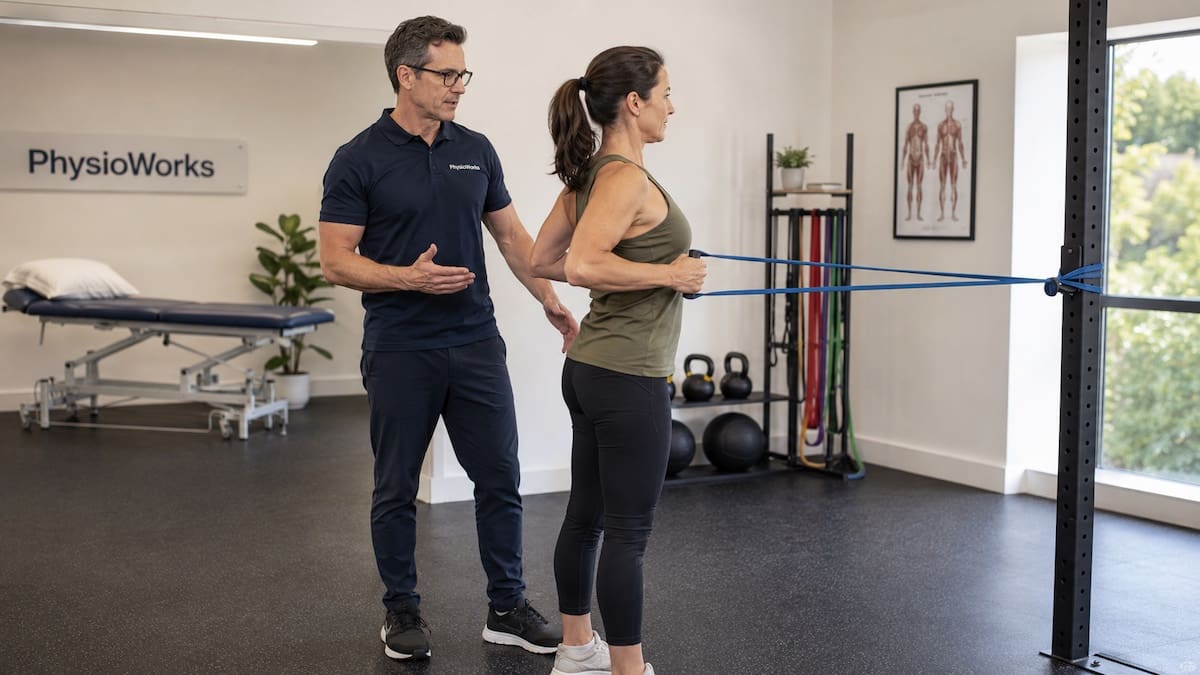
Resistance band exercises provide adjustable resistance for strength training, rehabilitation and home exercise. They can help you train your shoulders, hips, knees, legs and trunk without needing heavy gym equipment.
Bands suit many exercise programs. You can use them at home, in a clinic gym or while travelling. They also work well alongside core stability training when you want to improve posture and whole-body control.
When Can Resistance Band Exercises Help?
Home exercise
Bands provide portable resistance when you do not have access to weights or gym equipment.
Early strengthening
Lighter resistance can provide a manageable starting point before you progress to heavier loads.
Movement control
Band tension can help you practise shoulder, hip, knee and trunk control through a chosen range.
Rehabilitation
A physiotherapist can use band exercises to rebuild strength and confidence after injury.
Exercise consistency
Portable equipment can make it easier to continue a program at home, work or while travelling.
Exercise progression
You can change resistance, range, speed, repetitions or body position as your capacity improves.
Why Choose Resistance Band Exercises?
Resistance bands create tension as they stretch. The resistance usually increases as the band lengthens. This can make an exercise feel easier near the starting position and harder later in the movement.
Practical Benefits
- Easy to adjust: change the band, grip position, starting length or distance from the anchor.
- Portable: use bands at home, at work, in the gym or while travelling.
- Space efficient: most exercises require little floor space or storage.
- Suitable for controlled movement: practise smooth technique before adding heavier gym loads.
- Useful across the body: train the shoulders, arms, hips, knees, legs and trunk.
Rehabilitation and Return to Activity
Physiotherapists often include elastic resistance in rehabilitation programs. Shoulder rehabilitation may include band rows or external rotation. Lower-limb rehabilitation may include hip abduction, lateral steps or exercises that improve knee control.
Some programs combine band work with eccentric strengthening. The right exercise depends on the injured tissue, your current capacity and the activity you want to return to.
Are Resistance Bands as Good as Weights?
Resistance bands can build strength when the exercise provides enough challenge and the program progresses over time. Free weights and gym machines can also build strength. Neither option is automatically better for every person or every exercise.
Weights may suit exercises that require high external loads. Bands may suit people who value portability, adjustable resistance or a gradual return to training.
The equipment matters less than the overall program. Useful strength training requires appropriate resistance, controlled movement, regular practice and enough recovery.
How Do You Progress Resistance Band Exercises?
Progress one variable at a time. This makes it easier to judge how your body responds and reduces the risk of making the exercise too difficult too quickly.
Increase resistance
Use a stronger band, shorten the working length or move further from the anchor.
Improve control
Slow the movement and control the return rather than allowing the band to snap back.
Build endurance
Add repetitions or another set before changing to a substantially stronger band.
Increase movement range
Gradually work through more range when you can maintain comfort and technique.
Add a balance demand
Change your stance or progress towards single-leg control when this suits the exercise goal.
Reduce irritation
Lower the resistance, repetitions, movement range, speed or total session volume.
How to Use Resistance Bands Safely
-
Inspect the Band
Check for cuts, cracks, thinning, discolouration, sticky areas or other signs of damage before each session. Stop using a damaged band.
-
Choose a Secure Anchor
Use a purpose-built door anchor or a stable fixed point. Do not attach the band to lightweight furniture or anything that could move towards you.
-
Clear the Exercise Area
Make sure the band will not catch on sharp edges or nearby objects. Keep other people away from the band’s path.
-
Start with Lighter Resistance
Select a band that allows smooth movement without holding your breath, straining or losing posture.
-
Control Both Directions
Move steadily against the band and control the return. Do not allow the band to pull you suddenly into the starting position.
-
Keep the Band Away from Your Face
Avoid exercise positions where a slipping or broken band could strike your face or eyes.
Choose the Right Resistance
Starting with a band that is too strong can change your technique and overload the targeted area. Begin with lighter resistance and increase the challenge once you can complete the exercise with good control.
Band colour does not provide a universal resistance rating. Different manufacturers may use different colour systems. See our guide to resistance band force for more information.
Strength Products
These strength products are commonly used by our physiotherapists to improve strength, controlled movement, plus assist home exercise programs.
-
-
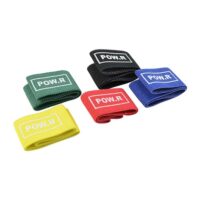 Exercise Equipment, Knee, Resistance Band
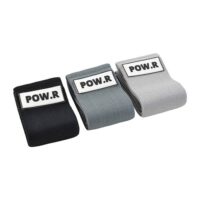
POW.R Fabric Mini Loop Bands
$12.00 – $55.00Select optionsQuick View -

-


-

 Gift Ideas, Back, Christmas Gift Ideas, Exercise Balls, Exercise Equipment, Knee, Pelvic Floor, Product Search
Pilates Balls
$13.00 – $14.00Select optionsQuick View -
-
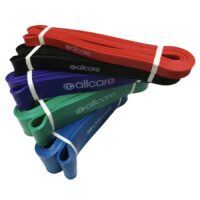
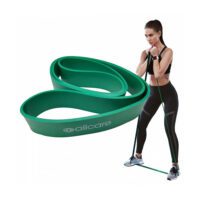 Exercise Equipment, Resistance Band
AllCare Powerloop Bands
$22.00 – $65.00Select optionsQuick View -
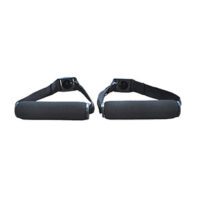
- Exercise Equipment, Resistance Band
POW.R Wide Fabric Loop Resistance Band
$14.95 – $49.95Select optionsQuick View -
-
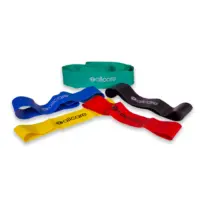
- Exercise Equipment, Back, Elbow, Foot, Hand & Wrist, Knee, Resistance Band, Shoulder
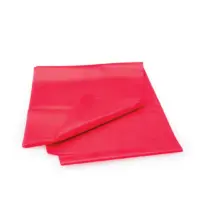
Resistance Bands Pre-Packed 1.5m
$10.95Select optionsQuick View -
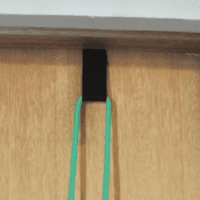 Exercise Equipment, Resistance Band, Shoulder
Resistance Band Anchor Stirrup
$13.00Add to cartQuick View



How Often Should You Train?
Training frequency depends on your goal, exercise intensity and recovery. Many people complete strength-focused resistance band exercises two or three times per week. Lower-load movement or activation exercises may suit more frequent practice.
A physiotherapist or Accredited Exercise Physiologist can help set the resistance, repetitions, sets and weekly frequency for your needs.
Upper-Body Resistance Band Exercises
The best exercises depend on your goals and current ability. These examples show common upper-body movement patterns rather than a complete exercise program.
Standing Row
Draw the elbows backwards while keeping your ribs controlled. Allow the shoulder blades to move smoothly rather than forcing them together.
Shoulder External Rotation
Keep the elbow close to your side and rotate the forearm outwards without shrugging or twisting your trunk.
Standing Chest Press
Press the hands forwards while maintaining a stable stance and neutral wrist position.
Lower-Body Resistance Band Exercises
Lower-body band exercises can add resistance or provide a movement cue for the hips, knees and legs.
Glute Bridge with Band
Lift the hips while keeping the knees aligned over the feet. Avoid pushing the knees excessively outwards.
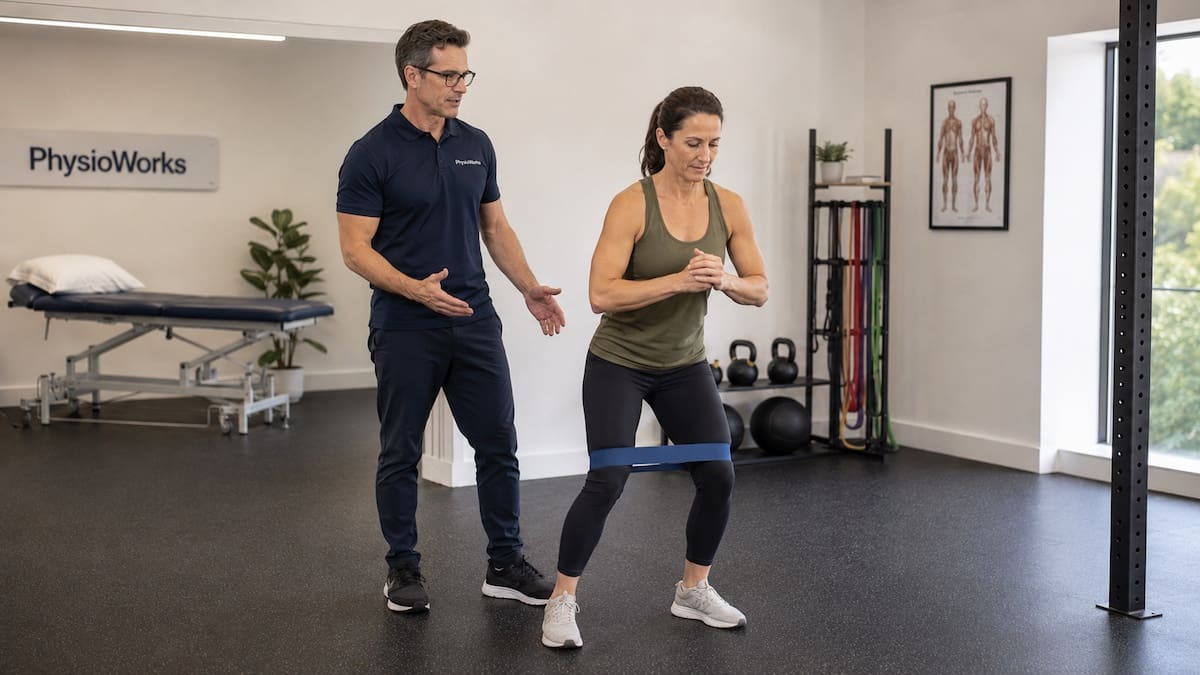
Lateral Band Steps
Take controlled sideways steps while maintaining hip, knee and foot alignment.
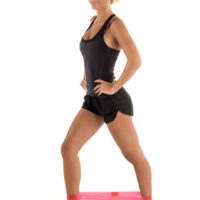
Banded Split Squat
Use light band tension as a movement cue while controlling the hip, knee and ankle through the exercise.
Can Resistance Bands Help with Mobility and Flexibility?
Bands can assist some gentle mobility exercises. However, more resistance does not necessarily create a better stretch. Keep the movement controlled and avoid using the band to force a joint into an uncomfortable position.
You may combine suitable band exercises with stretching exercises. When balance is a concern, a broader program may also include balance training.
Common Resistance Band Mistakes
Too much resistance
A band that is too strong may cause compensatory movement or reduce the useful exercise range.
Poor return control
Letting the band snap back reduces control and may cause the band to recoil unexpectedly.
Unstable anchor
A moving or unsuitable anchor may release the band or cause equipment to fall.
Damaged equipment
Small tears and thin areas can worsen under tension and cause the band to break.
Poor breathing
Holding your breath or bracing excessively may indicate that the resistance is too high.
Too many exercises
A short, purposeful program is often easier to perform and progress than a long list of unrelated drills.
What Does the Research Say?
Research in older adults suggests that elastic resistance training can improve strength and physical function. Some studies also report improvements in balance and other measures of physical performance.
These findings should not be assumed to apply equally to every age group, condition or training goal. Results depend on the exercise program, training dose, participant group and study methods. Resistance bands should form part of a structured program rather than being treated as a single solution for every strength or mobility problem.
Healthdirect provides Australian guidance about strength training for beginners, including safe progression and situations where medical or professional advice may be useful.
Related Strength and Exercise Information
What to Do Next
Start with a small number of exercises that match your goals. Choose resistance that allows smooth movement and complete the program consistently before adding more exercises or a stronger band.
Arrange a physiotherapy assessment if resistance band exercises cause persistent pain, feel unstable or form part of your recovery after an injury. Your physiotherapist can assess your movement, select an appropriate starting resistance and build a program around your current capacity.
Choose your clinic and appointment pathway
Select a PhysioWorks clinic to continue to live booking, an appointment request or reception assistance.


References
- Hernandez-Martinez J, Cid-Calfucura I, Chiguay C, et al. Effects of elastic band training on body composition and physical performance in older people: a systematic review with meta-analysis. Exp Gerontol. 2024;196:112553. doi:10.1016/j.exger.2024.112553.
- de Oliveira SN, Leonel L, Delevatti RS, Heberle I, Moro ARP. Effect of elastic resistance training on functional capacity in older adults: a systematic review with meta-analysis. Physiother Theory Pract. 2023;39(12):2553-2568. doi:10.1080/09593985.2022.2085219.
- Li A, Sun Y, Li M, Wang D, Ma X. Effects of elastic band resistance training on the physical and mental health of elderly individuals: a mixed methods systematic review. PLoS One. 2024;19(5):e0303372. doi:10.1371/journal.pone.0303372.
- Meng Y, et al. Effects of elastic band resistance training on lower limb strength and balance function in older adults: a systematic review and meta-analysis. Front Sports Act Living. 2025;7:1649305. doi:10.3389/fspor.2025.1649305.
Resistance Band Exercises: Frequently Asked Questions
Do resistance band exercises build strength?
Yes. Resistance band exercises can build strength when the exercise is challenging enough and you progressively increase the training demand. You can progress the resistance, repetitions, sets, movement range or exercise difficulty.
Which resistance band should I start with?
Start with a band that lets you complete the exercise through a comfortable range without losing control or holding your breath. Band colours vary between manufacturers, so select resistance by exercise quality rather than colour alone.
How often should I do resistance band exercises?
Many people complete strength-focused resistance band exercises two or three times per week. The right frequency depends on the exercise intensity, your goal, your recovery and any injury or health condition.
Can resistance bands help with rehabilitation?
Resistance bands can provide adjustable loading during rehabilitation. A physiotherapist may use them to improve strength, movement control and confidence. The exercise and dosage should match your injury, symptoms and stage of recovery.
When should I stop a resistance band exercise?
Stop or modify the exercise if you develop sharp pain, increasing joint pain, pins and needles, numbness, marked swelling or worsening symptoms. Seek professional advice if symptoms continue or you are unsure how to adjust the exercise.
