
Touch Football
Touch Football Injuries
Common touch football injuries can develop during sprinting, cutting, braking, stepping, diving and repeated high-speed play.


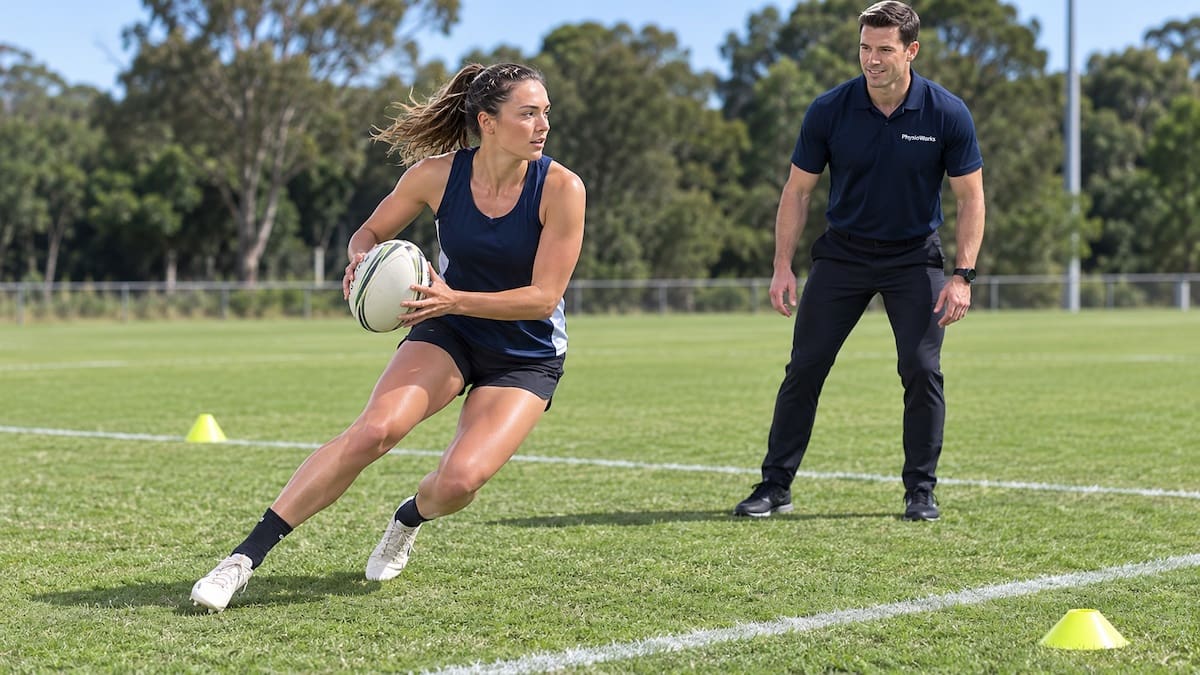
Touch football injuries commonly occur during sprinting, cutting, braking, stepping or diving. These actions repeatedly load the hamstrings, calves, ankles, knees, groin, shoulders, wrists and lower back.
Some injuries happen suddenly. Others build when playing or training load rises faster than the body can adapt. Fatigue, limited recovery and returning too quickly after a previous injury may also increase risk.
Quick Touch Football Injury Check
- Pain during sprinting, cutting, stepping, diving or stopping quickly
- Swelling, bruising, limping or a feeling that a joint may give way
- Repeated hamstring, calf or groin tightness during fast running
- Reduced speed, power or confidence when changing direction
- Symptoms that flare during tournaments or after repeated games
When Does Touch Football Pain Occur?
The action that triggers pain can help identify which body region needs assessment. However, a playing action alone does not confirm a diagnosis.
Accelerating or Sprinting
Fast running may provoke pain in the hamstring, calf or Achilles region. Read the muscle strain guide for more information.
Cutting or Stepping
Sharp changes of direction may provoke knee, ankle or groin symptoms. An ankle sprain is one possible injury pattern.
Braking or Landing
Sudden deceleration can increase load through the knee, calf and ankle. Learn more about common causes of knee pain.
Diving or Falling
Landing on an arm can injure the shoulder, wrist, ribs or upper body. Shoulder instability may occur after a significant landing or fall.
What Are the Most Common Touch Football Injuries?
Lower-limb injuries are common because touch football requires repeated sprinting and rapid changes of direction. Diving, falling and awkward landings can also affect the upper body.
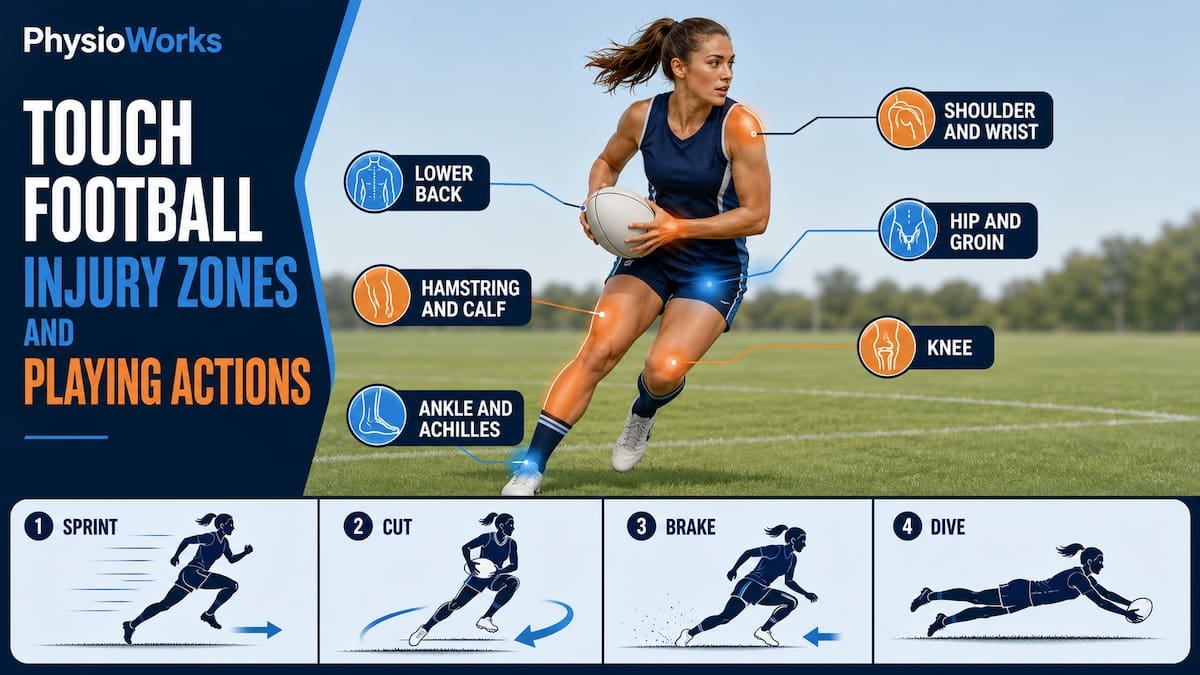
Knee and Thigh
Braking, pivoting and repeat sprinting can increase load through the knee and thigh.
Ankle, Achilles and Calf
Side-stepping, push-off and uneven ground can load the ankle and lower leg.
Hip and Groin
Repeated acceleration, lateral movement and wide stepping can load the hip and groin.
Shoulder and Spine
Diving, falling and repeated trunk rotation can irritate the upper body or lower back.
Why Do Touch Football Injuries Happen?
Touch football combines high-speed running with short recovery periods. As fatigue rises, movement timing, braking control and decision-making may change. This can increase load through muscles and joints.
Risk may also increase with hard fields, unsuitable footwear, short warm-ups, poor recovery or sudden rises in training and match volume. Tournament formats can be demanding because players may complete several games within a short period.
An older Australian touch football injury survey reported about 4.85 injuries per 1000 hours of play and training.1 Sport-specific research remains limited, so this figure should be interpreted cautiously. Current management also draws on broader sports-injury evidence, clinical assessment and the individual player’s symptoms.
Who Has a Higher Injury Risk?
Touch football injuries can affect social, school and competitive players. Risk often rises when training or competition demands change quickly.
- Players completing tournaments or several games each week
- Athletes returning after a break, illness or previous injury
- Teenagers experiencing rapid growth
- Players with a previous hamstring, ankle or knee injury
- Players continuing to sprint despite recurring pain or tightness
- Athletes with limited recovery between intense sessions
A previous injury may affect strength, confidence, movement and training consistency. A graded return can address these factors before full match exposure.
How Can Physiotherapy Help?
Physiotherapy for a touch football injury starts by identifying the injured area, the actions that aggravate symptoms and the player’s current load tolerance.
Your physiotherapist may assess:
- Walking, running and sprint tolerance
- Acceleration, braking and change-of-direction control
- Strength through the hamstring, calf, hip and trunk
- Single-leg balance, landing and stepping control
- Joint movement, swelling and stability
- Training, tournament and recovery load
Treatment depends on the injury. It may include temporary activity modification, progressive strengthening, movement retraining and a staged return-to-sport plan.
For broader information, explore our sports injuries and football injuries hubs.
When Should You See a Physiotherapist?
Consider an assessment when symptoms affect your movement, confidence or ability to recover between sessions.
- Pain lasts more than a week or keeps returning
- Swelling, bruising or joint instability is present
- You lose speed, power or confidence while cutting
- Hamstring, calf or groin symptoms return during sprinting
- Your running style changes or you develop a limp
- Training symptoms remain worse the following day
- You cannot complete normal work, school or daily activity
Should You Keep Playing?
Mild symptoms that settle quickly and do not affect your running may respond to temporary load reduction. Continuing to play through symptoms that alter movement, cause swelling or repeatedly worsen can delay recovery.
Lower concern — monitor
Symptoms are mild, there is no limp or swelling, movement remains normal and symptoms settle after activity.
Review the load
Pain returns with speed, cutting, repeat games or increasing training load. Reduce the aggravating load and reassess your response.
Stop and seek assessment
Swelling, giving way, major bruising, sharp pain, head-knock symptoms or loss of normal function needs appropriate assessment.
How Can You Reduce Injury Risk?
No strategy prevents every injury. However, preparation and sensible load progression may reduce avoidable risk.
Warm-Up
Use dynamic running drills, progressive direction changes and short accelerations before high-speed play.
Strength
Build hamstring, calf, hip, trunk and single-leg strength for repeat sprint and cutting demands.
Movement Control
Practise acceleration, braking and change-of-direction skills before adding fatigue or match pressure.
Recovery
Manage total minutes, hydration, sleep and recovery after tournaments or heavy game days.
Structured injury prevention programs may help when training load is rising. Players with knee injury risk may also benefit from an ACL injury prevention program.
How Do You Return Safely to Touch Football?
A return-to-sport plan should progress from basic daily activity towards full-speed, game-like movement. Progress depends on the injury rather than a fixed timeline.
-
Settle the Injury
Focus: Pain, swelling, walking and daily movement.
Progress when: Daily activity feels comfortable and movement is improving.
-
Rebuild Strength
Focus: Hamstring, calf, hip, trunk and single-leg control.
Progress when: Strength work does not create an excessive next-day flare.
-
Return to Running
Focus: Steady running, acceleration, braking and short sprints.
Progress when: You can run without limping or protective movement and symptoms remain appropriately controlled.
-
Add Touch Football Drills
Focus: Stepping, cutting, diving and repeat-sprint efforts.
Progress when: You tolerate game-like drills and recover appropriately by the next day.
Before competition, test the movements your position requires. This may include maximum-speed running, defensive changes of direction, repeat efforts and diving practice.
If pain or swelling keeps increasing, reduce the load and review the plan rather than repeatedly pushing through.
Touch Football Injuries FAQs
Are touch football injuries common?
Touch is a non-contact sport, but players still sprint, cut, stop and dive. These actions can load the ankle, knee, hamstring, calf, groin and shoulder. Risk may rise with fatigue, repeated games and sudden training increases.
What is the most common injury in touch football?
Lower-limb injuries are common because touch football involves repeat sprinting and sharp changes of direction. Frequent injury patterns include hamstring or calf strain, ankle sprain and knee pain. Diving can also injure the shoulder or wrist.
Can you tear your ACL in touch football?
Yes. A sudden stop, pivot or awkward landing can stress the ACL without direct contact. Giving way, rapid swelling or sharp knee pain after a twist should be assessed promptly.
Why do hamstring injuries occur in touch football?
Hamstring injuries commonly occur during acceleration or high-speed running. Fatigue, a rapid increase in game load, reduced strength or a previous hamstring injury may increase risk.
Should you keep playing touch football with pain?
Do not keep playing when pain changes your running, causes swelling or repeatedly returns during games. Mild symptoms that settle quickly may respond to load reduction. Repeated or worsening symptoms should be assessed.
How long does recovery take from a touch football injury?
Recovery varies with the injured structure, severity and playing demands. Muscle strains can range from relatively short interruptions to longer rehabilitation periods, while ligament injuries, tendon problems and recurring injuries may take longer. Return to sport should consider function, strength and sport-specific testing rather than time alone.
What Should You Do Next?
If a touch football injury is limiting training, matches or confidence, consider a physiotherapy assessment. Your physiotherapist can assess the problem, guide load changes and plan a graded return to play.
Book online 24/7 and choose the PhysioWorks clinic that best suits your location.
Choose your clinic and appointment pathway
Select a PhysioWorks clinic to continue to live booking, an appointment request or reception assistance.
References
- Neumann DC, Otto H. A survey of injuries sustained in the game of touch. J Sci Med Sport. 1998;1(4):228–235. doi:10.1016/S1440-2440(09)60006-2
- Martin RL, Davenport TE, Fraser JJ, et al. Ankle stability and movement coordination impairments: lateral ankle ligament sprains revision 2021. J Orthop Sports Phys Ther. 2021;51(4):CPG1–CPG80. doi:10.2519/jospt.2021.0302
- Rudisill SR, Varady NH, Kucharik MP, et al. Evidence-based hamstring injury prevention and risk factor management. Am J Sports Med. 2023;51(7):1927–1942. doi:10.1177/03635465221083998
- Australian Sports Commission. Australian Concussion Guidelines for Youth and Community Sport. 2024.
