
Dance Screening


Dance screening reviews strength, control and technique.
Dance screening is a physiotherapy assessment that reviews movement quality, strength, flexibility, balance, posture and dance technique. It helps identify issues that may affect training load, comfort or injury risk.
At PhysioWorks, this service sits within our biomechanical analysis pathway. It may suit ballet, contemporary, jazz and other dancers who want clearer guidance about movement control, repeated niggles or return-to-dance planning.
Dance screening can also guide care when a dancer has concerns related to dance injuries, ankle pain, foot pain or knee pain.
Quick Guide: What Dance Screening Reviews
- Strength, control, flexibility and technique
- Turnout, balance, landing and lower-limb alignment
- Foot, ankle, knee, hip, trunk and spinal loading patterns
- Training load, repeated niggles and movement confidence
- Whether physiotherapy, exercise or load advice may help
What Is Dance Screening?
Dance screening is a structured physiotherapy check. It looks at how a dancer moves, controls their joints, manages turnout, balances, lands and handles dance-specific load.
The aim is to find strengths and movement factors that may need work. It does not replace the role of a dance teacher, coach or formal dance-program assessment.
Why Is Dance Screening Important for Dancers?
Dance places repeated load through the feet, ankles, knees, hips, trunk and spine. Screening helps identify strength gaps, flexibility limits or control issues that may increase stress through these regions.
Research reports that dancer injuries often involve the lower limb and overuse patterns. A screening result may help guide earlier load advice, exercise and physiotherapy care when symptoms or movement concerns are present.
What Does a Dance Screening Assess?
Your physiotherapist may assess posture, joint range, turnout control, core and lower-limb strength, balance, landing control, coordination and dance-specific movement.
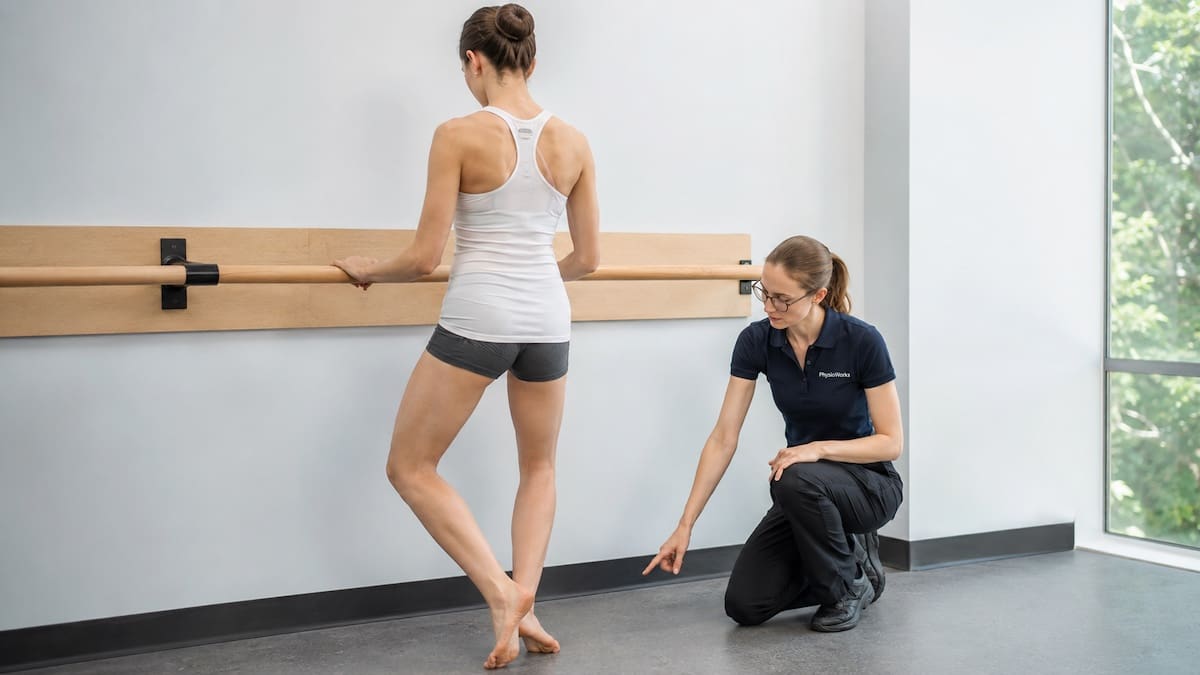
Turnout screening helps guide movement advice.
Where relevant, the assessment may also guide further review for issues such as anterior ankle impingement, posterior ankle impingement, chronic ankle instability, FHL tendinopathy or scoliosis.
What Type of Dance Screening Is Available?
PhysioWorks currently provides general musculoskeletal dance screening as part of physiotherapy and biomechanical assessment. This service can review movement quality, strength, control, flexibility and injury-related concerns.
Important: PhysioWorks does not currently offer formal pre-pointe assessments or Tertiary Dance Council of Australia assessments. If you need those specific assessments, check the requirements with your dance school, teacher or tertiary program.
Who Can Benefit From Dance Screening?
Dance screening may suit dancers who have repeated niggles, reduced movement confidence, growth-related change, a planned rise in training load or concerns about technique-related stress.
It may also help dancers who want clearer advice about strength, balance, control or injury management. If your goal relates to pointe readiness or tertiary dance entry, your physiotherapist can still review musculoskeletal factors, but the assessment is not a formal pre-pointe or tertiary dance council assessment.
How Does Dance Screening Work?
Your physiotherapist uses clinical tests and dance-specific observation to understand how your body handles dance. Screening may include strength tests, balance tasks, flexibility checks, turnout observation, landing control and movement analysis.
After the assessment, findings may guide a home exercise plan, load advice, follow-up physiotherapy or further support such as pre-exercise assessment, injury prevention or video analysis where appropriate.
When Should You Book a Dance Screening?
- You have recurring foot, ankle, knee, hip or back symptoms during dance.
- You are increasing rehearsal, class or performance load.
- You notice poor balance, turnout control or landing confidence.
- You are recovering from a dance-related injury.
- You want a clearer plan for strength, mobility and load management.
Are Dance Screening Sessions Claimable?
In many cases, physiotherapy appointments may be claimable through private health insurance extras cover. Your rebate depends on your policy, so check with your fund if you are unsure.
Please bring your private health card if you plan to claim on the day.
What Should You Wear and Bring?
Wear clothing that lets you move freely and allows your physiotherapist to assess alignment and movement. Bring the dance shoes you normally use, such as ballet flats, jazz shoes or tap shoes.
If pointe shoes are relevant to your training, bring them for context. However, this appointment is not a formal pre-pointe assessment.
When Do You Receive Your Results?
Your physiotherapist will explain the key findings during the session. Where appropriate, they may provide a summary, exercise advice or a follow-up plan.
If you would like information shared with a dance teacher or instructor, ask your physiotherapist about consent and communication options.
What Happens After Dance Screening?
Your next step depends on the findings. Some dancers only need advice and a home exercise plan. Others may benefit from follow-up physiotherapy if pain, weakness, stiffness, instability or repeated symptoms limit dance training.
Related PhysioWorks Guides
- Dance Injuries – common injury patterns and physiotherapy pathways for dancers.
- Ballet Injuries – ballet-related pain, load and movement issues.
- Gait Analysis – walking and lower-limb movement assessment.
- Running Analysis – movement analysis for running load and technique.
- Video Analysis – visual movement review for technique and load advice.
Frequently Asked Questions About Dance Screening
Is dance screening only for elite dancers?
No. Dance screening may help recreational, adolescent, pre-professional and adult dancers. It suits dancers who want clearer advice about movement quality, injury risk, strength, control or training load.
Does PhysioWorks offer formal pre-pointe assessments?
No. PhysioWorks does not currently offer formal pre-pointe assessments. A physiotherapist can assess musculoskeletal factors that may influence dance load, but formal pointe readiness decisions should be discussed with your dance teacher or relevant dance program.
Does PhysioWorks offer Tertiary Dance Council of Australia assessments?
No. PhysioWorks does not currently offer Tertiary Dance Council of Australia assessments. If you need a formal tertiary dance assessment, check the requirements with the relevant dance school, tertiary program or assessment body.
Can dance screening help prevent injury?
Dance screening cannot guarantee injury prevention. However, it may identify modifiable issues such as reduced strength, poor landing control, fatigue-related technique changes or mobility limits. These findings can then guide exercise and training advice.
Do I need pain to book a dance screening?
No. You can book dance screening for movement concerns, repeated niggles, training progression or injury prevention advice. If pain, swelling, instability or repeated symptoms limit training, physiotherapy assessment may help guide the next step.
Do I need follow-up treatment after dance screening?
Not always. Some dancers only need screening and advice. Others may benefit from an exercise plan, review session or treatment plan if the assessment shows issues that need further care.
What To Do Next
If you want a clearer picture of your dance movement, injury risk or technique-related physical capacity, a dance screening assessment can help identify what is working well and what may need attention.
Book through your preferred PhysioWorks clinic and bring your dance shoes, suitable clothing and private health card. Your physiotherapist can guide you toward follow-up treatment, exercise or a more detailed rehab plan if needed.
Choose your clinic and appointment pathway
Select a PhysioWorks clinic to continue to live booking, an appointment request or reception assistance.


References
- Sun YF, Liu H. Prevalence and risk factors of musculoskeletal injuries in modern and contemporary dancers: a systematic review and meta-analysis. Front Public Health. 2024;12:1325536. doi:10.3389/fpubh.2024.1325536
- Critchley ML, Bonfield S, Ferber R, Pasanen K, Kenny SJ. Relationships Between Common Preseason Screening Measures and Dance-Related Injuries in Preprofessional Ballet Dancers. J Orthop Sports Phys Ther. 2023;53(11):703-711. doi:10.2519/jospt.2023.11835
- Watson MDL, Lasner AN, Hada N. A Review of Musculoskeletal Dance Screening Tests in Collegiate Dancers: A Ten-Year Retrospective Study. J Dance Med Sci. 2025. doi:10.1177/1089313X251358325
- Healthdirect. Physiotherapy. Accessed June 13, 2026.
