
Prehabilitation


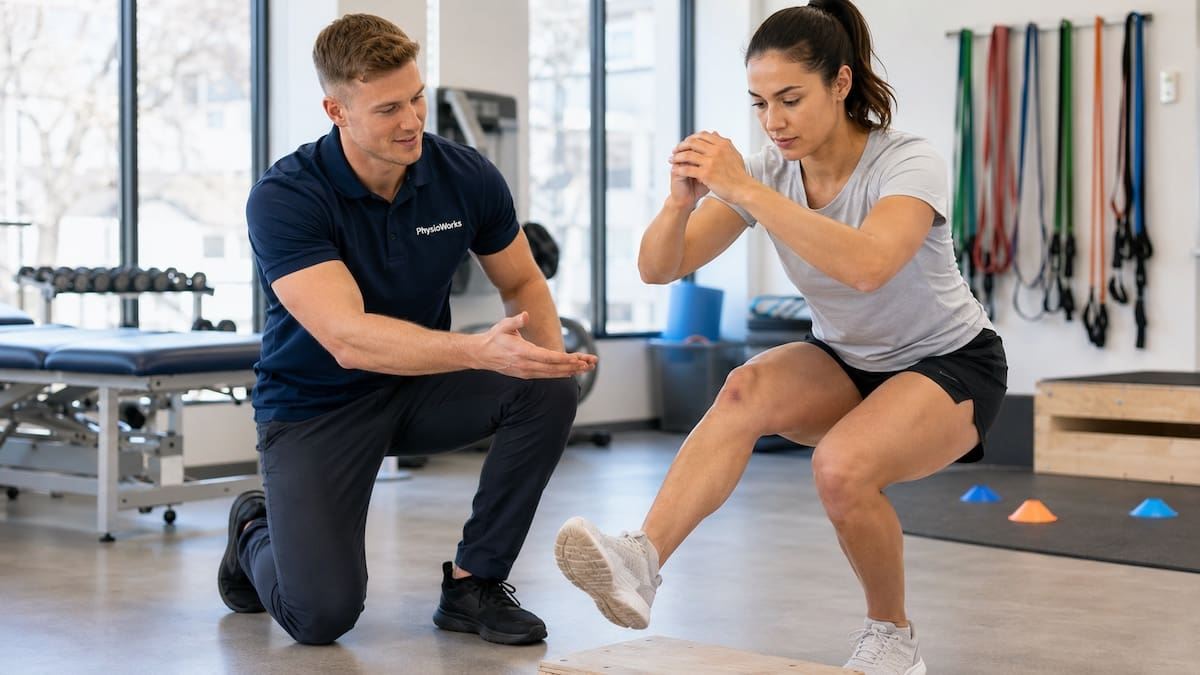
Prehabilitation is a proactive sports physiotherapy approach that helps prepare your body before pain, injury, or training overload interrupts sport. It focuses on movement quality, strength, control, mobility, balance, recovery, and sport-specific load tolerance.
This page supports our broader sports injury physiotherapy and sports injuries cluster. It suits athletes who want to prepare for a season, return after injury, reduce recurring niggles, or build confidence before increasing training.
Quick answer: Prehabilitation uses targeted screening and exercise to find modifiable risk factors before they become painful. A plan may include strength, balance, landing control, mobility, running mechanics, recovery planning, and sport-specific loading.
What Is Prehabilitation?
Prehabilitation is targeted assessment and training designed to improve physical readiness before symptoms start or before a known high-load period. It aims to reduce the gap between what your sport demands and what your body can currently tolerate.
A prehabilitation programme may include:
- movement screening before symptoms affect performance
- sport-specific strength, balance, and control training
- mobility work for stiff or overloaded areas
- landing, deceleration, jumping, cutting, or throwing drills
- training-load planning before a season, race, event, or return to sport
- early identification of modifiable risk factors linked with common sports injuries
Who Benefits From Prehabilitation?
Prehabilitation can suit junior athletes, recreational exercisers, gym users, runners, competitive players, and people returning to sport after time away. It is often useful before pre-season, after a previous injury, during heavier training blocks, or when starting a new programme.
It may be especially helpful if you are preparing for sport that involves repeated sprinting, jumping, landing, throwing, kicking, lifting, or change of direction. Athletes with recurring knee pain, ankle pain, or shoulder pain may also benefit from a structured plan.
When Should You Start Prehabilitation?
You do not need to wait for pain to begin. Prehabilitation often works best when started before a training spike, new season, tournament, race, return-to-running block, or gym progression.
Starting early gives you time to improve strength, movement control, and load tolerance before competition pressure rises. It also gives your physiotherapist time to test, progress, and adjust your plan rather than rushing changes after pain appears.
What Does a Prehabilitation Assessment Include?
A prehabilitation assessment looks at how your body moves, where you may be stiff or weak, how well you control force, and whether your current training load matches your capacity. The goal is not to diagnose pain you do not have. The goal is to identify modifiable factors that may increase injury risk or limit performance efficiency.
Movement and control screening
Your physiotherapist may assess squatting, single-leg control, jumping, landing, balance, trunk control, flexibility, mobility, and sport-specific tasks. For runners, a structured running analysis or gait analysis may help explain repeated loading patterns.
Strength, capacity, and asymmetry testing
Strength testing may compare sides, regions, or sport demands. Your programme may target calf strength, hamstring capacity, hip control, shoulder stability, trunk strength, or tendon loading depending on your sport and injury history.
Training load and recovery review
Many injuries follow sudden changes in workload. Your physiotherapist may review your weekly training, gym work, match load, recovery days, footwear, surface changes, sleep, and competition schedule. This helps shape a realistic plan that fits your life and sport.
What Causes Sports Injuries That Prehabilitation Tries to Reduce?
Sports injuries rarely come from one issue alone. They often occur when training load, recovery, movement quality, strength, and tissue capacity stop matching each other. Prehabilitation aims to reduce these gaps before they become a painful overload problem or an acute injury.
Common contributors include sudden load spikes, reduced strength, poor landing control, fatigue, incomplete recovery, limited mobility, previous injury, equipment changes, footwear changes, or technique issues. In running sports, our running injuries guide explains how repeated load can build into predictable patterns.
Prehabilitation Often Targets
- single-leg strength and balance
- jumping, landing, and deceleration control
- hamstring, calf, hip, trunk, or shoulder capacity
- training load, recovery, and fatigue patterns
- sport-specific movement quality
- confidence after a previous injury
How Does Prehabilitation Help Prevent Sports Injuries?
Prehabilitation helps by improving how your body handles force, fatigue, repetition, and sport-specific movement. A programme may improve strength where you lack capacity, mobility where you are stiff, balance where control is poor, and loading tolerance where tissues are not yet ready for the next step.
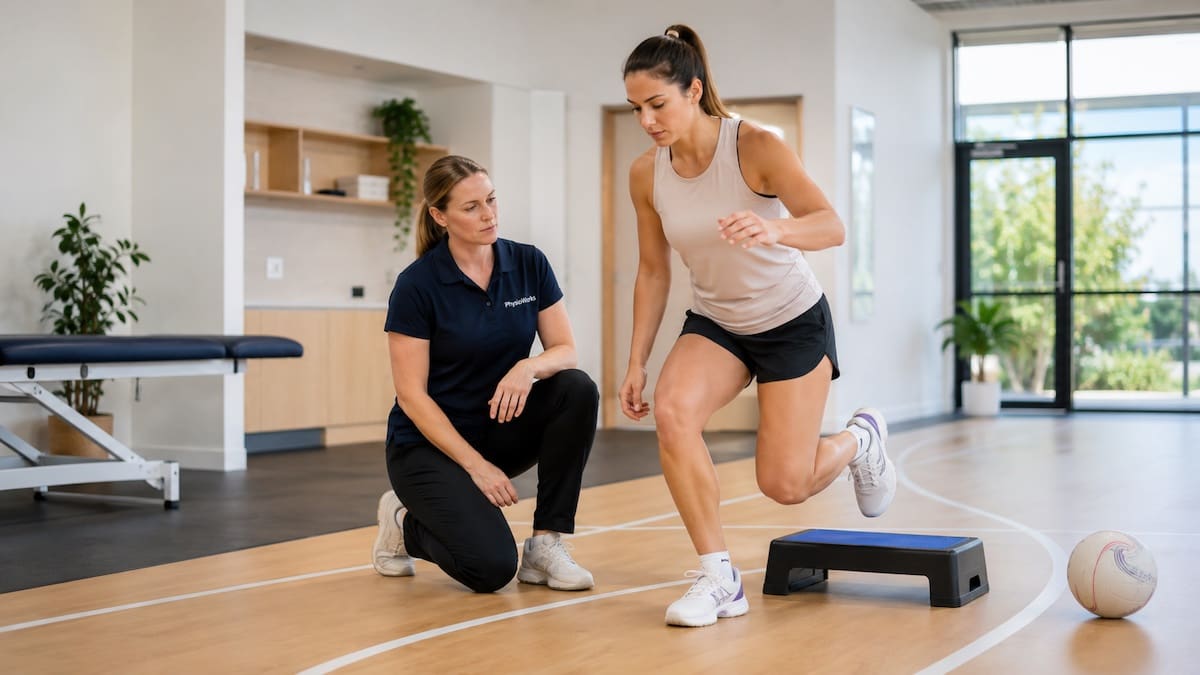
Many programmes use a mix of strength work, balance training, landing drills, deceleration practice, plyometrics, trunk control, hamstring loading, calf strengthening, shoulder stability, and graded sport exposure. A physiotherapist may also link your plan with a broader injury prevention programme when you need a structured block over several weeks.
What Are the Best Exercises for Prehabilitation?
There is no single prehabilitation exercise list that suits everyone. The best exercises depend on your sport, injury history, body region at risk, current strength, training load, and movement demands.
Common examples include:
- single-leg squats, step-downs, split squats, and calf raises
- hamstring loading such as bridges, sliders, or Nordic-style progressions
- hip strength and trunk control exercises
- landing, hopping, cutting, and deceleration drills
- balance, proprioception, and reaction tasks
- rotator cuff and shoulder blade control for overhead sport
- graded running, throwing, lifting, or kicking progressions
If your sport involves pivoting, jumping, or rapid direction change, the ACL injury prevention guide gives a more specific example of how strength, balance, and landing control can be built into training.
How Is Prehabilitation Different From Rehabilitation?
Rehabilitation usually starts after pain or injury. Prehabilitation starts before a problem becomes limiting, or before a known higher-risk period. Both may use similar tools, such as strength work, movement retraining, and load planning, but the timing and goal are different.
| Prehabilitation | Rehabilitation |
|---|---|
| Starts before pain, injury, or a planned load increase. | Starts after pain, injury, surgery, or function loss. |
| Aims to improve readiness and reduce modifiable risk factors. | Aims to restore movement, strength, function, and confidence. |
| Often used before pre-season, races, tournaments, or training spikes. | Often used after a strain, sprain, tendon flare, surgery, or overload injury. |
What Are the Benefits of Prehabilitation?
Potential benefits of prehabilitation include better movement efficiency, improved tissue capacity, fewer recurring overload problems, and more confidence during training. It may also help athletes adapt to new training loads with fewer setbacks.
- better posture, balance, and movement control
- improved strength, endurance, and power
- better proprioception and joint control
- improved tolerance to training and match loads
- reduced risk from modifiable movement or load errors
- more confidence when returning to sport after a previous injury
What Does Research Say About Prehabilitation?
Research on sports injury prevention supports targeted, exercise-based programmes that improve strength, control, landing mechanics, and load tolerance. The strongest programmes tend to be structured, repeated consistently, coached well, and matched to the athlete’s sport and risk profile.
Current research also highlights the importance of programme adherence. A simple programme completed consistently usually works better than a complex programme that athletes stop doing after a few weeks.
Prehabilitation FAQs
What is prehabilitation?
Prehabilitation is targeted assessment and exercise designed to improve physical readiness before symptoms begin or before a planned increase in sport load. It commonly includes movement screening, strength, mobility, balance, and sport-specific conditioning.
Who should consider prehabilitation?
Prehabilitation may suit athletes starting pre-season, returning after injury, increasing training, changing sport, or managing repeated niggles. It can also help active people who want a clearer plan before a race, tournament, gym programme, or high-load training block.
Can prehabilitation prevent every sports injury?
No programme can prevent every sports injury. Sport always carries some risk. However, prehabilitation may reduce modifiable risk factors such as poor control, strength deficits, sudden load spikes, fatigue errors, and incomplete preparation.
How long does a prehabilitation programme take?
Many programmes run for 6 to 12 weeks, then shift into a shorter maintenance plan. The right timeframe depends on your sport, goals, injury history, assessment findings, and training calendar.
Do I need pain before booking a prehabilitation assessment?
No. Many people book before pain begins, especially before a season, event, race, training block, or return to sport. Early assessment can help identify risk factors while you still have time to address them.
What to Do Next
If you are preparing for a season, returning from injury, or trying to reduce recurring sports niggles, consider booking a sports physiotherapy assessment. Bring your sport, position, event date, training schedule, injury history, and any current concerns.
PhysioWorks can help with athlete screening, movement assessment, injury risk profiling, and sport-specific planning. Your physiotherapist can then build a practical prehabilitation plan that matches your sport, body, and training week.
Choose your clinic and appointment pathway
Select a PhysioWorks clinic to continue to live booking, an appointment request or reception assistance.


References
- Castillo D, Raya-González J, Beato M, et al. A systematic review and meta-analysis of various injury prevention programmes in sport. Sports Med Open. 2025.
- Lutz D, Van Den Berg C, Räisänen AM, Shill IJ, Kim J, Vaandering K, Hayden A, Pasanen K, Schneider KJ, Emery CA, Owoeye OBA. Best practices for the dissemination and implementation of neuromuscular training injury prevention warm-ups in youth team sport: a systematic review. Br J Sports Med. 2024;58(11):615-625. doi:10.1136/bjsports-2023-106906
- Jiang T, Zhang M, Wang Z, et al. The effects of integrative neuromuscular training on injury risk and athletic performance in athletes: a systematic review and meta-analysis. BMC Sports Sci Med Rehabil. 2026;18(1):115. doi:10.1186/s13102-026-01549-4
- Al Attar WSA, Soomro N, Sinclair PJ, Pappas E, Sanders RH. Injury prevention programs that include plyometric exercises reduce the incidence of anterior cruciate ligament injury: a systematic review of cluster randomised trials. J Physiother. 2022;68(4):255-261. doi:10.1016/j.jphys.2022.09.001
- van Dyk N, Behan FP, Whiteley R. Including the Nordic hamstring exercise in injury prevention programmes halves the rate of hamstring injuries: a systematic review and meta-analysis of 8459 athletes. Br J Sports Med. 2019;53(21):1362-1370. doi:10.1136/bjsports-2018-100045
