
Closed Kinetic Chain Exercises
Closed kinetic chain exercises keep the working hand or foot in contact with a stable surface while the body moves. Squats, step-ups, wall presses and push-ups are common examples.



What is a closed kinetic chain exercise?
A closed kinetic chain exercise, also called a closed-chain or CKC exercise, keeps the end of the moving limb in contact with a surface. For the legs, this usually means that the foot stays planted on the floor, a step or a machine platform. For the arms, the hand may stay against a wall, bench or floor.
The body then moves around that fixed contact point. Several joints commonly move at the same time, while muscles work together to produce and control the movement.
For example, during a squat, the feet remain on the floor while the ankles, knees and hips bend and straighten. During a push-up, the hands remain on the floor while the elbows, shoulders and shoulder blades control the body.
What is the difference between open-chain and closed-chain exercises?
Closed kinetic chain
The hand or foot remains against a surface while the body moves. Examples include squats, step-ups, push-ups and wall presses.
Open kinetic chain
The hand or foot moves freely through space. Examples include seated knee extensions, hamstring curls, biceps curls and straight-leg raises.
Neither category is always better. Closed-chain exercises can help train coordinated weight-bearing movement. Meanwhile, open-chain exercises can target a particular muscle, movement direction or part of a joint’s range.
A rehabilitation program may use both types at different loads, ranges and stages. Exercise selection should reflect the injury, symptoms, surgery, healing stage and functional goal.
What are examples of closed kinetic chain exercises?
Lower-limb exercises
- Sit-to-stands
- Squats and supported squats
- Wall sits
- Step-ups and controlled step-downs
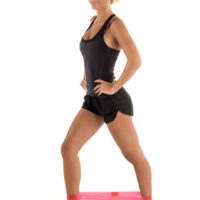
- Lunges and split squats
- Leg press exercises
- Calf raises
- Bridges with the feet supported
- Landing and hopping exercises
Upper-limb exercises
- Wall presses
- Weight shifts through the hands
- Incline push-ups
- Floor push-ups
- Planks and modified planks
- Four-point kneeling exercises
- Controlled ball or bench-supported exercises
Why do physiotherapists use closed-chain exercises?
Closed-chain exercises can provide a useful way to practise force production and movement control through several connected joints. Depending on the exercise, they may help a person work towards activities such as standing from a chair, climbing stairs, lifting, pushing, running or landing.
A physiotherapist may use them to:
- build strength through a functional movement pattern;
- improve balance and control while weight-bearing;
- develop confidence loading an arm or leg;
- train several muscle groups together;
- prepare for work, recreation or sport; or
- progress from supported to less-supported movement.
However, the term “closed chain” does not tell you whether an exercise is safe, suitable or effective by itself. Load, range, speed, technique, support and timing also matter.
When might closed-chain exercises be included?
Knee rehabilitation
Squats, sit-to-stands, step exercises and leg press variations may help restore lower-limb strength and control. They commonly form one part of rehabilitation for knee pain, osteoarthritis and ligament injuries.
Research does not show that closed-chain exercise should replace open-chain strengthening. A 2024 systematic review of anterior cruciate ligament rehabilitation found mixed results and low to very low certainty across the available comparisons. A balanced program may use both approaches.
Hip, ankle and foot rehabilitation
Supported squats, step tasks, calf raises and balance exercises can progressively expose the hip, knee, ankle and foot to weight-bearing load. The chosen exercise should match the affected tissue and the person’s current tolerance.
Shoulder, elbow and wrist rehabilitation
Wall presses, four-point kneeling and supported weight shifts can introduce controlled loading through the arm. Progression may involve changing the angle, support surface, movement range or amount of body weight.
Following a fracture or surgery, loading should only begin when it is appropriate for healing and any medical restrictions.
Return to running and sport
Later-stage closed-chain exercises may include single-leg squats, landing drills, hopping and change-of-direction tasks. These exercises require adequate strength, movement control and preparation for the demands of the activity.
Are closed-chain exercises better for knee rehabilitation?
Not necessarily. The best program depends on the condition and the required outcome.
Closed-chain exercises can train weight-bearing tasks such as squatting and stepping. Open-chain exercises can provide a direct way to strengthen muscles such as the quadriceps. In some situations, open-chain exercise may produce a stronger isolated muscle stimulus than a closed-chain exercise.
For knee osteoarthritis, a 2025 systematic review found that closed-chain programs may improve pain and function compared with no exercise or some conventional programs. However, the authors rated the overall evidence as low quality. These findings support closed-chain exercise as an option rather than proving that it is the best approach for every person.
How can you start closed-chain exercises safely?
-
Choose a manageable starting position
Use a wall, rail, bench or higher seat when you need additional support or a smaller movement range.
-
Use a tolerable range
Start within a range that you can control. Do not force depth or joint position simply to make the exercise look more advanced.
-
Control the movement
Move at a speed that allows you to maintain balance and a comfortable path through the movement.
-
Progress one main variable
Increase the repetitions, range, resistance, speed or complexity gradually rather than changing everything at once.
-
Review the response
Mild short-lived symptoms may be acceptable in some rehabilitation programs. Reduce the dose and seek advice when pain becomes sharp, continues to rise, causes swelling or instability, disrupts normal function, or does not settle as expected.
What technique should you use?
There is no single ideal position for every person or exercise. Technique should match your anatomy, symptoms, movement goal and available range.
Useful general principles include:
- keep the working hand or foot securely supported;
- use a stable stance and suitable footwear where required;
- keep the movement smooth enough to control;
- avoid forcing the knees, elbows or feet into a rigid position;
- breathe normally during light-to-moderate exercise;
- use support when balance or confidence is limited; and
- stop when the exercise produces unexpected pain, giving way or loss of control.
When should you get professional advice?
Consider a physiotherapy assessment when you are unsure which exercise suits your condition, have recently had surgery or a fracture, or need to return to demanding work or sport.
Assessment may also help when:
- pain or swelling continues to increase;
- a joint catches, locks or repeatedly gives way;
- you cannot comfortably bear weight through the arm or leg;
- strength or function is not improving;
- you have medical or post-operative loading restrictions; or
- you need a staged progression for running, jumping or sport.
Frequently asked questions
What is a closed kinetic chain exercise?
A closed kinetic chain exercise keeps the working hand or foot in contact with a stable surface while other parts of the body move. Squats, step-ups, wall presses and push-ups are common examples.
Are closed-chain exercises better than open-chain exercises?
No exercise category is always better. Closed-chain exercises can train coordinated weight-bearing movement, while open-chain exercises can target a particular muscle or joint movement. Many rehabilitation programs use both.
Are closed kinetic chain exercises safe for knee pain?
They may be appropriate when the exercise, range and load match the cause and irritability of the knee pain. Reduce the exercise and seek advice if pain rises sharply, swelling develops, the knee gives way or normal function worsens.
What are some lower-limb closed-chain exercises?
Examples include sit-to-stands, squats, wall sits, step-ups, lunges, leg press exercises, calf raises and bridges with the feet supported.
What are some upper-limb closed-chain exercises?
Examples include wall presses, supported weight shifts, incline push-ups, floor push-ups, planks and four-point kneeling exercises.
How often should you do closed-chain exercises?
Frequency depends on the exercise intensity, condition, training goal and recovery response. Strength exercises are often completed two or three times per week, although lighter rehabilitation exercises may be prescribed more frequently.
References
- Pamboris GM, Pavlou K, Paraskevopoulos E, Mohagheghi AA. Effect of open versus closed kinetic chain exercises in ACL rehabilitation on knee joint pain, laxity, extensor muscle strength and function: a systematic review with meta-analysis. Frontiers in Sports and Active Living. 2024;6:1416690. doi:10.3389/fspor.2024.1416690.
- Fadil A, Muaidi QI, Alayat MS, et al. The effectiveness of closed kinetic chain exercises in individuals with knee osteoarthritis: a systematic review and meta-analysis. PLoS One. 2025;20(5):e0322475. doi:10.1371/journal.pone.0322475.
- Menek B, Dansuk E. Investigating the effects of closed kinetic chain exercises on joint position sense, functionality, range of motion and pain in individuals with distal radius fracture: a randomised controlled trial. BMC Sports Science, Medicine and Rehabilitation. 2025;17:137. doi:10.1186/s13102-025-01195-2.
What to do next
Choose a closed-chain exercise that matches your current strength, symptoms and goal. Start with enough support to control the movement, then increase the range, resistance or complexity gradually.
A physiotherapist can assess your movement, determine whether open-chain, closed-chain or combined strengthening is most appropriate, and provide a progression for daily activity, work or sport.
Choose your clinic and appointment pathway
Select a PhysioWorks clinic to continue to live booking, an appointment request or reception assistance.
Muscle & Soft Tissue Products
These muscle and soft tissue products are commonly used by our physiotherapists to relax or loosen muscles, improve strength, comfort, flexibility, and home exercise programs.
-
-
- EMS Machines, Pain Management, TENS Machine, TENS Machine & EMS
NeuroTrac Rehab (TENS Machine + EMS)
$285.00Add to cartQuick View -
-
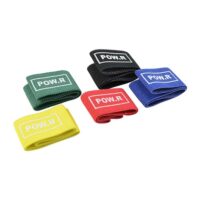 Exercise Equipment, Knee, Resistance Band
POW.R Fabric Mini Loop Bands
$12.00 – $55.00Select optionsQuick View -
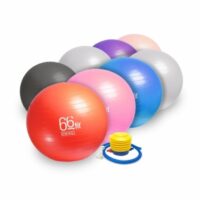
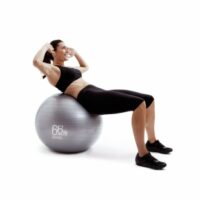 Exercise Balls, Back, Exercise Equipment, Knee, Shoulder
66fit Exercise Balls | Core & Rehab Stability Ball
$32.00 – $57.00Select optionsQuick View -
-
-


-
-
 Exercise Equipment, Resistance Band
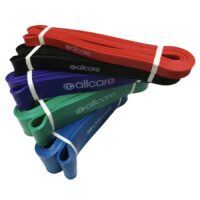
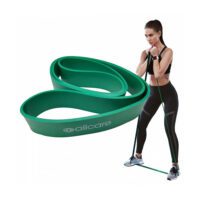
AllCare Powerloop Bands
$24.95 – $79.95Select optionsQuick View -
- Liniments & Gels, Massage Liniments, Pain Management
Fisiocrem
$16.95 – $39.95Select optionsQuick View -












Closed Kinetic Chain Exercises
Closed kinetic chain exercises keep the working hand or foot in contact with a stable surface while the body moves. Squats, step-ups, wall presses and push-ups are common examples.
What is a closed kinetic chain exercise?
A closed kinetic chain exercise, also called a closed-chain or CKC exercise, keeps the end of the moving limb in contact with a surface. For the legs, this usually means that the foot stays planted on the floor, a step or a machine platform. For the arms, the hand may stay against a wall, bench or floor.
The body then moves around that fixed contact point. Several joints commonly move at the same time, while muscles work together to produce and control the movement.
For example, during a squat, the feet remain on the floor while the ankles, knees and hips bend and straighten. During a push-up, the hands remain on the floor while the elbows, shoulders and shoulder blades control the body.
What is the difference between open-chain and closed-chain exercises?
Closed kinetic chain
The hand or foot remains against a surface while the body moves. Examples include squats, step-ups, push-ups and wall presses.
Open kinetic chain
The hand or foot moves freely through space. Examples include seated knee extensions, hamstring curls, biceps curls and straight-leg raises.
Neither category is always better. Closed-chain exercises can help train coordinated weight-bearing movement. Meanwhile, open-chain exercises can target a particular muscle, movement direction or part of a joint’s range.
A rehabilitation program may use both types at different loads, ranges and stages. Exercise selection should reflect the injury, symptoms, surgery, healing stage and functional goal.
What are examples of closed kinetic chain exercises?
Lower-limb exercises
- Sit-to-stands
- Squats and supported squats
- Wall sits
- Step-ups and controlled step-downs
- Lunges and split squats
- Leg press exercises
- Calf raises
- Bridges with the feet supported
- Landing and hopping exercises
Upper-limb exercises
- Wall presses
- Weight shifts through the hands
- Incline push-ups
- Floor push-ups
- Planks and modified planks
- Four-point kneeling exercises
- Controlled ball or bench-supported exercises
Why do physiotherapists use closed-chain exercises?
Closed-chain exercises can provide a useful way to practise force production and movement control through several connected joints. Depending on the exercise, they may help a person work towards activities such as standing from a chair, climbing stairs, lifting, pushing, running or landing.
A physiotherapist may use them to:
- build strength through a functional movement pattern;
- improve balance and control while weight-bearing;
- develop confidence loading an arm or leg;
- train several muscle groups together;
- prepare for work, recreation or sport; or
- progress from supported to less-supported movement.
However, the term “closed chain” does not tell you whether an exercise is safe, suitable or effective by itself. Load, range, speed, technique, support and timing also matter.
When might closed-chain exercises be included?
Knee rehabilitation
Squats, sit-to-stands, step exercises and leg press variations may help restore lower-limb strength and control. They commonly form one part of rehabilitation for knee pain, osteoarthritis and ligament injuries.
Research does not show that closed-chain exercise should replace open-chain strengthening. A 2024 systematic review of anterior cruciate ligament rehabilitation found mixed results and low to very low certainty across the available comparisons. A balanced program may use both approaches.
Hip, ankle and foot rehabilitation
Supported squats, step tasks, calf raises and balance exercises can progressively expose the hip, knee, ankle and foot to weight-bearing load. The chosen exercise should match the affected tissue and the person’s current tolerance.
Shoulder, elbow and wrist rehabilitation
Wall presses, four-point kneeling and supported weight shifts can introduce controlled loading through the arm. Progression may involve changing the angle, support surface, movement range or amount of body weight.
Following a fracture or surgery, loading should only begin when it is appropriate for healing and any medical restrictions.
Return to running and sport
Later-stage closed-chain exercises may include single-leg squats, landing drills, hopping and change-of-direction tasks. These exercises require adequate strength, movement control and preparation for the demands of the activity.
Are closed-chain exercises better for knee rehabilitation?
Not necessarily. The best program depends on the condition and the required outcome.
Closed-chain exercises can train weight-bearing tasks such as squatting and stepping. Open-chain exercises can provide a direct way to strengthen muscles such as the quadriceps. In some situations, open-chain exercise may produce a stronger isolated muscle stimulus than a closed-chain exercise.
For knee osteoarthritis, a 2025 systematic review found that closed-chain programs may improve pain and function compared with no exercise or some conventional programs. However, the authors rated the overall evidence as low quality. These findings support closed-chain exercise as an option rather than proving that it is the best approach for every person.
How can you start closed-chain exercises safely?
-
Choose a manageable starting position
Use a wall, rail, bench or higher seat when you need additional support or a smaller movement range.
-
Use a tolerable range
Start within a range that you can control. Do not force depth or joint position simply to make the exercise look more advanced.
-
Control the movement
Move at a speed that allows you to maintain balance and a comfortable path through the movement.
-
Progress one main variable
Increase the repetitions, range, resistance, speed or complexity gradually rather than changing everything at once.
-
Review the response
Mild short-lived symptoms may be acceptable in some rehabilitation programs. Reduce the dose and seek advice when pain becomes sharp, continues to rise, causes swelling or instability, disrupts normal function, or does not settle as expected.
What technique should you use?
There is no single ideal position for every person or exercise. Technique should match your anatomy, symptoms, movement goal and available range.
Useful general principles include:
- keep the working hand or foot securely supported;
- use a stable stance and suitable footwear where required;
- keep the movement smooth enough to control;
- avoid forcing the knees, elbows or feet into a rigid position;
- breathe normally during light-to-moderate exercise;
- use support when balance or confidence is limited; and
- stop when the exercise produces unexpected pain, giving way or loss of control.
When should you get professional advice?
Consider a physiotherapy assessment when you are unsure which exercise suits your condition, have recently had surgery or a fracture, or need to return to demanding work or sport.
Assessment may also help when:
- pain or swelling continues to increase;
- a joint catches, locks or repeatedly gives way;
- you cannot comfortably bear weight through the arm or leg;
- strength or function is not improving;
- you have medical or post-operative loading restrictions; or
- you need a staged progression for running, jumping or sport.
Frequently asked questions
What is a closed kinetic chain exercise?
A closed kinetic chain exercise keeps the working hand or foot in contact with a stable surface while other parts of the body move. Squats, step-ups, wall presses and push-ups are common examples.
Are closed-chain exercises better than open-chain exercises?
No exercise category is always better. Closed-chain exercises can train coordinated weight-bearing movement, while open-chain exercises can target a particular muscle or joint movement. Many rehabilitation programs use both.
Are closed kinetic chain exercises safe for knee pain?
They may be appropriate when the exercise, range and load match the cause and irritability of the knee pain. Reduce the exercise and seek advice if pain rises sharply, swelling develops, the knee gives way or normal function worsens.
What are some lower-limb closed-chain exercises?
Examples include sit-to-stands, squats, wall sits, step-ups, lunges, leg press exercises, calf raises and bridges with the feet supported.
What are some upper-limb closed-chain exercises?
Examples include wall presses, supported weight shifts, incline push-ups, floor push-ups, planks and four-point kneeling exercises.
How often should you do closed-chain exercises?
Frequency depends on the exercise intensity, condition, training goal and recovery response. Strength exercises are often completed two or three times per week, although lighter rehabilitation exercises may be prescribed more frequently.
References
- Pamboris GM, Pavlou K, Paraskevopoulos E, Mohagheghi AA. Effect of open versus closed kinetic chain exercises in ACL rehabilitation on knee joint pain, laxity, extensor muscle strength and function: a systematic review with meta-analysis. Frontiers in Sports and Active Living. 2024;6:1416690. doi:10.3389/fspor.2024.1416690.
- Fadil A, Muaidi QI, Alayat MS, et al. The effectiveness of closed kinetic chain exercises in individuals with knee osteoarthritis: a systematic review and meta-analysis. PLoS One. 2025;20(5):e0322475. doi:10.1371/journal.pone.0322475.
- Menek B, Dansuk E. Investigating the effects of closed kinetic chain exercises on joint position sense, functionality, range of motion and pain in individuals with distal radius fracture: a randomised controlled trial. BMC Sports Science, Medicine and Rehabilitation. 2025;17:137. doi:10.1186/s13102-025-01195-2.
What to do next
Choose a closed-chain exercise that matches your current strength, symptoms and goal. Start with enough support to control the movement, then increase the range, resistance or complexity gradually.
A physiotherapist can assess your movement, determine whether open-chain, closed-chain or combined strengthening is most appropriate, and provide a progression for daily activity, work or sport.
Choose your clinic and appointment pathway
Select a PhysioWorks clinic to continue to live booking, an appointment request or reception assistance.
Muscle & Soft Tissue Products
These muscle and soft tissue products are commonly used by our physiotherapists to relax or loosen muscles, improve strength, comfort, flexibility, and home exercise programs.
- Liniments & Gels, Massage Liniments, Pain Management
Fisiocrem
$16.95 – $39.95Select optionsQuick View -
-
-
- EMS Machines, Pain Management, TENS Machine, TENS Machine & EMS
NeuroTrac Rehab (TENS Machine + EMS)
$285.00Add to cartQuick View -
- Exercise Equipment, Resistance Band
AllCare Powerloop Bands
$24.95 – $79.95Select optionsQuick View -
-
- Exercise Balls, Back, Exercise Equipment, Knee, Shoulder
66fit Exercise Balls | Core & Rehab Stability Ball
$32.00 – $57.00Select optionsQuick View -
-
-
- Exercise Equipment, Knee, Resistance Band
POW.R Fabric Mini Loop Bands
$12.00 – $55.00Select optionsQuick View
