
Water Polo Injuries


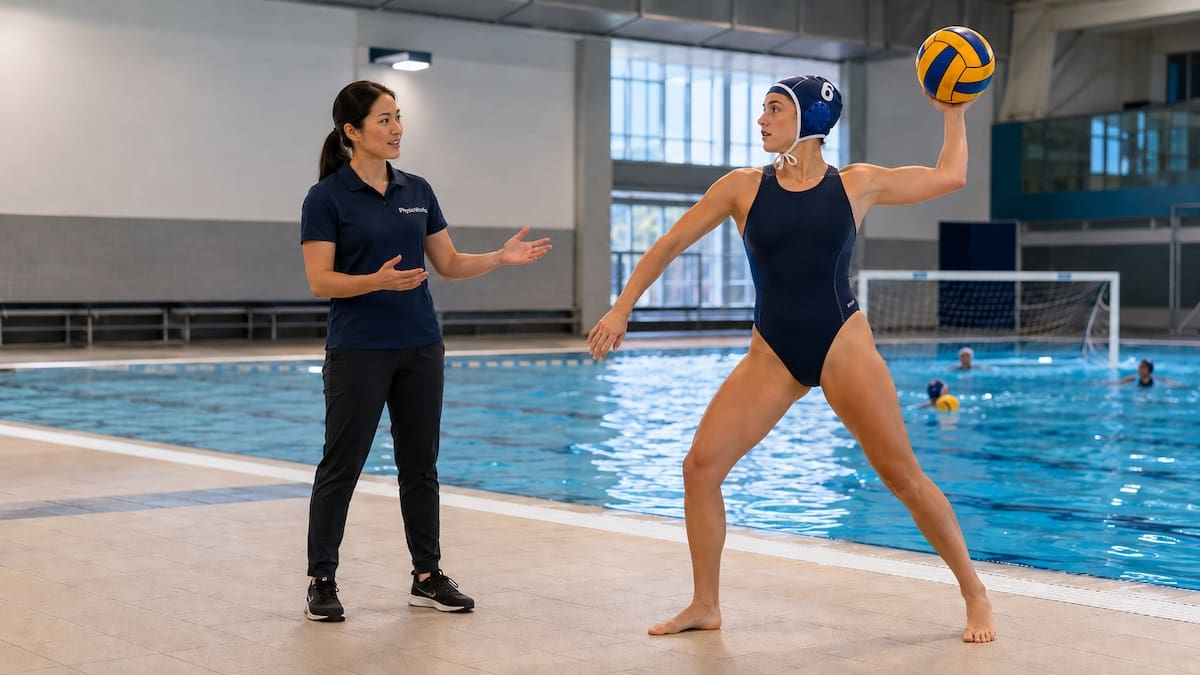
Shoulder and throwing assessment for a water polo player.
Water polo injuries may happen suddenly through contact or build gradually through repeated swimming, throwing and eggbeater kicking. Common problem areas include the shoulder, hip and groin, head and face, hand and wrist, neck and lower back.
Water polo combines swimming endurance with overhead throwing, rapid changes of direction and physical contact. Explore the broader water sports injuries guide or start with our shoulder pain information if overhead movement is your main concern.
Water Polo Injury Quick Answer
- Most common overuse area: shoulder and rotator cuff.
- Important lower-body area: hip and groin during eggbeater kicking.
- Common acute injuries: concussion, facial impact and finger injuries.
- Key risk periods: sudden training increases, tournaments and returning after time off.
- Consider assessment when: pain persists, strength drops or training repeatedly causes a flare-up.
Why Does Water Polo Cause Injuries?
Water polo places unusual demands on the whole body. Players must tread water continuously, elevate themselves to pass or shoot, swim with their head raised and hold position while opponents push or pull against them.
The eggbeater kick provides the stable base used for throwing, blocking and defending. This repeated circular movement loads the hip flexors, adductors and structures around the hip joint. Meanwhile, the shoulder must produce fast overhead movement without the stable ground contact available in land-based throwing sports.
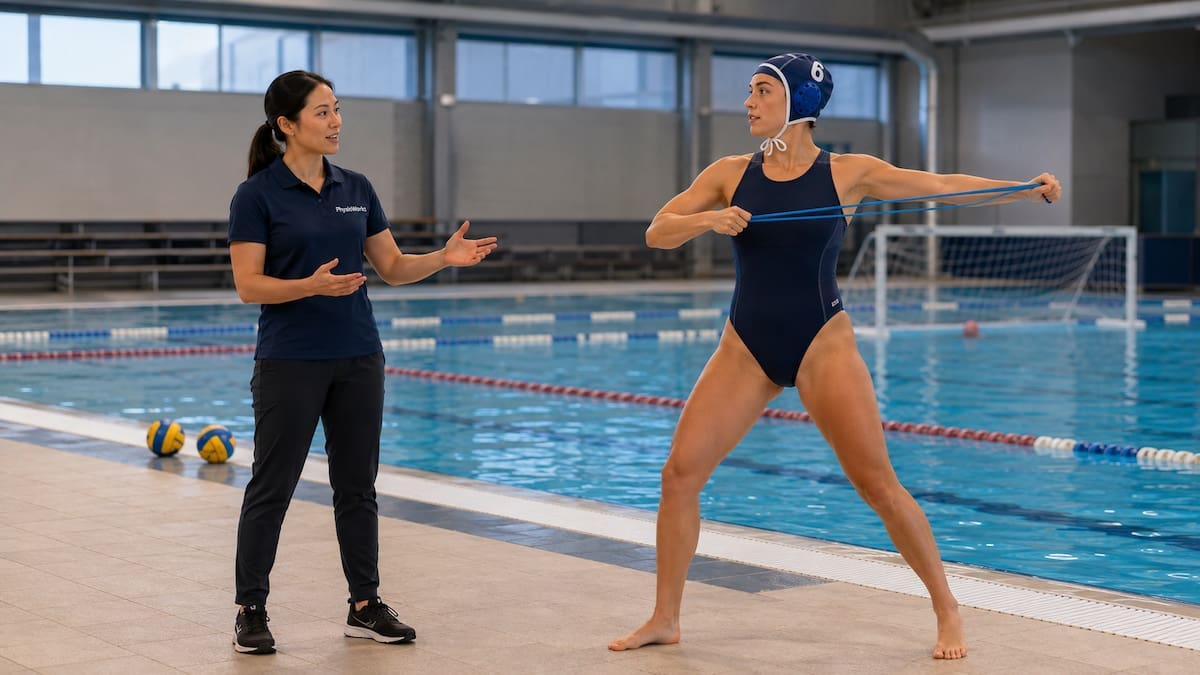
Overhead shooting loads the shoulder, trunk and hips.
Injury risk may increase when players experience:
- Rapid training increases: extra swim sets, shooting drills, camps or tournaments.
- Repeated overhead loading: high passing and shooting volume without enough recovery.
- Fatigue: reduced leg and trunk control may force the shoulder and neck to work harder.
- Physical contact: grappling, blocked shots, ball impact and unexpected collisions.
- Previous injuries: unresolved shoulder, hip, neck or hand problems may return during heavy training.
- Limited strength or movement control: reduced capacity may affect throwing, treading and contact tolerance.
Who Is More Likely to Develop a Water Polo Injury?
Water polo injuries affect junior, recreational and competitive players. However, the injury pattern can vary with playing position, experience, training volume and competition schedule.
- Competitive players face more weekly throwing, swimming and contact exposure.
- Goalkeepers may experience repeated overhead blocking and ball impacts.
- Returning players may have reduced tolerance after illness, injury or an off-season break.
- Junior athletes may be exposed to high training demands while strength and movement capacity are still developing.
- Players with previous injuries may have a greater risk of recurring shoulder or hip symptoms.
Pain can affect shot speed, accuracy, defensive position and confidence even when it does not force a player to miss a match.
What Are the Most Common Water Polo Injuries?
Shoulder Pain and Rotator Cuff Overload
The shoulder is one of the most frequently affected areas in water polo. Swimming, passing, shooting and contact may place repeated load on the rotator cuff, shoulder tendons, bursa and stabilising structures.
Players may notice pain during the throwing phase, reduced shot power, pain after training or a heavy “dead arm” feeling. Related information includes swimmer’s shoulder and our shoulder pain guide.
Hip and Groin Pain
The continuous eggbeater kick requires repeated hip rotation, abduction and adductor activity. Symptoms may develop around the groin, inner thigh, front of the hip or deeper within the hip joint.
Pain may become more noticeable during prolonged treading, breaststroke-style kicking, shooting or holding position against contact. Learn more about groin pain and hip adductor tendinopathy.
Concussion and Head or Facial Injuries
Ball impact, contact with another player and unexpected blows can cause facial injuries or concussion. Symptoms may include headache, dizziness, confusion, nausea, blurred vision, balance problems or feeling unusually slowed down.
A player with suspected concussion should stop playing and receive an appropriate medical assessment. Do not return to the pool on the same day. Follow a structured concussion return-to-sport process.
Finger, Hand and Wrist Injuries
Finger jams, sprains, dislocations and fractures may occur while catching, blocking or competing for the ball. Wrist pain may also develop after repeated ball handling or direct impact.
Seek prompt assessment when a finger looks deformed, movement is severely restricted or swelling and bruising develop quickly. See our hand and wrist pain information.
Neck Pain
Head-up swimming, rapid scanning and physical contact may overload the joints and muscles of the neck. Players may notice stiffness, pain when turning, headaches or discomfort that builds during longer sessions.
Persistent symptoms may require assessment to distinguish local muscle or joint pain from concussion or nerve-related symptoms. Read more about neck pain.
Lower Back Pain
Repeated trunk extension and rotation occur during shooting, defending and elevated treading positions. Fatigue through the hips and trunk may increase stress on the lower back.
Symptoms may relate to muscular overload, joint irritation or reduced tolerance to repeated extension and rotation. See the back pain guide for further information.
Knee Pain
The eggbeater kick can place repeated rotational and side-to-side stress through the knee. Some players develop irritation around the kneecap or inner knee, especially after sudden increases in treading volume.
Knee pain that persists, swells or affects kicking should be assessed. Visit the knee pain hub for related conditions.
How Are Water Polo Injuries Assessed?
A physiotherapy assessment begins with the injury history, symptom behaviour and recent changes in training. Your physiotherapist may also ask about playing position, shooting volume, gym training, previous injuries and upcoming competition demands.
Assessment may include:
- shoulder movement, rotator cuff strength and shoulder blade control
- throwing position, trunk rotation and overhead movement tolerance
- hip movement, adductor strength and eggbeater-related loading
- neck and trunk movement
- hand, wrist or finger stability after contact
- functional strength and endurance
- sport-specific tasks and return-to-training readiness
Imaging is not required for every water polo injury. However, your physiotherapist or doctor may recommend an X-ray, ultrasound, MRI or another investigation when the result is likely to change management.
How Can Physiotherapy Help Water Polo Injuries?
Sports injury physiotherapy may help identify aggravating loads, restore movement and strength, and guide a structured return to training.
Management may include:
- Load modification: adjusting swimming, shooting, contact and gym volume without unnecessary complete rest.
- Pain and movement management: advice, exercise and hands-on treatment where appropriate.
- Shoulder rehabilitation: rotator cuff endurance, shoulder blade control and progressive overhead loading.
- Hip and groin rehabilitation: adductor, hip flexor, gluteal and trunk strengthening.
- Throwing progression: gradual increases in passing distance, shot speed and total repetitions.
- Pool reconditioning: staged swimming, treading and contact exposure.
- Return-to-sport planning: progression based on symptoms, strength, movement and training tolerance.
An Accredited Exercise Physiologist may also help with longer-term conditioning, aerobic fitness, repeated-effort capacity and structured gym programming. Learn more about Exercise Physiology.
Massage may provide short-term support for muscle tension or post-training soreness. However, active rehabilitation and load planning remain important when pain repeatedly returns. See the PhysioWorks massage services guide.
When Should You Seek Assessment?
Consider a physiotherapy or medical assessment when you notice:
- pain that persists across several sessions or repeatedly returns
- reduced shot power, control or shoulder endurance
- a “dead arm”, weakness or instability during overhead movement
- hip or groin pain that limits eggbeater kicking
- significant swelling, bruising or sharp pain after contact
- a finger or joint that looks deformed
- pain that affects sleep or everyday activity
- recurring symptoms whenever training volume rises
Early assessment may help identify the aggravating loads and guide a safer, more structured return to water polo.
Seek Urgent Medical Care
Seek urgent medical care after a significant head or neck impact, loss of consciousness, worsening confusion, repeated vomiting, severe headache, increasing drowsiness, seizure, new weakness or numbness, breathing difficulty, or a visibly deformed joint.
How Can Water Polo Injuries Be Prevented?
No prevention plan can remove every injury risk. However, progressive training and targeted strength work may improve your ability to tolerate water polo demands.
- Increase shooting gradually: avoid sudden jumps in passing and high-speed shot numbers.
- Build shoulder endurance: train the rotator cuff and shoulder blade muscles for repeated overhead work.
- Strengthen the hips and groin: include adductor, gluteal and hip-control exercises throughout the season.
- Train trunk control: improve your ability to transfer force between the legs, trunk and throwing arm.
- Prepare for contact: develop body-position control during progressively more challenging drills.
- Monitor total load: consider pool sessions, gym work, matches, camps and other sports together.
- Allow recovery: use lighter sessions, suitable sleep and nutrition to support adaptation.
- Address recurring symptoms: do not wait until pain significantly changes your stroke or shot.
Shoulder programs may include exercises from our rotator cuff exercise guide. Exercise choice and loading should still match your symptoms, stage and playing demands.
How Do You Return Safely to Water Polo?
A safe return should progress from controlled activity to normal competition demands. Time alone does not confirm readiness.
- Restore comfortable movement: regain the movement needed for swimming, treading and throwing.
- Rebuild strength: improve shoulder, trunk, hip and groin capacity.
- Resume pool conditioning: begin with controlled swimming and low-intensity treading.
- Add ball work: progress passing distance, speed and total repetitions.
- Reintroduce shooting: increase shot power and volume gradually.
- Add contact drills: restore tolerance to defending, grappling and match positioning.
- Return to full training: complete normal sessions before returning to unrestricted competition.
Monitor symptoms during the session and again the next day. Increasing pain, swelling, weakness or reduced performance may mean the current step is too demanding.
Return-to-Water-Polo Check
- Progress: symptoms stay mild and settle by the next day.
- Modify: pain builds as shooting, treading or contact volume increases.
- Stop and assess: pain is sharp, strength drops, swelling appears or symptoms affect technique.
Return-to-sport testing may help assess strength, movement, fitness and confidence when an injury has caused a longer interruption.
Water Polo Injuries FAQs
Why do water polo players get shoulder pain?
Water polo combines repeated overhead throwing with swimming and physical contact. These demands can overload the rotator cuff and shoulder stability tissues, particularly when shooting volume rises quickly or technique changes during fatigue.
Is hip and groin pain common in water polo?
Hip and groin pain is common among water polo players. The eggbeater kick requires repeated hip rotation and adductor activity. Symptoms may become more noticeable during long treading sets, shooting and position-holding drills.
Can water polo cause neck pain?
Water polo can contribute to neck pain through head-up swimming, rapid scanning, overhead movement and contact. Assessment is important when neck pain follows a significant impact or occurs with headache, dizziness, numbness or weakness.
What should I do if I suspect concussion?
Stop playing immediately and arrange an appropriate medical assessment. Do not return to the pool on the same day. A staged return should begin only after symptoms and clinical findings have been reviewed.
How long do water polo injuries take to recover?
Recovery depends on the injured area, severity, symptom duration and training demands. A mild overload may improve over days or weeks. Longer-standing shoulder, hip or groin problems may need several weeks or months of structured rehabilitation.
Can I keep training with a water polo injury?
Some players can continue modified training, depending on the injury and symptoms. This may involve reducing shooting, contact or treading volume while maintaining suitable conditioning. Significant pain, weakness, swelling or concussion symptoms require assessment before continuing.
What To Do Next
If a water polo injury is limiting your training, throwing or confidence, a physiotherapist can assess the problem and help plan your next steps. Rehabilitation can then progress towards swimming, eggbeater kicking, shooting, contact drills and competition demands.
Choose your clinic and appointment pathway
Select a PhysioWorks clinic to continue to live booking, an appointment request or reception assistance.


References
- Croteau F, Brown H, Pearsall D, Robbins SM. Prevalence and mechanisms of injuries in water polo: a systematic review. BMJ Open Sport Exerc Med. 2021;7(2):e001081. doi:10.1136/bmjsem-2021-001081.
- Girdwood M, Webster M. Quantifying the burden of shoulder and hip pain in water polo players across different playing levels. Int J Sports Phys Ther. 2021;16(1):57-63.
- Schroeder GG, McClintick DJ, Trikha R, Kremen TJ Jr. Injuries affecting intercollegiate water polo athletes: a descriptive epidemiologic study. Orthop J Sports Med. 2022;10(7):23259671221110208. doi:10.1177/23259671221110208.
- Croteau F, Leclerc S, Moroz M. Incidence of concussions in elite female water polo: a retrospective analysis. Clin J Sport Med. 2023;33(6):e181-e185. doi:10.1097/JSM.0000000000001194.
- Croteau F, Paradelo D, Pearsall D, Robbins S. Risk factors for shoulder injuries in water polo: a cohort study. Int J Sports Phys Ther. 2021;16(4):1135-1144. doi:10.26603/001c.25432.