
Dementia Exercise, Mobility & Falls Prevention


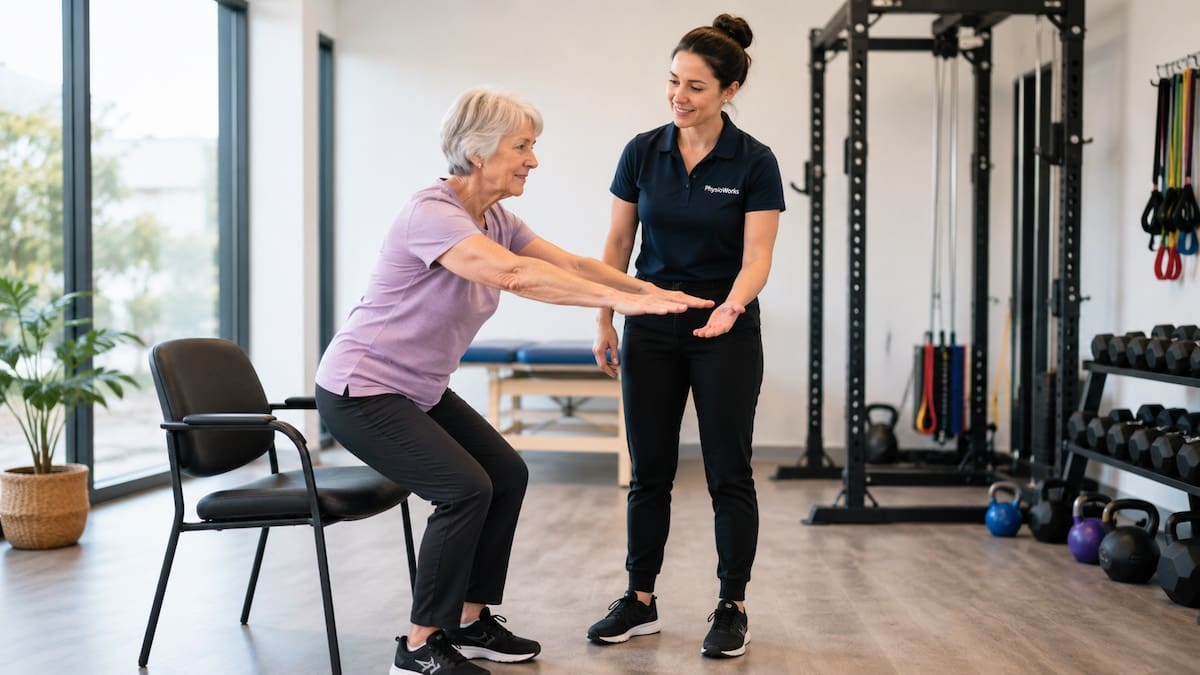
Dementia exercise can help support walking, balance, strength, confidence and daily function. Dementia affects memory, thinking, behaviour and day-to-day activity. It can also make movement less safe. For many people, the right exercise plan can help reduce inactivity and support independence.
At PhysioWorks, dementia care may involve exercise physiology, neurological physiotherapy, balance retraining and structured falls prevention. For suitable people, group classes may provide a safe and practical way to keep moving.
Quick Summary
- Dementia can affect balance, walking, strength and confidence.
- Exercise may help support mobility, routine and daily function.
- Falls risk should be checked early, especially after any fall.
- Group classes may suit some people after individual screening.
- Exercise physiology may help build a safer long-term plan.
What Is Dementia?
Dementia is a broad term for conditions that affect thinking and daily function. Depending on the type and stage, it may affect memory, attention, language, judgement, planning, mood and behaviour. Symptoms usually develop slowly and can make daily tasks harder over time.
Dementia is often discussed as a brain condition. However, it can also affect physical function. Many people living with dementia develop slower walking, reduced strength, poorer balance and less confidence with movement. As a result, they may become less active and more likely to fall.
What Causes Dementia?
Dementia can develop for different reasons. Alzheimer’s disease is one common cause. Vascular dementia, Lewy body dementia and frontotemporal dementia are also common. Risk rises with age, but health and lifestyle factors also matter.
Some risk factors cannot be changed. Others may be modified. These include inactivity, poor heart health, smoking, diabetes, high blood pressure, poor sleep and social isolation. Regular movement and healthy ageing habits can form part of broader dementia care.
How Can Exercise Help People Living With Dementia?
Exercise may help people living with dementia maintain strength, mobility, endurance, confidence and daily function. It can also support mood, routine and home or community activity. Exercise does not reverse dementia, but it may help reduce the impact of inactivity.
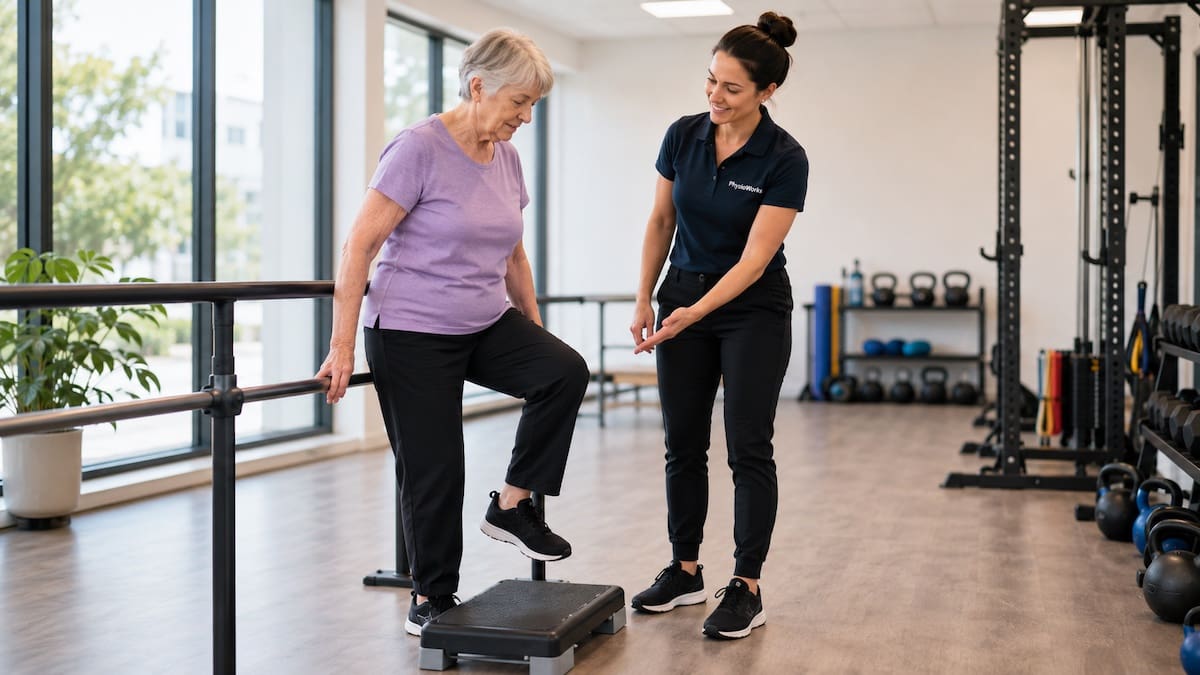
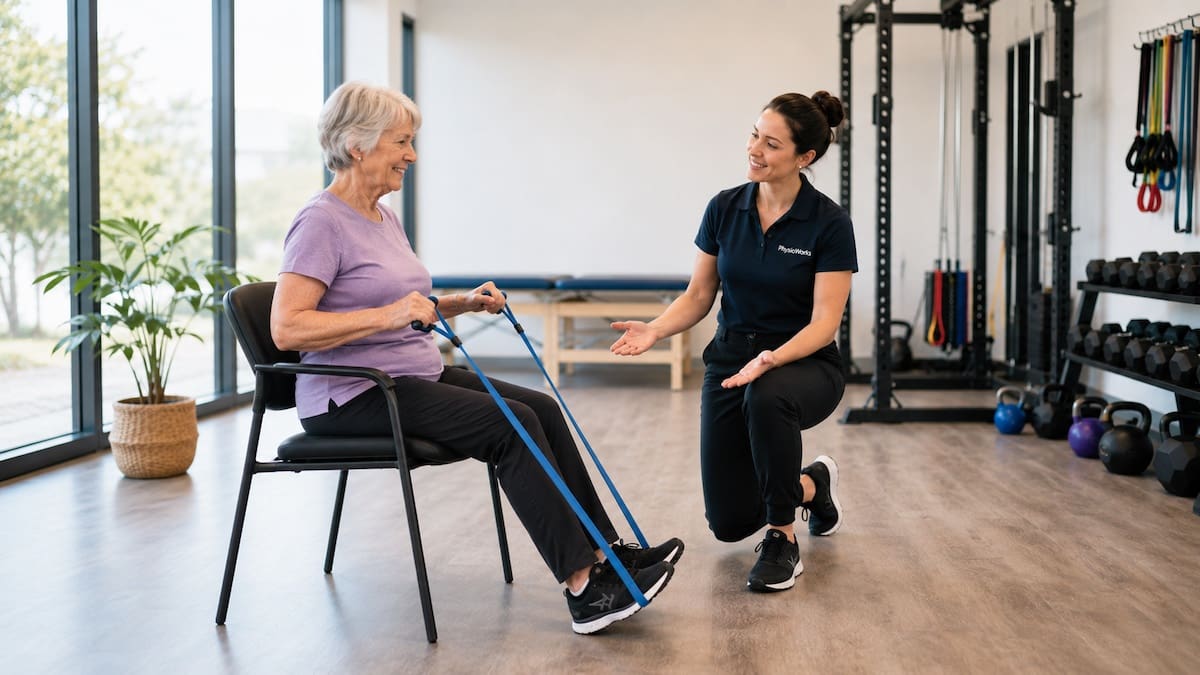
Useful exercise programs often include walking, sit-to-stand practice, lower limb strength work, stepping drills, balance exercises and daily task practice. In some cases, supervised group exercise can also improve confidence and routine.
Practical point: the safest exercise plan is one the person can repeat often, with the right level of support, cueing and progression.
How Can Exercise Physiology Help Dementia?
Exercise physiology can play an important role in dementia care. It may help when the goal is to improve physical capacity, routine, confidence and long-term exercise habits. An exercise physiologist can tailor a program to current ability, support needs and medical history.
This approach may suit people who are deconditioned, at risk of falls, or managing other health issues alongside dementia. It can also help family members and carers by providing a clear structure, home strategies and safe exercise options.
For more complex needs, neurological rehabilitation through exercise physiology may help target balance, mobility, endurance and participation.
Why Does Dementia Increase Falls Risk?
Dementia can increase falls risk because several issues may occur together. These may include slower reactions, reduced attention, poor balance, weaker leg muscles, medication effects, visual problems and difficulty judging distance or hazards.
Falls can lead to injury, hospital admission and loss of independence. A tailored program that combines balance training, strength work, walking practice and safety advice may help reduce risk.
Which Exercise Pathway Fits Best?
| Needs close support | Start with individual physiotherapy or exercise physiology. |
| Falls risk or poor balance | Consider balance assessment, then a class if suitable. |
| Needs routine and confidence | A supervised group exercise class may help consistency. |
| Land exercise is difficult | Hydrotherapy may suit some people after screening. |
Which Group Exercise Options May Suit Dementia?
Group exercise can help some people living with dementia stay active and consistent. However, it is not right for everyone. Suitability depends on balance, memory, behaviour, communication, support needs, transport and medical history.
Group Class Pathway
- Balance & Falls Prevention Class: may suit people who need supervised balance, stepping and strength work after screening.
- Physiotherapy Group Exercise Classes: may suit people who need a gentle, supervised movement option.
- Neurological Rehabilitation Exercise: may suit people who need tailored support before joining a group.
- Hydrotherapy: may suit some people who tolerate warm-water exercise better than land-based exercise.
What Treatment Options May Help Dementia-Related Mobility Problems?
Treatment should match the individual. Physiotherapy may help with mobility assessment, walking retraining, transfers, fall risk reduction and movement strategies. Exercise physiology may help with longer-term conditioning, exercise habits and steady progression.
For some people, a supervised balance and falls prevention class can be a helpful next step after assessment. For others, individual therapy is safer before group exercise begins.
What Are the Benefits of Balance and Falls Prevention Classes?
Balance and falls prevention classes offer a structured and social way to keep moving. They may help improve balance, stepping control, leg strength, confidence and general activity levels. Regular attendance may also make it easier to stay consistent.
Class-based exercise still needs good matching. At PhysioWorks, a clinician can help decide whether individual treatment, exercise physiology or a group class is the better fit.
When Should Someone With Dementia Seek Professional Help?
Seek professional help if dementia is affecting walking, balance, confidence, transfers, falls or daily activity. It is also sensible to seek review after a fall, after a clear decline in physical function, or when carers notice that movement is becoming less safe.
A physiotherapist or exercise physiologist can assess function, identify the main risks and explain the safest next step. That may include individual therapy, a home exercise program, balance retraining, neurological rehabilitation or referral into a suitable group exercise class.
Related Articles
- Neurological Physiotherapy
- Exercise Physiology
- Neurological Rehabilitation
- Balance Training & Falls Prevention
- Balance Training
- Balance & Falls Prevention Class
- Physiotherapy Group Exercise Classes
- Hydrotherapy
- Healthy Ageing Exercise Over 50
- Dementia Australia: Physical Exercise
- WHO: Risk Reduction of Cognitive Decline and Dementia
FAQs About Dementia, Exercise Physiology and Falls Prevention
Can exercise help dementia?
Exercise may help improve strength, balance, walking ability, endurance and general function in people living with dementia. It may also support confidence, routine and participation in daily activities.
Can exercise physiology help people with dementia?
Yes. Exercise physiology may help people with dementia through tailored exercise programs designed to improve mobility, strength, balance, confidence and long-term physical activity habits.
Does dementia increase falls risk?
Yes. Dementia can increase falls risk because it may affect judgement, reaction time, strength, balance and hazard awareness. Falls prevention assessment and exercise may help reduce this risk.
Are balance and falls prevention classes suitable for dementia?
They may suit some people after assessment. A clinician can decide whether a person is better suited to individual treatment, exercise physiology or a supervised balance and falls prevention class.
Is hydrotherapy suitable for dementia?
Hydrotherapy may suit some people when warm-water exercise feels safer or more comfortable than land-based exercise. Suitability depends on cognition, behaviour, mobility, continence, pool safety and support needs.
When should someone with dementia see a physiotherapist or exercise physiologist?
Professional help is useful when dementia affects balance, walking, transfers, falls risk, confidence or general physical function. It is also helpful after a fall or when mobility clearly declines.
What To Do Next
If dementia is affecting movement, balance, falls risk or confidence, book an assessment. A clinician can help choose the safest pathway: individual physiotherapy, exercise physiology, home exercise, neurological rehabilitation or a suitable group class.
For group options, start with an assessment first. This helps match the person to the right level of supervision and support.
Choose your clinic and appointment pathway
Select a PhysioWorks clinic to continue to live booking, an appointment request or reception assistance.
Balance Products
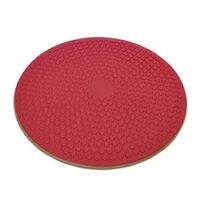
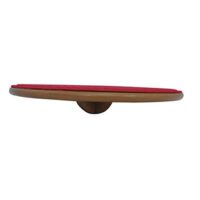
These balance products are commonly used by our physiotherapists to improve strength, balance, prevent injuries falls or injuries, plus assist home exercise programs.
-
-
-
-
- Gift Ideas, Back, Christmas Gift Ideas, Exercise Balls, Exercise Equipment, Knee, Pelvic Floor, Product Search
66fit Pilates Balls
$14.95 – $16.95Select optionsQuick View







References
- World Health Organization. Risk reduction of cognitive decline and dementia. World Health Organization. 2019.
- Lam FMH, Huang MZ, Liao LR, Chung RCK, Kwok TCY, Pang MYC. Physical exercise improves strength, balance, mobility, and endurance in people with cognitive impairment and dementia: a systematic review. J Physiother. 2018;64(1):4-15. doi:10.1016/j.jphys.2017.12.001
- Valenzuela PL, Carrera-Bastos P, Gálvez BG, et al. Effects of physical exercise on physical function in older patients with dementia and cognitive impairment: a systematic review and meta-analysis of randomised controlled trials. Age Ageing. 2023;52(6):afad104. doi:10.1093/ageing/afad104
- Law LLF, Barnett F, Yau MK, Gray MA. Effects of combined cognitive and exercise interventions on cognition in older adults with and without cognitive impairment: a systematic review. Ageing Res Rev. 2020;59:101003. doi:10.1016/j.arr.2019.101003
- Dementia Australia. Physical exercise. Accessed June 12, 2026.