
Ankle Sprain Prevention
Ankle Sprain Prevention
Ankle sprain prevention focuses on improving balance, strength, movement control and preparation for the activities that place your ankle under load. These strategies can help reduce the risk of a first ankle sprain and are particularly important after a previous ankle injury.
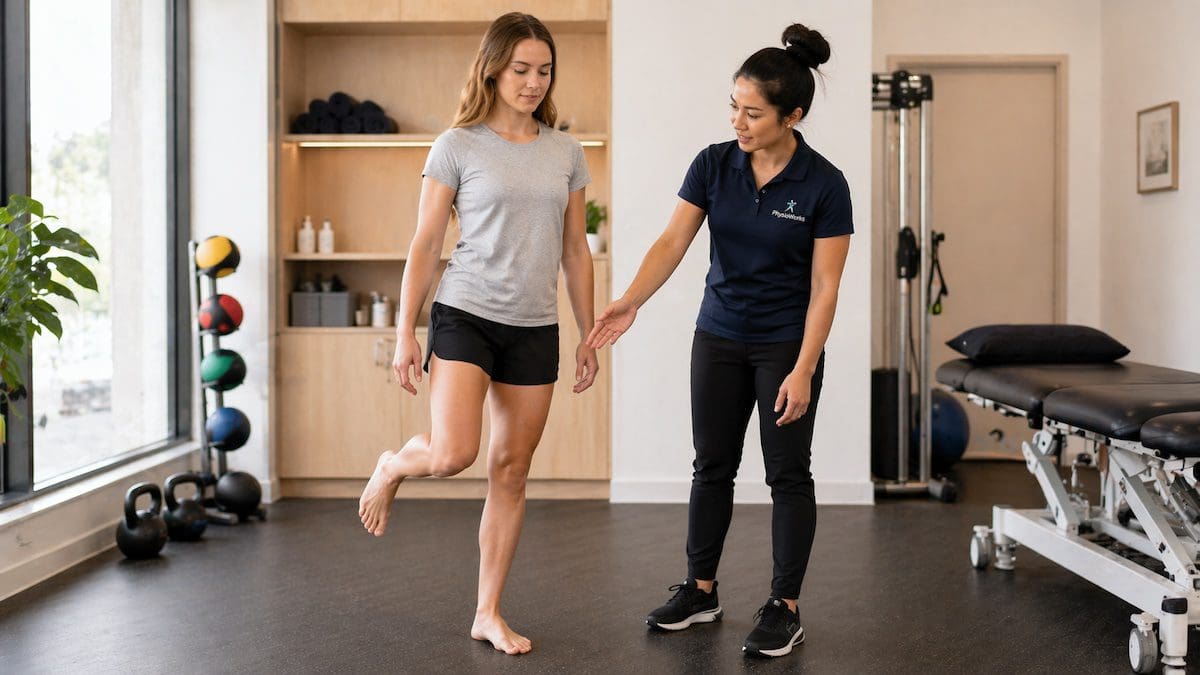
Single-leg balance training can improve ankle control and proprioception.
A previous ankle sprain is one of the most important reasons to consider prevention training. An ankle that has not fully regained balance, strength and movement control may remain more vulnerable when running, jumping, changing direction or walking on uneven ground.
Prevention is different from treating a new injury. If you have recently twisted your ankle and have pain, swelling or difficulty walking, see our ankle sprain guide. If your ankle repeatedly gives way, chronic ankle instability may also be relevant.
Previous injury
A previous ankle sprain can increase the risk of another sprain, particularly when rehabilitation is incomplete.
Balance
Reduced balance or proprioception can make it harder to respond quickly when the ankle starts to roll.
Strength
Weakness around the ankle, calf, foot or hip can reduce lower-limb control during demanding activities.
Sport demands
Jumping, landing, rapid direction changes and contact can increase ankle sprain risk.
Training surface
Uneven or slippery surfaces can challenge ankle control, particularly when fatigue develops.
Footwear
Poorly fitting, worn or unsuitable footwear may reduce traction or stability for the activity.
How Can You Reduce Your Risk of an Ankle Sprain?
An effective ankle sprain prevention programme usually combines several strategies rather than relying on one exercise. The emphasis will vary according to your injury history, activity, sport and current physical capacity.
1. Improve Balance and Proprioception
Balance and proprioception training help your nervous system detect changes in ankle position and respond more effectively. Useful exercises can include single-leg standing, controlled reaching tasks and progressively more challenging balance work.
Balance training is particularly useful after a previous ankle sprain because symptoms can settle before normal movement control has fully returned.
2. Build Ankle and Lower-Limb Strength
Strong muscles help control the ankle when you walk, run, land and change direction. Rehabilitation commonly includes calf strengthening, resisted ankle exercises, squats, lunges and exercises for the hip and wider lower limb.
The peroneal muscles and tendons are particularly relevant to lateral ankle control, although ankle prevention should not focus on one muscle group alone.
3. Restore Useful Ankle Mobility
Adequate ankle movement helps you absorb load during squatting, landing, stepping and running. Limited ankle dorsiflexion can alter lower-limb movement and may make some tasks more difficult to control.
Mobility exercises, calf flexibility work and rehabilitation of any remaining ankle stiffness may therefore form part of a prevention programme.
4. Practise Jumping, Landing and Direction Changes
Prevention should prepare you for the movements you actually perform. Once basic strength and balance are adequate, training may progress to hopping, jumping, landing, acceleration, deceleration and change-of-direction exercises.
For athletes, these exercises should gradually become more similar to the speed, unpredictability and movement demands of their sport.
5. Consider Ankle Taping or Bracing
Ankle taping or a suitable brace may reduce ankle sprain risk during higher-risk activity, particularly for people with a history of recurrent ankle sprains.
External support works best alongside rehabilitation rather than replacing it. See our ankle strapping guide for more information.
6. Choose Suitable Footwear and Training Conditions
Choose footwear that fits properly and suits your activity and surface. Check worn soles, studs, tread and overall shoe condition regularly.
Training load also matters. Fatigue can affect balance and movement quality, so progressive preparation for longer, faster or more demanding sessions forms part of sensible injury prevention.
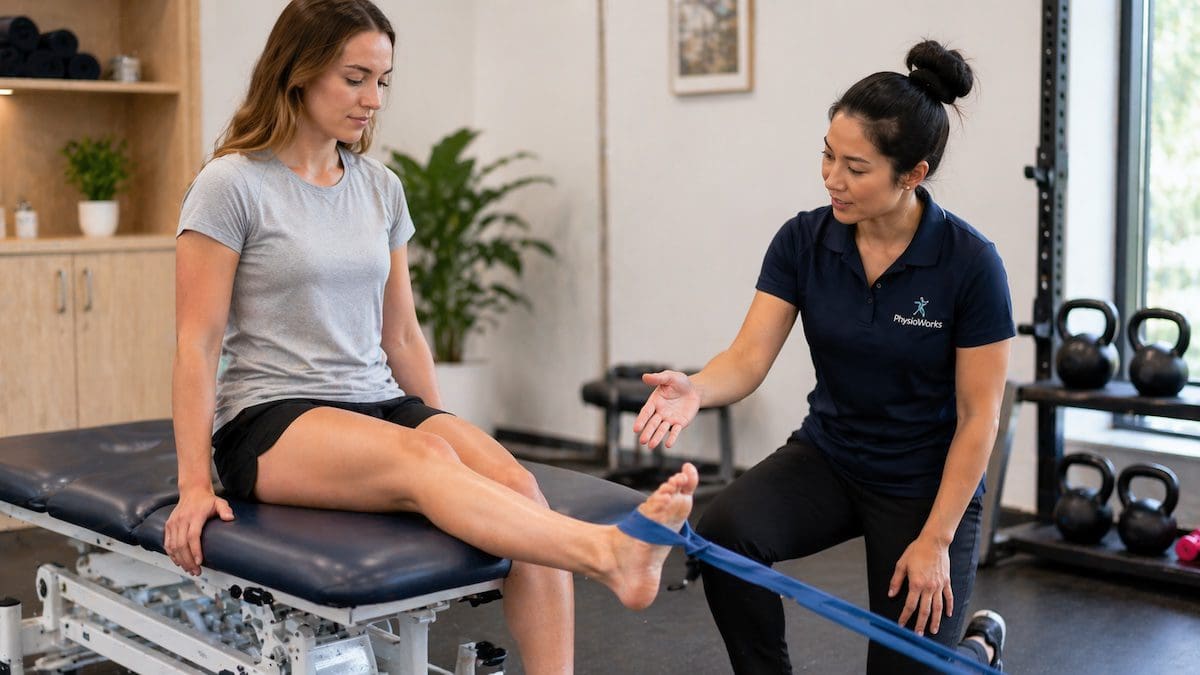
Progressive strengthening can help improve ankle and lower-limb stability.
What Exercises Help Prevent Ankle Sprains?
Useful ankle sprain prevention exercises may include single-leg balance, calf raises, resisted ankle movements, step-downs, hopping and controlled direction-change drills.
A simple programme might begin with controlled strength and balance exercises before progressing to faster and more demanding movements. The exact progression depends on whether you are trying to prevent a first ankle sprain, returning after an injury or managing recurrent instability.
-
Build basic single-leg control
Start with balance tasks that you can perform safely and with good control.
-
Develop strength
Progress calf, ankle, foot and lower-limb strengthening as tolerated.
-
Add dynamic movement
Introduce stepping, reaching, hopping and landing tasks when appropriate.
-
Match the activity
Progress towards the speed, direction changes, surfaces and fatigue demands of your normal sport or activity.
Who Benefits Most From Ankle Sprain Prevention?
Ankle sprain prevention is useful for athletes, active adults and people who have previously rolled or sprained an ankle.
It is especially worth considering if your ankle feels unreliable on uneven ground, you have difficulty with single-leg tasks, or you are returning to running, jumping, court sport or field sport after an ankle injury.
How Can Physiotherapy Help Prevent Another Ankle Sprain?
A physiotherapist can assess ankle mobility, ligament stability, balance, strength, movement control and the demands of your sport or activity.
They can then identify which parts of your rehabilitation need further work and progressively prepare you for higher-load activities. This can be particularly useful when an ankle repeatedly gives way, remains swollen or stiff, or does not feel ready for sport despite pain improving.
Assessment may also identify related problems such as anterior ankle impingement or persistent tendon symptoms that require a different management approach.
When Should You Get an Ankle Injury Assessed?
Seek prompt assessment after an ankle injury if you cannot bear weight, have marked swelling or bruising, notice a visible deformity, or have severe or worsening pain.
Assessment is also appropriate when the ankle repeatedly gives way, remains swollen, feels persistently weak or stops you returning to your normal activities.
A different injury may sometimes be responsible for ongoing symptoms. For example, pain higher above the ankle after a twisting injury can occur with a high ankle sprain.
Frequently Asked Questions
Can balance training reduce ankle sprain risk?
Yes. Balance and proprioception exercises can improve ankle control and are particularly useful for people who have previously sprained an ankle. Regular training can form an important part of reducing recurrent ankle sprain risk.
Should you wear an ankle brace to prevent sprains?
An ankle brace or tape may help reduce risk during higher-risk activities, particularly if you have had previous ankle sprains. It works best alongside strength, balance and movement training rather than as a replacement for rehabilitation.
What muscles help prevent ankle sprains?
The calf muscles, peroneal muscles, foot stabilisers and muscles around the hip all contribute to lower-limb control. Good ankle prevention therefore usually includes broader lower-limb strengthening rather than isolated ankle exercises alone.
When should you see a physiotherapist for ankle instability?
Consider physiotherapy if your ankle keeps rolling, feels unreliable on uneven ground, remains swollen or weak, or prevents you returning confidently to sport or normal activity.
What To Do Next
If you want to reduce your risk of ankle sprains, begin with regular balance work, progressive lower-limb strengthening and movement practice that matches your usual activity.
However, if you already have ankle pain, recurrent instability or a history of repeated sprains, an individual assessment can help identify remaining deficits and guide a more specific prevention programme.
PhysioWorks physiotherapists can assess ankle mobility, strength, stability and movement control and help you progress towards safer training and activity.
Choose your clinic and appointment pathway
Select a PhysioWorks clinic to continue to live booking, an appointment request or reception assistance.
Ankle Products
These ankle products are commonly used by our physiotherapists to improve ankle pain, strength, balance, proprioception, endurance and flexibility, plus assist home exercise programs.
-
-
-
-
-


- EMS Machines, Pain Management, TENS Machine, TENS Machine & EMS
NeuroTrac Rehab (TENS Machine + EMS)
$285.00Add to cartQuick View -

- Liniments & Gels, Massage Liniments, Pain Management
Fisiocrem
$16.95 – $39.95Select optionsQuick View -
-

-
-
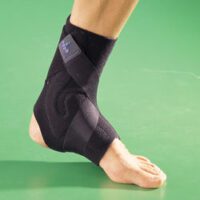 Ankle, Braces & Supports, Foot
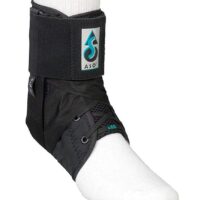
Ankle Support with Plastic Stay – OPPO 1109
$52.00Select optionsQuick View -

 Ankle, Braces & Supports, Foot, Walking
Victor Moonboot 1.0 Air or No Air
$77.00 – $79.00Select optionsQuick View -
-
-
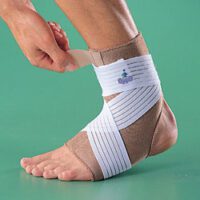 Ankle, Braces & Supports, Clearance Sale
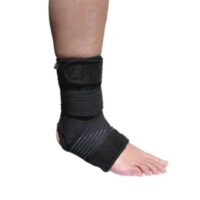
Ankle Support with Strap – OPPO 1003
$42.00Select optionsQuick View








References
- Al Attar WSA, Soomro N, Sinclair PJ, Pappas E, Sanders RH. Injury prevention programs that include balance training exercises reduce ankle injury rates among soccer players: a systematic review. J Physiother. 2022;68(3):165-173.
- Schiftan GS, Ross LA, Hahne AJ. The effectiveness of proprioceptive training in preventing ankle sprains in sporting populations: a systematic review and meta-analysis. J Sci Med Sport. 2015;18(3):238-244. doi:10.1016/j.jsams.2014.04.005.
- Doherty C, Bleakley C, Delahunt E, Holden S. Treatment and prevention of acute and recurrent ankle sprain: an overview of systematic reviews with meta-analysis. Br J Sports Med. 2017;51(2):113-125. doi:10.1136/bjsports-2016-096178.
- Kaminski TW, Hertel J, Amendola N, et al. National Athletic Trainers’ Association position statement: conservative management and prevention of ankle sprains in athletes. J Athl Train. 2013;48(4):528-545. doi:10.4085/1062-6050-48.4.02.
