
Balance & Falls Prevention Class
Balance & Falls Prevention Class Brisbane


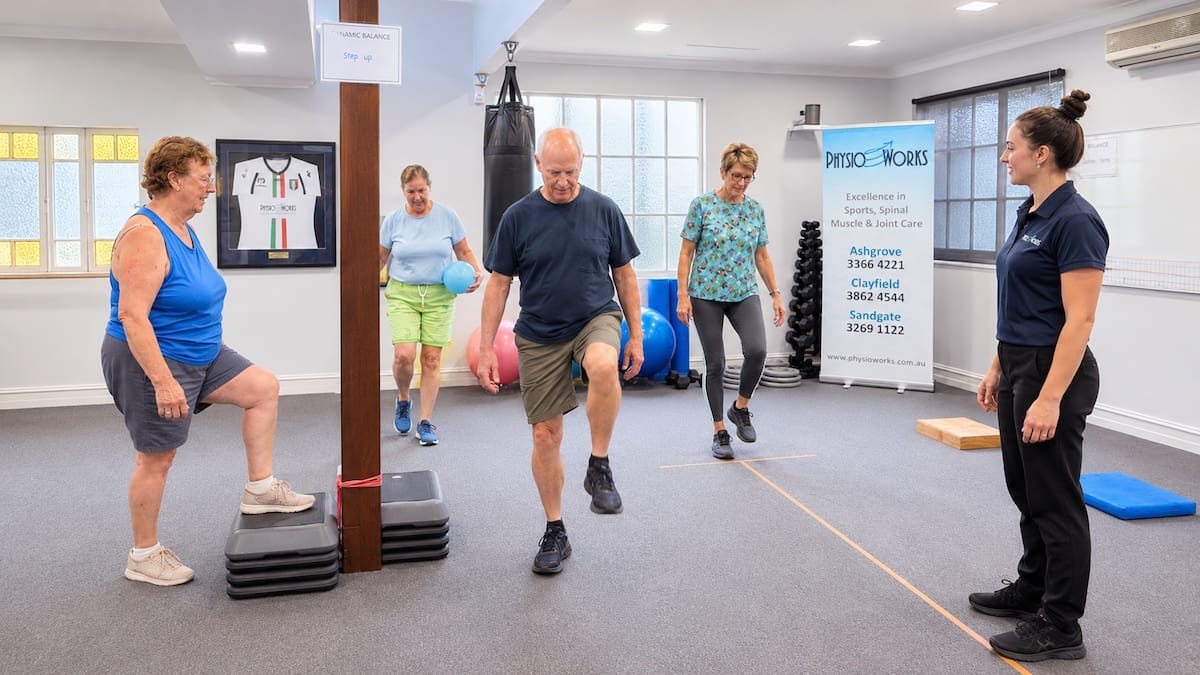
Balance & Falls Prevention Class Brisbane is a physiotherapist-led group exercise program for people who feel unsteady, worry about falling or want more confidence with walking and everyday movement.
The program combines balance, leg-strength and stepping exercises with physiotherapy assessment and supervision. It forms part of our broader balance training and falls prevention services.
Who it may suit
Older adults and other people who feel unsteady, weaker or worried about falling.
Main focus
Balance, leg strength, stepping control, mobility and walking confidence.
Class length
40 minutes of supervised exercise.
Locations
PhysioWorks Clayfield and PhysioWorks Sandgate.
Before joining
A one-to-one physiotherapy balance assessment is required.
Physiotherapy Group Exercise Classes
Arrange Your Assessment
An individual physiotherapy assessment is required before joining the Mat Pilates group at Clayfield or Sandgate.
What Is a Balance and Falls Prevention Class?
A balance and falls prevention class is a structured exercise program designed to improve the physical skills that help you stay upright, move confidently and respond to small losses of balance.
This is not a general fitness class. Your starting level is guided by a physiotherapy assessment, then exercises are adjusted and progressed according to your balance, strength, mobility and confidence.
If you need more individualised rehabilitation, your physiotherapist may recommend one-to-one balance training before or alongside group exercise.
Who May Benefit From the Class?
The class may suit you if changes in balance, strength or confidence have started to affect walking, stairs or everyday activity.
You may benefit if you:
- feel unsteady when walking, turning or using stairs
- have had a fall or near-fall
- want to improve leg strength and mobility
- avoid activities because you worry about falling
- are rebuilding confidence after illness or injury
- want supervised exercise rather than exercising alone
Balance problems can have different causes. For example, people with significant vertigo or dizziness may need a more specific assessment before joining a general balance class.
How Does the Balance Program Work?
The program follows an assessment-first pathway. Your physiotherapist establishes a suitable starting point before you join the supervised class.
-
Complete your balance assessment
Your physiotherapist reviews your balance, walking, mobility, leg strength, health history and falls risk. Together, you can also discuss your goals and any activities that currently feel difficult.
-
Join the supervised class
You complete balance, stepping and strengthening exercises at a level suited to your current ability and confidence.
-
Progress the challenge
Your exercises can change as your control, strength and confidence improve.
-
Review your progress
Your physiotherapist can reassess relevant measures and decide whether your program should continue, progress or change.
Why Does Balance Training Help?
Staying upright depends on several abilities working together. These include leg strength, coordination, reaction speed, sensory information, stepping responses and the ability to adjust your body position when the environment changes.
Exercise programs that challenge balance and functional movement can reduce falls in community-dwelling older adults. Evidence supports appropriately prescribed exercise as an important part of falls-prevention care.
What Happens in a Typical Balance Class?
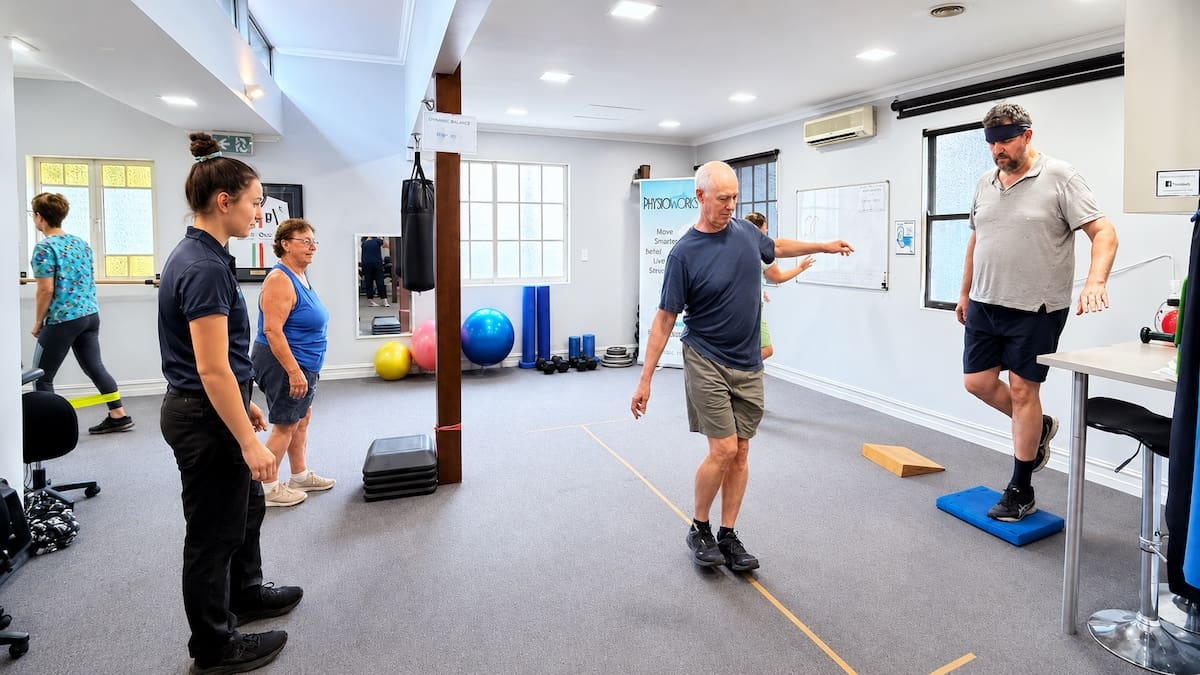
A typical 40-minute class includes a warm-up, supervised balance and strength exercises, and a cool-down.
Exercises may include:
- stepping forwards, sideways and in different directions
- stance and weight-shifting exercises
- sit-to-stand practice
- walking and turning tasks
- leg-strength exercises
- postural-control activities
- functional exercises related to everyday movement
The exact exercises depend on the people attending and your individual starting level. You should not expect every person in the class to complete the same exercise at the same difficulty.
When Should You Book a Balance Assessment?
Consider booking a balance assessment if you have fallen, feel less steady than usual or have started avoiding activities because you are concerned about falling.
Assessment can also be useful if you feel unsafe on stairs or uneven ground, have noticed reduced leg strength, or want to return to activity after illness or injury.
Learn more about what physiotherapists may assess in our balance assessment guide.
Which Exercise Program May Suit You?
Balance & Falls Prevention is most relevant when steadiness, stepping control or confidence with walking is the main concern. Another PhysioWorks program may suit you better when your main goal is different.
Balance & Falls Prevention
Consider this pathway if unsteadiness, falls risk, stepping or walking confidence is your main concern.
Bone Density Class
May suit people whose main goal is supervised strength and bone-loading exercise for low bone density or osteoporosis.
Hydrotherapy
May be useful when pain, stiffness or difficulty with land-based exercise makes water-based exercise a more suitable starting point.
Exercise Physiology
May suit people who need a broader or longer-term exercise program for strength, physical capacity or health-related goals.
Balance Classes at Clayfield and Sandgate
Balance & Falls Prevention classes are available at PhysioWorks Clayfield and PhysioWorks Sandgate. Because assessment is required before joining, reception can help arrange the correct starting appointment and confirm current class availability.
Clayfield PhysioWorks
North Brisbane physiotherapy clinic offering assessment and supervised group-exercise pathways.
Sandgate PhysioWorks
Brisbane bayside physiotherapy clinic offering balance and falls prevention assessment and classes.
Who Supervises the Balance Classes?
PhysioWorks physiotherapists Chelsea Gan and Jack Campbell have clinical interests that include balance, strength and falls prevention.
Your physiotherapist can assess your starting level, recommend appropriate exercise and review your progress as needed.
Frequently Asked Questions
Who is the Balance & Falls Prevention Class for?
The class is designed for older adults and other people who feel unsteady, have had a fall or near-fall, or want to improve balance, leg strength and confidence with everyday movement.
Do I need a physiotherapy assessment before joining?
Yes. A physiotherapy balance assessment is required before joining so your balance, mobility, strength, walking and relevant health history can be reviewed and an appropriate starting level can be recommended.
How long is a Balance & Falls Prevention Class?
Each class runs for 40 minutes and includes supervised balance, strength and functional movement exercises.
What should I wear and bring?
Wear comfortable clothing and supportive closed-in shoes. Bring a water bottle and any walking aid you normally use. You should also bring glasses or hearing aids if you rely on them for everyday activity.
Can I claim balance classes through private health insurance?
Eligibility depends on your private health fund and level of extras cover. Ask your fund or PhysioWorks reception about the relevant service and claiming arrangements before relying on a rebate.
Can I attend if I have osteoporosis or arthritis?
The class may be suitable for some people with osteoporosis or arthritis. Your physiotherapy assessment helps determine whether the class and individual exercises are appropriate for your health, symptoms and current capacity.
I have already had a fall. Can I still start balance training?
Yes. A previous fall is one reason to consider a balance assessment. Your physiotherapist can review possible contributing factors and recommend an appropriate exercise or rehabilitation pathway.
What to Do Next
If you feel unsteady, have fallen or want more confidence with walking, start with a physiotherapy balance assessment. Your physiotherapist can identify an appropriate starting point and advise whether the Balance & Falls Prevention Class is suitable for you.
Choose Clayfield or Sandgate below to arrange the required assessment or speak with reception about the class pathway.
References
- Sherrington C, Fairhall NJ, Wallbank GK, et al. Exercise for preventing falls in older people living in the community. Cochrane Database of Systematic Reviews. 2019;1(1):CD012424.
- Pillay J, Gaudet LA, Saba S, et al. Falls prevention interventions for community-dwelling older adults: systematic review and meta-analysis. Systematic Reviews. 2024;13:289.
- Nicholson WK, Guirguis-Blake JM, Grossman DC, et al. Interventions to Prevent Falls in Community-Dwelling Older Adults: US Preventive Services Task Force Recommendation Statement. JAMA. 2024;331(22):1917–1924.
Choose Clayfield or Sandgate
Call your preferred clinic to arrange the individual physiotherapy assessment required before joining a Mat Pilates Group Exercise class.
PhysioWorks Clayfield
Call Clayfield reception to check current class availability and arrange the required physiotherapy assessment.
Clinic: PhysioWorks Clayfield
Phone: 07 3862 4544
PhysioWorks Sandgate
Call Sandgate reception to check current class availability and arrange the required physiotherapy assessment.
Clinic: PhysioWorks Sandgate
Phone: 07 3269 1122
Not sure which clinic to choose? Select the most convenient location. Both clinics use an assessment-first pathway into physiotherapy group exercise classes.
