
Spondylosis
Spondylosis (Spinal Arthritis): Symptoms and Treatment


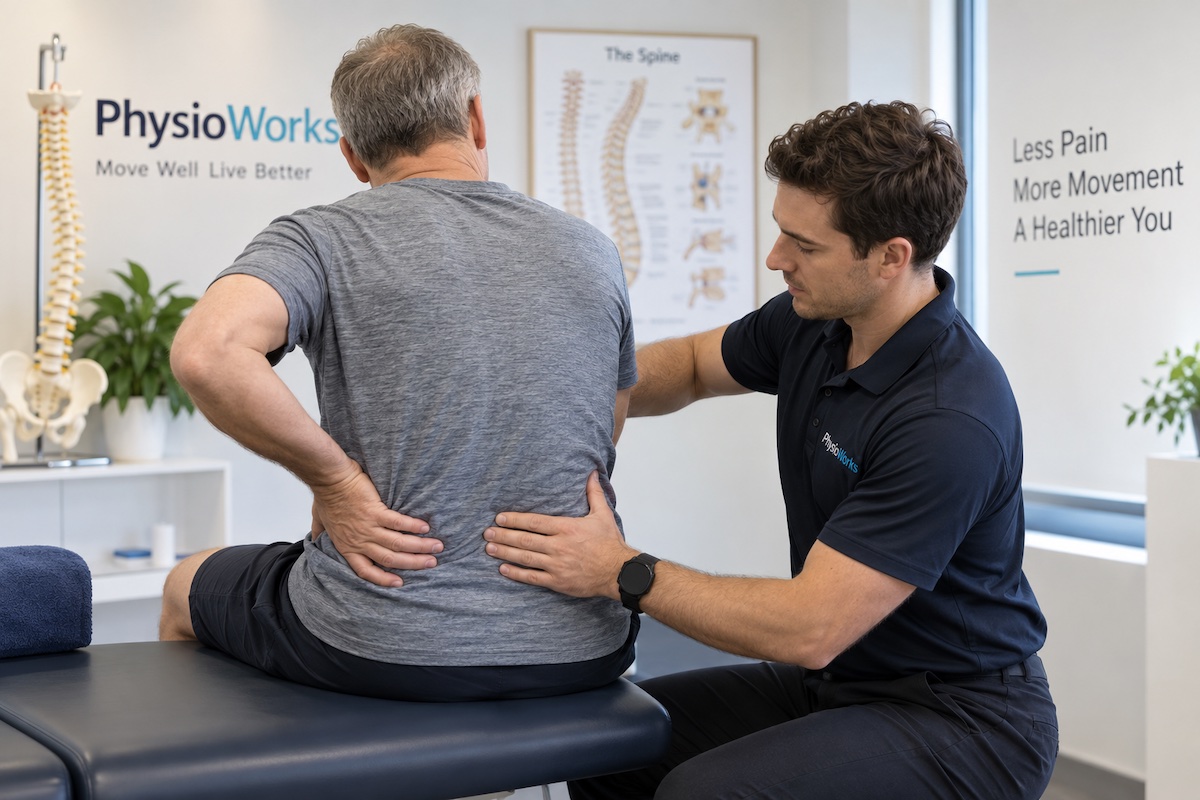
Spondylosis, sometimes called spinal arthritis, describes age-related degenerative changes in the joints, discs and other structures of the spine. These changes are common and do not always cause pain.
When symptoms do occur, they may include stiffness, local neck or back pain, reduced movement or, in some cases, irritation of a spinal nerve. Physiotherapy may help improve movement, strength and confidence while helping you manage activities that aggravate your symptoms.
What is spondylosis?
Spondylosis develops as the structures of the spine gradually change with age. These changes can involve the spinal discs, small joints and surrounding bone. Bone spurs, joint stiffness and disc changes may be visible on imaging.
Spondylosis can occur in the neck (cervical spine), mid-back (thoracic spine) or lower back (lumbar spine). Importantly, the amount of degeneration seen on a scan does not always match the amount of pain a person experiences.
If symptoms travel down a leg, read about sciatica. Neck symptoms that spread into an arm may relate to cervical radiculopathy.
What symptoms can spondylosis cause?
Symptoms vary between people and depend on the part of the spine involved. Common symptoms may include:
-
Morning stiffness that improves after moving.
-
Local neck, mid-back or lower back pain.
-
Stiffness after prolonged sitting or standing.
-
Reduced spinal movement.
-
Pain during some bending, twisting or arching movements.
-
Temporary muscle tightness or spasm.
-
Pins and needles, numbness or weakness if a nerve becomes irritated.
Other degenerative spinal conditions can produce similar symptoms. These include facet joint arthropathy and spinal stenosis.
When should you seek medical assessment?
Most spondylosis symptoms do not require emergency treatment. However, neurological symptoms deserve appropriate assessment, particularly when they are new or worsening.
Medical review is also appropriate after significant trauma, or when spinal pain is severe and unexplained, progressively worsening, or associated with fever or feeling systemically unwell.
Why does spondylosis develop?
Age is the main factor associated with spondylosis. Genetics, previous spinal injury and long-term physical loading may also influence degenerative change.
Day-to-day symptoms can fluctuate independently of what appears on a scan. A change in activity, prolonged positions, travel, gardening, lifting or an unfamiliar increase in physical load can sometimes trigger a flare without necessarily meaning that further spinal damage has occurred.
How is spondylosis assessed?
A physiotherapist will first discuss your symptoms, activities, health history and how the problem affects everyday function. Your assessment may include spinal movement, strength, joint mobility and relevant functional tasks.
If symptoms travel into an arm or leg, your physiotherapist may also assess nerve function, including strength, sensation and other neurological signs.
X-rays, MRI or CT scans can identify degenerative changes. However, imaging findings do not always explain a person’s symptoms because age-related spinal changes are also common in people without pain. Assessment therefore considers your symptoms and function as well as any scan findings.
Can physiotherapy help spondylosis?
Physiotherapy for symptomatic spondylosis usually aims to improve comfort, restore useful movement and build the physical capacity needed for everyday activities, work or recreation.
Settling a painful flare
Your physiotherapist can help identify movements and activities that are temporarily aggravating your symptoms. Treatment may include guided movement, advice about modifying activity and, when appropriate, hands-on techniques such as joint mobilisation or soft tissue treatment.
Heat or short-term use of ice may help some people manage symptoms. If you are considering an electrical pain-relief device, see what a TENS machine does.
Improving movement
Regular comfortable movement is often more useful than occasional aggressive stretching. Changing position regularly and gradually restoring movements that have become stiff or guarded may help you return to normal activity.
For practical strategies, see our posture exercises and guide to improving posture.
Building strength and capacity
Progressive strengthening can help your spine and surrounding muscles tolerate everyday loads. Your program may include trunk and hip strengthening, walking or cardiovascular exercise, and a graded return to lifting, work or sport.
Useful starting points include core stability training and core stability exercises.
How can you manage spondylosis day to day?
Many people with age-related spinal changes remain active and manage their symptoms well. A practical approach may include:
-
Moving regularly, particularly after waking or prolonged sitting.
-
Gradually rebuilding strength and physical capacity.
-
Varying positions and tasks rather than remaining in one posture for long periods.
-
Using walking, swimming, cycling or another comfortable form of aerobic exercise.
-
Adjusting activity temporarily during a flare rather than stopping all movement.
-
Building back towards normal loads as symptoms settle.
Exercise should match your current symptoms, general health and goals. There is no single exercise program that suits every person with spondylosis.
What does the evidence suggest?
Research into degenerative spinal conditions supports an active rehabilitation approach rather than relying only on passive treatment. Exercise, education and gradual restoration of activity commonly form part of conservative management.
Research specifically involving cervical spondylosis has examined approaches including isometric strengthening and combinations of physiotherapy treatment. The most appropriate program still depends on the individual presentation rather than the scan result alone.
For an independent medical overview, see the NCBI Bookshelf overview of spondylosis.
Spondylosis FAQs
Is spondylosis the same as spinal arthritis?
Spondylosis is a broad term for age-related degenerative changes in the spine. It is often described as spinal arthritis because these changes can involve the spinal joints, discs and surrounding bone.
Can spondylosis cause sciatica?
Yes. Degenerative changes in the lower back can sometimes irritate a nearby spinal nerve and contribute to leg pain, tingling or numbness. Other conditions can cause similar symptoms, so assessment is useful when symptoms persist or worsen.
What exercises help spondylosis?
There is no single best exercise for spondylosis. Many people benefit from a combination of comfortable mobility, regular aerobic activity and progressive strengthening. The most suitable exercises depend on the spinal region involved, your symptoms and your goals.
Do I need imaging for spondylosis?
Not always. Degenerative spinal changes are common on scans, including in people without pain. Imaging may be more useful when symptoms are persistent, worsening, associated with significant neurological changes or when the result is likely to alter management.
Can physiotherapy help spondylosis?
Physiotherapy may help people with symptomatic spondylosis improve movement, build strength and manage activities that aggravate their symptoms. Treatment is tailored to the individual rather than based only on degenerative changes seen on imaging.
What to do next
If spinal pain or stiffness is affecting your movement, work, sleep or normal activities, a physiotherapy assessment can help clarify the factors contributing to your symptoms.
Your physiotherapist can then develop a plan based on your current function, symptoms and goals. This may include advice, movement and strengthening exercises, symptom-management strategies and a gradual return to the activities that matter to you.
Choose your clinic and appointment pathway
Select a PhysioWorks clinic to continue to live booking, an appointment request or reception assistance.
Back Support Products
These back support products are commonly used by our physiotherapists to help reduce back pain, improve comfort, and support your recovery at home.
-
 Back, Braces & Supports, Maternity, Posture
Pregnancy Belly Band & C-Section 3-in-1
$94.99Select optionsQuick View - Braces & Supports, Back, Maternity, SIJ
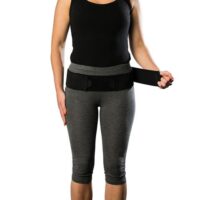
AOM38 AllCare Ortho Core Stability Belt
$49.95Select optionsQuick View -
 Back, Braces & Supports, Maternity, Posture
Maternity Back Support – OPPO 2062
$60.00 – $64.00Select optionsQuick View -
 Braces & Supports, Back, Maternity, SIJ
Maternity Support Belt – OPPO 4062
$37.00Select optionsQuick View -
-
-
-
 Back, Braces & Supports, Maternity, SIJ
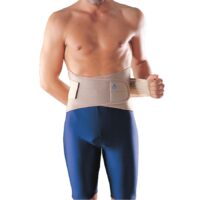
Core Stability Support – OPPO 3462
$54.00Select optionsQuick View

References
- Mengi A, Bulut GT. The effect of combining physiotherapy with dry needling in patients with cervical spondylosis: A randomized controlled trial. J Back Musculoskelet Rehabil. 2024;37(5):1213-1221. doi: 10.3233/BMR-230287
- Saadat S, et al. Effectiveness of isometric exercises on disability and pain of cervical spondylosis: a randomized controlled trial. 2022. PubMed
- Kirker K, Masaracchio MF, Loghmani P, et al. Management of lumbar spinal stenosis: a systematic review and meta-analysis of rehabilitation, surgical, injection, and medication interventions. Physiother Theory Pract. 2023;39(2):241-286. doi: 10.1080/09593985.2021.2012860
- Lantz JM, Abedi A, Tran F, et al. The impact of physical therapy following cervical spine surgery for degenerative spine disorders: a systematic review. Clin Spine Surg. 2021;34(8):291-307. doi: 10.1097/BSD.0000000000001108
