- Description
- Additional information
Description
AOM38 AllCare Ortho Core Stability Belt, core stability belt, sacroiliac joint belt, SIJ support belt, pelvic support belt
AOM38 AllCare Ortho Core Stability Belt
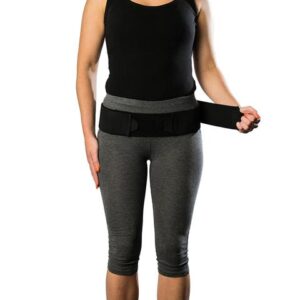
The AOM38 AllCare Ortho Core Stability Belt is designed to support the pelvis and sacroiliac joints when pain, instability, or poor load transfer affects everyday movement. It can be helpful for people with sacroiliac joint (SIJ) pain, pubic symphysis discomfort, reduced pelvic control, or post-partum pelvic symptoms. From a physiotherapy perspective, external support can be useful when the pelvis needs extra compression while irritated tissues settle and muscle control improves.
This core stability belt uses a non-elastic main belt for firm pelvic support, while the adjustable elastic straps let you fine-tune compression to a comfortable level. The non-slip inner lining helps the belt stay in position during walking, standing, exercise, and day-to-day activity. Because it sits low around the pelvis, it targets the sacroiliac region more directly than a standard lumbar support.
The belt is commonly used when symptoms increase with rolling in bed, walking, stairs, single-leg standing, prolonged standing, or returning to exercise after pregnancy. It may also help during a guided rehabilitation program focused on core stability, pelvic control, hip strength, and movement retraining. For people with ongoing buttock or pelvic pain, it can form part of a broader management plan alongside advice, exercise, and hands-on treatment. You can also read more about SIJ pain treatment options and common causes of SIJ and buttock pain.
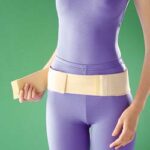
The AOM38 suits a wide range of users, including post-partum patients, people with recurrent SIJ irritation, and active adults who want low-profile pelvic support during daily tasks. It is best worn low around the hips, just above the greater trochanters, and adjusted so it feels secure without being excessively tight. If you need added support for related low back symptoms, you may also like the Sacro Lumbar Support – OPPO 1064. For pregnancy-related support needs, consider the Pregnancy Belly Band & C-Section 3-in-1.
Key Benefits
- Supports pelvic stability during walking, standing, exercise, and daily activity.
- Targets the sacroiliac joints and pubic symphysis with firm, low-profile compression.
- Adjusts easily with elastic tension straps to suit comfort and symptom levels.
- Stays in place thanks to the non-slip inner lining.
- Useful in rehabilitation for SIJ pain, pelvic instability, and post-partum recovery.
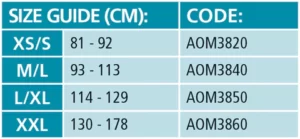
Sizing Chart
Measure around your hips just above the greater trochanter (cm):
Frequently Asked Questions
What does a core stability belt do?
A core stability belt provides compression around the pelvis to help improve load transfer through the sacroiliac joints and surrounding structures. It is often used when pelvic movement feels painful, unstable, or poorly controlled. Read more about core stability.
Can a pelvic support belt help SIJ pain?
Yes, a pelvic support belt may help some people with SIJ pain by improving pelvic compression and reducing irritation during movement. It usually works best when combined with the right diagnosis, activity advice, and progressive rehabilitation. Learn more in our guide to SIJ pain.
Is this belt suitable after pregnancy?
The AOM38 can be useful after pregnancy when pelvic joints and surrounding muscles need extra support during recovery. It may be especially helpful when symptoms are aggravated by walking, stairs, rolling in bed, or prolonged standing. For related support options, see the Pregnancy Belly Band & C-Section 3-in-1.
How tight should an SIJ belt be?
An SIJ belt should feel firm and supportive without causing numbness, pinching, or difficulty breathing. It is usually worn low around the pelvis rather than around the waist. A physiotherapist can help you position it correctly for the best result.
Can I wear a core stability belt during exercise?
Many people wear a pelvic support belt during walking, gym exercises, household tasks, or rehab sessions if these activities trigger symptoms. However, the belt should support rehabilitation rather than replace muscle retraining. Read more about SIJ treatment options.
When should I see a physiotherapist for pelvic or SIJ pain?
You should seek assessment if pain persists, keeps returning, spreads into the buttock or groin, or affects walking, sleep, work, or exercise. Early assessment helps identify whether the pain is coming from the SIJ, lower back, hip, or surrounding soft tissues. You can start with our article on common causes of SIJ and buttock pain.
Additional information
| Weight | .5 kg |
|---|---|
| Dimensions | 5 × 14 × 9 cm |
| Size | Medium/Large, XSmall/Small, Large/X-Large, XXL |