
Remedial Massage Brisbane
Targeted remedial massage for muscle tension, soreness, restricted movement and recovery support at selected PhysioWorks clinics across Brisbane.

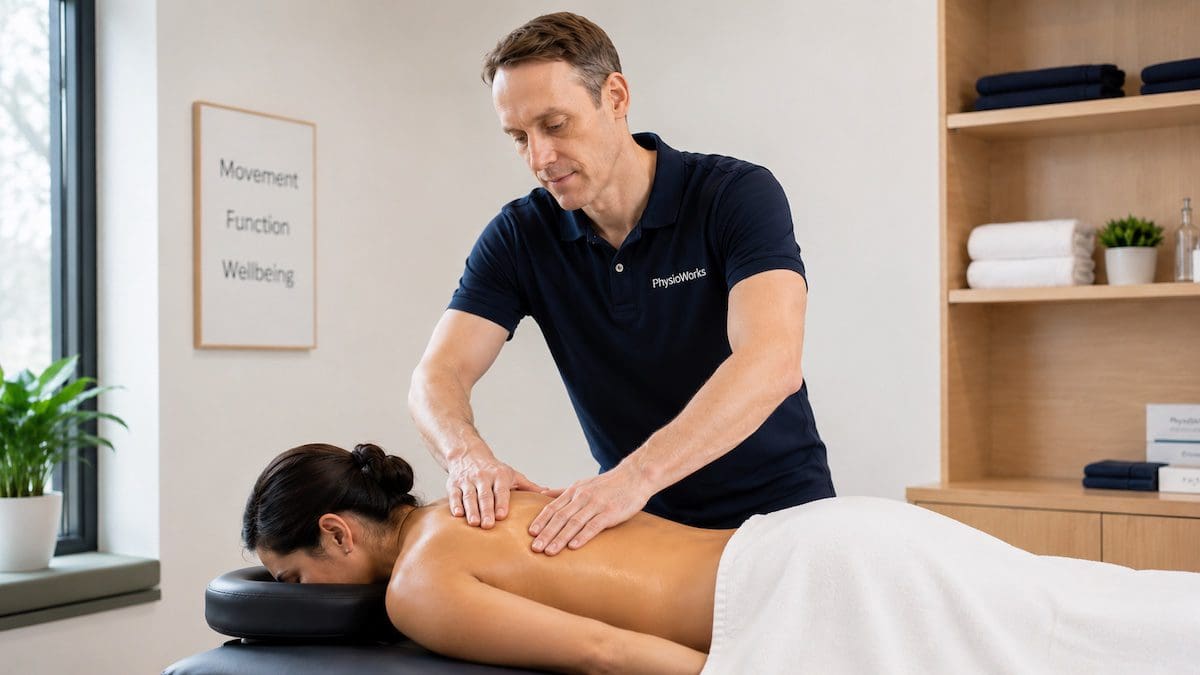
Remedial massage uses targeted hands-on treatment matched to the areas you want addressed.
People commonly book remedial massage for muscle tension linked to work, exercise, sport or everyday activity. It may help you feel more comfortable, move more freely and manage short-term muscle soreness. However, results vary, and massage does not replace medical or physiotherapy assessment when symptoms suggest an injury or another health problem.
PhysioWorks offers remedial massage within a collaborative clinical setting. Where appropriate, your massage therapist can recommend that you consider physiotherapy assessment, movement advice or active rehabilitation alongside massage.
Book a Massage Appointment
Massage is available at selected PhysioWorks clinics. Choose your preferred clinic to view current booking options.
What Is Remedial Massage?
Remedial massage is a goal-focused form of soft tissue treatment. Rather than following the same routine for every person, the therapist discusses the areas that concern you and adapts the session accordingly.
Your appointment may focus on one body region or several related areas. For example, neck and shoulder tension may also involve the upper back, while lower-limb soreness may require treatment through the hip, thigh or calf.
Targeted
Treatment focuses on the areas most relevant to your symptoms and goals.
Individualised
Your therapist adjusts pressure, positioning and techniques throughout the appointment.
Collaborative
You can ask questions, request a pressure change, decline an area or stop treatment at any time.
Who May Benefit From Remedial Massage?
Remedial massage may suit people who want targeted hands-on care for muscle tension, post-exercise soreness or recurring tightness. It may also complement an active recovery or rehabilitation plan.
Desk and Work-Related Tension
Targeted treatment may help people experiencing neck, shoulder, upper-back or forearm tension associated with sustained or repetitive work.
Exercise and Training Soreness
Remedial massage may support short-term comfort after training, increased activity or an unfamiliar physical workload.
Localised Muscle Tightness
A focused appointment may suit one or two areas that feel persistently tight, tender or uncomfortable with movement.
Recovery Support
Massage may form one part of a broader plan involving movement, rest, gradual loading, exercise or physiotherapy.
What Areas Can Remedial Massage Treat?
Your therapist can tailor the appointment to the body regions you want addressed. Common treatment areas include:
- neck and shoulder muscles;
- upper and lower back;
- hips and gluteal muscles;
- thighs, hamstrings and quadriceps;
- calves and lower legs;
- forearms and hands; and
- muscles affected by work, sport or exercise.
Tell your therapist about the location, timing and behaviour of your symptoms. This information helps them plan the session and identify when another form of assessment may be more suitable.
What Happens During a Remedial Massage Appointment?
Your appointment begins with a brief discussion about your symptoms, general health, goals and pressure preference. The therapist may ask about recent injuries, training loads, work demands, medication or health conditions that could affect treatment.
-
Discuss Your Main Concern
Explain which areas feel tight, sore or restricted and what you want from the appointment.
-
Agree on the Treatment Plan
Your therapist discusses the areas to be treated, your preferred pressure and suitable positioning.
-
Adjust Treatment as Needed
The therapist monitors your comfort and can change the technique, pressure, position or treatment area.
-
Review Your Response
After treatment, your therapist may discuss simple movement, activity or recovery advice and whether another appointment is appropriate.
What Techniques May a Remedial Massage Therapist Use?
A remedial massage therapist may combine several hands-on techniques. The choice depends on the treated region, your comfort and the purpose of the appointment.
Broad Massage Strokes
Smooth or kneading movements may warm the area and help the therapist assess how the muscles respond.
Trigger Point Therapy
Focused pressure may be applied to a localised sensitive area when it is appropriate and comfortable.
Myofascial Techniques
Slower, broader contact may be used around areas that feel restricted or sensitive.
Gentle Movement
Your therapist may include comfortable assisted movement or stretching when it suits the treatment goal.
No single technique suits everyone. Your therapist should modify treatment according to your comfort and response rather than applying maximum pressure as a default.
Does Remedial Massage Need to Be Painful?
No. Remedial massage can feel firm or locally sensitive, but it should remain tolerable. More pressure does not automatically produce a better result.
Tell your therapist when pressure feels too strong, sharp, uncomfortable or different from what you expected. They can reduce the pressure, change technique or move away from the area.
Comfortable
You should be able to breathe normally and remain reasonably relaxed.
Adjustable
Pressure can change between body regions and throughout the session.
Consent-Based
Continuing treatment depends on your ongoing agreement and comfort.
How Might You Feel After Remedial Massage?
Responses differ. Some people report feeling more comfortable or less tense shortly after treatment. Others notice little immediate change or experience mild short-term tenderness after focused work.
Following the appointment, return to normal activity according to how you feel. Gentle movement may feel helpful. However, you do not need to force stretching, avoid all activity or drink excessive amounts of water because you have had a massage.
How Long Should You Book?
The most suitable appointment length depends on how many areas you want addressed and how much discussion or modification the session may require.
One Focused Area
A shorter appointment may suit a clearly defined region such as the neck, shoulder, calf or forearm.
Several Related Areas
A longer appointment may be more practical when treatment needs to cover connected regions.
Unsure What to Choose?
Select a practical appointment length and tell the therapist your priorities at the beginning of the session.
Appointment lengths and available services vary between practitioners and clinics. Check the options shown in the booking pathway before confirming your appointment.
How Often Should You Have Remedial Massage?
There is no standard schedule that suits everyone. Some people book one appointment for short-term muscle tension. Others choose several appointments during a period of increased training, work or recovery.
Your decision should consider:
- how your symptoms respond;
- whether the benefit lasts long enough to be useful;
- your activity and training demands;
- whether active rehabilitation is also required; and
- your time, preferences and budget.
Ongoing massage should have a clear purpose. If your symptoms repeatedly return or continue to affect daily activity, consider whether a physiotherapy or medical assessment would provide more useful information.
When Is Physiotherapy a Better First Step?
Remedial massage focuses on soft tissue comfort and treatment. A physiotherapy assessment may be a better starting point when you need an injury assessment, diagnosis, rehabilitation plan or advice about returning to work, sport or exercise.
Choose Remedial Massage
Consider remedial massage when your main goal is targeted care for muscle tension, exercise soreness or general soft tissue comfort.
Choose Physiotherapy
Consider physiotherapy for a recent injury, persistent or unexplained pain, movement loss, weakness, rehabilitation or recurring symptoms.
When Should You Delay Massage or Seek Medical Advice?
Massage may need to be changed, postponed or avoided when treatment could aggravate an illness or injury. Tell your therapist about relevant health conditions, medications, recent procedures and changes in your symptoms.
Please also advise your therapist if you:
- take anticoagulant or blood-thinning medication;
- are pregnant;
- have recently had surgery or a medical procedure;
- have a recent fracture or significant injury;
- have a skin infection, wound or contagious illness;
- are receiving cancer treatment; or
- have a health condition that affects circulation, sensation, healing or bone strength.
These factors do not always prevent massage. However, they may require medical clearance, modified positioning, gentler pressure or avoidance of a particular region.
How Does Remedial Massage Compare With Other Massage Styles?
Remedial massage is usually the most suitable choice when you want a therapist to focus on one or more specific problem areas. Other massage styles may better match different preferences.
Where Can You Book Remedial Massage?
Remedial massage is available at selected PhysioWorks clinics. Practitioner availability and online booking systems vary by location, so use the registered massage booking pathway rather than assuming that every clinic uses the same platform.
Ashgrove Massage
View remedial massage information and current appointment options at PhysioWorks Ashgrove.
Clayfield Massage
View remedial massage information and the current Clayfield massage booking pathway.
Sandgate Massage
Compare current Sandgate massage therapists and choose the correct practitioner pathway.
For a broader location comparison, visit the Brisbane massage clinics guide.
Remedial Massage FAQs
What is remedial massage used for?
Remedial massage is commonly used for targeted muscle tension, soreness, restricted comfort and recovery support. Treatment is adjusted to the areas you want addressed, your pressure preference and your response during the appointment.
What should I wear to a remedial massage appointment?
Wear comfortable clothing that is easy to change in and out of. Your therapist should uncover only the area being treated and use secure towels or draping. You may also choose to remain partly clothed.
Is remedial massage the same as deep tissue massage?
No. Remedial massage describes a targeted, goal-focused approach. Deep tissue massage describes the use of firmer or deeper pressure. A remedial appointment may include firm techniques, but deep pressure is not required throughout the session.
Should remedial massage hurt?
Remedial massage may feel firm or locally sensitive, but it should remain tolerable. Tell your therapist if the pressure feels sharp, excessive or uncomfortable so they can adjust it.
Can remedial massage help back or neck tension?
Remedial massage may provide short-term comfort for some people with muscular back or neck tension. Persistent, severe or unexplained symptoms may require physiotherapy or medical assessment.
How quickly should remedial massage work?
Responses vary. Some people notice short-term comfort soon after treatment, while others experience gradual or limited change. A useful response should be judged by how you feel and function rather than by a fixed timeframe.
Can I book remedial massage when I have a fever or infection?
It is generally better to postpone massage when you have a fever, active infection or feel significantly unwell. Contact the clinic before your appointment when you are uncertain.
Do I need a referral for remedial massage?
You generally do not need a referral for a private remedial massage appointment. Funding, insurance or compensable arrangements may have separate eligibility and documentation requirements.
What Should You Do Next?
Book remedial massage when your main priority is targeted hands-on care for muscle tension, soreness or recovery support. Choose a suitable appointment length and tell your therapist which areas matter most at the beginning of the session.
When you have a recent injury, significant pain, unexplained symptoms, weakness or an ongoing movement problem, consider booking a physiotherapy assessment instead.
Massage Products
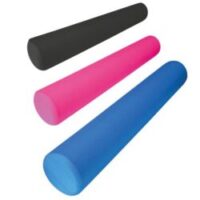
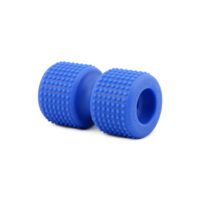
These muscle and soft tissue products are commonly used by our remedial massage therapists and physiotherapists to relax or loosen muscles.
- Liniments & Gels, Massage Liniments, Pain Management
Fisiocrem
$16.95 – $39.95Select optionsQuick View - Christmas Gift Ideas, Exercise Equipment, Gift Ideas, Massage Tools, Pain Management
Pocket Physio MAX
$24.95Select optionsQuick View -

-
 Gift Ideas, Christmas Gift Ideas, Exercise Equipment, Foot, Knee, Massage Tools, Pain Management
Footeez Lockeroom
$45.00Add to cartQuick View -
 Exercise Equipment, Back, Elbow, Foot, Massage Tools, Shoulder
Pocket Physio
$14.95Select optionsQuick View -
-


-
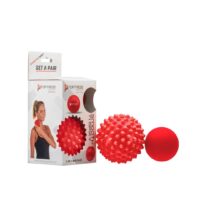 Exercise Equipment, Gift Ideas, Massage Tools
Smooth n Spiky Massage Balls (2 Pack)
$20.00Select optionsQuick View - Pain Management, Christmas Gift Ideas, Liniments & Gels, Product Search
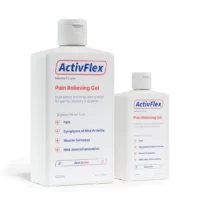
ActivFlex Pain Relief Gel
$27.95 – $42.95Select optionsQuick View -
-







References
- Mak S, Allen J, Begashaw M, et al. Use of massage therapy for pain, 2018–2023: a systematic review. JAMA Network Open. 2024;7(7):e2422259.
- Chen PC, Wei L, Huang CY, et al. The effect of massage force on relieving nonspecific low back pain. International Journal of Environmental Research and Public Health. 2022;19(20):13191.
- Nemati D, Lauche R, Munk N. Massage therapy as a self-management strategy for musculoskeletal and chronic pain symptoms: a systematic review. Journal of Integrative and Complementary Medicine. 2024;30(4):319–335.
Brisbane Massage Therapists
Massage therapists operate independent practices within selected PhysioWorks clinics. Use the current booking pathway to check available practitioners, appointment lengths and locations.
Remedial Massage Therapists
Our remedial massage therapists help relieve muscle tension, improve flexibility, reduce soft tissue pain, and support recovery from training loads, desk posture, and everyday physical stress.
Debbie Cox

Ashish Shrestha
