
Lymphatic Drainage Massage
Lymphatic Drainage Massage Brisbane
Lymphatic drainage massage is a gentle hands-on treatment that uses light, rhythmic movements rather than deep pressure. It may be considered for some people with medically assessed swelling, heaviness or tightness.

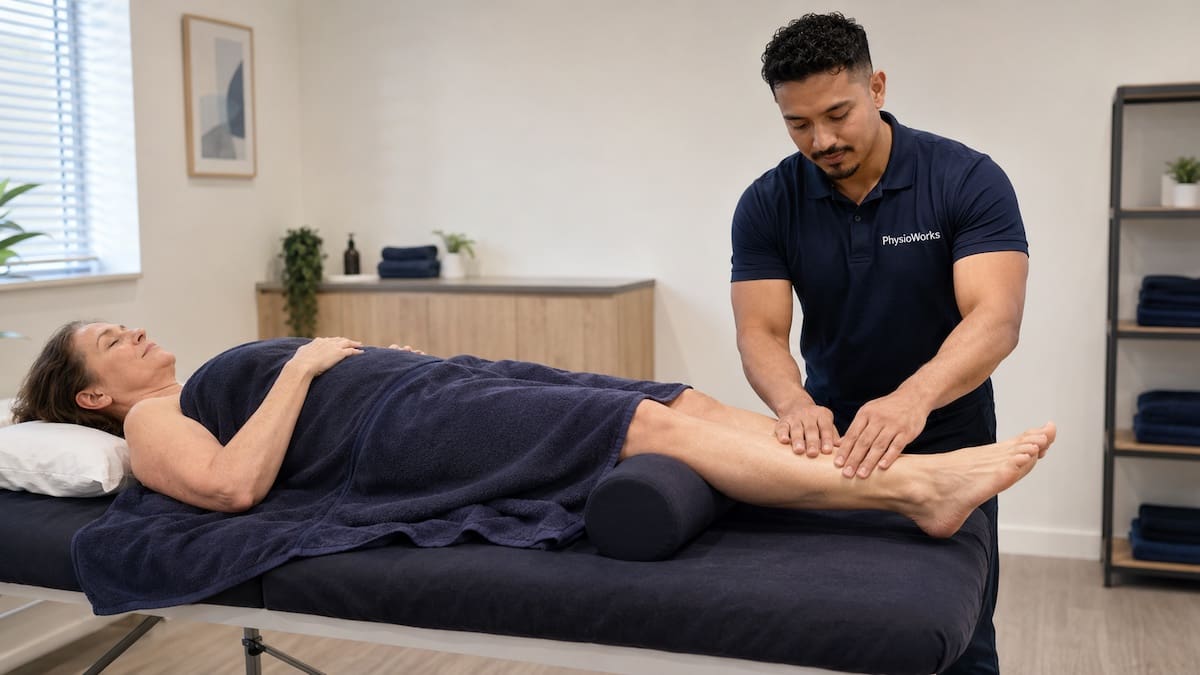
Gentle lymphatic drainage massage uses light, directional contact rather than deep pressure.
The treatment differs from firm remedial massage and deep tissue massage. Your therapist will discuss your symptoms, medical history and goals before deciding whether massage is appropriate.
Book a Massage Appointment
Massage is available at selected PhysioWorks clinics. Choose your preferred clinic to view current booking options.
What Is Lymphatic Drainage Massage?
Lymphatic drainage massage is a gentle treatment approach. The therapist uses slow, light and repeated movements over the skin rather than firm pressure through the muscles.
The lymphatic system helps move fluid through the body. Changes in lymph flow can contribute to swelling, heaviness or tightness. However, swelling has many possible causes. Massage should only proceed when the cause has been appropriately assessed and treatment is considered safe.
How Does Lymphatic Drainage Massage Work?
Your therapist uses broad, relaxed hand contact and gentle directional movements. The pressure is usually much lighter than standard therapeutic or sports massage.
Treatment may focus on areas around the neck, trunk or affected limb. Depending on your broader care plan, it may sit alongside movement, breathing exercises, skin care, compression or advice from another health professional.
What Benefits May Lymphatic Drainage Massage Provide?
Responses vary between people. When lymphatic drainage massage is appropriate, it may help some people:
- Feel more comfortable in an affected area.
- Reduce feelings of heaviness or tissue tightness.
- Relax during a gentle treatment session.
- Support a broader swelling-management plan.
- Better understand relevant self-management strategies.
Massage should not be presented as a guaranteed way to reduce swelling. Research suggests that manual lymphatic drainage may be most useful as one possible component of broader care rather than as a stand-alone treatment.
What Should You Expect During Treatment?
Your appointment begins with questions about your symptoms, general health, medications, surgery history and treatment goals. Tell your therapist when the swelling started, whether it has changed and whether another health professional has assessed it.
Please also tell your therapist about relevant medical conditions, recent surgery, cancer treatment, skin problems, pregnancy or anticoagulant medication. This information can affect whether massage is appropriate and how treatment is performed.
You will then lie or sit in a comfortable position. Your therapist will use gentle, rhythmic contact over the relevant region. Treatment should not feel forceful or painful.
Pressure, positioning, treatment area and draping can be adjusted to your comfort. You can ask questions, request a change in pressure, decline treatment to an area or stop treatment at any time.
Session length varies according to the area being treated, your health history and your goals. Your therapist can discuss an appropriate appointment length with you.
Is Lymphatic Drainage Massage Suitable for Everyone?
Massage May Be Worth Discussing If
- Your swelling has already been assessed.
- You have appropriate clearance after surgery.
- You prefer light treatment rather than deep pressure.
- Treatment forms part of a broader care plan.
Seek Medical Advice First If
- The swelling is new or unexplained.
- The area is red, hot or increasingly painful.
- You recently had major surgery.
- You have significant heart, kidney or circulation concerns.
If muscle soreness, trigger points or training-related tension is your main concern, trigger point therapy, remedial massage or deep tissue massage may be more suitable.
When Should You Seek Medical Advice Before Massage?
Your therapist may delay treatment and recommend medical advice when there is a risk that massage could be unsuitable.
Massage may not be appropriate when you have:
- A known or suspected blood clot or deep vein thrombosis.
- An active infection, cellulitis, fever or acute illness.
- Unstable heart failure or significant kidney disease.
- New, rapidly changing or unexplained swelling.
- Recent surgery without clearance from the treating practitioner.
- Severe pain, significant redness or heat in the swollen area.
Lymphatic Drainage Massage After Surgery
Do not start lymphatic drainage massage after surgery without guidance from your surgeon or treating health professional. Appropriate timing depends on the procedure, wound healing, infection risk, circulation and other medical factors.
When clearance has been provided, gentle massage may form one part of a wider recovery plan. Other elements may include movement, compression, elevation and post-surgery rehabilitation.
Lymphatic Drainage Massage and Lymphoedema
Lymphoedema is persistent swelling associated with impaired lymphatic drainage. It can occur after cancer treatment, surgery, trauma or other medical conditions.
Lymphoedema management often involves more than massage. A broader plan may include compression, exercise, skin care, education and monitoring by suitably trained health professionals.
Manual lymphatic drainage may help selected people when it forms part of this wider care. Evidence remains mixed when it is used alone.
What Does the Research Say?
Studies have examined manual lymphatic drainage for breast cancer-related lymphoedema and swelling after orthopaedic injury or surgery. Results vary between studies.
Current evidence supports cautious use as part of broader care rather than presenting massage as a stand-alone solution or guaranteed way to reduce limb volume.
Related Massage Services
Remedial Massage
Consider remedial massage when muscle soreness, tension or a musculoskeletal complaint is the main concern.
Deep Tissue Massage
Learn about firmer massage techniques used for selected muscle and soft-tissue concerns.
Swedish Massage
Explore a gentler general massage option focused on comfort and relaxation.
Trigger Point Therapy
Consider trigger point treatment when localised muscle tenderness or tension is a primary concern.
View our Brisbane massage services to compare other massage options.
Frequently Asked Questions
What is lymphatic drainage massage?
Lymphatic drainage massage is a gentle treatment that uses light, rhythmic skin movements. It differs from deep tissue massage because it does not use firm pressure through the muscles.
Can lymphatic drainage massage reduce swelling?
It may help some people feel more comfortable or less heavy. However, results vary, and massage should usually form part of a broader swelling-management plan.
Is lymphatic drainage massage painful?
No. The technique should feel light and comfortable. Tell your therapist if you feel pain, pressure or discomfort.
Can I have lymphatic drainage massage after surgery?
Only after your surgeon or treating health professional confirms that massage is appropriate. Timing depends on the procedure, wound healing and your medical history.
Should unexplained swelling be massaged?
No. New or unexplained swelling should be medically assessed before massage. Sudden one-sided swelling, redness, heat, chest pain or shortness of breath requires urgent medical attention.
How long does an appointment take?
Appointment length depends on the area being treated, your health history and your goals. Your therapist can discuss a suitable appointment length with you.
What to Do Next
Start with medical advice when swelling is new, unexplained or changing. If the cause is known and massage has been considered safe, you can book a massage appointment to discuss your health history, goals and treatment options.
The booking pathway below lets you choose from the current PhysioWorks massage options. Therapist services vary, so select the appropriate clinic and practitioner pathway for your needs.
Our Approach to Lymphatic Drainage Massage
At PhysioWorks, we aim to provide thoughtful, evidence-informed massage care that matches your goals and comfort. Your therapist will discuss the treatment approach, screen for relevant safety concerns and adapt the session to your needs.
If your presentation suggests that massage is not appropriate, your therapist may recommend medical assessment or another healthcare pathway instead.
References
- Lin Y, Fu MR, Qiu Z, et al. Manual lymphatic drainage for breast cancer-related lymphedema: a systematic review and meta-analysis. Phys Ther. 2022;102(6):pzac034.
- De Vrieze T, De Groef A, Van der Gucht E, et al. Does manual lymphatic drainage add value in reducing arm volume in patients with breast cancer-related lymphedema? Phys Ther. 2022;102(10):pzac137.
- Kasseroller RG. Effectiveness of manual lymphatic drainage in intensive decongestive therapy for breast cancer-related lymphedema. Lymphat Res Biol. 2023;21(3):310–318.
- Klein I, Blum A, Koren L, et al. Lymphatic and compression therapy after orthopaedic injury or surgery. J Orthop Surg Res. 2020;15(1):516.
