
Cricket Injuries
Cricket injuries can develop during bowling, batting, sprinting, throwing, catching and fielding. Some happen suddenly, while others build when training or match load rises faster than the body can recover.


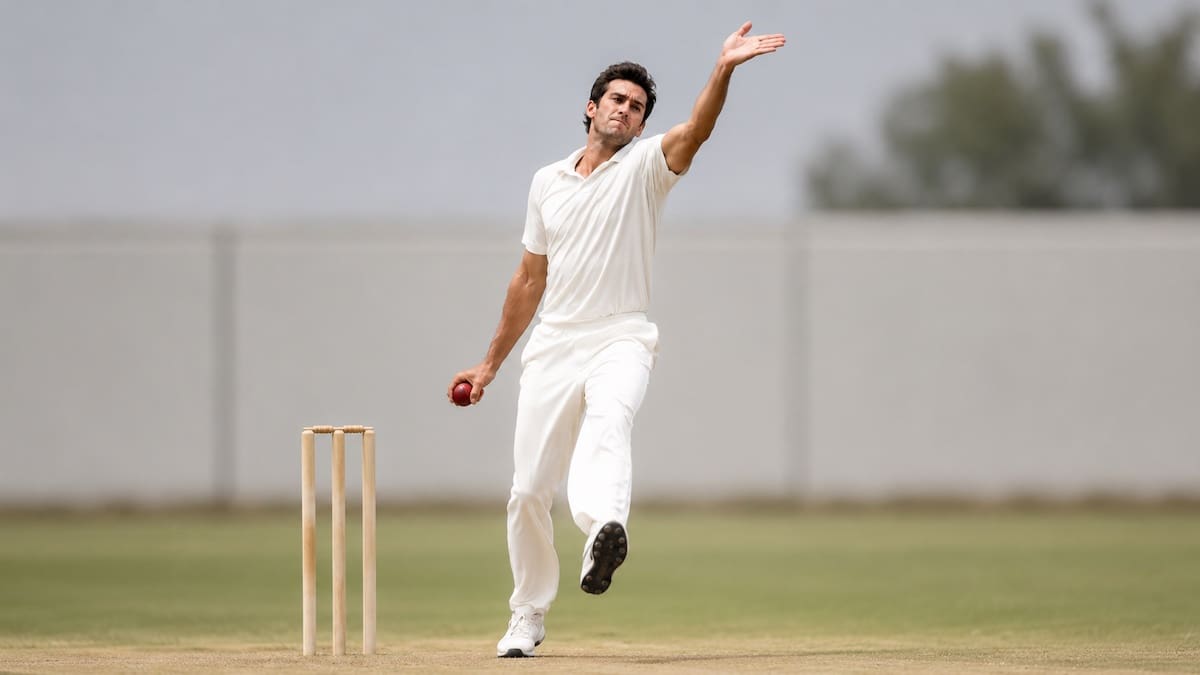
What are cricket injuries?
Cricket injuries include sudden trauma and problems that develop gradually. A player may sprain an ankle while fielding, injure a finger while catching or develop concussion symptoms after a ball strike. Other problems, including side strain, hamstring strain and lumbar bone stress injury, can build through repeated training and match exposure.
Cricket creates a distinctive mix of physical demands. Fast bowlers repeatedly combine a run-up, front-foot landing, trunk rotation and high-speed arm movement. Fielders sprint, dive, land and throw. Batters rotate forcefully and repeatedly accelerate between wickets.
The injury pattern varies with playing role, age, previous injury, physical capacity, technique, recent workload and recovery. For a broader overview, visit our team sports injury guides.
Common areas
Lower back, side, hamstring, shoulder, hand, wrist, knee and ankle.
Common triggers
Workload spikes, fatigue, inadequate recovery, impact, awkward landings and returning after a break.
Common effects
Pain, stiffness, swelling, reduced speed, poorer accuracy and loss of confidence.
Where do cricket injuries occur?
Cricket can load several body regions during the same session. The location of pain may provide useful clues, but symptoms alone do not confirm a diagnosis.
Lower back and side
Repeated fast-bowling load and forceful trunk rotation can contribute to back pain, lumbar bone stress and side strain.
Read about cricket stress fracture and side strain.
Hamstring and groin
Sprinting between wickets, chasing boundaries and rapidly increasing running volume can load the hamstring and groin.
See our hamstring strain guide.
Shoulder, elbow and wrist
Repeated throwing and bowling can irritate the shoulder, elbow or wrist, particularly when volume or intensity rises quickly.
Learn more about throwing injuries and rotator cuff injuries.
Hand, knee and ankle
Ball impact, dives, quick turns, uneven turf and awkward landings may cause hand, knee or ankle injuries.
Review hand and wrist injuries, sports knee injuries and sprained ankle.
Why does cricket cause injuries?
Cricket may look stop-start, but players repeatedly produce short, powerful efforts over a long training session or match. Fast bowling adds high-speed movement and repeated impact. Fielding adds sprinting, diving and throwing. Batting adds forceful rotation and repeated accelerations.
Recent workload change often matters more than one isolated session. A player may cope well with a stable workload but develop symptoms after suddenly increasing overs, spells, throwing distance, sprint volume or gym load.
How do cricket injuries vary by playing role?
Each role creates a different mix of repetition, speed, impact and recovery demands.
Fast bowler
Common patterns: lower-back pain, lumbar bone stress, side strain and hamstring strain.
Assessment focus: bowling workload, recovery, trunk and hip capacity, sprint exposure and graded return to bowling.
Batter
Common patterns: side strain, groin pain, lower-back irritation and running-related muscle injury.
Assessment focus: trunk rotation, hip capacity, batting volume and repeated acceleration between wickets.
Fielder
Common patterns: throwing-related shoulder pain, hamstring strain, ankle sprain and impact injuries.
Assessment focus: sprinting, throwing, diving, landing and changing direction under fatigue.
Wicketkeeper
Common patterns: knee, hip and lower-back irritation from repeated squatting and rapid side-to-side movement.
Assessment focus: squat tolerance, hip and trunk control, glove work and repeated movement capacity.
What are common cricket injuries?
Cricket stress fracture
Lumbar bone stress can develop through repeated fast-bowling load, particularly after a rapid workload increase or inadequate recovery.
Hamstring strain
A hamstring strain may occur during sprinting, boundary chasing or sudden high-speed work after a quieter training period.
Side strain
Side strains affect muscles around the trunk and can be associated with fast bowling, throwing and forceful batting rotation.
Rotator cuff-related shoulder pain
Shoulder symptoms may develop after increased throwing volume, longer spells or additional upper-body training.
Hand and wrist injuries
Ball impact, awkward catching, diving and falls may injure the fingers, hand or wrist.
Sprained ankle
Ankle sprains may occur during a quick turn, uneven landing, fielding slide or movement on irregular turf.
How can physiotherapy help a cricket injury?
A physiotherapy assessment considers the injured area as well as the demands of the player’s role. The aim is to identify factors that affect symptoms, physical capacity and the ability to return safely to training and competition.
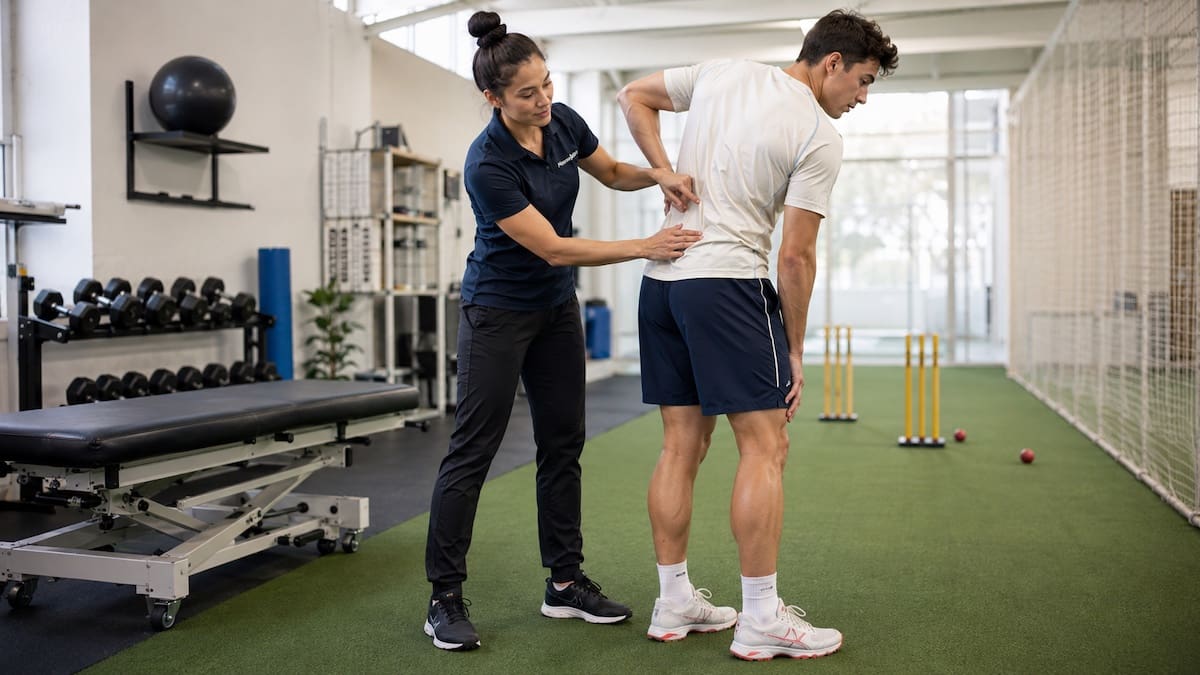
- Clinical assessment: examines symptoms, movement, strength and signs that may require further investigation.
- Workload review: considers bowling, throwing, sprinting, strength training, competition and recovery.
- Rehabilitation: rebuilds mobility, strength, control, power and tolerance for cricket-specific tasks.
- Return-to-sport planning: progresses running, throwing, bowling, batting and fielding in manageable stages.
- Exercise physiology: may support longer-term strength, fitness and physical preparation.
- Massage: may provide short-term symptom relief when used as part of an active rehabilitation plan.
For broader information about assessment and rehabilitation, see sports injury physiotherapy.
When should a cricket injury be assessed?
Arrange an assessment when pain changes how you bowl, bat, throw, run or field, or when symptoms repeatedly return after temporary rest.
- Pain persists beyond several days or repeatedly returns with cricket.
- Swelling, bruising or marked tenderness develops.
- A pop, crack or sudden loss of function occurred during the injury.
- Bowling pace, throwing accuracy, sprint speed or confidence has dropped.
- Lower-back pain increases during bowling, particularly in a junior fast bowler.
- Shoulder or elbow pain increases with throwing.
- A previous muscle strain or ankle sprain keeps recurring.
- Pain affects sleep, walking or ordinary daily activity.
How can cricket injury risk be reduced?
- Build pre-season load gradually: increase running, throwing, bowling and strength work in planned stages.
- Maintain sprint exposure: include appropriate short, faster running rather than leaving match day as the largest speed load.
- Track bowling load: consider total deliveries, spell length, consecutive days and the player’s next-day response.
- Follow junior bowling guidance: use Cricket Australia’s junior bowling guidelines when planning pace-bowling load.
- Develop trunk, hip and leg capacity: strength and control support acceleration, rotation, bracing and deceleration.
- Prepare for throwing: build distance, effort and volume gradually after a break.
- Plan recovery: account for sleep, hydration, travel, work, school and back-to-back sessions.
- Respond to recurring symptoms: investigate persistent pain rather than repeatedly resting and returning to the same workload.
How should you return to cricket after injury?
Return should reflect the player’s usual role. A fast bowler needs a different progression from a batter or wicketkeeper. Increase one main variable at a time and monitor symptoms during the session, later that day and the next morning.
-
Settle the reactive phase
Reduce or modify the activities that clearly aggravate symptoms while maintaining comfortable movement and general conditioning where appropriate.
-
Rebuild physical capacity
Restore the strength, mobility, control and fitness required for the player’s role.
-
Reintroduce cricket skills
Begin controlled running, batting, catching, throwing or bowling at a manageable volume and intensity.
-
Increase role-specific load
Progress speed, effort, total volume, spell length and recovery demands without changing every variable at once.
-
Complete team training
Confirm that the player tolerates realistic training demands before unrestricted competition.
-
Monitor the response
Use pain, confidence, performance and the next-day response to guide the following session.
Cricket injury FAQs
What are the most common cricket injuries?
Cricket injuries commonly involve the lower back, hamstring, side, shoulder, hand, wrist, knee and ankle. The pattern varies with playing role, age, workload, previous injury and recent changes in training.
Why do fast bowlers develop back stress injuries?
Fast bowling repeatedly loads the lumbar spine through the run-up, front-foot landing, trunk movement and delivery action. Risk may rise with workload spikes, inadequate recovery and growth-related factors in junior players.
How long does a cricket side strain take to recover?
Recovery varies with the injured tissue, severity, symptoms and cricket demands. A mild strain may improve within several weeks, while a more significant injury can take longer. Return should be based on function and tolerance rather than time alone.
Should I keep playing with shoulder pain after throwing?
Reduce or stop painful throwing when symptoms worsen, speed or accuracy falls, or discomfort persists after training. Assessment can help identify contributing factors and guide a graded return.
How can I manage cricket load during a busy schedule?
Avoid stacking every hard bowling, sprinting, throwing and gym session together. Track total cricket exposure, maintain regular strength and speed work, and adjust the next session according to fatigue and symptom response.
When should a junior fast bowler with back pain stop bowling?
A junior fast bowler should stop painful bowling and arrange assessment when back pain develops during or after bowling, repeatedly returns, worsens with extension or rotation, or affects normal activity. Early review is important because bone stress injuries can initially present as activity-related back pain.
What to do next
Book a physiotherapy assessment when a cricket injury limits training, performance or confidence. Your physiotherapist can assess the likely problem, review workload and physical capacity, and plan a graded return to your cricket role.
Choose your clinic and appointment pathway
Select a PhysioWorks clinic to continue to live booking, an appointment request or reception assistance.
Muscle & Soft Tissue Products
These muscle and soft tissue products are commonly used by our physiotherapists to relax or loosen muscles, improve strength, comfort, flexibility, and home exercise programs.
-
-
-


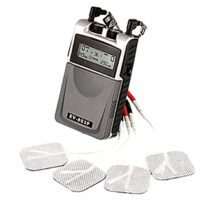
- EMS Machines, Pain Management, TENS Machine, TENS Machine & EMS
NeuroTrac Rehab (TENS Machine + EMS)
$285.00Add to cartQuick View -
-
-
-
 Exercise Balls, Back, Exercise Equipment, Knee, Shoulder
66fit Exercise Balls | Core & Rehab Stability Ball
$32.00 – $57.00Select optionsQuick View - Liniments & Gels, Massage Liniments, Pain Management
Fisiocrem
$16.95 – $39.95Select optionsQuick View -

-
-
 Exercise Equipment, Resistance Band
AllCare Powerloop Bands
$24.95 – $79.95Select optionsQuick View -
 Exercise Equipment, Knee, Resistance Band
POW.R Fabric Mini Loop Bands
$12.00 – $55.00Select optionsQuick View -











References
- Orchard JW, Inge P, Sims K, et al. Comparison of injury profiles between elite Australian male and female cricket players. J Sci Med Sport. 2023;26(1):19-24. doi:10.1016/j.jsams.2022.12.002.
- Orchard JW, James T, Alcott E, et al. Incidence and prevalence of elite male cricket injuries using updated consensus definitions. Br J Sports Med. 2016;50(12):731-738.
- Orchard JW, Kountouris A, Sims K. Management of lumbar bone stress injury in cricket fast bowlers and other athletes. J Sci Med Sport. 2023.
- Cricket Australia. Junior bowling guidelines. Accessed 22 June 2026.