Rotator Cuff Calcific Tendinopathy
What Is the Best Sleeping Position for Back and Neck Pain?


The best sleeping position for back and neck pain is usually one that feels comfortable and keeps your head, neck, spine and pelvis well supported. Back sleeping with a pillow under the knees and side sleeping with a pillow between the knees are practical options for many people.
Why Does Sleeping Position Matter for Back and Neck Pain?
Sleeping positions can affect how your neck and back feel during the night and when you wake up. A posture that keeps one area bent or twisted for a long time may aggravate sensitive muscles and joints. However, sleep posture is only one possible contributor to pain.
Rather than forcing your spine into a rigid position, aim for comfortable support. Your pillow, mattress, body shape and ability to change positions all matter. Morning symptoms may also relate to neck pain or lower back pain that develops for reasons unrelated to sleep.
How Can You Sleep Comfortably on Your Back?
Lie on your back with your head supported by a pillow that does not force your chin towards your chest. If your lower back feels uncomfortable, try placing a pillow beneath both knees. This slightly bends the hips and knees and may reduce the feeling of strain.
Head and neck
Use a pillow that supports the neck without pushing the head sharply forwards.
Knee support
Try a small pillow beneath both knees if it feels more comfortable for your lower back.
Mattress
Check that the mattress supports your body without uncomfortable sinking or pressure.
How Can You Sleep Comfortably on Your Side?
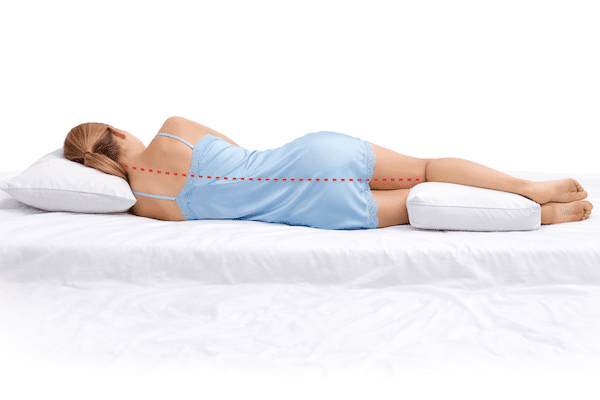
Side sleeping can be a comfortable option for people with back or neck symptoms. Bend your hips and knees slightly rather than curling tightly. A pillow between your knees may limit uncomfortable movement through the pelvis and lower back.
For neck comfort, the head pillow should fill the gap between your shoulder and head. It should not leave your head drooping towards the mattress or tilted upwards. Pillow height depends on your shoulder width, mattress and sleeping preference. See our guide to choosing a pillow for sleep.
Which Sleeping Positions May Aggravate Pain?
Stomach sleeping often requires prolonged neck rotation and may feel uncomfortable if your neck is already sensitive. It can also increase lower back arching in some people. If you regularly wake sore, try changing gradually to supported side sleeping.
A tightly curled position may feel stiff for some people. However, gentle bending can relieve symptoms for others, including some people with spinal stenosis. Let comfort and your usual symptoms guide you rather than assuming every curved posture is harmful.
How Should You Choose a Pillow for Neck Pain?

A suitable pillow supports a comfortable head position. Side sleepers often need more pillow height than back sleepers, but there is no universally correct measurement. If you wake with neck discomfort, review pillow height, firmness and the way it works with your mattress.
Our pillow selection guide and signs of an unsupportive pillow explain what to consider before replacing your pillow.
Does Mattress Firmness Matter for Back Pain?
A mattress should support your body without creating uncomfortable pressure or excessive sinking. Medium-firm mattresses suit many people with persistent lower back pain, although the most comfortable choice varies.
If your mattress is sagging or your symptoms are consistently worse in one bed than another, consider whether support is contributing. Mattress changes cannot address every cause of back pain.
How Can You Get Out of Bed With Less Discomfort?
If sitting straight up is painful, try rolling onto your side, moving your legs over the edge and pushing up with your arms. This log-roll method can make getting out of bed more comfortable. Move gently once standing rather than forcing stretches into pain.
When Should You Seek Help?
Consider a physiotherapy assessment if pain repeatedly interrupts sleep, continues most mornings, spreads into your arm or leg, or affects everyday activity. A physiotherapist can assess your symptoms and help you decide whether changing your sleep setup, movement or exercise plan is likely to help.
Choose your clinic and appointment pathway
Select a PhysioWorks clinic to continue to live booking, an appointment request or reception assistance.
Sleeping Position FAQs
Is side sleeping or back sleeping better for back pain?
Both can be comfortable. Back sleeping with a pillow under the knees may reduce lower back discomfort. Side sleeping with a pillow between the knees may reduce twisting. Choose according to comfort and symptoms.
Why can stomach sleeping aggravate neck pain?
Stomach sleeping often keeps the neck turned for several hours. If this position increases morning stiffness or pain, consider trying a supported side-lying position.
What pillow height is best for neck pain?
Choose a height that keeps your head in line with your body. Side sleepers often need a taller pillow than back sleepers, depending on shoulder width, mattress and personal comfort.
Can a pillow under the knees help lower back pain?
For some back sleepers, a pillow beneath both knees makes the hips and knees more comfortable and reduces the feeling of arching through the lower back.
When should I see a physiotherapist about pain after sleeping?
Consider an assessment if neck or back pain regularly disturbs sleep, persists after waking, spreads into an arm or leg, or continues despite changes to your sleeping setup.
References
- Cary D, Jacques A, Briffa K. Examining relationships between sleep posture, waking spinal symptoms and quality of sleep: A cross sectional study. PLoS One. 2021;16(11):e0260582. doi:10.1371/journal.pone.0260582.
- Saini Y, Rai A, Sen S. Relationship between sleep posture and low back pain: A systematic review. Musculoskeletal Care. 2025;23(2):e70114. doi:10.1002/msc.70114.
- Pang JCY, Tsang SMH, Fu ACL. The effects of pillow designs on neck pain, waking symptoms, neck disability, sleep quality and spinal alignment in adults: A systematic review and meta-analysis. Clinical Biomechanics. 2021;85:105353. doi:10.1016/j.clinbiomech.2021.105353.
- Barbara AM, Grobelna A. Therapeutic mattresses for chronic pain. CADTH Health Technology Review. 2022.
Pillow Support Products
- Neck, Christmas Gift Ideas, Gift Ideas, Pillows/Cushions, Posture
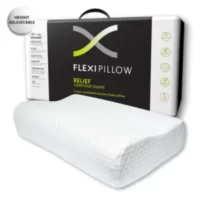
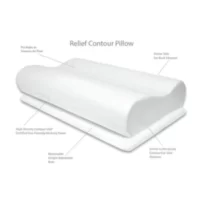
FlexiPillow Relief Contour Pillow
$109.95Add to cartQuick View - Christmas Gift Ideas, Neck, Pillows/Cushions
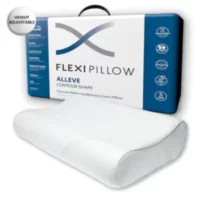
FlexiPillow Alleve Pillow
$109.95Add to cartQuick View -