
Relaxation Massage
Relaxation Massage
Relaxation massage uses gentle, flowing strokes and light-to-moderate pressure to help ease general muscle tension and create a calm, comfortable treatment experience.

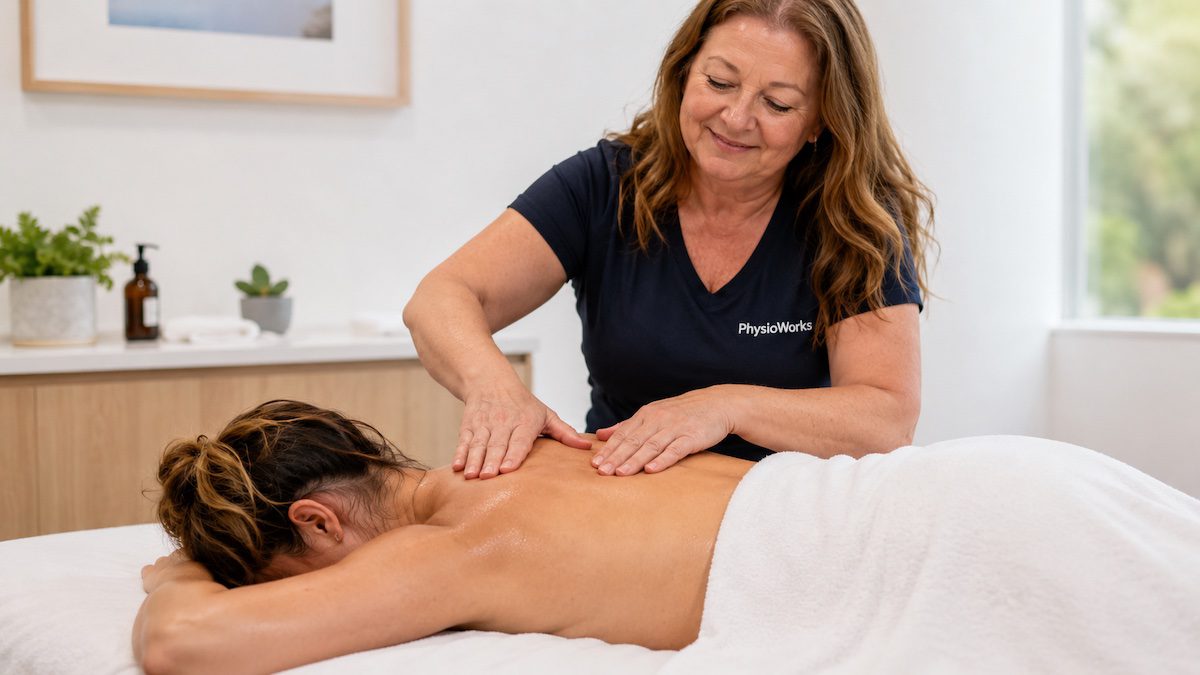
People often choose relaxation massage after a busy or stressful period, when they feel generally tight or tired, or when they prefer a softer treatment style.
Your massage therapist will discuss your preferred pressure, treatment areas and positioning before starting. You can ask for changes, decline treatment of an area or stop the session at any time.
Book a Massage Appointment
Massage is available at selected PhysioWorks clinics. Choose your preferred clinic to view current booking options.
What Is Relaxation Massage?
Relaxation massage is a gentle style of hands-on treatment. It usually combines smooth gliding strokes, an even rhythm and light-to-moderate pressure.
The session focuses on comfort and whole-body ease rather than strong pressure or intensive work on one painful spot. Your therapist may spend more time on areas that commonly hold tension, such as the neck, shoulders or back, while keeping the overall treatment calm and comfortable.
Pressure does not need to feel painful to be useful. Your therapist can make it lighter or firmer as the session progresses.
Pressure
Usually light to moderate and adjusted to your comfort.
Treatment style
Slow, flowing and designed to feel settled rather than intense.
Main goal
General comfort, relaxation and relief from everyday muscle tension.
Why Do People Book Relaxation Massage?
People often book relaxation massage when stress, work demands or a busy routine leave them feeling tense or run down.
Common reasons include:
- general neck, shoulder or back tightness
- feeling physically tense after a demanding week
- difficulty slowing down or switching off
- preferring gentle massage instead of strong pressure
- wanting a calm treatment as part of a regular wellbeing routine
- wanting to try massage for the first time in a comfortable setting
Massage may support relaxation and short-term comfort. However, individual responses vary, and massage does not treat every cause of pain, sleep difficulty or stress.
What Happens During a Relaxation Massage Appointment?
-
Discuss your goals and preferences
Your therapist will ask what you want from the session, which areas feel tense and whether you prefer light or moderate pressure.
-
Choose comfortable positioning
Your therapist can adjust the treatment table, pillows and your position. Side-lying or other options may be available when lying face down is uncomfortable.
-
Confirm treatment areas and draping
Only the area being treated needs to be uncovered. Towels or sheets remain in place to support warmth, privacy and comfort.
-
Adjust the session as needed
You can request lighter pressure, more pressure, a position change or a different area of focus at any time.
How Does Relaxation Massage Compare With Other Styles?
Relaxation Massage
Usually uses gentle, flowing strokes and light-to-moderate pressure. It suits people seeking calm, comfort and help with general tension.
Swedish Massage
Uses similar flowing techniques but may include a more structured mix of strokes and pressure based on your goals.
Remedial Massage
Places more emphasis on specific muscles, symptoms or problem areas and may use a more targeted treatment plan.
Deep-Tissue Massage
May use firmer, more sustained pressure when this suits the treatment area, your preferences and your health history.
There can be some overlap between massage styles. Your therapist can adjust techniques during the appointment rather than treating each style as a fixed formula.
Is Relaxation Massage Right for You?
Relaxation massage may suit you when your main goal is gentle hands-on care rather than strong or highly targeted treatment.
You prefer gentle pressure
The therapist can keep pressure light and increase it only when you request it.
You feel generally tense
The session can cover several areas instead of focusing on one specific problem.
You are new to massage
A slower appointment can help you learn which pressure and positioning feel comfortable.
Relaxation massage may not be the most suitable first appointment when pain is new, severe, worsening or linked to an injury. A physiotherapy assessment may be more appropriate when the cause of your symptoms is unclear.
When Should You Delay Massage or Seek Advice?
Delay massage and seek medical advice when you have:
- a fever or you feel acutely unwell
- a new skin infection, contagious rash or open wound
- unexplained swelling, redness or heat in a limb
- a known or suspected recent blood clot
- sudden severe or unexplained pain
- new numbness, weakness or other neurological symptoms
- a recent injury that has not been assessed
Tell your therapist before treatment if you are pregnant, take blood-thinning medicine, recently had surgery, have a fracture or skin condition, or are receiving cancer treatment. This information may affect pressure, positioning, treatment areas or whether massage should proceed.
What Might You Notice After the Appointment?
Many people feel calm or more comfortable after relaxation massage. Some people notice temporary tenderness, tiredness or a change in how tense an area feels.
Plan a normal, comfortable level of activity afterwards. You do not need to follow a strict recovery routine. Drink according to thirst and return to your usual activities as they feel comfortable.
Seek advice if you develop marked pain, unusual swelling, new neurological symptoms or another response that concerns you.
How Often Can You Book Relaxation Massage?
There is no standard schedule that suits everyone. Some people book occasionally when they feel tense, while others prefer a regular appointment that fits their routine.
Your preferred frequency may depend on:
- your treatment goals
- how long any benefit lasts
- your workload and activity level
- your budget and available time
- whether another form of assessment or care would be more useful
Your therapist can discuss a practical plan without assuming that frequent or ongoing massage is necessary.
Can Relaxation Massage Help With Sleep?
Some studies suggest massage may support sleep quality in certain groups. However, the research involves different populations and massage approaches. It does not establish that a relaxation massage appointment will improve sleep for everyone.
Persistent sleep problems can have many causes. Speak with your GP when poor sleep continues, affects daytime function or occurs with other health concerns.
Related Massage Services
What to Do Next
Choose relaxation massage when you want gentle pressure, a calm treatment rhythm and help with general muscle tension.
During booking, select the clinic and therapist that suit you. At the appointment, tell your therapist which areas you would like treated and how much pressure feels comfortable.
Brisbane Massage Therapists
Choose a massage therapist who suits your preferred location, pressure and treatment style. Because massage booking systems vary by clinic and therapist, use the options shown in the booking pathway rather than assuming every therapist uses the same portal.
Remedial Massage Therapists
Our remedial massage therapists help relieve muscle tension, improve flexibility, reduce soft tissue pain, and support recovery from training loads, desk posture, and everyday physical stress.
Debbie Cox

Ashish Shrestha
Courtney Burgin

References
- Ntoumas I, Karatzaferi C, Giannaki CD, et al. The impact of relaxation massage prior to bedtime on sleep quality and quantity in people with symptoms of chronic insomnia: a home-based sleep study. Healthcare (Basel). 2025;13(2):180.
- Fang CS, Chang SL, Fang CJ, Chou FH. Effect of massage therapy on sleep quality in critically ill patients: a systematic review and meta-analysis. Journal of Clinical Nursing. 2023;32(15–16):4362–4373.
- Samuel SR, Maiya GA, Fernandes DJ, et al. Massage and relaxation therapy for sleep in cancer survivors: a systematic review. Supportive Care in Cancer. 2021;29(6):2957–2972.
- National Center for Complementary and Integrative Health. Massage therapy: what you need to know.
Relaxation Massage FAQs
What is relaxation massage?
Relaxation massage uses gentle, flowing strokes and light-to-moderate pressure. It focuses on comfort, calm and general muscle tension rather than strong or highly targeted treatment.
How is relaxation massage different from Swedish massage?
Both styles may use smooth, flowing strokes. Relaxation massage places greater emphasis on a gentle, settled experience, while Swedish massage may use a broader mix of techniques and pressure.
Does relaxation massage need to hurt?
No. Relaxation massage should remain comfortable. Tell your therapist when pressure feels too strong, too light or uncomfortable so they can adjust it.
What should I wear to a relaxation massage appointment?
Wear comfortable clothing. Your therapist will explain treatment positioning and draping. Only the area being treated needs to be uncovered, and you may ask to remain more covered.
How often should I book relaxation massage?
There is no set schedule. Book according to your goals, response, preferences, budget and available time. Your therapist can discuss whether occasional or more regular appointments are appropriate.
Can relaxation massage help with sleep?
Some people report feeling more settled after massage, and research suggests possible sleep benefits in some groups. Results vary, and persistent sleep problems may need assessment by your GP.
When should I avoid massage?
Delay massage if you have a fever, skin infection, open wound, suspected blood clot, unexplained swelling, sudden severe pain or new neurological symptoms. Seek suitable medical advice before booking.
Should I book physiotherapy instead?
Physiotherapy may be the better first appointment when pain is new, worsening, injury-related, associated with weakness or pins and needles, or difficult to explain.