
Women's Health Physiotherapy

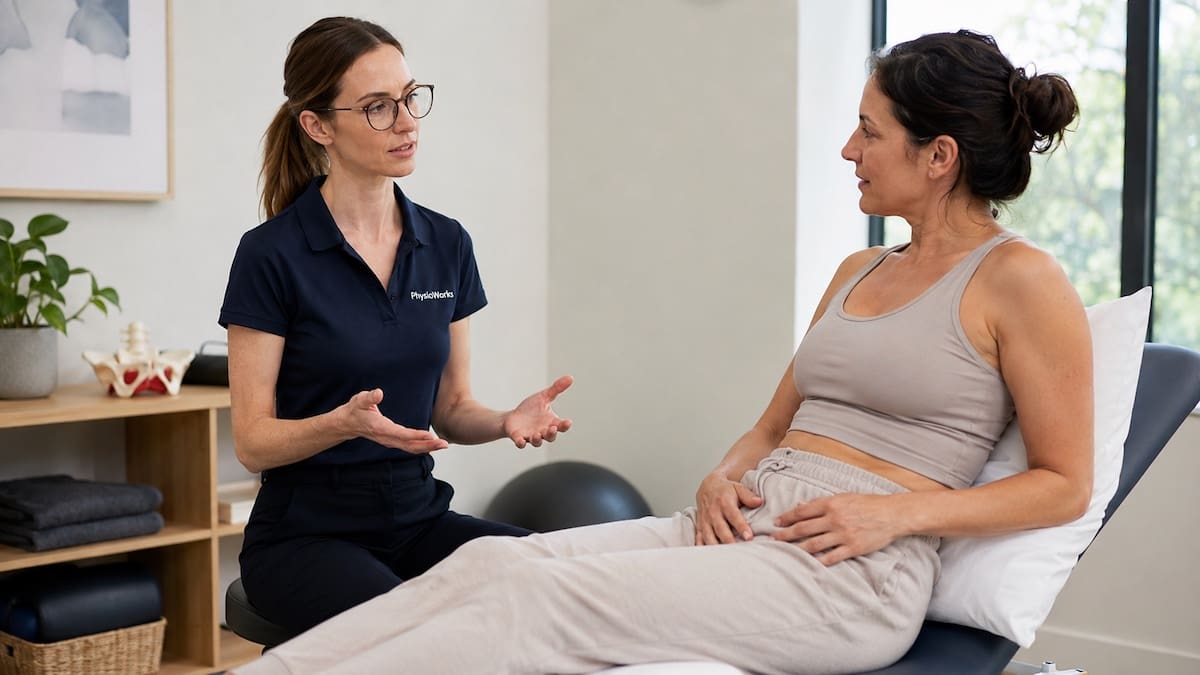
Pelvic health assessment and recovery planning
Women’s health physiotherapy may help with:
- pelvic floor and continence concerns
- pregnancy-related back, pelvic or rib pain
- postnatal recovery and return to exercise
- pelvic heaviness, urgency or prolapse symptoms
Women’s health physiotherapy may help with pelvic floor problems, bladder or bowel symptoms, pregnancy-related pain, postnatal recovery and return-to-exercise concerns. At PhysioWorks, you can also explore related help for pelvic floor exercises, pregnancy back pain, stress incontinence and mastitis and blocked ducts.
Many women book physiotherapy for leaking, pelvic heaviness, abdominal separation, back or pelvic pain in pregnancy, postnatal weakness or uncertainty about returning to walking, gym, lifting or running. For a simple public-health overview, Healthdirect explains physiotherapy in plain language.
What Is Women’s Health Physiotherapy?
Women’s health physiotherapy focuses on pelvic health, pregnancy, postnatal recovery and female-specific musculoskeletal concerns. A physiotherapist may assess pelvic floor function, breathing, posture, movement, strength, pain triggers and recovery goals.
Treatment often combines education, exercise, load management, movement retraining, symptom strategies and hands-on treatment where suitable. The aim is to help you understand your symptoms and choose a safe next step.
Who Is Women’s Health Physiotherapy For?
Women’s health physiotherapy is suitable for women at different life stages. This may include pregnancy, the postnatal period, peri-menopause, menopause and later adult life.
- women with pelvic floor or continence concerns
- women with back, pelvic or rib pain during pregnancy
- postnatal women rebuilding strength and movement confidence
- women returning to walking, gym, lifting or running
- women with bladder, bowel, prolapse or pelvic heaviness symptoms
- women who want clearer advice before symptoms progress
Common Reasons Women Book
- Leaking: urine leakage with coughing, sneezing, lifting or exercise.
- Urgency: sudden bladder or bowel urges that are hard to delay.
- Heaviness: pelvic pressure or possible prolapse symptoms.
- Pregnancy pain: back, pelvic girdle, hip or rib pain.
- Postnatal recovery: abdominal weakness, scar sensitivity or return-to-exercise concerns.
What Can Women’s Health Physiotherapy Help With?
Women’s health physiotherapy may help a wide range of pelvic health, pregnancy and postnatal concerns. Common reasons to book include leaking, urgency, prolapse symptoms, pregnancy-related pain, abdominal separation, breastfeeding-related problems and difficulty returning to exercise comfortably.
- stress incontinence and leaking with coughing, sneezing, lifting or exercise
- overactive bladder and urgency
- pelvic organ prolapse with heaviness or pressure
- pregnancy back pain and pelvic girdle pain
- diastasis recti after pregnancy
- mastitis and blocked ducts
- underactive pelvic floor symptoms
- faecal incontinence or bowel control concerns
Can Women’s Health Physiotherapy Help Pelvic Floor Problems?
Yes. Women’s health physiotherapy may help pelvic floor problems by improving strength, relaxation, coordination, breathing control, pressure management and movement habits. This may reduce leaking, urgency, heaviness, pelvic pain or uncertainty about returning to impact exercise.
Your pelvic floor muscles support the bladder, bowel and pelvic organs. They also contribute to continence, core support and pressure control. Many women benefit from a structured pelvic floor exercise program rather than guessing whether they are squeezing, relaxing and progressing correctly.
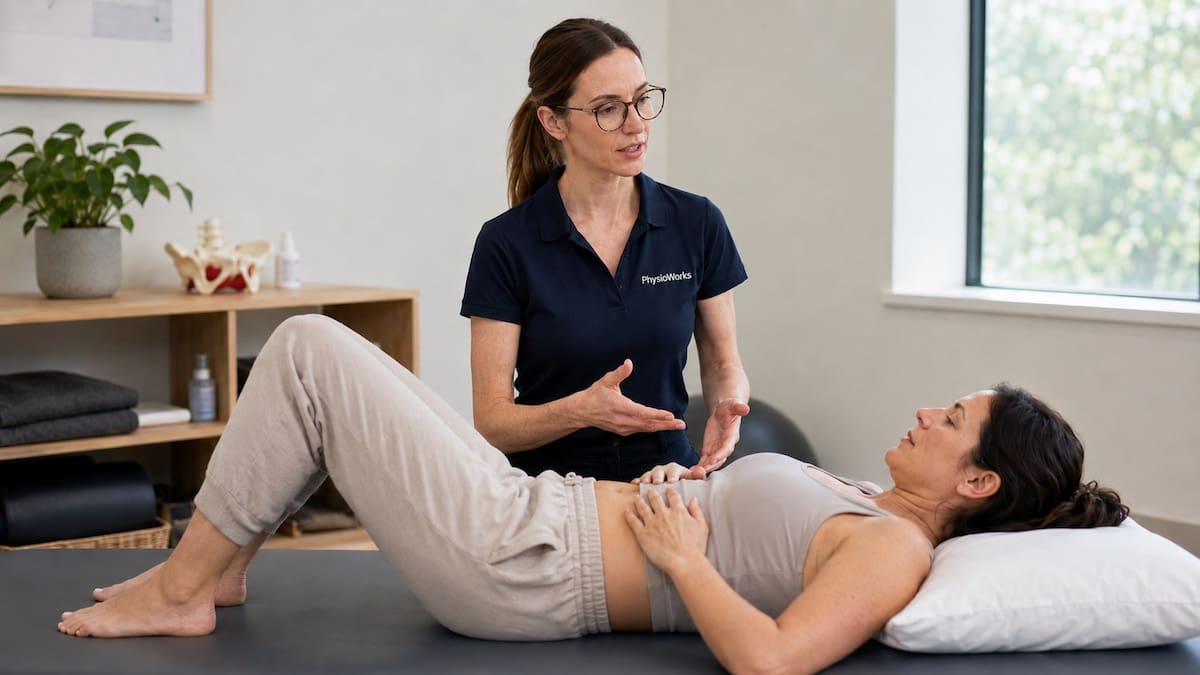
Postnatal pressure-control coaching
Can Physiotherapy Help During Pregnancy and After Birth?
Yes. Physiotherapy may help during pregnancy and after birth by reducing pain, improving movement confidence, guiding safe exercise and planning a gradual return to normal activity. Treatment is tailored to your symptoms, goals, recovery stage and current loads.
Pregnancy changes posture, breathing, abdominal wall load, pelvic floor demand and joint loading. After birth, your priorities may shift toward recovery, feeding positions, lifting, sleep disruption, scar sensitivity, abdominal strength and rebuilding tolerance for walking, work, gym or running. Helpful next reads include pregnancy back pain and our safe pregnancy exercises guide.
When Should You Book?
Consider women’s health physiotherapy if symptoms affect comfort, continence, movement confidence, exercise, sleep, work or daily tasks.
It is also useful when you are not sure what is normal, what is safe or how to progress without flaring symptoms.
What Happens at a Women’s Health Physiotherapy Appointment?
A women’s health physiotherapy appointment usually starts with a detailed discussion about your symptoms, goals, training history and relevant pregnancy or birth history. Your physiotherapist then assesses the movement, strength, breathing, pelvic floor or load-management factors that may be contributing to your symptoms.
Depending on your presentation, the assessment may include posture, abdominal control, spinal or pelvic movement, pelvic floor function, bladder and bowel habits, and how daily tasks affect you. Treatment often includes explanation, specific exercises, pacing advice, symptom strategies and hands-on treatment where appropriate.
Is Women’s Health Physiotherapy Right for You?
Women’s health physiotherapy is worth considering when symptoms are affecting comfort, continence, movement confidence, exercise, sleep or daily tasks. It is also useful when you are not sure what is normal, what is safe or how to progress your recovery.
This is often most helpful during pregnancy, in the early months after birth, when returning to exercise or when bladder, bowel, prolapse, pelvic pain or abdominal symptoms are lingering.
Where Can You Book Women’s Health Physiotherapy?
You can book women’s health physiotherapy through PhysioWorks and choose the clinic that suits you best. If you want to check current options first, start with our Clayfield clinic or Sandgate clinic, then use the booking options below to view availability.
Related Women’s Health Physiotherapy Pages
FAQs About Women’s Health Physiotherapy
What does a women’s health physiotherapist treat?
A women’s health physiotherapist may help with pelvic floor dysfunction, pregnancy back or pelvic pain, prolapse, incontinence, abdominal separation, postnatal recovery and some breastfeeding-related conditions such as mastitis or blocked ducts.
Can women’s health physiotherapy help pelvic floor problems?
Yes. Pelvic floor physiotherapy may help leaking, urgency, heaviness, prolapse symptoms, pain or difficulty returning to exercise. Treatment may improve strength, coordination, relaxation, breathing control and load management.
Can physiotherapy help during pregnancy and after birth?
Yes. Physiotherapy may help manage pregnancy-related back or pelvic pain, guide safe exercise, support recovery after birth and build a gradual return to lifting, walking, gym or running.
When should you see a women’s health physiotherapist?
Consider an assessment if you have pelvic heaviness, leaking, urgency, bowel symptoms, pregnancy-related pain, abdominal separation, pain after birth or uncertainty about returning to exercise safely.
Do you need a referral for women’s health physiotherapy?
No. Most people can book directly with a physiotherapist without a referral. Some funding pathways or shared-care arrangements may still involve your GP, specialist or other healthcare provider.
Is pelvic floor physiotherapy uncomfortable?
Pelvic floor physiotherapy should be explained clearly and tailored to your comfort level. Your physiotherapist should discuss assessment options, answer your questions and seek your consent before progressing with any part of the appointment.
How many women’s health physiotherapy sessions do you need?
The number of sessions depends on your symptoms, goals and how long the problem has been present. Some women improve quickly with the right advice and exercises. Others benefit from a staged rehabilitation plan.
Can women’s health physiotherapy help after a C-section?
Yes. Physiotherapy may help after a caesarean birth by guiding breathing, mobility, abdominal recovery, scar management, posture, strength rebuilding and return-to-exercise planning.
What to Do Next
If your symptoms affect comfort, work, exercise, sleep, continence or confidence, a women’s health physiotherapy assessment may help identify the main drivers and give you a practical recovery plan.
Book your assessment with PhysioWorks so your physiotherapist can explain what may be contributing to your symptoms and map out the next suitable steps.
Choose your clinic and appointment pathway
Select a PhysioWorks clinic to continue to live booking, an appointment request or reception assistance.
Pregnancy Support Products
These pregnancy related support products are commonly used by our physiotherapists to help reduce strain, improve comfort, and support your body during pregnancy and post-partum.
-
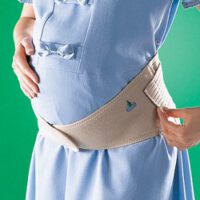 Back, Braces & Supports, Maternity, Posture
Maternity Back Support – OPPO 2062
$60.00 – $64.00Select optionsQuick View -
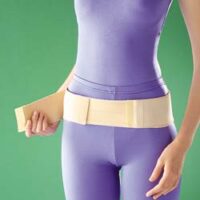 Back, Braces & Supports, Maternity, SIJ
Core Stability Support – OPPO 3462
$54.00Select optionsQuick View -
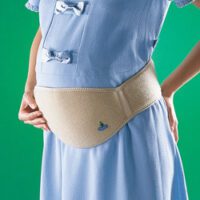 Braces & Supports, Back, Maternity, SIJ
Maternity Support Belt – OPPO 4062
$37.00Select optionsQuick View -
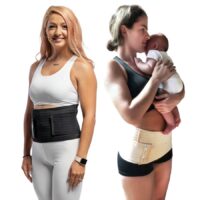
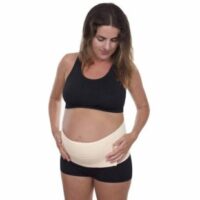 Back, Braces & Supports, Maternity, Posture
Pregnancy Belly Band & C-Section 3-in-1
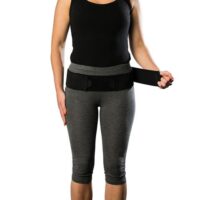
$94.99Select optionsQuick View - Braces & Supports, Back, Maternity, SIJ
AOM38 AllCare Ortho Core Stability Belt
$49.95Select optionsQuick View


References
- Hay-Smith EJC, Starzec-Proserpio M, Moller B, et al. Comparisons of approaches to pelvic floor muscle training for urinary incontinence in women. Cochrane Database Syst Rev. 2024;12(12):CD009508.
- Marcellou EG, Stasi S, Giannopapas V, et al. Effect of pelvic floor muscle training on urinary incontinence symptoms in postmenopausal women: A systematic review and meta-analysis. Eur J Obstet Gynecol Reprod Biol. 2025;304:134-140. doi:10.1016/j.ejogrb.2024.11.040.
- Brown CA, Toong PJ, Kearney R. Systematic review of evidence for conservative management of pelvic organ prolapse in younger women. Int Urogynecol J. 2025;36(3):477-490. doi:10.1007/s00192-024-05995-x.
- Vesting S, Gutke A, de Baets L. Educating women to prevent and treat low back and pelvic girdle pain during and after pregnancy: a systematized narrative review. Ann Med. 2025;57(1):2476046. doi:10.1080/07853890.2025.2476046.
