
Electrotherapy Physiotherapy
Electrotherapy Physiotherapy


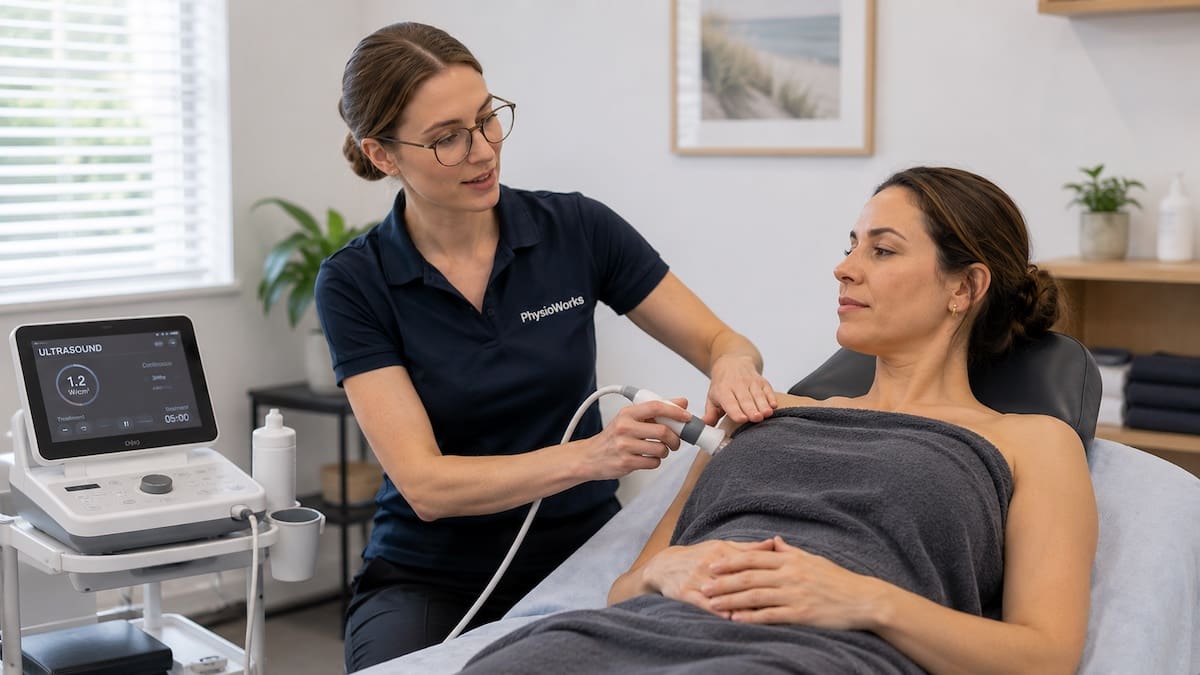
Electrotherapy and local modalities are treatments that a physiotherapist may use to reduce pain, improve comfort or support muscle activity while you progress through active rehabilitation. Depending on your needs, treatment may use electrical stimulation, sound waves, heat or cold.
Electrotherapy usually acts as an adjunct rather than a stand-alone solution. Your physiotherapist may combine it with broader physiotherapy treatment, exercise, load management and movement retraining.
Electrotherapy and Local Modality Options
TENS
Electrical stimulation primarily used to support temporary pain relief.
EMS
Electrical muscle stimulation used to create controlled muscle contractions during selected rehabilitation programs.
Therapeutic Ultrasound
Sound-wave treatment used selectively within a broader physiotherapy plan.
Heat and Cold Therapy
Temperature-based options that may provide short-term comfort for selected symptoms.
What Is Electrotherapy?
Electrotherapy is a broad term for treatments that apply controlled electrical or other forms of energy to influence pain, muscle activity or local tissue response. In physiotherapy, its main role is usually to support short-term symptom management or rehabilitation rather than replace active treatment.
Any benefit may be temporary. Therefore, your treatment plan should also address factors contributing to your symptoms, such as reduced strength, poor load tolerance, restricted movement or an injury that requires progressive rehabilitation.
Pain relief
Some electrotherapy options may provide short-term symptom relief.
Movement
Improved comfort may make movement or exercise easier to tolerate.
Muscle activation
EMS may help stimulate selected muscles when activation is difficult.
Rehabilitation
A useful modality should support progression towards active rehabilitation.
How Does Electrotherapy Fit Into Physiotherapy?
Modern physiotherapy usually prioritises active care. This can include exercise, mobility work, strength training, education, load management and movement retraining. Electrotherapy may be added when symptom relief or muscle activation helps you participate more comfortably in these treatments.
For example, a physiotherapist may use TENS to help reduce pain before movement practice. In another situation, EMS may help stimulate a muscle that is difficult to activate during early rehabilitation. The selected treatment should have a clear purpose rather than being used routinely.
Types of Electrotherapy and Local Modalities
Transcutaneous Electrical Nerve Stimulation — TENS
Transcutaneous Electrical Nerve Stimulation, or TENS, sends mild electrical pulses through electrodes placed on the skin.
Some people experience reduced pain during or shortly after treatment. However, TENS does not correct the underlying cause of pain. Its role is generally to provide temporary symptom relief that may make movement, daily activity or rehabilitation more comfortable.
Electrical Muscle Stimulation — EMS
Electrical Muscle Stimulation, or EMS, sends electrical impulses through skin electrodes to stimulate motor nerves and create muscle contractions.
EMS may support muscle activation or strengthening in selected rehabilitation situations, including when injury, surgery or reduced activity has made a muscle difficult to activate. It should normally complement rather than replace active strengthening.
Therapeutic Ultrasound
Therapeutic ultrasound uses high-frequency sound waves applied through a treatment head and gel. A physiotherapist may consider it for selected musculoskeletal and other clinical presentations.
Research findings differ between conditions. Therefore, ultrasound should have a specific clinical purpose and should not replace active rehabilitation where exercise-based care is appropriate.
Cold Therapy
Cold therapy may temporarily reduce pain and can feel soothing after some acute injuries or symptom flare-ups.
Avoid placing ice directly against the skin. A physiotherapist can advise whether cold therapy suits your symptoms. PhysioWorks also stocks cold gel packs.
Heat Therapy
Heat may ease stiffness or muscle tension and improve short-term comfort before gentle movement.
Avoid excessive heat and take extra care when skin sensation or circulation is reduced.
How Do TENS, EMS and Ultrasound Differ?
TENS
Mainly used for temporary pain relief through sensory nerve stimulation.
EMS
Produces muscle contractions to support activation or strengthening.
Therapeutic ultrasound
Uses sound waves and may be considered for selected clinical presentations.
Heat or cold
May provide short-term comfort depending on the symptoms and treatment goal.
When Might Electrotherapy Be Recommended?
Your physiotherapist may consider electrotherapy when reducing symptoms or improving muscle activation would help you participate more comfortably in rehabilitation. Possible situations include:
- pain that limits movement or exercise participation
- reduced muscle activation after injury or surgery
- a short-term flare-up that interrupts rehabilitation
- stiffness or muscle tension that responds to heat
- acute discomfort where brief cold therapy feels helpful
- selected clinical presentations where therapeutic ultrasound has a defined treatment purpose
The selected modality should suit your diagnosis, recovery stage, medical history and treatment goals. Not every person or condition benefits from electrotherapy.
Is Electrotherapy Effective?
The answer depends on the modality, condition and intended outcome. Research across electrotherapy treatments is not uniform.
A large systematic review reported that TENS may reduce pain during or shortly after treatment across a broad range of acute and chronic pain presentations. However, treatment responses vary. Evidence for therapeutic ultrasound is more mixed and differs between musculoskeletal conditions.
EMS may support muscle activation and strength in selected settings, although treatment protocols and responses vary. Active resistance exercise remains important when it is safe and appropriate.
Consequently, electrotherapy should not be treated as a universal solution. Its most practical role is usually to support comfort, muscle activation or participation while exercise, education and progressive loading address longer-term recovery.
For further detail, read the systematic review and meta-analysis of TENS for acute and chronic pain.
Who Should Be Careful With Electrotherapy?
Electrical stimulation and other modalities are not suitable for every person or every body area. Before treatment, tell your physiotherapist about implanted electrical devices, pregnancy, epilepsy, cancer treatment, blood-flow problems, reduced sensation, broken skin, infection or any recent operation.
Your physiotherapist will screen for precautions and explain what the treatment should feel like. Tell them immediately if you notice burning, sharp pain, marked skin irritation, dizziness or another unexpected response.
Electrotherapy FAQs
Is electrotherapy the main physiotherapy treatment?
No. Electrotherapy is usually an adjunct. It may help settle symptoms or support muscle activation, but exercise, movement retraining, education and progressive rehabilitation generally play a larger role in longer-term recovery.
What is the difference between TENS and EMS?
TENS mainly stimulates sensory nerves and aims to provide temporary pain relief. EMS stimulates motor nerves and produces muscle contractions to support muscle activation or strengthening.
Does TENS cure pain?
No. TENS does not correct the underlying cause of pain. However, some people experience temporary pain relief that helps them move, complete daily activities or participate in rehabilitation more comfortably.
Is therapeutic ultrasound helpful for everyone?
No. Research findings vary between conditions. A physiotherapist should only include therapeutic ultrasound when it has a clear purpose within your broader treatment plan.
Should I use ice or heat?
That depends on your symptoms and preferences. Cold may feel helpful after an acute injury or flare-up, while heat may suit stiffness or muscle tension. Protect your skin and avoid extreme temperatures.
Can I use a TENS machine at home?
Many people can use TENS at home after receiving suitable advice. Correct electrode placement, intensity and safety screening matter. Ask your physiotherapist before use if you have an implanted device, altered sensation or another relevant medical condition.
What does electrotherapy feel like?
TENS usually feels like a comfortable tingling or pulsing sensation. EMS generally produces a noticeable muscle contraction. Therapeutic ultrasound should not feel painful and may produce little sensation or mild warmth. Tell your physiotherapist if treatment feels sharp, hot or uncomfortable.
What to Do Next
If pain, weakness or stiffness is limiting your movement, a physiotherapist can assess the likely cause and determine whether electrotherapy has a useful role. They can also explain how symptom relief or muscle activation will connect with exercise, load progression and your return to normal activity.
Assess
Identify the main problem and relevant contributing factors.
Choose
Use electrotherapy only when the modality has a clear purpose.
Rehabilitate
Include active rehabilitation when it is appropriate.
Review
Check whether each treatment is helping you progress towards your goals.
Choose your clinic and appointment pathway
Select a PhysioWorks clinic to continue to live booking, an appointment request or reception assistance.
References
- Johnson MI, Jones G, Paley CA, et al. Efficacy and safety of transcutaneous electrical nerve stimulation (TENS) for acute and chronic pain in adults: a systematic review and meta-analysis of 381 studies (the meta-TENS study). BMJ Open. 2022;12(2):e051073. doi:10.1136/bmjopen-2021-051073.
- Guan H, Zhang X, Wang Y, et al. Ultrasound therapy for pain reduction in musculoskeletal disorders: a systematic review and meta-analysis. Ther Adv Chronic Dis. 2024;15:20406223241267217. doi:10.1177/20406223241267217.
- Papadopoulos ES, Mani R. The role of ultrasound therapy in the management of musculoskeletal soft tissue pain. Int J Low Extrem Wounds. 2020;19(4):350-358. doi:10.1177/1534734620948343.
- Aiyer R, Noori SA, Chang KV, Jung B, Rasheed A, Bansal N. Therapeutic ultrasound for chronic pain management in joints: a systematic review. Pain Med. 2020;21(7):1437-1448. doi:10.1093/pm/pnz102.
