
Men’s Health Physiotherapy
Men's Health Physiotherapy

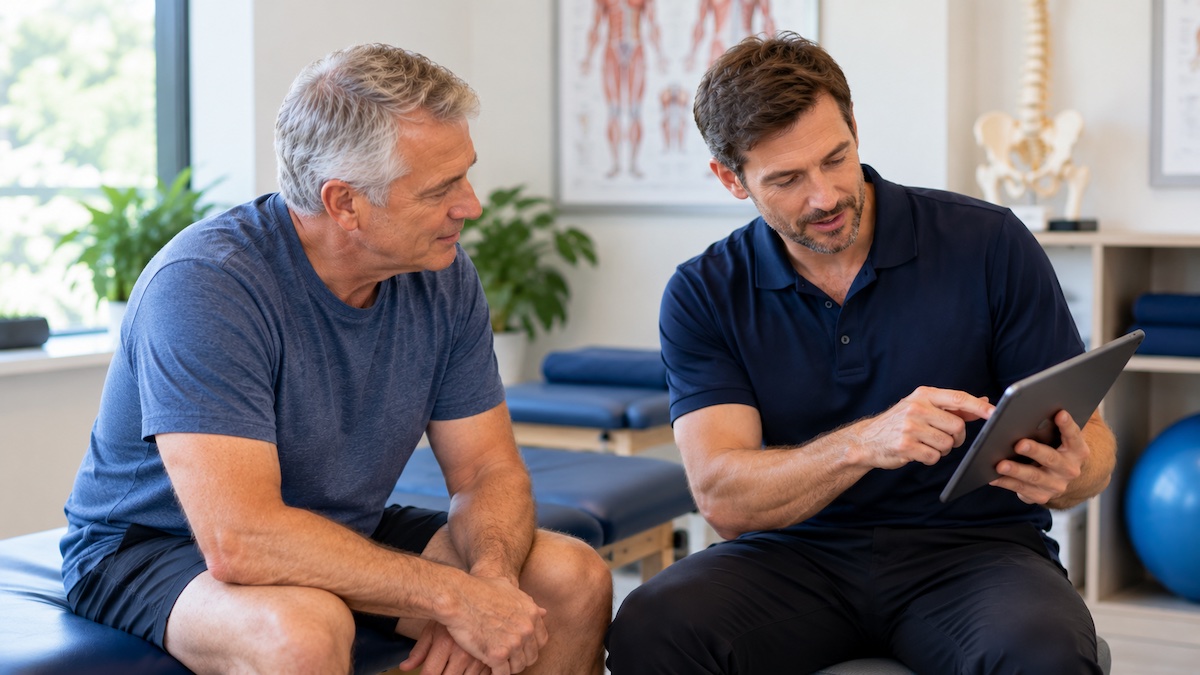
Men’s health physiotherapy can help with bladder and bowel control, pelvic floor problems and recovery before or after prostate surgery. Assessment identifies what may be contributing to your symptoms and guides rehabilitation matched to your needs.
Bladder control
Assessment and rehabilitation for urinary leakage, urgency, frequency and related bladder-control problems.
Pelvic floor
Learn how to identify, contract and retrain the male pelvic floor with exercises matched to your needs.
Prostate surgery
Pelvic floor and exercise rehabilitation can support preparation for and recovery after prostate surgery.
Bowel function
Physiotherapy may assist with constipation, incomplete emptying and faecal incontinence.
Ultrasound feedback
Real-time ultrasound may help you see whether you are activating your pelvic floor muscles effectively.
PhysioWorks Ashgrove
Book an Ashgrove Appointment
Choose the service you need, or call our Ashgrove reception team for help.
Physiotherapy
Book for pain, injury assessment, hands-on treatment or rehabilitation.
Exercise Physiology
Book guided exercise support for strength, health, balance and long-term capacity.
Massage
Book massage for muscle tightness, soreness, recovery or relaxation.
What Is Men’s Health Physiotherapy?
Men’s health physiotherapy assesses and manages problems affecting the male pelvic floor, bladder and bowel, as well as rehabilitation before and after prostate surgery.
Treatment depends on your symptoms and goals. It may include pelvic floor muscle retraining, bladder or bowel strategies, education and a structured exercise program. The aim is to improve control, confidence and day-to-day function rather than apply the same exercise program to everyone.
What Problems Can Men’s Health Physiotherapy Help?
Men’s health physiotherapy may be appropriate for a range of pelvic health and post-surgical concerns, including:
- pre and post-prostatectomy rehabilitation
- urinary incontinence in men, including stress and urge leakage
- urinary urgency or frequency
- pelvic floor weakness or poor muscle control
- constipation and bowel-emptying difficulties
- faecal incontinence in men
- pelvic floor rehabilitation after prostate cancer treatment
Symptoms can have several possible causes. Physiotherapy assessment helps determine whether pelvic floor rehabilitation is appropriate and what approach best suits your presentation.
For a broader professional overview, the Australian Physiotherapy Association provides information about physiotherapy and male pelvic health.
How Is the Male Pelvic Floor Assessed?
Your physiotherapist will first discuss your symptoms, health history, surgery where relevant, bladder or bowel function and the activities affected by the problem.
Assessment may then examine how effectively you can activate and relax your pelvic floor muscles. This helps determine whether weakness, poor coordination or technique may be contributing to your symptoms.
Real-time ultrasound physiotherapy may be used as a visual feedback tool. It can help you see whether you are activating the intended muscles and can make pelvic floor retraining easier to understand.
Men’s Health Physiotherapy Treatment
Treatment depends on your symptoms, assessment findings and stage of recovery. Your rehabilitation plan may include:
- pelvic floor muscle retraining
- male pelvic floor exercises
- individualised home exercises
- bladder habit retraining
- bowel management strategies
- real-time ultrasound feedback
- rehabilitation before or after prostate surgery
- graded exercise and return to normal activities
Research suggests pelvic floor muscle training can improve continence outcomes after radical prostatectomy. Supervised programs and confirming the correct muscle contraction may be particularly useful. See the references below for supporting research.
When Should You See a Men’s Health Physiotherapist?
Consider an assessment when bladder, bowel or pelvic floor symptoms persist, interfere with daily activities or affect your confidence and quality of life. Physiotherapy may also be useful when preparing for or recovering from prostate surgery.
Assessment can help if you are unsure whether you are performing pelvic floor exercises correctly or if your symptoms have not improved with general advice alone.
Explore Men’s Health Conditions and Rehabilitation
Use these guides to learn more about common men’s pelvic health concerns and rehabilitation options.
Men’s Health Physiotherapy at PhysioWorks
Scott Schulte provides men’s health physiotherapy at PhysioWorks Ashgrove, including pelvic floor rehabilitation and physiotherapy before and after prostate surgery.
Your treatment is based on your individual presentation rather than a standard pelvic floor program. Scott can assess your symptoms, check how effectively you are using your pelvic floor and guide an appropriate rehabilitation plan.
If you are unsure whether men’s health physiotherapy is suitable for you, an initial physiotherapy assessment can help determine the appropriate next step.
FAQs About Men’s Health Physiotherapy
Can men’s health physiotherapy help after prostate surgery?
Yes. Men’s health physiotherapy often forms part of pre and post-prostatectomy rehabilitation. Treatment may include pelvic floor retraining, bladder advice and a structured exercise plan to improve control and function during recovery.
Do men have pelvic floor muscles?
Yes. Men have pelvic floor muscles that support bladder and bowel control. These muscles can weaken or lose coordination, including after surgery or when pelvic health symptoms develop.
Can physiotherapy help urinary incontinence in men?
It often can. Physiotherapy may help manage urinary incontinence by teaching the correct pelvic floor contraction, addressing bladder habits and providing rehabilitation matched to your symptoms.
How is the male pelvic floor assessed?
Assessment may include your symptom history and pelvic floor muscle function. Tools such as real-time ultrasound physiotherapy may also provide visual feedback to help determine whether the muscles are working effectively.
When should you get help for men’s pelvic health symptoms?
Consider assessment when symptoms are persistent, worsening or affecting your recovery, confidence, daily activities or quality of life. You can also seek advice before prostate surgery to discuss appropriate preparation and rehabilitation.
What to Do Next
If you are experiencing bladder leakage, bowel problems, pelvic floor weakness or are preparing for or recovering from prostate surgery, a physiotherapy assessment can help clarify the problem and guide an individual rehabilitation plan.
Scott Schulte provides men’s health physiotherapy at PhysioWorks Ashgrove. You can book an Ashgrove physiotherapy appointment online or contact the clinic for assistance choosing the appropriate appointment.
PhysioWorks Ashgrove
Book an Ashgrove Appointment
Choose the service you need, or call our Ashgrove reception team for help.
Physiotherapy
Book for pain, injury assessment, hands-on treatment or rehabilitation.
Exercise Physiology
Book guided exercise support for strength, health, balance and long-term capacity.
Massage
Book massage for muscle tightness, soreness, recovery or relaxation.
References
- Yang JM, Yang T, Gao L, Zhang YL. Effect of pelvic floor muscle training on urinary incontinence after radical prostatectomy: an umbrella review of meta-analyses. Front Med (Lausanne). 2023;9:1076940. doi:10.3389/fmed.2022.1076940
- Zhou L, Zhang X, Li M, et al. Preoperative pelvic floor muscle exercise for continence after radical prostatectomy: a systematic review and meta-analysis. Front Public Health. 2023;11:1186067. doi:10.3389/fpubh.2023.1186067
- dos Santos JEM, Araujo AC, de Moraes Lopes MH, et al. Pelvic floor muscle training in men with post-prostatectomy urinary incontinence: a systematic review of literature guidelines. Neurourol Urodyn. 2024. doi:10.1002/nau.25567
- Ashrafi A, Abootalebi M, Baghban AA, et al. Evaluating pelvic floor muscle activity in chronic functional constipation: a transabdominal ultrasound study. J Bodyw Mov Ther. 2024;40:547-551. doi:10.1016/j.jbmt.2024.04.052
