
Osteoporosis & Osteopenia
Osteoporosis: Symptoms, Exercise and Treatment


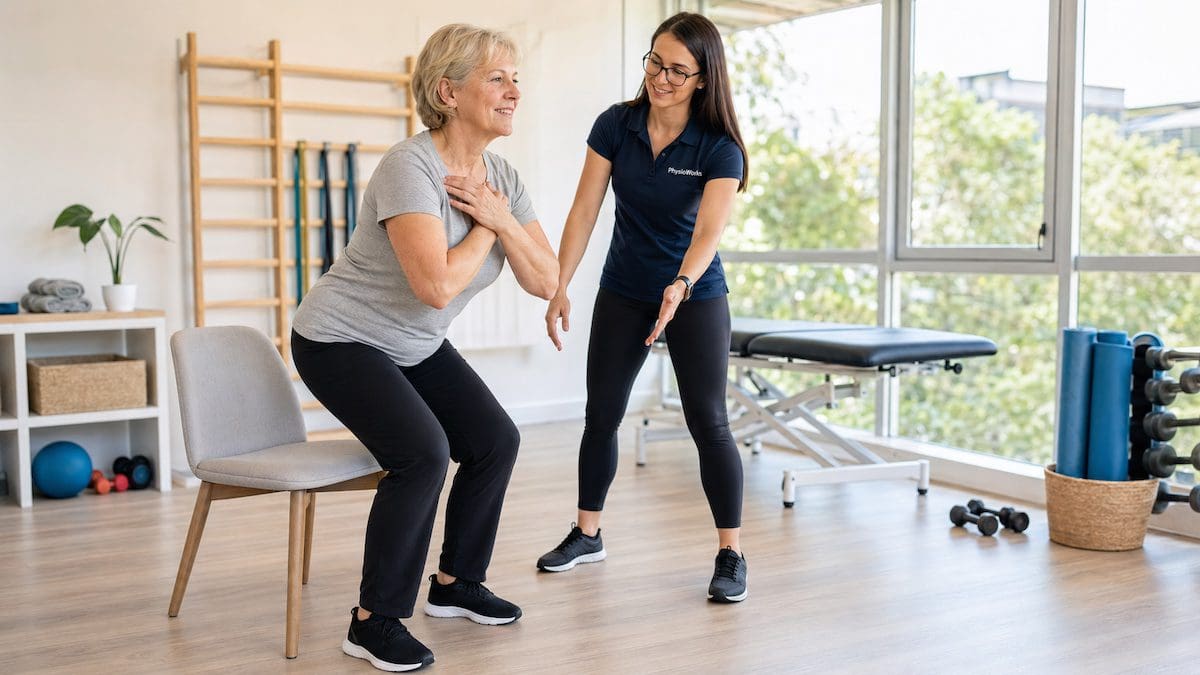
Supervised strength exercise can form part of a bone-health program.
Osteoporosis reduces bone strength and increases the risk of fractures. Management may include medical treatment, nutrition, appropriate exercise, balance training and strategies to reduce falls.
Low bone density, including osteopenia and osteoporosis, can increase the chance of a fragility fracture. Common fracture sites include the spine, hip and wrist.
If you have new pain, a recent fall or uncertainty about safe movement, physiotherapy may be a useful starting point. Longer-term Exercise Physiology can help with structured strength, balance and exercise progression.
What Should You Do First?
New pain or recent fall
Arrange medical or physiotherapy assessment, particularly if you have new spinal, hip, rib or wrist pain.
Low bone density result
Discuss your overall fracture risk, treatment options, nutrition and exercise with your GP or treating health professional.
Reduced balance
Balance assessment and targeted training may help if you feel unsteady or are worried about falling.
Unsure about exercise
A physiotherapist or Exercise Physiologist can help identify an appropriate starting point and progression.
Ready for structured training
Exercise Physiology can help progress resistance, weight-bearing, balance and functional exercise over time.
Prefer supervised group exercise
A supervised bone-health exercise class may be an option after the required initial assessment.
What Is Osteoporosis?
Osteoporosis is a condition in which bones become less strong and more likely to fracture. A fracture may occur after a relatively minor fall, knock or other load that would not normally break healthy bone.
Osteoporosis is sometimes called a silent disease because many people have no obvious symptoms before a fracture occurs.
What is osteopenia?
Osteopenia means your bone mineral density is below the expected healthy range but has not reached the bone-density threshold used to define osteoporosis.
Your bone-density result is only part of the picture. Age, previous fractures, falls, family history, medicines and other health conditions can also affect your overall fracture risk.
What Are the Signs of Osteoporosis?
Osteoporosis itself commonly produces no symptoms. However, fractures associated with osteoporosis can cause symptoms such as:
- sudden or persistent back pain
- loss of height over time
- a more stooped spinal posture
- pain after a relatively minor fall or strain
- hip, wrist, rib or other fractures after lower-level trauma.
Why Does Osteoporosis Develop?
Bone is living tissue that continually changes. Osteoporosis can develop when the loss of bone occurs faster than new bone formation.
Ageing is an important factor. Bone loss can also accelerate after menopause because of changes in oestrogen levels.
Who has a higher risk of osteoporosis?
Risk can be influenced by several factors, including:
- increasing age
- menopause
- a previous fragility fracture
- family history of osteoporosis or hip fracture
- low body weight or significant loss of muscle mass
- low levels of weight-bearing activity
- smoking
- higher alcohol intake
- inadequate calcium, vitamin D or protein intake
- some inflammatory, endocrine, gastrointestinal and other medical conditions
- some medicines, including prolonged corticosteroid use.
How Is Osteoporosis Diagnosed?
Your GP will consider your age, medical history, medicines, fracture history and other risk factors. They may recommend a bone mineral density test, commonly called a DXA or DEXA scan.
Bone-density results are considered alongside your overall fracture risk rather than interpreted in isolation.
If you already have osteoporosis and develop new spinal pain, height loss or pain following a relatively minor injury, further assessment may be needed to check for a fracture.
How Is Osteoporosis Treated?
Osteoporosis management often uses several approaches rather than exercise alone. Your individual plan depends on your fracture risk, health history and test results.
Management may include:
- medical assessment and fracture-risk review
- osteoporosis medicines when clinically indicated
- adequate calcium, vitamin D and protein intake
- appropriate resistance and weight-bearing exercise
- balance and falls-prevention strategies
- management of other health conditions that affect bone health
- review of medicines that may influence bone or falls risk.
Your GP can advise whether osteoporosis medication or further investigation is appropriate for you.
How Can Exercise Help Osteoporosis?
Exercise is an important part of osteoporosis management. However, different types of exercise provide different benefits, and the right program depends on your fracture risk and current physical capacity.
An osteoporosis exercise program commonly considers three areas:
- progressive resistance training to improve muscular strength and provide appropriate loading to bone
- weight-bearing or impact exercise where suitable for your fracture risk and physical capacity
- balance training to improve steadiness and help reduce falls risk.
Walking remains useful for general health, fitness and daily activity. However, walking alone usually does not provide the same progressive strengthening or bone-loading stimulus as a well-designed resistance program.
The right program depends on your fracture history, bone density, strength, balance, pain, medical history and previous exercise experience. See the RACGP guidance on exercise and osteoporosis.
How Can Physiotherapy Help?
Physiotherapy may be useful when osteoporosis occurs alongside pain, a recent fall, reduced movement, poor balance or uncertainty about safe activity.
A physiotherapist can assess how you move and identify factors that may affect your exercise plan. Depending on your needs, management may include:
- strength and functional assessment
- balance and falls-risk assessment
- guidance following a fracture or painful episode
- safe lifting and movement strategies
- posture and spinal movement guidance
- graded return to walking, exercise or daily activities
- transition to longer-term Exercise Physiology when appropriate.
If you feel unsteady, you may also benefit from dedicated balance training.
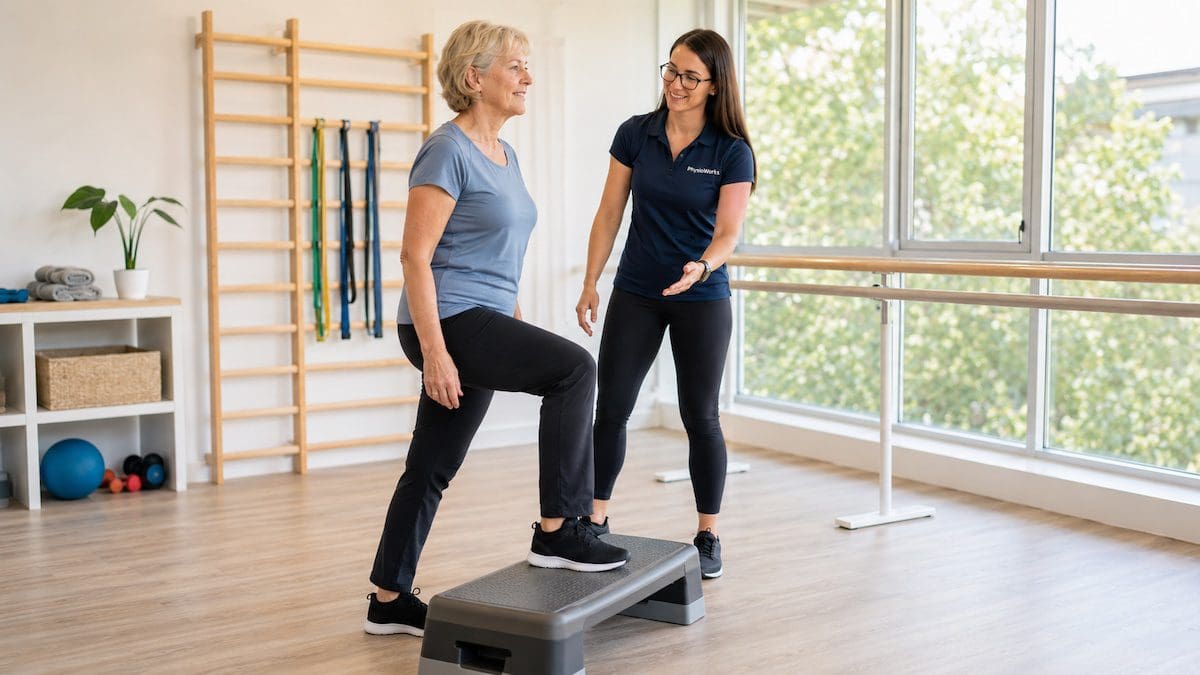
Balance and functional strength training can support steadier daily movement.
Where Does Exercise Physiology Fit?
Exercise Physiology may be particularly useful when you need a structured, progressive exercise program for osteoporosis, osteopenia or reduced physical capacity.
An Accredited Exercise Physiologist can assess your current capacity, prescribe suitable exercise and progress the program over time. Your plan may include:
- progressive resistance training
- balance exercises
- appropriate weight-bearing exercise
- selected impact exercise where suitable
- walking and aerobic conditioning
- functional tasks such as lifting, carrying and stepping
- long-term gym or home exercise planning.
Physiotherapy and Exercise Physiology can form part of the same pathway. Physiotherapy may lead when pain, injury or assessment is the immediate issue. Exercise Physiology may then help build longer-term strength and physical capacity.
How Can Exercise Progress Safely?
1. Build the Foundation
Start with movement quality, balance, confidence and basic strength. Examples may include sit-to-stand exercises, supported balance work and hip-hinge practice.
2. Build Strength
Increase resistance progressively using exercises such as step-ups, squats, rows and loaded carries when appropriate.
3. Add Challenge
Heavier resistance or selected impact exercise may be introduced when your fracture risk, strength, balance and technique make it appropriate.
Can Exercise Make Osteoporosis Worse?
Appropriate exercise is generally encouraged for osteoporosis. Problems are more likely when the exercise does not match the person’s fracture risk or when load, range or difficulty increases too quickly.
People with a history of vertebral fractures or higher fracture risk may require modifications to some movements and loading strategies. Rather than avoiding all bending, lifting or exercise, the aim is to select and progress activities appropriately.
If you have mid-back symptoms, see our information about thoracic pain.
Supervised Exercise for Osteoporosis and Osteopenia
People with osteoporosis, osteopenia or another low bone-density result may benefit from supervised exercise with an Exercise Physiologist.
PhysioWorks offers a bone-health exercise program that focuses on progressive strength, balance, posture, functional movement and appropriate bone loading. Exercise can be adjusted to your current capacity and clinical history.
Individual starting point
Exercise is selected according to your current strength, balance, exercise experience and health history.
Assessment first
An initial Exercise Physiology assessment helps establish an appropriate starting level before supervised class exercise.
Current class details
Check the Bone Density Class page for current locations, session information and access arrangements.
View Bone Density Class Details
Osteoporosis FAQs
What exercises are best for osteoporosis?
Most osteoporosis exercise programs use a combination of progressive resistance training, weight-bearing activity and balance work. Selected impact exercise may also be appropriate for some people. Your program should match your fracture risk, health, strength, balance and exercise experience.
Can I join a bone-health exercise class if I have osteoporosis?
You may be able to join after an initial Exercise Physiology assessment. The assessment helps determine your starting level and considers your bone-density history, fracture risk, strength, balance, symptoms and exercise background.
Can osteoporosis cause back pain?
Osteoporosis itself often causes no pain. However, a vertebral fracture associated with osteoporosis can cause sudden or persistent back pain, height loss or changes in spinal posture. New symptoms should be medically assessed.
Do I need to stop bending or lifting if I have osteoporosis?
Not necessarily. Many people can continue bending and lifting with appropriate technique, loading and progression. People with vertebral fractures or higher fracture risk may need individual advice about particular movements and loads.
Should I avoid high-impact exercise?
Not everyone with osteoporosis needs to avoid impact exercise. The appropriate level depends on your fracture risk, previous fractures, strength, balance and other health factors. Higher-impact exercise should be selected carefully and progressed appropriately.
Is walking enough for osteoporosis?
Walking is useful for general health, fitness and daily activity. However, walking alone may not provide enough progressive resistance or bone-loading stimulus for a complete osteoporosis exercise program. Strength and balance exercise are also important.
Should I see a physiotherapist or Exercise Physiologist?
A physiotherapist may be the better starting point if you have new pain, a recent fall, possible fracture symptoms or need movement assessment. An Exercise Physiologist may be useful when your main goal is longer-term strength, balance, conditioning and progressive exercise. Some people benefit from both.
Can exercise improve bone density?
Appropriately prescribed exercise, particularly progressive resistance training and suitable weight-bearing exercise, may have beneficial effects on bone mineral density. Results vary between people, while strength, balance and functional benefits remain important exercise goals.
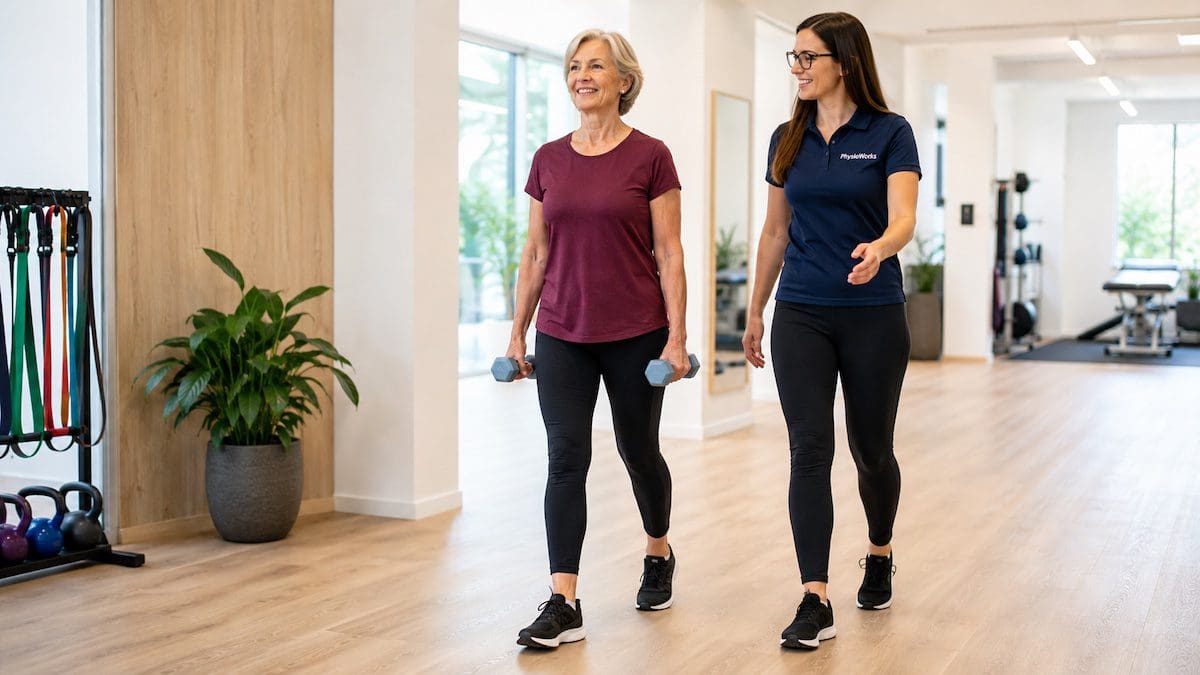
Progressive resistance and functional loading can be matched to your ability and fracture risk.
What to Do Next
-
Review your bone health
Discuss your bone-density result, overall fracture risk, nutrition and possible medical treatment with your GP.
-
Get pain or new symptoms assessed
Arrange medical or physiotherapy assessment if you have new back pain, a recent fall, reduced balance or uncertainty about safe movement.
-
Build an appropriate exercise plan
Consider Exercise Physiology if you want structured strength, balance and longer-term exercise progression.
-
Consider supervised group exercise
View the Bone Density Class if you are interested in supervised exercise for low bone density.
Choose your clinic and appointment pathway
Select a PhysioWorks clinic to continue to live booking, an appointment request or reception assistance.
Related Osteoporosis Care
References
- Royal Australian College of General Practitioners. Exercise: Osteoporosis prevention, diagnosis and management in postmenopausal women and men over 50 years of age. RACGP.
- Healthy Bones Australia. Exercise and Bone Health. Healthy Bones Australia.
- Mohebbi R, Shojaa M, Kohl M, et al. Exercise training and bone mineral density in postmenopausal women: an updated systematic review and meta-analysis of intervention studies with emphasis on potential moderators. Osteoporosis International. 2023;34:1145–1178.
- Zhao F, Su W, Sun Y, Wang J, Lu B, Yun H. Optimal resistance training parameters for improving bone mineral density in postmenopausal women: a systematic review and meta-analysis. Journal of Orthopaedic Surgery and Research. 2025;20:523. doi:10.1186/s13018-025-05890-1.
- Brooke-Wavell K, Skelton DA, Barker KL, et al. Strong, steady and straight: UK consensus statement on physical activity and exercise for osteoporosis. British Journal of Sports Medicine. 2022;56(15):837–846.
