
Reformer Pilates Sandgate
One-on-one, physiotherapist-led Reformer Pilates in Sandgate
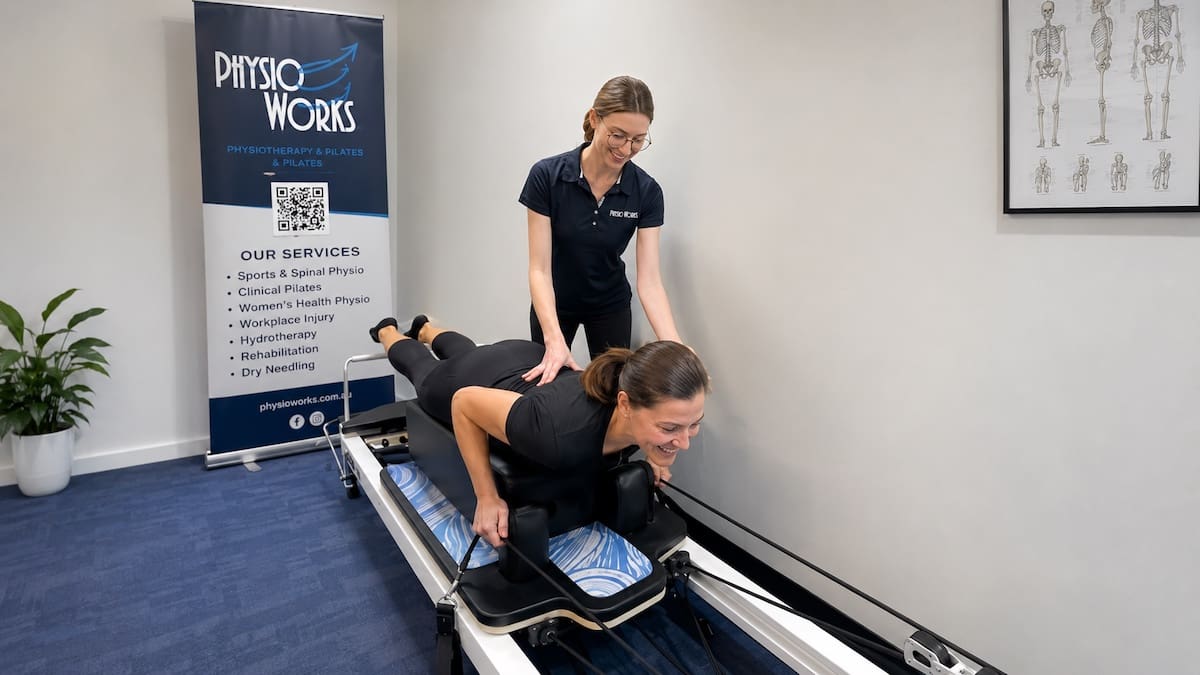
One-on-one Reformer Pilates at PhysioWorks Sandgate
PhysioWorks Sandgate provides individual Reformer Pilates sessions for people who want close technique coaching, structured exercise and a plan matched to their needs. Sessions take place at our clinic at 18 Bowser Parade, Sandgate.
Reformer Pilates may suit beginners, people returning after injury and people who want more confidence before joining a group class. Your session can be adjusted for your current strength, movement, symptoms, balance and exercise goals.
Sessions are led by physiotherapist and Pilates instructor Erin Runge. You can also compare individual sessions with our clinician-led Pilates classes.
Reformer Pilates appointments may require reception assistance. Call 07 3269 1122 if you need help choosing the right starting option.
Book at PhysioWorks Sandgate
Book online 24/7 or call Sandgate reception for help choosing an appointment.
Massage: Select Ashish Shrestha or Courtney Burgin in Nookal.
Private health insurance: Both massage therapists are recognised by major private health funds for eligible remedial massage services. Rebates depend on your extras cover and available benefits.
Call reception for classes, Hydrotherapy, Bike Fit, Functional Capacity Evaluations or assistance selecting an appointment.
Is one-on-one Reformer Pilates right for you?
Individual sessions may suit you when you want guided exercise with clear technique, controlled progressions and close physiotherapist support.
- You are new to Pilates or Reformer equipment.
- You are returning after injury, surgery or a long break from exercise.
- You want better trunk, hip or postural control.
- You have pain or stiffness that changes with movement or load.
- You want to prepare for group classes but need a more supported start.
What is Reformer Pilates?
Reformer Pilates uses a machine with a sliding carriage, springs, straps and a foot bar. The springs provide resistance or support, allowing exercises to be adjusted across different positions and ability levels.
The Reformer can be used to train strength, breathing, posture, balance, coordination and movement control. Your physiotherapist can change the spring resistance, movement range, exercise position and tempo during the session.
This flexibility can be useful when you need exercise adapted for pain, stiffness, reduced strength, fatigue or an injury history.
How one-on-one sessions work
| Stage | What happens | Why it matters |
|---|---|---|
| Starting assessment | Your physiotherapist discusses your goals, symptoms, injury history and current exercise capacity. | Your session begins at an appropriate level. |
| Equipment set-up | You learn how to use the carriage, springs, straps and foot bar safely. | Good set-up improves confidence and exercise control. |
| Technique coaching | Your physiotherapist guides breathing, posture, alignment and movement quality. | Real-time feedback reduces guesswork. |
| Progression | The load, range, tempo or exercise complexity changes as your capacity improves. | Your plan can keep progressing without advancing too quickly. |
| Next pathway | You may continue one-on-one or move into clinician-led group classes when ready. | You have a clear next step rather than a one-off session. |
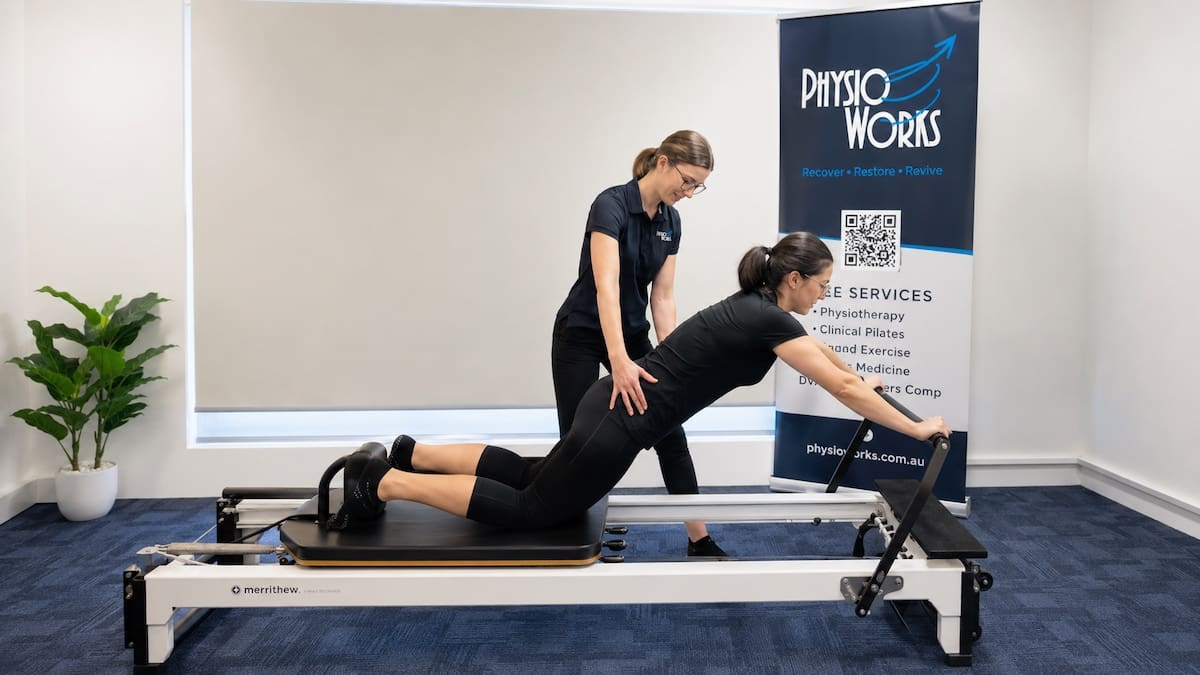
Your Reformer Pilates physiotherapist
Sessions are led by Erin Runge, a physiotherapist and Pilates instructor at PhysioWorks Sandgate. Erin provides individual coaching, exercise modification and progression based on your movement, symptoms and goals.
What can Reformer Pilates help you train?
Your individual program will depend on your assessment and goals. Common areas of focus include:
- trunk and pelvic control
- hip and leg strength
- posture and body awareness
- balance and coordination
- mobility and controlled flexibility
- movement confidence after injury
- preparation for group Pilates
- general conditioning and exercise consistency
Reformer Pilates may also form part of a broader rehabilitation plan for lower back pain, neck pain or later-stage return to exercise.
One-on-one or group Pilates?
| One-on-one Reformer Pilates may suit you when | Group Pilates may suit you when |
|---|---|
| You are learning the equipment for the first time. | You already understand the main equipment and exercise set-up. |
| You need exercises adjusted for pain, injury or movement restrictions. | You can follow general class instructions safely. |
| You want close coaching and immediate technique feedback. | You are comfortable exercising with less individual attention. |
| You are returning after surgery or a long training break. | Your symptoms and exercise tolerance are stable. |
| You want a personalised progression plan. | You want regular supervised exercise in a small-group setting. |
Erin can help you decide when you are ready to move from individual sessions into clinician-led Pilates classes.
When does Reformer Pilates need extra care?
Your program may need further assessment or modification if you have strong or worsening pain, a recent operation, dizziness, new neurological symptoms, balance changes, osteoporosis concerns, pregnancy-related symptoms or a medical condition affecting exercise safety.
Depending on your needs, another starting pathway may be more suitable. This could include physiotherapy, a different rehabilitation plan or Exercise Physiology Sandgate.
Call reception on 07 3269 1122 if you are unsure which appointment to choose.
Your Sandgate Reformer Pilates pathway
- Start one-on-one: learn the equipment, establish safe technique and receive an individual program.
- Continue one-on-one: retain close coaching when injury-specific changes or detailed progression remain important.
- Move into group classes: transition when you can use the equipment safely and manage your exercise load.
- Combine services: physiotherapy, Pilates and exercise physiology may support different stages of your plan.
Find Reformer Pilates at PhysioWorks Sandgate
Clinic: PhysioWorks Sandgate
Address: 18 Bowser Parade, Sandgate QLD 4017
Phone: 07 3269 1122
The clinic is near Sandgate Railway Station and the Sandgate foreshore, with access from Sandgate, Shorncliffe, Brighton, Deagon, Bracken Ridge and nearby north Brisbane suburbs.
Reformer Pilates Sandgate FAQs
Can beginners do Reformer Pilates?
Yes. Beginners can start with simple exercises, light spring resistance and close supervision. A physiotherapist can adjust the exercise to your strength, movement and confidence.
Do I need an assessment before starting?
An individual starting appointment allows the physiotherapist to understand your goals, exercise history, symptoms and current movement capacity. This helps guide equipment set-up and exercise selection.
Is Reformer Pilates suitable after an injury?
It may suit some people during later-stage rehabilitation. The exercises and spring resistance need to match the injury, healing stage and advice from your treating practitioner.
Is Reformer Pilates useful for back pain?
Pilates-based exercise may help some people improve trunk control, strength and movement confidence. It should be tailored to the person and used as part of a broader plan where required.
Should I choose one-on-one or group Pilates?
Choose one-on-one when you need closer technique coaching, injury-specific modifications or more confidence with the equipment. Group classes may suit you once you can exercise safely with less individual guidance.
How do I arrange a Reformer Pilates session at Sandgate?
Call PhysioWorks Sandgate on 07 3269 1122. Reception can confirm current availability and help you choose the most appropriate appointment.
Ask about Reformer Pilates availability
Call PhysioWorks Sandgate on 07 3269 1122 to confirm current Reformer Pilates availability and discuss the right starting option.
The booking pathway below also includes other PhysioWorks Sandgate services. Reformer Pilates enquiries may still require assistance from reception.
Choose Your Sandgate Appointment
Select a service below. Online booking opens in a new tab.
Physiotherapy
For pain, injuries, rehabilitation, dizziness, balance concerns and movement problems.
Exercise Physiology
For individual exercise assessment, rehabilitation, strength, balance, bone health and long-term health support.
Massage
Book a massage appointment with Ashish Shrestha at PhysioWorks Sandgate.
Classes and Specialised Services
Call for Mat Pilates, Better Bones, Balance and Falls Prevention, Hydrotherapy, Bike Fit, Functional Capacity Evaluations or help choosing an appointment.
