
Spinal Stenosis
Spinal Stenosis: Symptoms, Causes and Treatment


Spinal stenosis occurs when spaces around the spinal nerves narrow. In the lower back, this may cause pain, tingling, numbness or heaviness in the legs, especially during standing or walking. Symptoms often ease with sitting or bending forward. Not everyone with narrowing on a scan has symptoms.
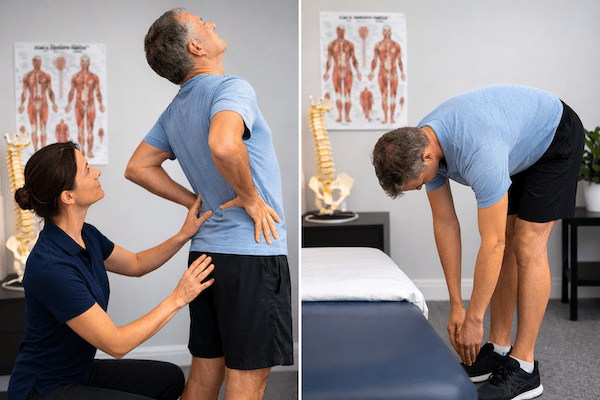
Common symptoms
Leg aching, heaviness, tingling or numbness, sometimes with back pain.
Often aggravated by
Standing upright or walking for longer periods.
Often eased by
Sitting, bending forward or leaning on a shopping trolley.
What Is Spinal Stenosis?
The spinal canal contains the spinal cord and nerve structures. Age-related changes to the discs, joints, ligaments and bones can reduce the available space. Narrowing may occur in the central canal or where individual nerves exit the spine.
Imaging and symptoms are not the same thing. Some people have narrowing on an MRI but no related symptoms. A clinician considers your symptoms, examination findings and scan results together when deciding whether spinal stenosis is clinically important.
Lumbar Versus Cervical Spinal Stenosis
Lumbar spinal stenosis (lower back)
Lumbar stenosis can irritate nerve roots supplying the legs. It commonly causes leg discomfort or heaviness that increases with standing and walking and improves with sitting or bending forward. Symptoms may affect one or both legs.
Cervical spinal stenosis (neck)
Narrowing in the neck may affect nerve roots or, more seriously, the spinal cord. Spinal cord involvement, known as cervical myelopathy, can cause hand clumsiness, changes in balance or walking, limb weakness and other neurological symptoms. New or progressive symptoms need prompt medical assessment rather than routine exercise advice.
What Causes Spinal Stenosis?
Spinal stenosis often develops gradually. Several changes may contribute:
- Thickening of ligaments around the spinal canal.
- Age-related changes in spinal joints and bone spurs.
- Disc height loss or a bulging disc.
- Spondylosis or degenerative spinal joint changes.
- Degenerative disc disease.
- Vertebral slippage, spinal shape differences or, less commonly, narrowing present from birth.
The amount of narrowing does not reliably predict how much pain or disability a person will experience.
What Are the Symptoms of Lumbar Spinal Stenosis?
Symptoms vary. Common features include:
- Aching, pain or heaviness in the buttocks or legs.
- Tingling, numbness or altered sensation in the legs or feet.
- Reduced standing or walking tolerance.
- Symptoms that ease when sitting, bending forward or leaning on a trolley.
- Sometimes, lower-back pain or leg weakness.
Symptoms can overlap with sciatica and other nerve-related conditions. However, not all leg pain during walking comes from the spine.
Why Does Spinal Stenosis Cause Pain When Walking?
A typical lumbar spinal stenosis symptom pattern is called neurogenic claudication. Standing upright or walking may bring on aching, heaviness, tingling or weakness in one or both legs. Sitting or bending forward often relieves these symptoms.
Leaning on a shopping trolley or riding a stationary bike may feel easier than standing straight. Some people also find walking uphill more comfortable than walking downhill. These patterns are clues, not a diagnosis.
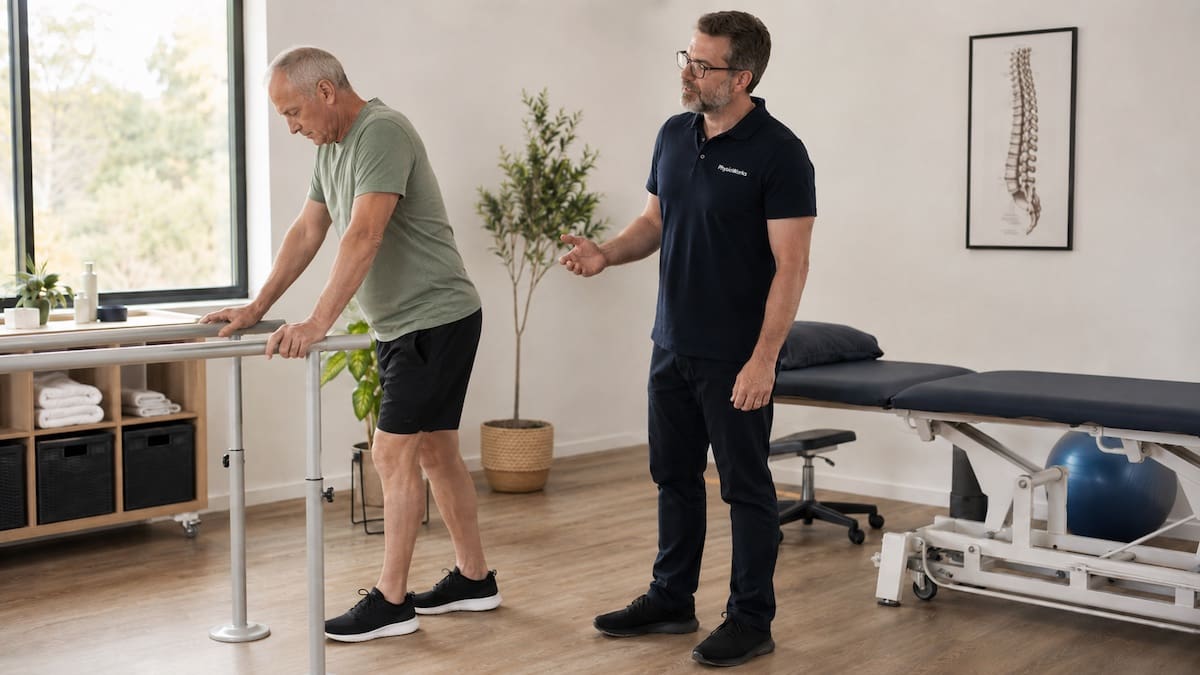
Could walking-related leg pain have another cause?
Yes. Poor circulation in the legs can also cause pain during walking, known as vascular claudication. Unlike the typical spinal pattern, vascular symptoms may settle simply by stopping, without needing to sit or bend forward. Your clinician may check pulses, circulation risk factors and other findings, and arrange medical assessment where appropriate.
Often harder
Standing, longer walks and walking downhill.
Often easier
Sitting, forward leaning, regular rests and sometimes cycling.
Rehabilitation goal
Improve comfortable activity, strength and functional walking capacity.
How Is Spinal Stenosis Diagnosed?
A clinician takes a history of your symptoms and how they respond to walking, standing, rest and different positions. Assessment may include spinal movement, leg strength, sensation, reflexes, balance and walking tolerance. Where circulation is a concern, vascular assessment may also be appropriate.
MRI can help identify narrowing of the spinal canal or nerve openings. However, a scan cannot establish the cause of symptoms on its own. Imaging is particularly useful when symptoms are severe, neurological deficits develop, diagnosis remains uncertain or a procedure is being considered.
How Is Lumbar Spinal Stenosis Treated?
Care depends on your symptoms, health, examination findings and goals. For many people without urgent neurological signs, initial management is non-surgical.
Physiotherapy and activity modification
A physiotherapist may help you understand symptom triggers and develop an individual program. This can include:
- Education about the condition and positions that alter symptoms.
- Walking intervals with planned rests and gradual progression.
- Suitable cycling or other lower-irritation aerobic exercise.
- Hip, trunk and leg strengthening, including appropriately progressed core stability exercises.
- Balance and functional movement practice when needed.
- Adjustments to standing tasks, work activities and daily routines.
Exercise can improve strength, function and confidence. It does not necessarily reverse the anatomical narrowing shown on an MRI. Treatment should reflect your response rather than rely on one routine for everyone.
Medicines, injections and surgery
Your GP or specialist may discuss medicines or other treatments depending on the presentation. Injections may offer relief for selected people, but benefits can be limited or temporary and are not guaranteed. Surgery, often to decompress affected nerves, may be considered when walking disability remains substantial despite suitable care or when neurological problems progress. A spinal specialist can explain the likely benefits, limitations and risks in your situation.
Which Exercises May Help Spinal Stenosis?
There is no single best exercise for every person. A program may include comfortable spinal movement, lower-limb strength, trunk control, balance and aerobic conditioning. Some people tolerate a slightly flexed position better, while others benefit from a broader mix of movements.
Examples may include supported cycling, sit-to-stand practice, step exercises and short walking intervals. Exercise selection and progression should consider pain behaviour, neurological findings, balance and other health conditions.
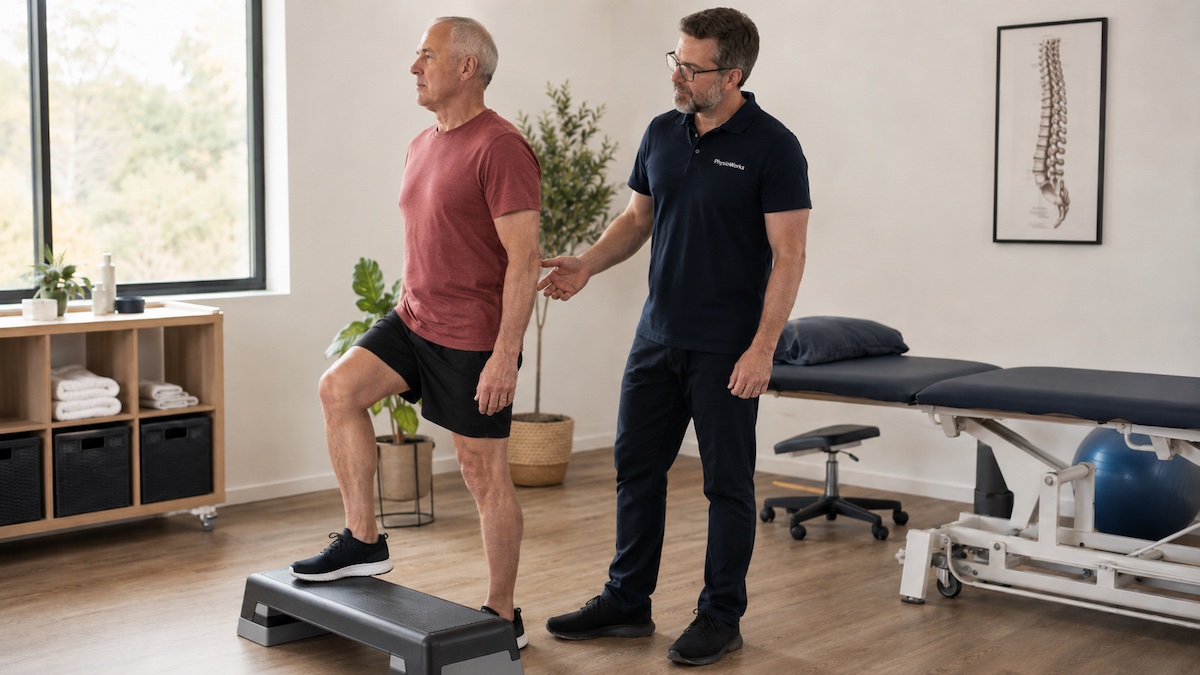
Can I Keep Walking With Spinal Stenosis?
Many people can continue walking with symptom-guided changes. Start with a distance or duration you can manage comfortably, take a rest before symptoms become severe and repeat as tolerated. Over time, gradually increase your total activity if symptoms and function allow.
-
Find a manageable starting point
Notice how long you can walk before leg symptoms become troublesome.
-
Plan rest breaks
Use sitting or another comfortable position to settle symptoms between shorter walking bouts.
-
Choose suitable alternatives
A flatter route, stationary cycling or supported walking may help you stay active while managing symptoms.
-
Progress according to your response
Increase activity gradually rather than pushing through new weakness or significant neurological symptoms.
If walking distance is falling rapidly, weakness is developing or symptoms do not settle as expected, arrange a clinical review.
What Is the Prognosis?
Spinal stenosis varies widely between people. Some maintain good function with exercise, pacing and activity changes. Others experience ongoing walking limitations or require specialist assessment. Symptom severity, neurological findings, other health conditions and personal goals all influence treatment decisions.
When Should You Seek Professional Advice?
Arrange an assessment when back or leg symptoms persist, interfere with walking or daily life, or become more frequent. New or progressive weakness, altered balance or significant sensory changes warrant prompt medical assessment. Follow the emergency advice above for bladder or bowel changes, saddle numbness or rapidly progressing weakness.
A physiotherapist can assess movement, walking tolerance and neurological findings, help plan suitable rehabilitation and recommend further medical review when indicated.
Spinal Stenosis FAQs
What does spinal stenosis feel like?
Lumbar spinal stenosis may cause back, buttock or leg pain, heaviness, tingling or numbness, particularly during standing or walking. Symptoms often ease with sitting or bending forward.
Is walking good for spinal stenosis?
Walking can help maintain activity and function, but you may need shorter intervals and planned rests. A physiotherapist can help you build a suitable program.
Can spinal stenosis cause sciatica?
Yes. Narrowing around nerve roots can cause radiating leg pain, tingling or numbness that resembles sciatica. A clinical assessment helps distinguish possible causes.
Can spinal stenosis improve without surgery?
Many people manage symptoms and improve function with exercise, pacing and other non-surgical care. Surgery may be considered when symptoms remain very limiting or neurological problems worsen.
What exercises may help spinal stenosis?
Suitable options may include cycling, walking intervals, gentle mobility, balance work and trunk, hip or leg strengthening. The right exercises depend on your symptoms and assessment findings.
When is spinal stenosis urgent?
Seek emergency medical assessment for new difficulty passing urine, loss of bladder or bowel control, saddle numbness or rapidly worsening leg weakness. New or worsening balance problems and hand clumsiness may also indicate spinal cord involvement and need prompt medical assessment.
What to Do Next
If spinal stenosis symptoms are affecting walking, work or daily activities, a physiotherapy assessment may help clarify contributing factors and identify suitable rehabilitation options. Your clinician can also explain when further medical or specialist review is appropriate.
Choose your clinic and appointment pathway
Select a PhysioWorks clinic to continue to live booking, an appointment request or reception assistance.
Back Support Products
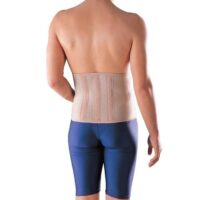
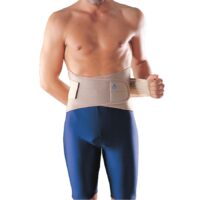
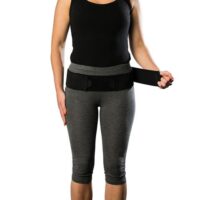
These back support products are commonly used by our physiotherapists to help reduce back pain, improve comfort, and support your recovery at home.
-

 Back, Braces & Supports, Maternity, Posture
Pregnancy Belly Band & C-Section 3-in-1
$94.99Select optionsQuick View -
 Braces & Supports, Back, Maternity, SIJ
Maternity Support Belt – OPPO 4062
$37.00Select optionsQuick View -
 Back, Braces & Supports, Maternity, SIJ
Core Stability Support – OPPO 3462
$54.00Select optionsQuick View - Braces & Supports, Back, Maternity, SIJ
AOM38 AllCare Ortho Core Stability Belt
$49.95Select optionsQuick View -
-
-
-
 Back, Braces & Supports, Maternity, Posture
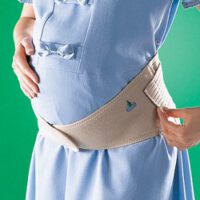
Maternity Back Support – OPPO 2062
$60.00 – $64.00Select optionsQuick View


References
- Kawakami M, Takeshita K, Inoue G, et al. Japanese Orthopaedic Association clinical practice guidelines on lumbar spinal stenosis: secondary publication. J Orthop Sci. 2023;28(1):46–91.
- Kwon JW, Moon SH, Park SY, et al. Lumbar spinal stenosis: Review update 2022. Asian Spine J. 2022;16(5):789–798.
- Ammendolia C, Hofkirchner C, Plener J, et al. Non-operative treatment for lumbar spinal stenosis with neurogenic claudication: An updated systematic review. BMJ Open. 2022;12(1):e057724.
- Comer C, Williamson E, McIlroy S, et al. Exercise treatments for lumbar spinal stenosis: A systematic review and intervention component analysis of randomised controlled trials. Clin Rehabil. 2024;38(3):361–374.