
Syndesmosis Injury Treatment


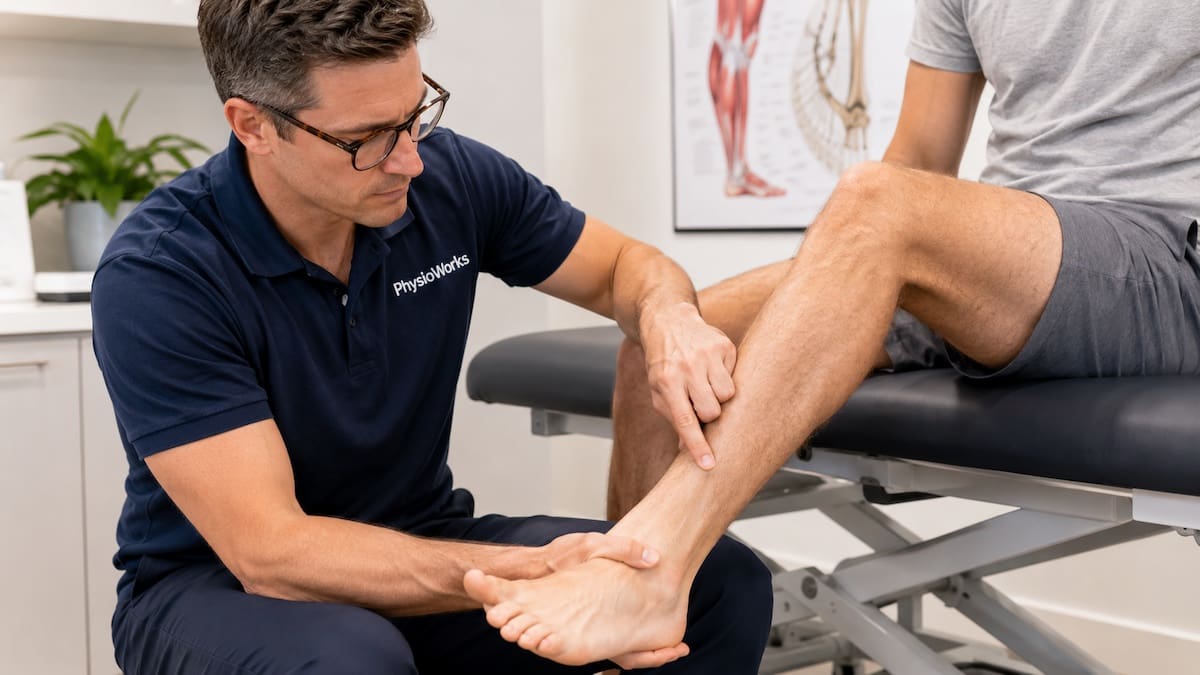
What Is a Syndesmosis Injury?
A syndesmosis injury affects the strong ligaments above the ankle that hold the tibia and fibula together. It is often called a high ankle sprain. These ligaments help keep the ankle stable during walking, running, jumping, landing and change-of-direction sport.
Syndesmosis injury treatment is different from simple ankle sprain care. The injury may need protection, careful loading, imaging review, sport-specific rehab or surgical opinion if the ankle is unstable.
Quick Guide
- Common name: high ankle sprain.
- Main pain area: above the ankle joint, between the tibia and fibula.
- Common triggers: twisting, tackling, awkward landing or foot planted with rotation.
- Key concern: missed instability can delay recovery.
- Best next step: early assessment if walking, twisting or push-off is painful.
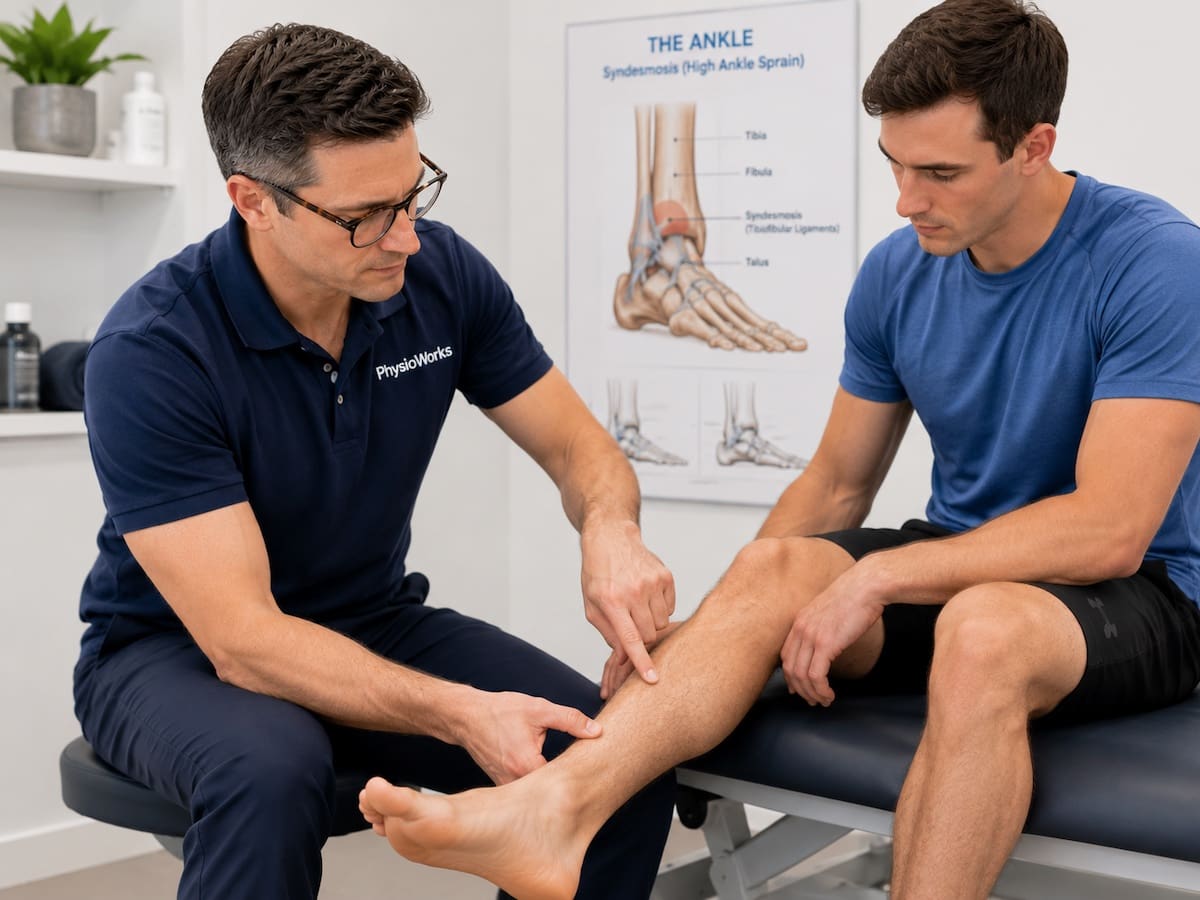
Why Is a High Ankle Sprain Different?
A standard ankle sprain often affects the ligaments on the outside of the ankle. A syndesmosis injury sits higher. It affects the ligament system between the lower leg bones.
This matters because the syndesmosis helps control the ankle mortise. The ankle mortise is the socket formed by the tibia and fibula around the talus. If this area is unstable, the ankle may not tolerate running, jumping or twisting safely.
Ankle Syndesmosis Anatomy
The ankle syndesmosis is a group of ligaments that connects the lower tibia and fibula. Together, these ligaments:
- keep the ankle mortise stable around the talus
- allow small but important movement during walking and running
- protect the ankle from rotational and high loading forces
- help the ankle cope with cutting, landing and push-off
A syndesmosis injury occurs when these ligaments stretch or tear. This usually happens when the foot is fixed and the lower leg twists, or when a contact injury forces the ankle outwards.
What Causes a Syndesmosis Injury?
Syndesmosis injuries often occur in running, field and court sports. They are common in football, netball, rugby, soccer, basketball and skiing.
Common Injury Mechanisms
- twisting the leg while the foot is fixed on the ground
- forced outward rotation of the foot during a tackle
- landing heavily from a jump
- falling with the ankle trapped underneath the body
- being hit from the side while the foot stays planted
- returning to sport with poor ankle strength or control after an earlier injury
Because symptoms can look like a normal ankle sprain, athletes often benefit from early sports physiotherapy review after a painful high ankle injury.
What Are the Symptoms of a Syndesmosis Injury?
Syndesmosis injuries often feel different from a simple ankle sprain. Pain usually sits higher than the ankle bones and may worsen with walking, push-off or twisting.
- Pain above the ankle joint: often between the tibia and fibula.
- Swelling that tracks up the leg: rather than staying only around the ankle.
- Difficulty weight bearing: walking, stairs or hills may be painful.
- Twisting pain: turning on the foot may feel sharp or unsafe.
- Reduced push-off: running, hopping or cutting may feel weak.
- Instability: the ankle may feel loose, weak or unreliable.
When Should You Get It Checked?
Book a review if pain sits above the ankle joint, walking is difficult, swelling is marked, or twisting feels unsafe.
Seek urgent medical review if you cannot take weight, notice deformity, have severe pain, have numbness, or suspect a fracture.
How Is a Syndesmosis Injury Diagnosed?
Diagnosis combines your injury story, ankle testing and imaging when needed. Your physiotherapist or doctor will check the ankle, lower leg and walking pattern. They may also test calf strength, balance, hopping tolerance and syndesmosis stress signs.
Assessment Usually Includes
- History: how the injury happened, where pain sits and whether walking is possible.
- Palpation: checking tenderness between the tibia and fibula.
- Movement testing: ankle range, calf control, balance and gait.
- Stress testing: selected tests that load the syndesmosis carefully.
- Sport testing: later-stage hop, landing and change-of-direction checks.
When Is Imaging Needed?
Imaging may help if symptoms suggest fracture, widening between the tibia and fibula, severe ligament injury, cartilage injury or slow recovery.
- X-ray: helps exclude fracture and may show widening between the tibia and fibula.
- MRI: shows syndesmosis ligament injury and related soft tissue damage.
- CT scan: may be used when joint alignment or fracture detail matters.
Your physiotherapist may also complete a broader sports injury assessment to check related hip, knee, foot and landing control factors.
Is It More Than a Simple Ankle Sprain?
A syndesmosis injury is more likely when pain sits above the ankle, walking is harder than expected, and twisting or push-off feels unsafe.
| Feature | Common ankle sprain | Syndesmosis injury |
|---|---|---|
| Pain location | Often outside ankle | Often above ankle joint |
| Walking | May improve quickly | Often painful for longer |
| Twisting | May be sore | Often sharp or unstable |
| Recovery | Often faster | Often slower and more staged |
Early diagnosis and targeted ankle strengthening are important parts of syndesmosis injury treatment. If you want prevention ideas after recovery, see our ankle sprain prevention guide.
Syndesmosis Injury Treatment
Syndesmosis injury treatment aims to protect the ligament system first, then restore walking, strength, balance and sport-specific loading. The plan depends on injury grade, ankle stability, imaging findings and your goals.
Phase 1: Settle and Protect
In the early phase, the goal is to reduce pain and protect the injured ligaments from repeated stress.
- Relative rest: avoid running, jumping, hopping and twisting.
- Ice, compression and elevation: use these to help manage swelling and discomfort.
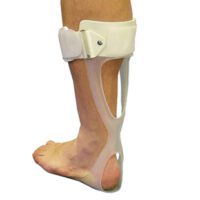
- Brace or boot support: a moon boot or brace may protect the ankle while symptoms settle.
- Crutches: use when walking is painful or causes a limp.
- Medical review: seek review if pain, swelling or weight-bearing ability suggests fracture or instability.
Your physiotherapist can guide when to use a CAM walker moon boot, brace or crutches, and when to start weaning support.
Phase 2: Restore Movement
Once pain and swelling start to settle, treatment shifts towards gentle movement and safer walking.
- restore ankle range without forcing pain
- improve walking pattern
- start gentle calf and lower leg activation
- keep hip, knee and core strength active
- reduce stiffness in nearby joints
Treatment may include hands-on joint mobilisation, taping, load advice and a home exercise plan.
Phase 3: Rebuild Strength, Control and Balance
As healing progresses, your program should rebuild the ankle’s ability to control load.
- Calf strength: seated and standing calf raises progressed over time.
- Peroneal and tibialis strength: resisted ankle control work.
- Balance retraining: single-leg balance, wobble board and uneven-surface control.
- Hip and knee control: step-downs, squats and landing control where appropriate.
- Foot mechanics: foot and ankle biomechanics review if footwear, arch control or gait affects recovery.
Load Decision Box
Progress load when: walking is improving, swelling is stable, and exercises do not cause a strong next-day flare.
Hold load when: pain rises during walking, swelling increases, or twisting feels unsafe.
Get reassessed when: symptoms stall, the ankle feels unstable, or you cannot progress from walking to light running.
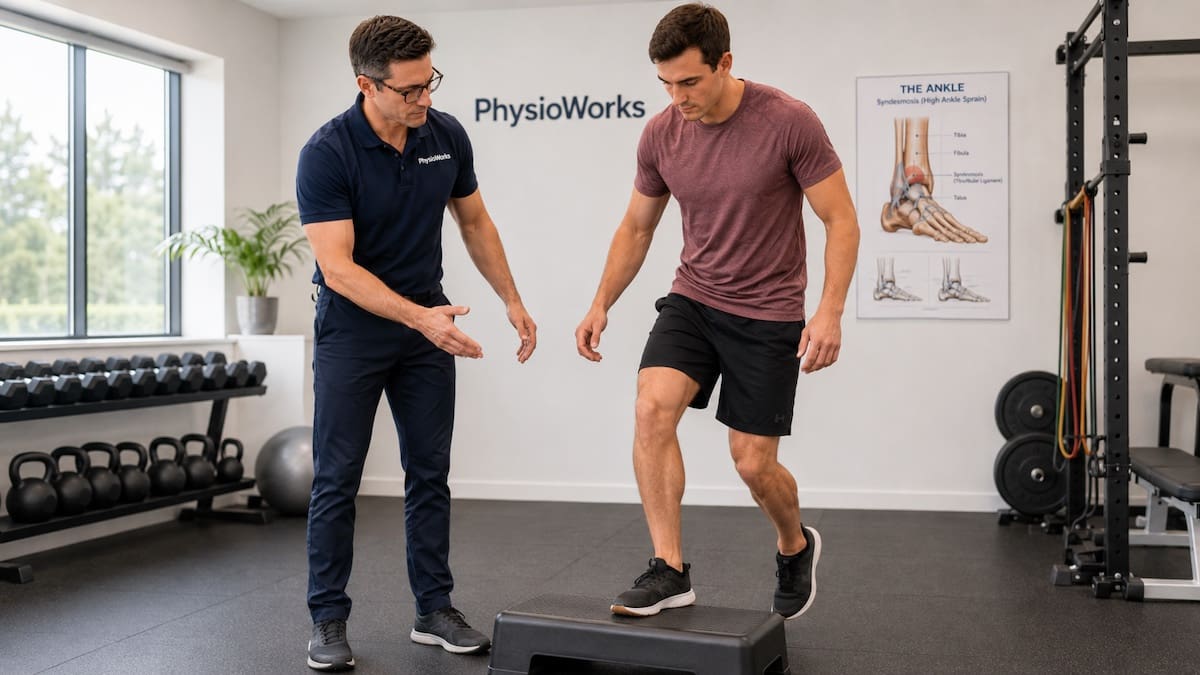
Phase 4: Running and Return-to-Sport Progression
Return to sport should follow function, not the calendar alone. Your ankle needs to tolerate straight-line running before cutting, jumping and contact drills.
| Stage | Goal | Examples |
|---|---|---|
| Daily activity | Walk without limping | flat walking, stairs, calf activation |
| Early running | Build straight-line load | walk-jog, easy running, flat ground |
| Agility | Restore direction change | side steps, cutting, figure-of-eight drills |
| Sport loading | Prepare for match demands | jumping, landing, tackling or sport drills |
Your physiotherapist may use objective return-to-sport testing to check strength, balance, hopping, agility and confidence.
Return-to-Sport Checklist
Before returning to full training or match play, you should usually be able to:
- walk without limping
- complete repeated calf raises with good control
- balance on one leg without giving way
- hop and land without sharp pain
- change direction without ankle instability
- complete sport drills and recover well the next day
Do I Need Surgery for a Syndesmosis Injury?
Not all syndesmosis injuries need surgery. Stable injuries may recover with protection and physiotherapy. Unstable injuries usually need orthopaedic review.
Surgery may be considered when the tibia and fibula separate, the ankle mortise is unstable, or there is an associated fracture or dislocation. Surgical fixation aims to hold the bones in a better position while the ligaments heal.
After surgery, rehabilitation remains important. Your plan usually progresses from protection and walking support through to strength, balance, running and sport-specific loading.
How Long Does Syndesmosis Injury Recovery Take?
Recovery time depends on injury grade, ankle stability, imaging findings, surgery needs and sport demands.
- Mild stable injury: many people return to sport in about 3–6 weeks with suitable rehab.
- Moderate injury: protection may last several weeks, followed by 6–12 weeks of structured rehab.
- Severe or surgical injury: recovery can take 3–6 months or longer before full sport.
These time frames are broad guides. Your symptoms, strength, swelling response and function should guide progress.
How Can You Reduce Future Ankle Problems?
Good long-term ankle care can reduce repeat injury risk and improve confidence with sport.
- keep calf and hip strength in your weekly routine
- include balance and proprioception training
- restore ankle mobility after the protection phase
- use suitable shoes for your sport or work
- consider taping, strapping or bracing for higher-risk sport
- review lingering stiffness, swelling or instability early
You may also find ankle strapping helpful as a short-term support strategy during return to activity.
Related Ankle Information
- High Ankle Sprain
- Sprained Ankle
- Chronic Ankle Instability
- Ankle Fracture
- Peroneal Tendinopathy
- Ankle Pain and Injuries
Syndesmosis Injury FAQs
How do you treat a syndesmosis injury?
Treatment starts with protection, swelling control and safe walking. It then progresses to ankle movement, strength, balance, running and sport-specific loading. Severe or unstable injuries may need surgical review before rehab progresses.
How long does syndesmosis injury recovery take?
Mild stable injuries may settle in several weeks. Moderate injuries often need several months of staged rehabilitation. Severe or surgical cases can take 3–6 months or longer before full sport.
Can you walk with a syndesmosis injury?
Some people can walk with a mild injury, but many limp or cannot bear weight comfortably. Do not force walking if pain is sharp or your ankle feels unstable. A boot or crutches may be needed after assessment.
Does a syndesmosis injury need surgery?
Stable injuries may not need surgery. Surgery may be considered when the tibia and fibula separate, the ankle mortise is unstable, or there is an associated fracture or dislocation.
What happens if a syndesmosis injury is missed?
A missed or poorly managed injury may lead to ongoing pain, stiffness, swelling, reduced push-off, ankle instability and delayed return to sport. Early assessment helps guide safer loading.
When should I see a physiotherapist?
Book a physiotherapy review if pain sits above the ankle, walking is difficult, twisting hurts, swelling persists or sport feels unsafe. Seek urgent medical review if you suspect fracture, deformity, numbness or severe pain.
What To Do Next
If you suspect a syndesmosis injury, do not train through sharp pain. Early assessment can help confirm the likely injury, guide imaging when needed and match treatment to your stage of recovery.
PhysioWorks physiotherapists can assess your ankle, explain your options, guide rehabilitation and help you plan a safer return to work, running and sport. You can book online or phone your nearest clinic.
Choose your clinic and appointment pathway
Select a PhysioWorks clinic to continue to live booking, an appointment request or reception assistance.
Ankle Products
These ankle products are commonly used by our physiotherapists to improve ankle pain, strength, balance, proprioception, endurance and flexibility, plus assist home exercise programs.
-
-
- Liniments & Gels, Massage Liniments, Pain Management
Fisiocrem
$16.95 – $39.95Select optionsQuick View -
-
-

-
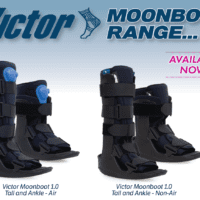
 Ankle, Braces & Supports, Foot, Walking
Victor Moonboot 1.0 Air or No Air
$77.00 – $79.00Select optionsQuick View -

-
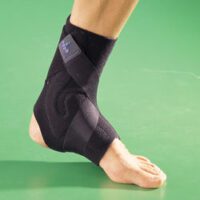 Ankle, Braces & Supports, Foot
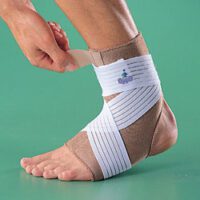
Ankle Support with Plastic Stay – OPPO 1109
$52.00Select optionsQuick View - EMS Machines, Pain Management, TENS Machine, TENS Machine & EMS
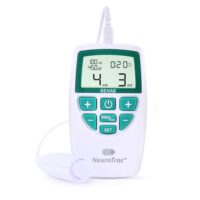
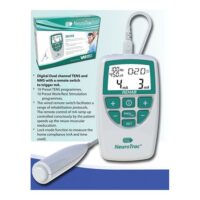
NeuroTrac Rehab (TENS Machine + EMS)
$285.00Add to cartQuick View -
-
-
-


-
 Ankle, Braces & Supports, Clearance Sale
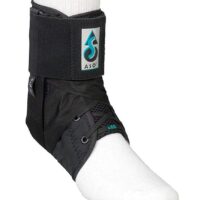
Ankle Support with Strap – OPPO 1003
$42.00Select optionsQuick View -




References
- Liu J, Valentine D, Ebraheim NA. Management of syndesmosis injury: a narrative review. Orthop Res Rev. 2022;14:305-313.
- Regauer M, Mackay G, Nelson O, et al. Evidence-based surgical treatment algorithm for unstable syndesmotic injuries. J Clin Med. 2022;11(2):331.
- Salameh M, Hantouly AT, Rayyan A, et al. Return to play after isolated syndesmotic ligamentous injury in athletes: a systematic review and meta-analysis. Orthop J Sports Med. 2022;10(5):23259671221096482.
- Vancolen SY, Nadeem I, Horner NS, et al. Return to sport after ankle syndesmotic injury: a systematic review. Sports Health. 2019;11(2):116-122.
