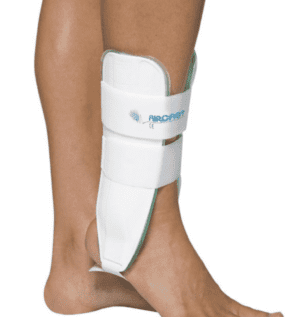

- Description
- Additional information
Description
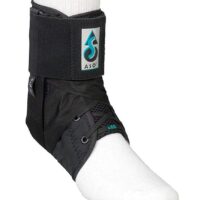
AirCast Ankle Brace
AirCast Ankle Brace, ankle brace support, ankle sprain brace, ankle instability support
Why use an AirCast Ankle Brace?
An ankle sprain can disrupt sport, work, and daily walking in minutes. Most ankle sprains happen when the foot rolls inwards (inversion), which strains or tears the outer ankle ligaments. Without solid early support and a good rehab plan, swelling can linger and the ankle can feel unstable for months.
The AirCast Ankle Brace gives semi-rigid support that helps protect the ankle while you keep moving safely. This matters in the first phase of recovery because you want to reduce swelling, restore confident weight-bearing, and lower the chance of repeated “rolling” episodes. For injury basics and timelines, see our Sprained Ankle Treatment & Recovery Guide and our Acute Injury Management guide.
How does it work?
The AirCast Ankle Brace uses anatomically shaped semi-rigid shells on each side of the ankle. These shells limit harmful inversion and eversion (rolling in and out), while still allowing comfortable, functional movement.
Inside the shells, the Duplex™ aircell system provides pre-inflated compression around the ankle. Compression may help manage swelling and support circulation during early walking. As a result, many people feel more secure when transitioning from rest or crutches back to normal gait.
Because the brace is relatively low-profile, it often fits inside everyday footwear. That practicality makes it easier to follow the “protect, but keep gentle movement” approach used in early injury care. For broader recovery planning, review our Sports Injury Physiotherapy overview.
What is it used for?
The AirCast Ankle Brace commonly supports:
- Acute ankle sprains (often Grade I–II)
- Swelling control during early rehab
- Protected return to walking and daily activity
- Chronic ankle instability (ankle “giving way”)
- Return to sport or higher-risk activities
For long-term stability, combine bracing with progressive strengthening and balance work. If your ankle keeps rolling or feels unreliable, read Chronic Ankle Instability (CAI) and consider a physiotherapy assessment to guide safe progressions.
Who is it best for?
This ankle brace suits active adults, athletes, and workers who need extra protection on uneven ground. It can also help people with a history of repeated sprains who want added support during training, sport, or long work shifts.
Key benefits
- Limits harmful ankle rolling (inversion/eversion)
- Supports early, protected weight-bearing
- Provides compression that may assist swelling management
- Low-profile design to fit in most shoes
- Useful for acute sprains and ongoing ankle instability
Size guide: length of brace
- Small: 22 cm (8.7″)
- Medium: 23 cm (9.0″)
- Large: 27 cm (10.5″)
Frequently asked questions
Is the AirCast Ankle Brace good for ankle sprains?
Yes. The semi-rigid shells help limit ankle rolling while you regain comfortable movement and weight-bearing. Many people use it during the first phase after a sprain alongside swelling control and graded activity. For guidance on recovery steps, see the Sprained Ankle Treatment & Recovery Guide.
Can I walk in an AirCast Ankle Brace?
In many cases, yes. The brace is designed for protected walking, particularly as pain and swelling settle. If you limp heavily or pain spikes, reduce load and follow the advice in our Acute Injury Management guide.
Will it reduce swelling?
The aircells provide compression, which may help manage swelling during early rehab. Pair the brace with elevation and sensible activity pacing, especially after being on your feet for long periods.
Is it suitable for chronic ankle instability?
It can help by limiting rolling and improving confidence during higher-risk activity. However, strength, balance, and proprioception training still matter for lasting change. Start with Chronic Ankle Instability (CAI) for practical rehab direction.
Can I wear it for sport?
Often, yes. Many athletes use an ankle brace during return-to-sport to lower reinjury risk, especially in court sports and field sports. If you need a structured plan, see Sports Injury Physiotherapy.
How tight should the brace feel?
Aim for firm support without numbness, pins and needles, or colour change in the foot. If symptoms occur, loosen the straps and reassess sizing and fit.
Related reading
For ankle injury help, start with our Sprained Ankle Treatment & Recovery Guide, review early care in Acute Injury Management, and learn longer-term strategies in Chronic Ankle Instability (CAI).
External reference
For manufacturer feature details (Duplex™ aircells and shell design), see the Aircast information page from Enovis Rehab: Sport Stirrup Ankle Brace (Aircast).
Additional information
| Weight | .2 kg |
|---|---|
| Dimensions | 10 × 30 × 20 cm |
| Size | Small, Medium, Large |
| Foot | Left, Right |