
Respiratory Physiotherapy


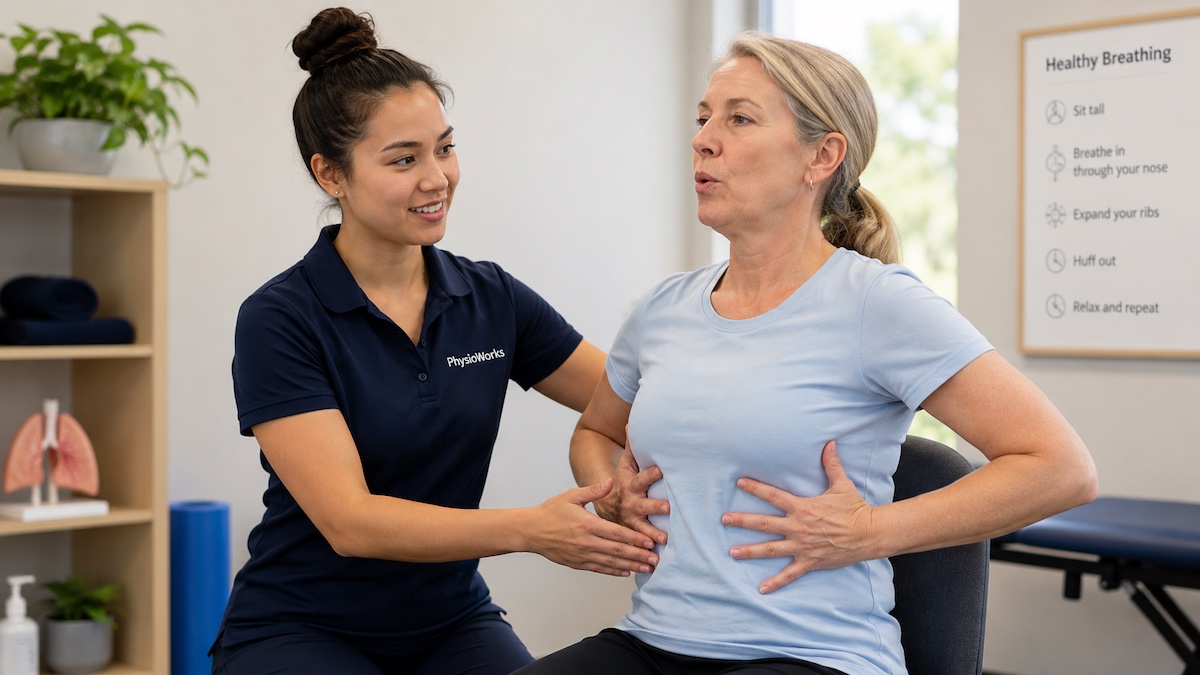
A physiotherapist guides controlled chest expansion and huff breathing during respiratory physiotherapy.
Quick answer
Respiratory physiotherapy may help manage mucus, an ineffective cough, reduced chest movement and some forms of breathlessness. Treatment may include breathing control, airway-clearance techniques, positioning, supported coughing and gradual activity.
Respiratory physiotherapy focuses on how you breathe, expand your chest and clear mucus from your airways. Your physiotherapist assesses your breathing pattern, cough effectiveness, chest movement and activity tolerance before recommending suitable treatment.
This care may support recovery after illness or surgery and help some people living with long-term respiratory conditions. It often works alongside thoracic physiotherapy, post-operative physiotherapy and broader physiotherapy care.
Seek urgent medical care for severe breathing symptoms
Respiratory physiotherapy does not replace urgent medical assessment. Call Triple Zero or seek immediate care for severe or rapidly worsening breathlessness, chest pain or pressure, blue or grey lips, confusion, fainting, coughing blood or difficulty speaking in full sentences.
Sudden breathlessness or chest pain after surgery or prolonged immobility also requires urgent medical assessment.
What is respiratory physiotherapy?
Respiratory physiotherapy assesses and manages problems affecting breathing, coughing, mucus clearance and chest movement. The treatment plan depends on the cause of your symptoms, your medical history and how safely you tolerate each technique.
Some people need short-term support after a chest infection, hospital stay or operation. Others may need longer-term strategies for conditions that produce regular sputum or reduce cough effectiveness.
Who may benefit from respiratory physiotherapy?
A respiratory physiotherapy assessment may help when you experience:
- mucus that is difficult to clear
- a wet or productive cough that persists
- recurrent chest infections
- reduced chest expansion after illness or surgery
- breathlessness that limits walking or stairs
- a weak or ineffective cough
- reduced activity tolerance after illness or hospital admission
Airway clearance may suit some people with bronchiectasis, cystic fibrosis, chronic bronchitis or pneumonia when mucus is present. However, it is not automatically required for every person with COPD or another respiratory condition.
Respiratory physiotherapy and pulmonary rehabilitation
Respiratory physiotherapy
Commonly focuses on breathing pattern, cough effectiveness, mucus clearance, chest movement and recovery strategies.
Pulmonary rehabilitation
Usually involves a broader multidisciplinary exercise and education program for people living with ongoing lung disease.
Your physiotherapist can explain whether physiotherapy is appropriate or whether you may benefit from medical review, pulmonary rehabilitation or another service.
What happens during an assessment?
Your physiotherapist will discuss your symptoms, diagnosis, medical history and current treatment. They may assess:
- breathing rate and pattern
- chest and rib movement
- posture and comfortable breathing positions
- cough and huff effectiveness
- mucus amount and ease of clearance
- walking or activity tolerance
- your response to trial breathing techniques
These findings help determine whether breathing exercises, airway clearance, pacing, movement or further medical assessment is the most suitable next step.
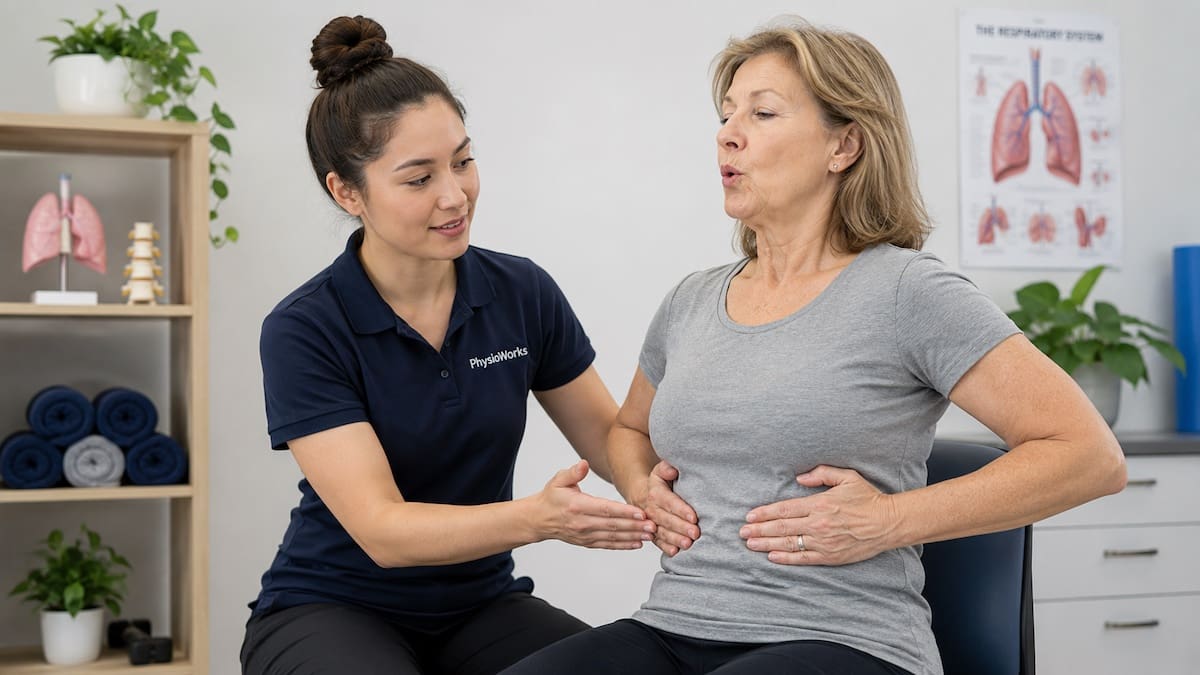
Lower-rib breathing control may help improve chest expansion and breathing awareness.
Which respiratory physiotherapy treatment may help?
Mucus that is difficult to clear
Treatment may include breathing cycles, huffing, positioning or a positive expiratory pressure device where suitable.
Shallow breathing after surgery
Supported deep breathing, comfortable positioning, early movement and chest-expansion exercises may form part of recovery.
Breathlessness during activity
Pacing, breathing control and gradual activity progression may help reduce unnecessary breathing effort.
Weak or ineffective cough
A physiotherapist may teach huffing, supported coughing or other strategies based on your strength and medical condition.
Reduced fitness after illness
A graded walking or exercise program may help rebuild activity tolerance once your medical condition is stable.
Complex or worsening symptoms
Physiotherapy may be delayed while you obtain medical assessment, investigations or specialist respiratory care.
Breathing exercises
Breathing exercises may improve chest expansion, reduce unnecessary upper-chest effort and help you control breathlessness. Depending on your needs, your physiotherapist may teach lower-rib breathing, paced breathing or breathing control during movement.
See our practical guide to breathing exercises.
Airway clearance techniques
Airway-clearance techniques aim to move mucus towards the larger airways so it becomes easier to clear. Your plan may use one technique or combine several approaches.
Active cycle of breathing technique
Breathing control
Use relaxed, gentle breathing to settle your breathing pattern.
Chest expansion
Take several deeper breaths to help move air behind mucus.
Huff
Use an open-mouth forced breath to move mucus without repeated harsh coughing.
Rest and repeat
Return to breathing control and repeat the cycle only as advised.
Other airway-clearance options may include:
- supported coughing
- positioning to assist drainage when appropriate
- manual vibration in selected cases
- positive expiratory pressure devices
- movement or walking to support ventilation and secretion clearance
Read more in our airway clearance guide.
Positioning and chest expansion
Posture and positioning can affect ventilation, comfort and mucus movement. Upright sitting, supported side-lying or other targeted positions may help in selected situations.
Drainage positions do not suit everyone. Your physiotherapist should consider recent surgery, reflux, osteoporosis, rib pain, blood pressure, neurological conditions and other medical precautions before recommending them.
For further clinical information, see Postural Drainage and Vibration.
Incentive spirometry and breathing devices
An incentive spirometer provides visual feedback while you practise a slow, deep breath. It may form one part of a structured recovery plan when pain or immobility has reduced deep breathing.
However, an incentive spirometer is not automatically required. It does not replace walking, regular movement, coughing, prescribed medication, medical treatment or other respiratory care.

An incentive spirometer may provide feedback during prescribed deep-breathing practice.
View the Triflo II incentive spirometer. Seek professional guidance when you are unsure whether the device suits your condition or recovery plan.
What respiratory physiotherapy cannot replace
Respiratory physiotherapy may support recovery and symptom management, but it does not replace:
- urgent medical assessment for severe breathing symptoms
- prescribed inhalers, antibiotics or other medication
- oxygen therapy or respiratory specialist care
- investigation of unexplained or worsening breathlessness
- post-operative precautions provided by your surgeon or hospital team
Can respiratory physiotherapy be done by telehealth?
Telehealth may suit some people for breathing-technique review, pacing advice, exercise supervision and home-program progression. It may be less suitable when you require lung auscultation, direct physical assessment or urgent medical review.
Your physiotherapist can help determine whether an in-clinic or telehealth appointment better matches your symptoms and safety needs.
Frequently asked questions
What does a respiratory physiotherapist do?
A respiratory physiotherapist assesses breathing pattern, chest movement, cough effectiveness, mucus clearance and activity tolerance. Treatment may include breathing exercises, airway clearance, positioning, supported coughing and gradual activity.
Can respiratory physiotherapy help clear mucus?
It may help when mucus is difficult to clear. A physiotherapist may teach breathing cycles, huffing, positioning, supported coughing or positive expiratory pressure techniques when suitable.
Is respiratory physiotherapy suitable for COPD?
Some people with COPD may benefit, particularly when sputum, breathing-pattern problems or reduced activity tolerance are present. Airway clearance is not required for every person with COPD.
What is the active cycle of breathing technique?
The active cycle of breathing technique combines relaxed breathing control, deeper chest-expansion breaths and huffing. It aims to move mucus while reducing repeated forceful coughing.
Can respiratory physiotherapy help after surgery?
It may support deep breathing, chest expansion, coughing, movement and gradual activity after surgery. Treatment must follow your surgeon’s instructions and any post-operative precautions.
When do breathing problems need urgent medical care?
Seek urgent medical care for severe or rapidly worsening breathlessness, chest pain, blue or grey lips, confusion, fainting, coughing blood or difficulty speaking in full sentences.
What to do next
If mucus, coughing, reduced chest movement or breathlessness is limiting your daily activity, book a physiotherapy assessment. A physiotherapist can determine whether respiratory physiotherapy is suitable and recommend a plan that matches your symptoms, diagnosis and medical care.
Choose your clinic and appointment pathway
Select a PhysioWorks clinic to continue to live booking, an appointment request or reception assistance.


References
- Rocamora-Pérez P, et al. Effectiveness of positive expiratory pressure on patients with respiratory diseases: a systematic review. Canadian Journal of Respiratory Therapy. 2022.
- Pescaru CC, et al. Telemedicine-driven pulmonary rehabilitation in patients recovering from COVID-19: a systematic review. Journal of Clinical Medicine. 2023.
- Koh JH, et al. Telemedicine interventions for chronic obstructive pulmonary disease: an umbrella review. Journal of Medical Internet Research. 2023.
- Tripathi AK, et al. Postural Drainage and Vibration. StatPearls. 2024.
- Gökçe E, et al. Outcomes of incentive spirometry for patients undergoing surgery: a review of recent evidence. 2025.
