
Post-Operative Shoulder Physiotherapy


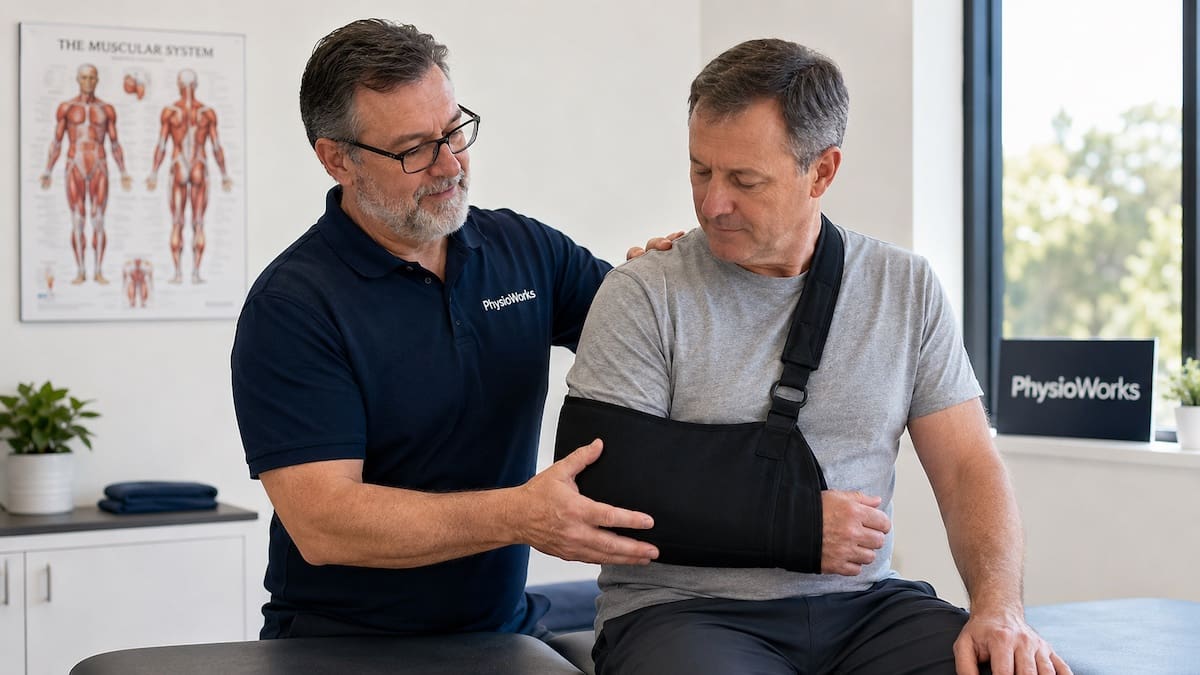
Post-operative shoulder physiotherapy helps guide recovery after shoulder surgery. It sits within the broader post-operative physiotherapy pathway and often works with your surgeon’s protocol, sling limits, wound care advice, and staged exercise plan.
For broader shoulder diagnosis and recovery information, see our shoulder pain physiotherapy guide. Your rehab plan should match your operation, tissue healing, symptoms, surgeon instructions, work needs, sport goals, and daily tasks.
Post-Operative Shoulder Physiotherapy: Quick Guide
- Early phase: protect the repair, manage pain, and keep nearby joints moving.
- Middle phase: restore shoulder movement without forcing healing tissue.
- Strength phase: rebuild rotator cuff, shoulder blade, and arm control.
- Final phase: prepare for work, sport, gym, sleep, and daily tasks.
- Safety rule: follow your surgeon’s limits before adding load.
What Is Post-Operative Shoulder Physiotherapy?
Post-operative shoulder physiotherapy is a staged rehab program after shoulder surgery. It usually starts with protection, pain control, swelling care, and safe movement. It then moves towards strength, control, and function as healing allows.
Your physiotherapist may help you:
- protect the surgical repair during the early phase
- manage pain, swelling, and shoulder stiffness
- restore range of motion safely
- rebuild rotator cuff, shoulder blade, and arm strength
- return to work, sport, gym training, and daily activities
When Should Post-Operative Shoulder Physiotherapy Start?
Post-operative shoulder physiotherapy often starts soon after surgery. The exact timing depends on what was repaired and how much protection the tissues need. Some people begin with hospital advice, sling use, hand and elbow movements, and gentle passive exercises.
Others need a slower start, especially after tendon repairs, stabilisation procedures, fracture fixation, or shoulder replacement. Once you leave hospital, your PhysioWorks physiotherapist can help continue the next phase using your surgeon’s instructions.
Clinic-based post-operative shoulder rehab may be available through PhysioWorks locations such as Ashgrove physiotherapy and Clayfield physiotherapy.
What Happens During Each Shoulder Surgery Rehab Phase?
Shoulder surgery rehab usually moves through protection, mobility, strength, and function. The timing varies because a rotator cuff repair, stabilisation surgery, fracture fixation, or shoulder replacement may each need a different loading plan.
| Phase | Main Goal | Common Focus |
|---|---|---|
| Protection | Protect healing tissue | Sling use, pain control, wound care, hand and elbow movement |
| Mobility | Restore safe range | Passive, assisted, then active movement when cleared |
| Strength | Rebuild shoulder control | Rotator cuff, shoulder blade control, posture, and arm endurance |
| Function | Return to activity | Work tasks, gym, overhead use, sport drills, and confidence |
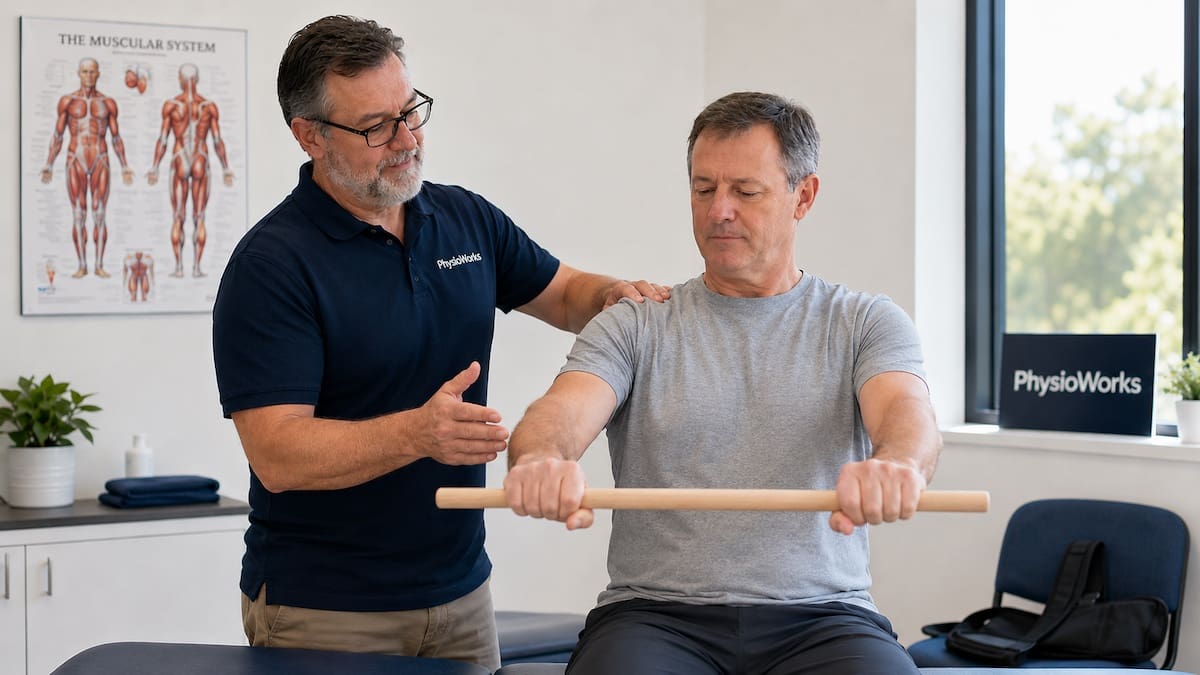
1. Protection and Pain Control
Early rehab protects the repair, checks sling use, manages pain, and keeps nearby joints moving. Your physiotherapist may guide hand, wrist, elbow, neck, and shoulder blade exercises. Gentle passive movement may start when allowed.
2. Mobility Recovery
As healing improves, the next goal is shoulder range without overload. This may include passive, assisted, then active movement. Your surgeon’s protocol and symptom response guide the pace.
3. Strength and Control
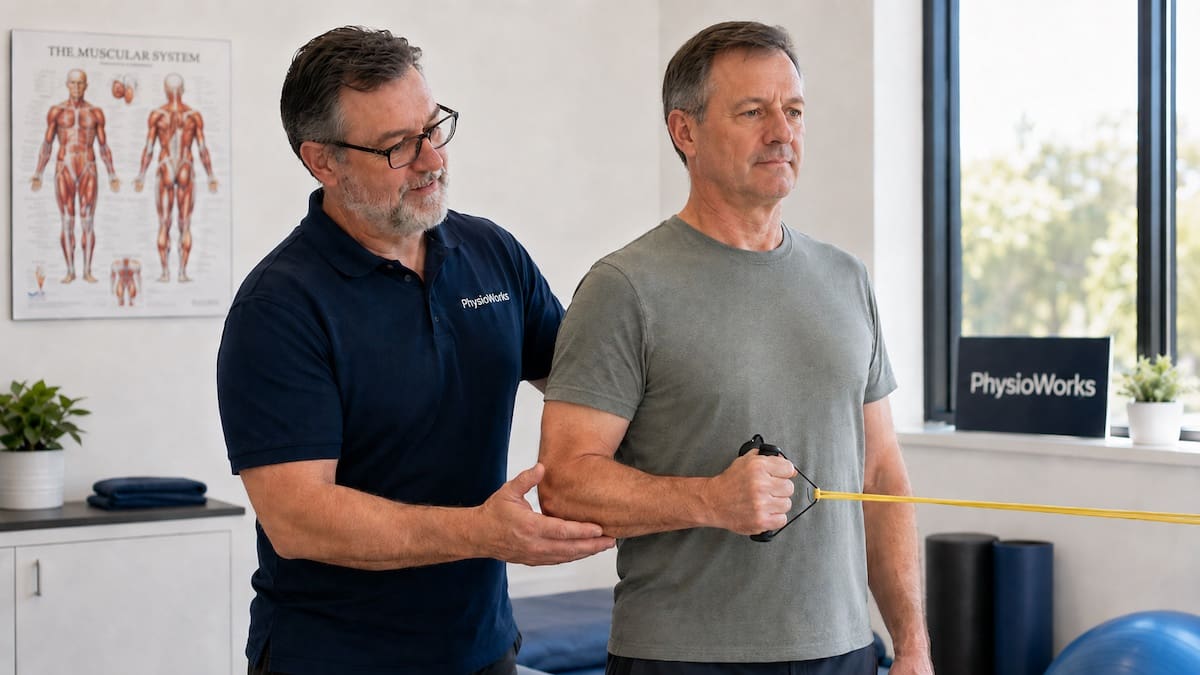
Later rehab builds rotator cuff strength, shoulder blade control, arm endurance, and movement quality. This stage often links with shoulder physiotherapy and selected shoulder exercises.
4. Functional Return
The final phase rebuilds confidence with daily tasks, work duties, gym training, overhead activity, and sport demands. Progression should follow symptoms, strength, control, and surgeon clearance rather than the calendar alone.
Which Shoulder Surgeries Commonly Need Physiotherapy?
Post-operative rehab can vary a lot between procedures. Common examples include:
- Rotator cuff repair: often needs protected loading early, then gradual mobility and strength work. See rotator cuff tear and rotator cuff injury information through the shoulder cluster.
- AC joint surgery: rehab often targets shoulder girdle control and return to overhead function. See AC joint pain.
- Shoulder stabilisation surgery: loading and range must protect healing stabilisers and reduce re-dislocation risk. See shoulder instability, shoulder dislocation, and shoulder labrum injury.
- Frozen shoulder surgery: rehab often focuses on mobility recovery and symptom control. See frozen shoulder.
- Biceps tenodesis: rehab protects the biceps tendon while rebuilding shoulder and arm strength. See biceps tendinopathy.
- Fracture fixation or post-surgical fracture care: movement and load must match bone healing and fixation stability. See fractured humerus.
- Shoulder replacement: rehab should reflect the changed joint mechanics and your surgeon’s limits.
Why Is the Program Different for Each Surgery?
The right post-operative plan depends on what tissue was repaired, how strong the fixation is, and whether a tendon, labrum, bone, or joint replacement is involved. That is why two people with “shoulder surgery” may have different movement limits, sling timeframes, and exercise progressions.
Your physiotherapist should also consider pain, swelling, sleep, age, general health, work demands, and whether you want to return to the gym, manual work, or sport. For a broader explanation of what physiotherapists do in recovery and rehabilitation, Healthdirect provides a useful overview of physiotherapy.
How Do You Know If Your Rehab Is Progressing Well?
Good shoulder surgery rehab usually shows steady gains in comfort, sleep, movement, and control without repeated symptom spikes. Progress is not always straight, but each phase should have a clear goal and a safe reason for adding movement or load.
- Pain settles after exercise rather than building for days.
- Movement improves without forcing the shoulder.
- Strength starts only when the repair can tolerate load.
- Your program changes as your function improves.
What Should You Avoid After Shoulder Surgery?
You should usually avoid movements or loads that your surgeon has not cleared. Common mistakes include removing the sling too early, stretching too hard, lifting too soon, or trying to “test” the repair before the tissue is ready.
Most recovery plans balance protection and progress. Too little movement may add to stiffness. Too much too soon may irritate healing tissue or place the repair at risk.
When Should You Get Extra Review?
Contact your surgeon or treating team promptly if you develop unexpected swelling, wound problems, fever, significant redness, sudden loss of function, unusual pain escalation, worsening pins and needles, or new symptoms that do not fit your expected recovery.
Also seek review if your rehab stalls, your exercises repeatedly flare symptoms, or your shoulder feels less stable as activity increases.
Post-Operative Shoulder Physiotherapy FAQs
How long does post-operative shoulder physiotherapy take?
Recovery time varies with the procedure. Some people improve over a few months. Rotator cuff repairs, stabilisation surgery, fractures, and shoulder replacements can take longer. Your timeline depends on healing, pain, stiffness, strength, and your goals.
Is it normal to feel stiff after shoulder surgery?
Mild to moderate stiffness is common after shoulder surgery, especially early on. The key is to improve movement without forcing the joint. Your physiotherapist can guide the safest way to move while still protecting the repair.
Can I start strengthening exercises straight away?
Usually no. Early strengthening can overload healing tissue if it starts too soon. Most plans begin with protection and controlled mobility. Strength work then starts when your protocol and recovery markers allow.
Do I need a physiotherapist if my surgeon gave me exercises?
Home exercises help, but many people benefit from physiotherapy guidance after shoulder surgery. A physiotherapist can check technique, adjust your program, manage setbacks, monitor stiffness, and help you move through each stage.
Can physiotherapy help after rotator cuff repair?
Physiotherapy often plays an important role after rotator cuff repair because the tendon needs protection before heavier loading. Your program may move from sling advice and gentle motion to shoulder blade control, rotator cuff strength, and functional return.
What should I bring to my first post-operative shoulder appointment?
Bring your surgeon’s referral, operation report if available, rehab protocol, imaging reports, sling instructions, and any exercise sheet you received. These details help your physiotherapist match the session to your surgery and current limits.
What to Do Next
If you have had shoulder surgery, or you are planning surgery soon, arrange your rehab early. A structured post-operative shoulder physiotherapy plan may help you move through each stage more confidently and reduce avoidable setbacks.
PhysioWorks can help review your operation type, surgeon instructions, current symptoms, and next exercise stage so your recovery plan matches your shoulder and your goals.
Choose your clinic and appointment pathway
Select a PhysioWorks clinic to continue to live booking, an appointment request or reception assistance.
Shoulder Products
These shoulder products are commonly used by our physiotherapists to improve strength, posture, movement, plus assist home exercise programs.
-
 Ice & Heat, Pain Management, Uncategorized
PhysiPak Universal Heat pack
$79.00Select optionsQuick View - Liniments & Gels, Massage Liniments, Pain Management
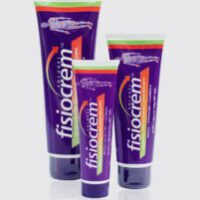
Fisiocrem
$16.95 – $39.95Select optionsQuick View -
-

-
-
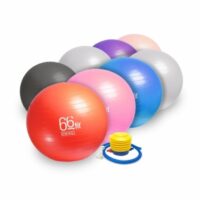
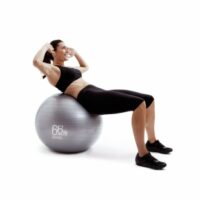 Exercise Balls, Back, Exercise Equipment, Knee, Shoulder
66fit Exercise Balls | Core & Rehab Stability Ball
$32.00 – $57.00Select optionsQuick View -
-

-
-

-
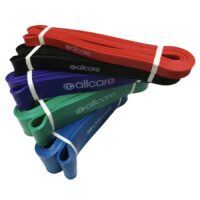
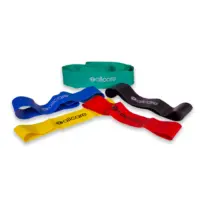
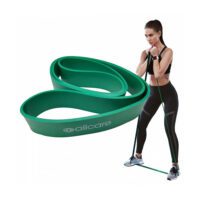 Exercise Equipment, Resistance Band
AllCare Powerloop Bands
$24.95 – $79.95Select optionsQuick View - EMS Machines, Pain Management, TENS Machine, TENS Machine & EMS
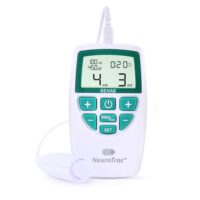
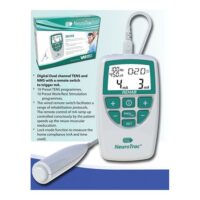
NeuroTrac Rehab (TENS Machine + EMS)
$285.00Add to cartQuick View -
-
-
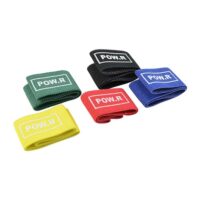 Exercise Equipment, Knee, Resistance Band
POW.R Fabric Mini Loop Bands
$12.00 – $55.00Select optionsQuick View



References
- Chen Y, Meng H, Li Y, et al. The effect of rehabilitation time on functional recovery after arthroscopic rotator cuff repair: a systematic review and meta-analysis. PeerJ. 2024;12:e17395. doi:10.7717/peerj.17395
- Willmore E, Bateman M, Maher N, et al. Rehabilitation guidelines following arthroscopic shoulder stabilisation surgery for traumatic instability – a Delphi consensus. Physiotherapy. 2024;124:154-163. doi:10.1016/j.physio.2024.05.001
- Sciarretta FV, Moya D, List K. Current trends in rehabilitation of rotator cuff injuries. SICOT J. 2023;9:14. doi:10.1051/sicotj/2023011
- Gabiatti AJB, Hillesheim GB, Gomildes MZ, et al. Cryotherapy in Postoperative Shoulder Surgery: A Systematic Review. Ther Hypothermia Temp Manag. 2024;14(4):218-228. doi:10.1089/ther.2023.0071
