
Core Stability Training


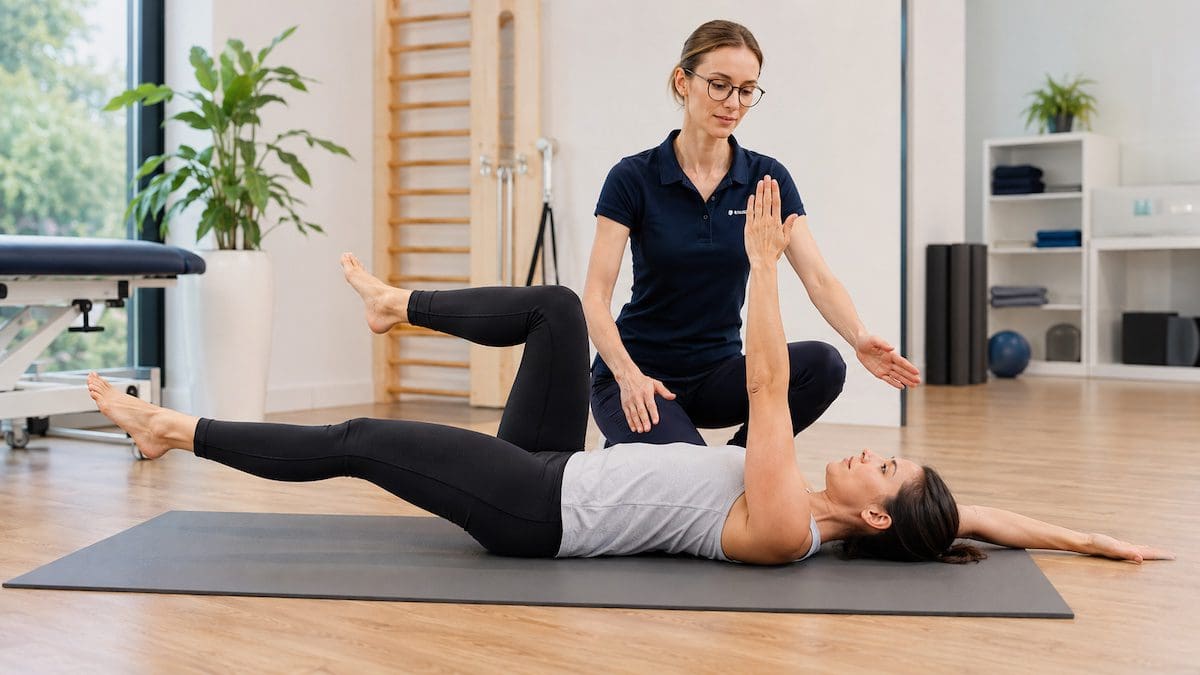
Core stability training starts with controlled movement.
Core stability training helps improve trunk control and spinal support during daily movement, sport, work, and gym training. Many people with low back pain notice flare-ups when their deep core muscles fatigue early, switch off, or fail to coordinate well with breathing, posture, and hip control.
Core training is not just “ab” work. Instead, it focuses on how your deep abdominal, spinal, pelvic, and hip muscles work together. When you rebuild that control, many people move with less strain and more confidence.
If you want a practical starting point, read our core stability exercises guide. If you suspect a specific control problem, this page on core stability deficiency explains common patterns and signs. If posture fatigue also contributes, start with posture exercises. You can also discuss whether physiotherapy is the right option for your recovery plan.
Core Stability Training: Quick Summary
- Core stability training focuses on trunk control, not just abdominal strength.
- It often starts with breathing, gentle bracing, and low-load movement control.
- Progressions may include dead bugs, bird dogs, bridges, squats, hip hinges, lifting, running, and sport drills.
- Quality usually matters more than intensity in the early stages.
- A physiotherapist may adjust your program if pain, leg symptoms, or flare-ups limit progress.
What is core stability training?
Core stability training is a structured exercise approach that improves your ability to keep your spine and pelvis steady while your arms and legs move. Your body relies on a mix of deep stabilising muscles, often including the transversus abdominis and multifidus, plus larger support muscles such as the glutes and obliques. The aim is not brute force. Instead, the goal is better timing, endurance, coordination, and control.
Why core stability training matters
When trunk control improves, you can often:
- reduce repeated strain on sensitive spinal joints and soft tissues
- lift, carry, run, and twist with better movement control
- improve posture endurance for desk work, driving, and parenting tasks
- build a safer base for gym, Pilates, and sport programs
For many people, the biggest gain is consistency. Short, well-controlled sessions done often usually work better than long, fatiguing sessions done only now and then.
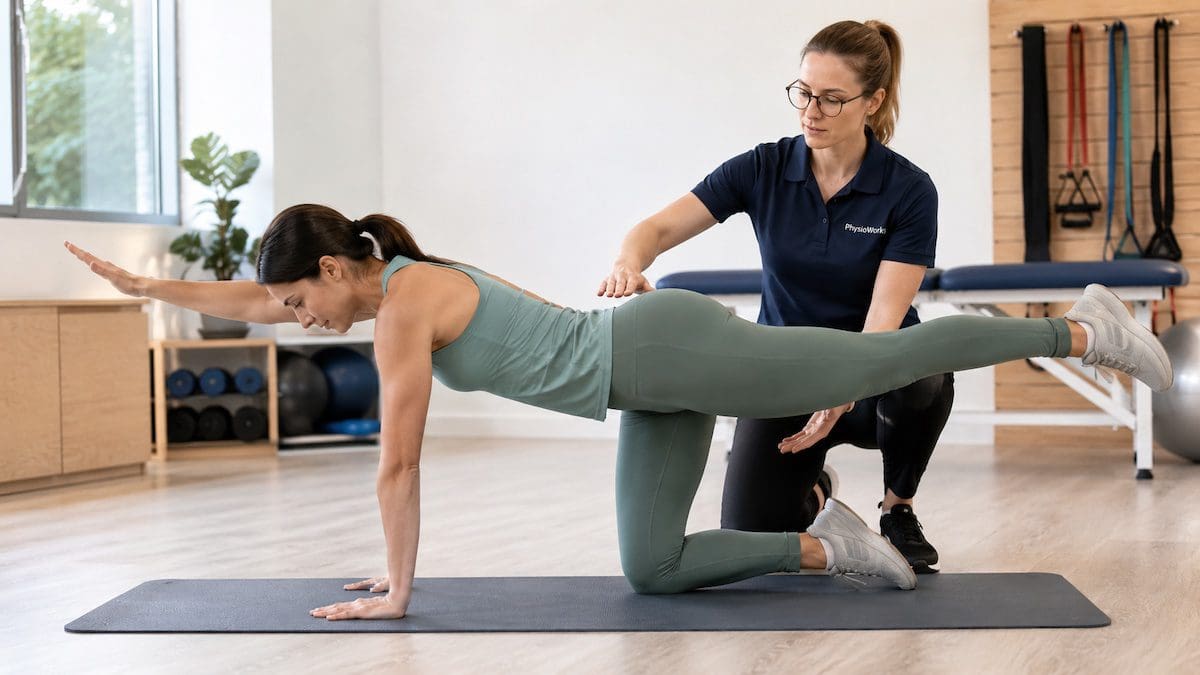
Core stability training builds control before load.
How does core stability training work?
Traditional “core” exercise plans sometimes jump straight into long planks, heavy carries, or fast circuits. Those exercises can be useful later. However, they can also skip the early control stages. Core stability training usually starts with low-load retraining and then progresses into functional daily and sporting tasks.
A simple progression that often works well
- Stage 1: activation – breathing control, gentle abdominal bracing, and pelvic positioning
- Stage 2: endurance – short holds repeated often with good quality and less fatigue
- Stage 3: integration – adding hip and shoulder movement such as hinging, squatting, stepping, and reaching
- Stage 4: load and speed – lifting, running drills, gym work, and sport-specific patterns
If you also need general spinal mobility and strength, these guides may help: back exercises and gym back exercises.
What should you expect from core stability training?
Most people begin with simple positions they can control well, such as lying, kneeling, or supported standing. Your physiotherapist may check how you breathe, brace, and move your hips and spine together. From there, the exercises usually build gradually based on your symptoms, goals, and the activities you need to return to.
You should expect the program to feel manageable rather than exhausting. In many cases, quality matters more than intensity early on. As your control improves, the exercises become more challenging and more specific to work, gym, running, or sport.
Real-time ultrasound guidance
Some people struggle to feel the right muscles switch on, especially after persistent pain or repeated flare-ups. In these cases, real-time ultrasound feedback can help you see the contraction and improve technique.
Learn more here: real-time ultrasound retraining. For a practical introduction, read what to expect with ultrasound-guided retraining.
Is core stability training safe during low back pain?
In many cases, yes. The key is to match the exercise to your current stage and keep the dose sensible. Pain that settles quickly after exercise often suggests that you can continue and progress gradually. However, sharp pain, worsening leg symptoms, or pain that ramps up for several days means you should scale back and get assessed.
For broader guidance on staying active with low back pain, see the Low Back Pain Clinical Care Standard.
When should you get help with core stability training?
Book a physiotherapy assessment if your back pain keeps returning, your exercises trigger sharp pain, symptoms travel into your leg, or you are unsure how to progress safely. A clear starting point often helps you build control without doing too much too soon.
Practical tips to improve results
- Start easier than you think and build gradually over 2 to 4 weeks.
- Use positions you can control well, often lying, kneeling, then standing.
- Train little and often. Five to ten minutes, 3 to 5 days per week can work very well.
- Pair core work with hip control, because strong glutes and hip stability can reduce back overload.
- Progress one variable at a time, such as load, range, hold time, or speed.
If you want a comparison of tools that may support early retraining, this guide on exercise ball training may help. You can also read what are the best core exercises? for common starting points.
Related articles
- Core stability exercises
- What are the best core exercises?
- Exercise ball training
- Back exercises
- Back pain relief
FAQs
How often should I do core stability training?
Most people do well with short sessions 3 to 5 days per week. Start with 5 to 10 minutes and focus on control, breathing, and good technique. Progress gradually by changing one variable at a time, such as hold time, load, range, or speed.
Which core stability exercise should I start with?
A dead bug variation, bird dog, glute bridge, or gentle bracing drill often works well. The right starting point depends on your pain, movement control, and goals. Choose the easiest version you can control well before adding load or longer holds.
Can core stability training help low back pain?
Core stability training may help some people with low back pain by improving trunk control, movement confidence, and load tolerance. It works best when the exercises match your symptoms and daily demands, rather than following a generic hard-core workout.
When should I stop or scale back?
Scale back if pain spikes sharply, symptoms spread into the leg, or soreness keeps building for more than 24 to 48 hours. In that case, a physiotherapist can adjust your exercise choice, technique, range, and dose.
Is Pilates the same as core stability training?
Pilates and core stability training can overlap, especially when they focus on breathing, trunk control, and precise movement. However, physiotherapy core stability training is usually more individualised around pain behaviour, movement assessment, and staged return to activity.
Can core stability training help sport and gym performance?
Yes, it may help improve control, load transfer, and movement efficiency. Many people use it to build a better base for lifting, running, change of direction, and return to sport. Progression should match your strength, symptoms, and movement quality.
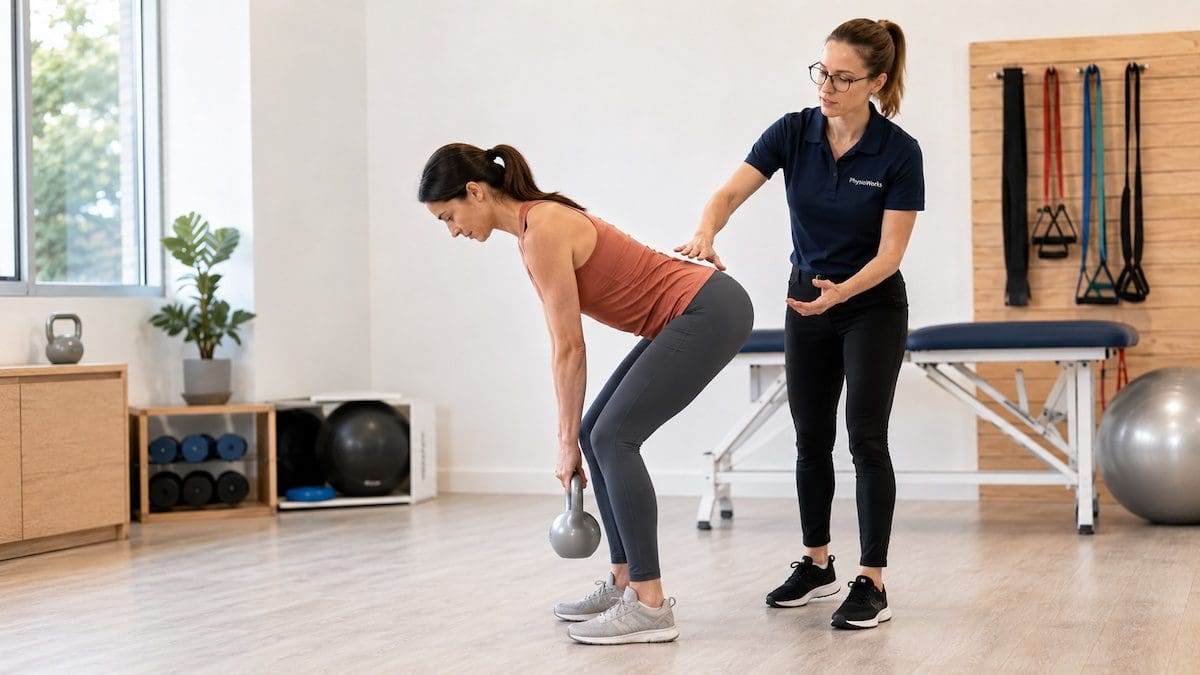
Core stability supports confident lifting control.
What to do next
If you feel stuck, book an assessment with a physiotherapist. They can check your movement control, identify aggravating factors, and set a simple program that matches your symptoms and goals.
Most people do best when they have a clear starting point, a sensible progression, and a short review to refine technique and load. Early guidance can also help you avoid doing too much too soon.
Choose your clinic and appointment pathway
Select a PhysioWorks clinic to continue to live booking, an appointment request or reception assistance.
Back Support Products
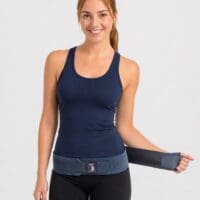
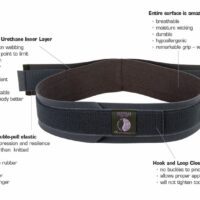
These back support products are commonly used by our physiotherapists to help reduce back pain, improve comfort, and support your recovery at home.
-
 Back, Braces & Supports, Maternity, SIJ
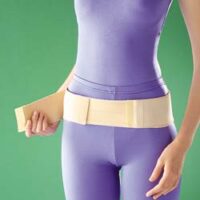
Core Stability Support – OPPO 3462
$54.00Select optionsQuick View - Braces & Supports, Back, Maternity, SIJ
AOM38 AllCare Ortho Core Stability Belt
$49.95Select optionsQuick View -
 Braces & Supports, Back, Maternity, SIJ
Maternity Support Belt – OPPO 4062
$37.00Select optionsQuick View -
-
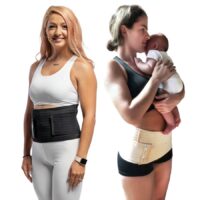
 Back, Braces & Supports, Maternity, Posture
Pregnancy Belly Band & C-Section 3-in-1
$94.99Select optionsQuick View -
-
-
 Back, Braces & Supports, Maternity, Posture
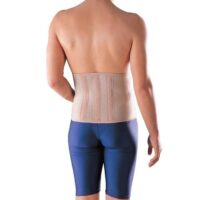
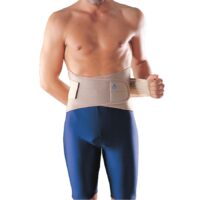
Maternity Back Support – OPPO 2062
$60.00 – $64.00Select optionsQuick View
Back Pain Tips: 7 Evidence-Based Ways to Move Better, Hurt Less & Recover Faster
A Physiotherapist’s Guide to a Stronger, Healthier Back
Discover practical, research-based strategies to ease back pain, move with confidence, and build long-term strength. Written by physiotherapist John Miller, this concise guide blends science and decades of clinical experience to help you recover faster and stay active for life.
- Clear, actionable advice grounded in current research
- Whole-person approach: movement, sleep, mindset and care team
- Includes a quick flare-up plan, FAQs and daily habits


References
- Smrcina Z, Woelfel S, Burcal C. A systematic review of the effectiveness of core stability exercises in patients with non-specific low back pain. Int J Sports Phys Ther. 2022;17(5):766-774. doi:10.26603/001c.37251
- Ge L, Huang H, Yu Q, et al. Effects of core stability training on older women with low back pain: a randomised controlled trial. Eur Rev Aging Phys Act. 2022;19:10. doi:10.1186/s11556-022-00289-x
- Frizziero A, Pellizzon G, Vittadini F, Bigliardi D, Costantino C. Efficacy of core stability in non-specific chronic low back pain. J Funct Morphol Kinesiol. 2021;6(2):37. doi:10.3390/jfmk6020037
- Guo XB, Lan Q, Ding J, Tang L, Yang M. Effects of different types of core training on pain and functional status in patients with chronic nonspecific low back pain: a systematic review and meta-analysis. Front Physiol. 2025;16:1672010. doi:10.3389/fphys.2025.1672010
