
Pilates for Back Pain

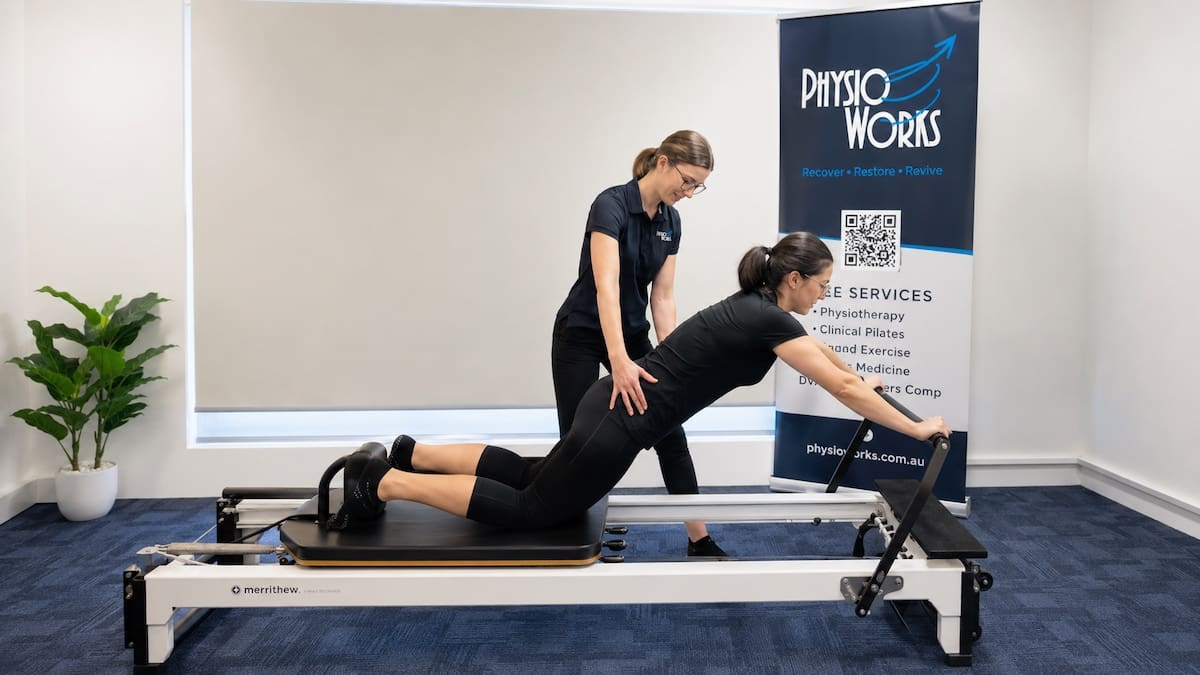
Pilates for back pain may help improve trunk control, strength, movement confidence and day-to-day function when exercises match your symptoms. At PhysioWorks, Pilates-based rehabilitation is used as part of a broader plan for people with back pain, especially when stiffness, poor control, low endurance or recurring flare-ups affect work, exercise or daily life.
Brisbane patients can discuss suitable options through our Sandgate and Clayfield physiotherapy group exercise classes, one-to-one Reformer Pilates at Sandgate, and individual physiotherapy care. Your physiotherapist can help decide whether Pilates, back pain physiotherapy, walking, strength work or another pathway is the best starting point.
Quick Guide: Pilates for Back Pain
- Best fit: recurring back pain, low trunk endurance, stiffness or reduced movement confidence.
- Start point: simple, low-load movements matched to your pain pattern.
- Progression: breathing, trunk control, hip strength, balance and functional loading.
- Not ideal yet: severe pain, strong leg symptoms, numbness, weakness or unclear diagnosis.
- Next step: assessment helps match the right exercises to your current capacity.
What is Pilates for back pain?
Pilates for back pain is a guided exercise approach that focuses on breathing control, trunk support, posture, hip movement and whole-body coordination. It aims to improve how your spine and surrounding muscles manage load during sitting, bending, lifting, walking and exercise.
In a physiotherapy setting, Pilates is not a one-size-fits-all class. Exercises should be selected and progressed based on your pain behaviour, movement control, goals, general strength and confidence. This matters because back pain can involve muscles, joints, discs, nerves, load tolerance, stress, sleep and activity habits.
How does Pilates for back pain work?
Pilates-based rehabilitation usually starts with simple, low-load movements for the trunk, pelvis and hips. As symptoms settle and capacity improves, the program can progress into stronger and more functional movements. This is why Pilates often overlaps with core stability training, back pain exercises and broader exercise programs.
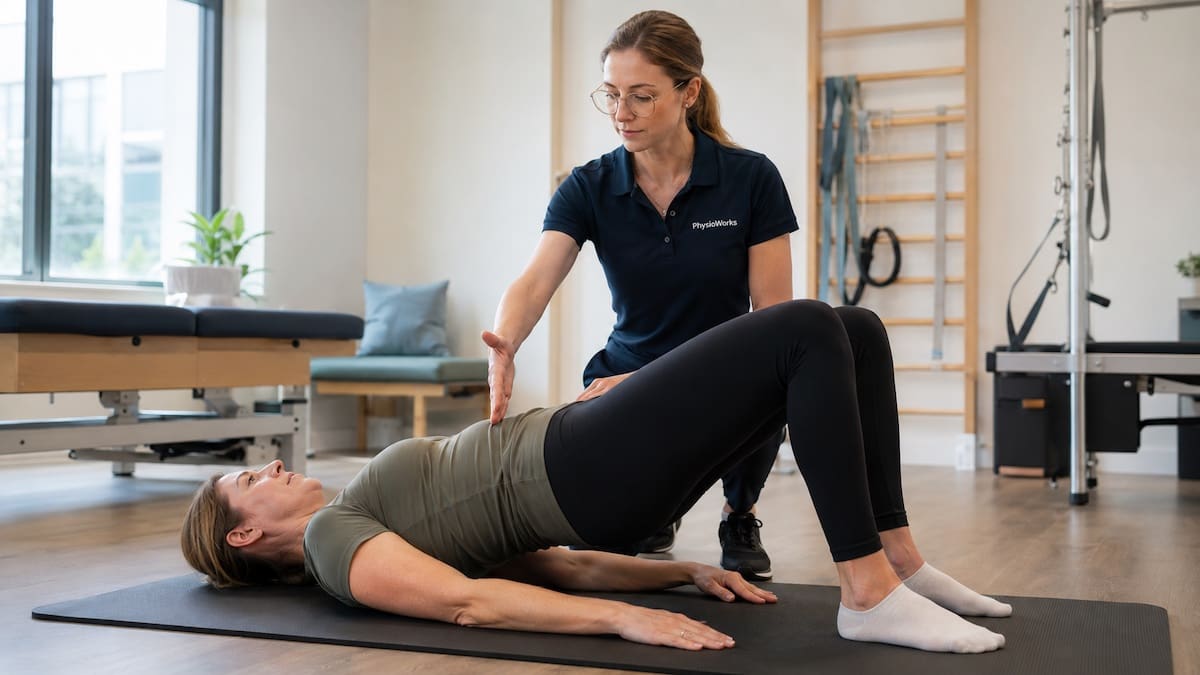
The aim is not just “core strength”
A good Pilates plan should help you control movement, tolerate load, breathe well, rebuild confidence and return to useful activity. For some people, that means quiet mat work. For others, it means stronger reformer, gym or functional progressions.
Who may benefit from Pilates for back pain?
Pilates may suit people who have ongoing or recurrent back pain, reduced confidence with movement, poor trunk endurance, stiffness after sitting, or difficulty returning to normal activity after a flare-up.
- Recurring or persistent lower back pain
- Reduced trunk strength or movement control
- Stiffness after sitting, driving or inactivity
- Difficulty returning to exercise, gym or sport
- Poor confidence with bending, lifting or twisting
- A need for guided rehabilitation progression
Why can Pilates help back pain?
Back pain often changes how people move. Load tolerance may drop, movement confidence may fall, and trunk muscles may become less coordinated after pain or inactivity. Pilates can help restore control and activity tolerance through graded exercise.
Research supports exercise as a useful treatment option for chronic low back pain, and Pilates may help some people reduce pain and disability. However, current evidence does not show that Pilates is always better than other well-matched exercise. The best choice depends on your symptoms, goals, preferences and ability to progress safely.
Load management for Pilates and back pain
Load management means reducing irritating movements during a flare-up, rebuilding tolerance with manageable exercise, then progressing as your back adapts. With Pilates for back pain, this means choosing exercises that challenge control without pushing symptoms beyond what your body can recover from.
- Reduce or modify exercises that clearly increase pain or leg symptoms.
- Keep gentle movement going where it feels safe and useful.
- Rebuild trunk, hip and leg strength gradually.
- Avoid sudden jumps in class intensity, spring load or repetition volume.
- Check your response over the next 24 to 48 hours.
Is Pilates right for everyone with back pain?
No. Some people need simpler pain-settling strategies first, especially when symptoms are severe, highly irritable or travelling into the buttock or leg. Others may need more specific management for conditions such as sciatica, bulging disc or a pulled back muscle.
A physiotherapy assessment helps decide whether Pilates is suitable, what level to begin at, and which movements should be modified. This is especially important if pain is spreading, symptoms are changing, or you are unsure whether exercise is helping.
When should you pause and get advice?
Stop the exercise and seek advice if Pilates increases leg pain, pins and needles, numbness, weakness, balance changes, bladder or bowel symptoms, or pain that keeps worsening after class.
These symptoms do not always mean something serious, but they should be assessed before you keep progressing exercise.
What are the benefits of Pilates for back pain?
- Improved trunk control and core endurance
- Better confidence with bending, lifting and daily tasks
- Low-impact strengthening during recovery
- A structured progression back to activity
- Support for posture, breathing and movement awareness
- Better awareness of how your hips, trunk and spine work together
What should you expect from a Pilates-based rehabilitation plan?
Your physiotherapist will assess your pain behaviour, movement tolerance, aggravating factors and goals. They may then recommend one-to-one rehabilitation, a home program, supervised reformer work or progression into a suitable group setting.
At PhysioWorks, Pilates for back pain may sit alongside manual therapy, education, walking, pacing, strength work and core stability exercises. Your plan should feel clear, realistic and easy to adjust if symptoms change.
How do PhysioWorks Pilates pathways differ?
| Pathway | Best suited to | Typical focus |
|---|---|---|
| One-to-one physiotherapy | Irritable pain, new flare-ups or unclear symptoms | Assessment, pain control, exercise selection and safety |
| Reformer Pilates | People who need individual technique coaching | Trunk control, hip strength, posture and confidence |
| Group exercise classes | People ready for supervised class-based exercise | Consistency, strength, mobility and guided progression |
Related information
- Pilates
- Physiotherapy Group Exercise Classes
- Clayfield PhysioWorks
- Essential Back Pain FAQs
- Lower Back Pain
- Back Pain Exercises
What to do next
If back pain keeps returning, limits exercise, or leaves you unsure which movements are safe, book a physiotherapy assessment. Your physiotherapist can assess your symptoms and guide whether Pilates, strengthening, walking, manual therapy or another pathway is the best starting point.
You can book online 24/7 or call your preferred PhysioWorks clinic if you are unsure which appointment type suits your back pain.
Choose your clinic and appointment pathway
Select a PhysioWorks clinic to continue to live booking, an appointment request or reception assistance.
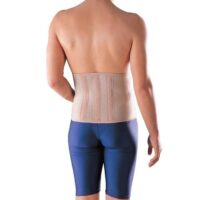
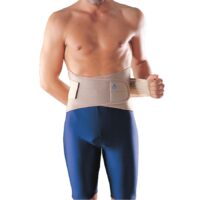
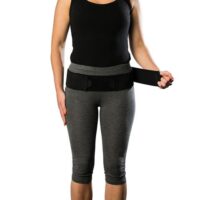
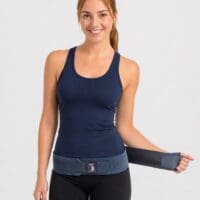
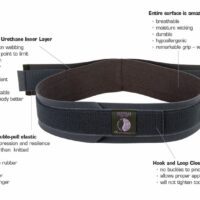
Back Support Products
These back support products are commonly used by our physiotherapists to help reduce back pain, improve comfort, and support your recovery at home.
-
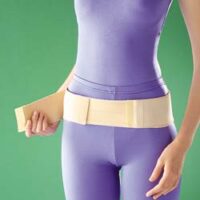 Back, Braces & Supports, Maternity, SIJ
Core Stability Support – OPPO 3462
$54.00Select optionsQuick View -
-
 Back, Braces & Supports, Maternity, Posture
Maternity Back Support – OPPO 2062
$60.00 – $64.00Select optionsQuick View -
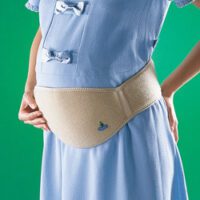 Braces & Supports, Back, Maternity, SIJ
Maternity Support Belt – OPPO 4062
$37.00Select optionsQuick View - Braces & Supports, Back, Maternity, SIJ
AOM38 AllCare Ortho Core Stability Belt
$49.95Select optionsQuick View -
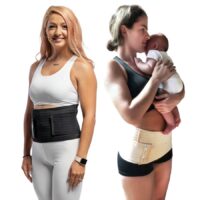
 Back, Braces & Supports, Maternity, Posture
Pregnancy Belly Band & C-Section 3-in-1
$94.99Select optionsQuick View -
-


Pilates for back pain FAQs
Can Pilates make back pain worse?
Yes. Pilates can aggravate back pain if the exercises are too advanced, too repetitive, or poorly matched to your current symptoms. Pain that increases during class, spreads into the leg, or feels worse the next day suggests the program may need to change.
Is Pilates better than general exercise for back pain?
Not always. Pilates is one useful option, but research does not show that it is always better than other forms of exercise. Many people also respond well to walking, strength training, mobility work or general rehabilitation when the program matches their goals and symptoms.
How often should you do Pilates for back pain?
Many people start with two or three sessions each week, but the right amount depends on symptom irritability, fitness, recovery and exercise history. Short, regular sessions often work better than doing too much too soon.
Do you need a physiotherapy assessment before starting?
A physiotherapy assessment is helpful if pain is new, recurring, severe, spreading into the leg, or limiting normal activity. Assessment helps confirm whether Pilates is suitable and which exercises should be modified or avoided at first.
Can Pilates help sciatica?
Pilates may help some people with back-related leg symptoms, but it needs careful selection. If symptoms travel below the knee, include pins and needles, numbness or weakness, book an assessment before starting or progressing Pilates.
Is Reformer Pilates useful for back pain?
Reformer Pilates can be useful when it is guided and progressed well. Springs, straps and the moving carriage can support controlled movement, but the setup needs to match your back pain pattern, strength and confidence.
References
- Patti A, Thornton JS, Giustino V, Drid P, Paoli A, Schulz JM, et al. Effectiveness of Pilates exercise on low back pain: a systematic review with meta-analysis. Disabil Rehabil. 2024;46(16):3535-3548. doi:10.1080/09638288.2023.2251404
- Wong CM, Rugg B, Geere JA. The effects of Pilates exercise in comparison to other forms of exercise on pain and disability in individuals with chronic non-specific low back pain: a systematic review with meta-analysis. Musculoskeletal Care. 2023;21(1):78-96. doi:10.1002/msc.1667
- Hayden JA, Ellis J, Ogilvie R, et al. Exercise therapy for chronic low back pain. Cochrane Database Syst Rev. 2021;9(9):CD009790.
- Healthdirect Australia. Low back pain. Accessed 30 June 2026.
