
Yoga Benefits
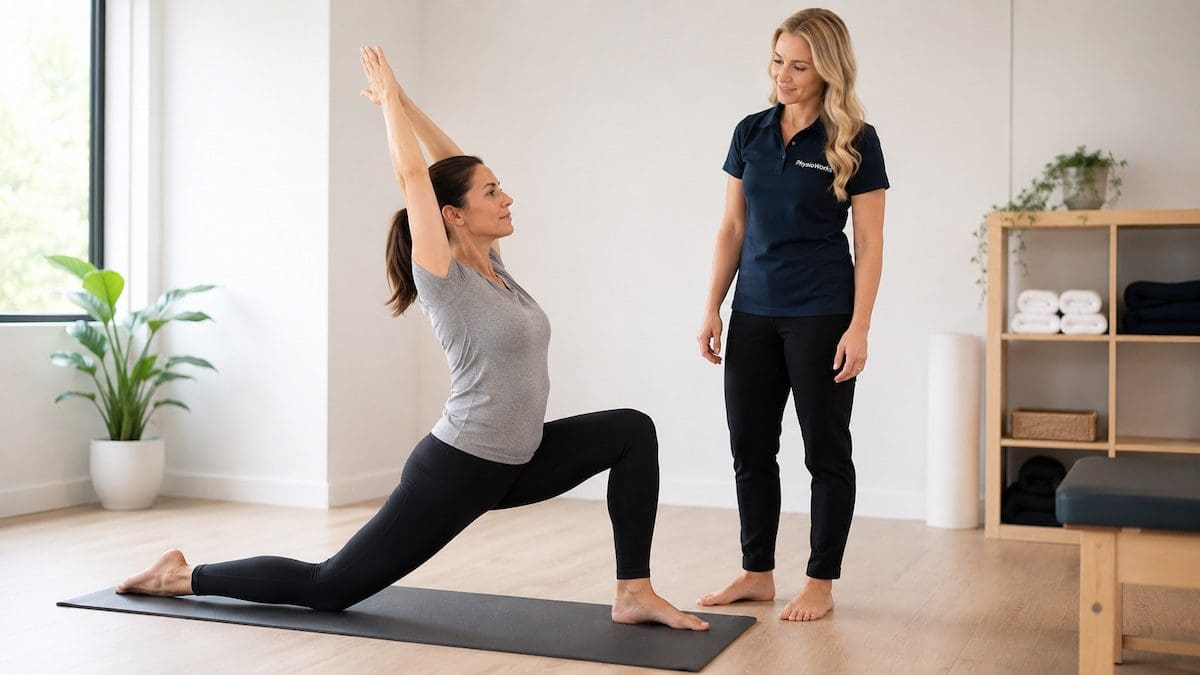
Controlled yoga movement can support flexibility and balance.
Yoga benefits may include improved flexibility, balance, strength, stress management, sleep quality and body awareness. Many people use yoga as a low-impact movement option that supports general wellbeing, sports recovery and long-term mobility.
PhysioWorks does not provide yoga classes. However, our physiotherapists can help if pain, stiffness, injury, weakness or movement restrictions affect your yoga practice, training routine or return to exercise. For broader injury prevention advice, see our guide to mind-body and dance-related injury prevention.
Quick Summary: Why Do People Do Yoga?
- Yoga may improve flexibility and joint range of motion.
- It can build balance, control and body awareness.
- Breathing and relaxation practices may help stress management.
- Some people use yoga to complement sports, gym training or walking.
- Modified yoga can suit beginners, but pain should not be ignored.
What Is Yoga?
Yoga is a movement and mindfulness practice that can combine postures, breathing, relaxation and meditation. Hatha yoga is one of the most common forms practised in Western countries and usually focuses on physical postures, breathing control and relaxation.
Yoga is not only stretching. Many styles also train balance, trunk control, strength endurance, breathing rhythm and mental focus. Different classes vary widely, so a gentle beginner class may feel very different from a dynamic flow class, hot yoga session or strength-based practice.
What Are the Main Yoga Benefits?
The main yoga benefits relate to movement control, flexibility, balance, strength, relaxation and general wellbeing. Research suggests yoga may help some people with stress, sleep, pain, physical function and quality of life, although results vary between people and programs.
Common Physical Benefits
- Flexibility: regular, comfortable stretching may improve range of motion over time.
- Balance: standing poses can challenge single-leg control and postural reactions.
- Strength: weight-bearing poses may support trunk, hip, shoulder and leg strength.
- Posture awareness: yoga may help people notice how they sit, stand and move.
- Breathing control: slower breathing may support relaxation and movement control.
Can Yoga Help With Stress and Sleep?
Yoga may help stress and sleep for some people because it combines movement, breathing and relaxation. It should not replace medical or psychological care when symptoms are significant, but it can form one helpful part of a broader wellbeing plan.
A 2024 systematic review reported low-quality evidence that yoga may reduce stress in stressed adults when compared with passive control groups. Research also suggests possible benefits for sleep quality, pain and wellbeing, although study quality, class type and program length vary.
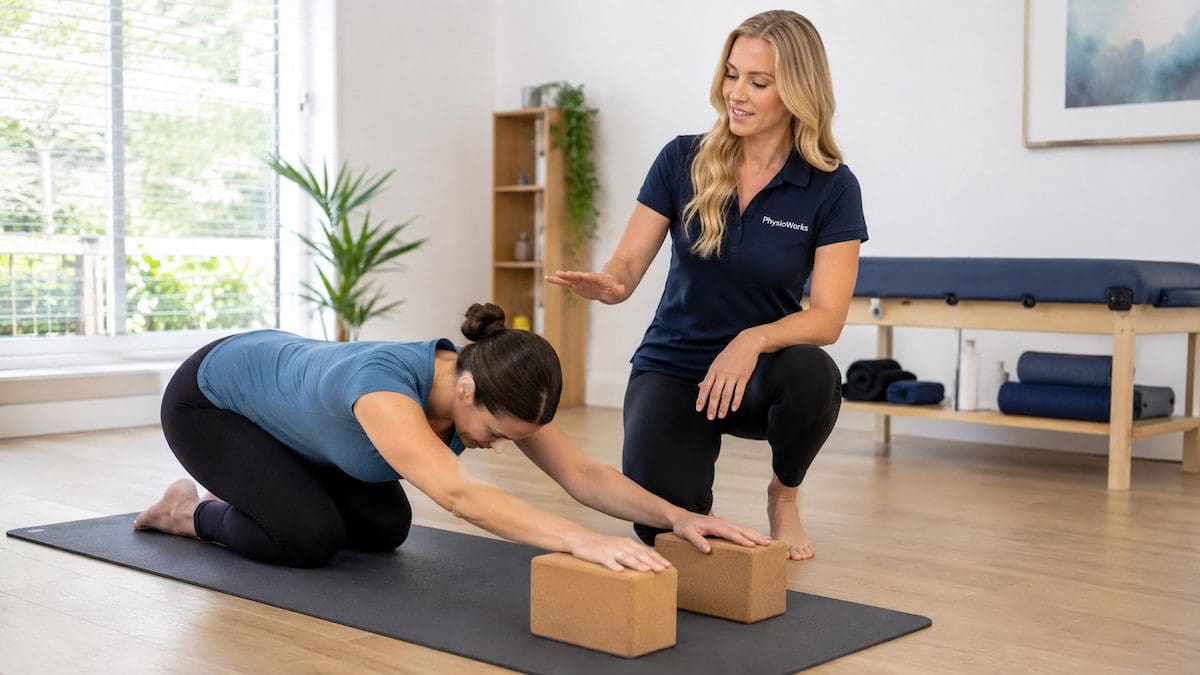
Props can help make yoga positions more comfortable.
Do You Need to Be Flexible to Start Yoga?
No. You do not need to be flexible before starting yoga. Many people begin yoga because they feel stiff, tight or restricted.
A good class should let you modify poses, use props and work at a comfortable level. If a pose causes sharp pain, pins and needles, dizziness, joint catching or symptoms that linger after class, stop and seek advice. A physiotherapist may help assess whether the issue relates to mobility, strength, balance, pain sensitivity or a specific injury.
Beginner-Friendly Yoga Tips
- Start with a beginner, gentle or modified class.
- Tell the instructor about injuries before class starts.
- Use props when they improve comfort or control.
- Avoid forcing end-range positions.
- Use slow breathing to keep movement controlled.
- Stop if symptoms feel sharp, nervy, unstable or unusual.
How Can Yoga Support Sport and Exercise?
Yoga can complement sport and exercise by supporting mobility, balance, trunk control, recovery habits and body awareness. Runners, cyclists, gym users and recreational athletes may use yoga as part of a weekly movement routine.
However, yoga is not a complete replacement for sport-specific strength, conditioning or rehabilitation. If you have a recurring injury, tendon pain, joint pain or reduced confidence with loading, a structured plan may work better. Useful related pages include prehabilitation, sports physiotherapy, muscle strain and tendinopathy.
When Should You Be Careful With Yoga?
Yoga should feel controlled, not forced. Be careful if you have recent surgery, a new injury, unexplained pain, dizziness, nerve symptoms, osteoporosis, pregnancy-related concerns, balance problems or a medical condition that affects exercise safety.
You should also seek advice if yoga repeatedly aggravates neck pain, back pain, knee pain, shoulder pain or posture-related discomfort. Modifying the pose, reducing range, changing load or improving strength may help.
Stop and Seek Advice If You Notice:
- sharp pain during a pose
- pins and needles, numbness or radiating pain
- joint locking, catching or giving way
- dizziness, faintness or unusual shortness of breath
- pain that worsens after each class
- symptoms after a fall, twist or sudden overload
What Should You Wear to Yoga?
Choose comfortable clothing that lets you move, bend and stretch without restriction. You do not need expensive yoga gear. Most yoga classes are done barefoot, although grip socks may suit some people in specific settings.
Yoga, Pilates and Physiotherapy: What Is the Difference?
Yoga usually combines postures, breathing and relaxation. Pilates often focuses more on controlled strength, trunk control and movement precision. Physiotherapy assesses pain, injury, strength, mobility, balance and functional limitations, then builds a plan matched to your goals.
These approaches can complement each other. For example, someone with back stiffness may enjoy yoga for mobility, Pilates for control and physiotherapy for assessment and a tailored loading plan.
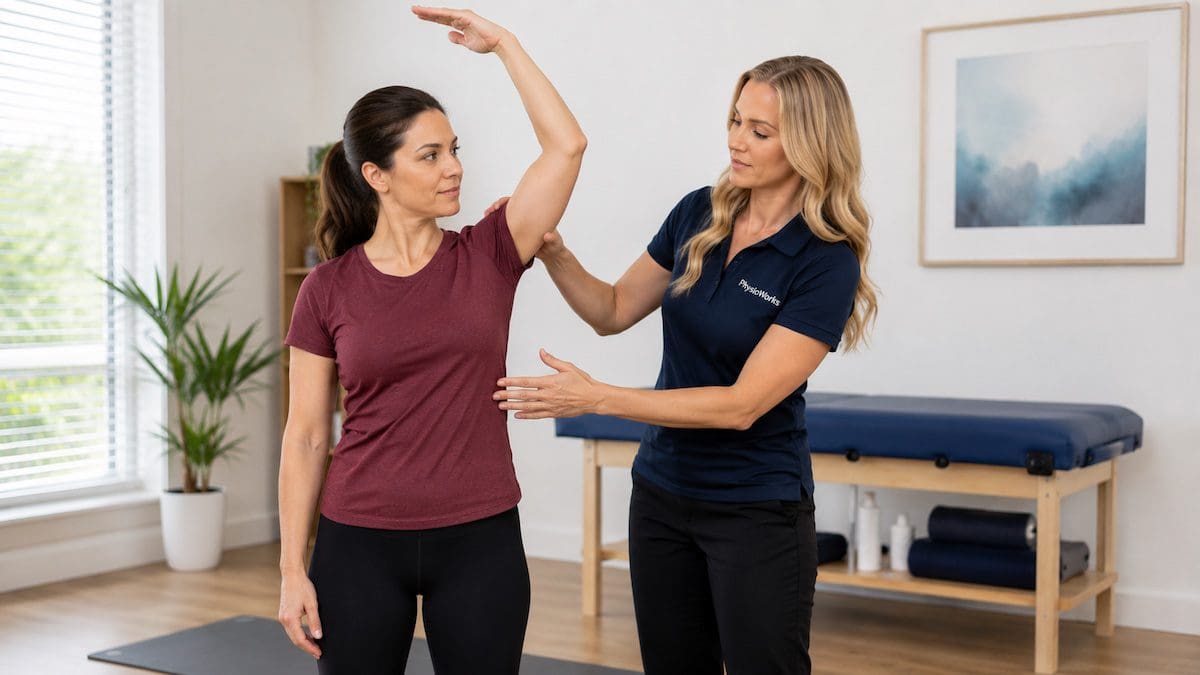
Physiotherapy can help when pain limits yoga movement.
What To Do Next
If you want to try yoga, choose an appropriate class, start gently and avoid forcing painful positions. A qualified yoga instructor can help you modify poses and build confidence safely.
If pain, injury, stiffness or balance issues limit your yoga practice, PhysioWorks can assess the problem and help you plan a safe return to movement. We do not offer yoga classes, but we can help you manage the musculoskeletal issues that may stop you enjoying yoga, sport or exercise.
Choose your clinic and appointment pathway
Select a PhysioWorks clinic to continue to live booking, an appointment request or reception assistance.
Related Articles
- Preventing Sports Injuries in Pilates, Yoga, Dance and Ballet
- Pilates
- Prehabilitation
- Sports Physiotherapy
- Back Pain
- Neck Pain
- Knee Pain
- Improving Posture Guide
Yoga Benefits FAQs
What are the main benefits of yoga?
Yoga may help improve flexibility, balance, strength, breathing control, stress management, sleep quality and body awareness. Benefits vary depending on the yoga style, class frequency, health status and how well poses are modified for the individual.
Do you need to be flexible to start yoga?
No. You do not need to be flexible before starting yoga. Many people begin because they feel stiff or restricted. A beginner-friendly class should offer modified poses, props and comfortable progressions.
Can yoga help with stress?
Yoga may help some people manage stress because it combines movement, breathing and relaxation. It should not replace medical or psychological care when symptoms are significant, but it may form part of a broader wellbeing plan.
Is yoga safe if you have pain or an injury?
Yoga may be safe for many people with pain or injury when poses are modified. Stop if you feel sharp pain, pins and needles, dizziness, joint locking or symptoms that worsen after class. Seek health advice if symptoms persist.
Does PhysioWorks offer yoga classes?
PhysioWorks does not offer yoga classes. Physiotherapists can help if pain, stiffness, weakness, injury or movement restrictions affect your yoga practice, sport or return to exercise.


References
- Schleinzer A, Blasche G, Brunner-Ziegler S, et al. Effects of yoga on stress in stressed adults: a systematic review and meta-analysis. Complement Ther Med. 2024.
- National Center for Complementary and Integrative Health. Yoga: effectiveness and safety. Updated 2024.
- Prashanth S, Nalini V, Maheshkumar K, et al. Effects of yoga on sleep quality among the geriatric population: systematic review and meta-analysis. Sleep Medicine: X. 2024.
- Crevelário de Melo R, et al. Effectiveness and safety of yoga to treat chronic and acute pain: a rapid review of systematic reviews. BMJ Open. 2021;11:e048536.
- Khajuria A, et al. Reducing stress with yoga: a systematic review based on multimodal biosignals. Cureus. 2024.
