Soft Tissue Injuries

Soft Tissue Injury Care

Soft Tissue Injuries

What is a Soft Tissue Injury?

A soft tissue injury is any injury within your soft tissues, such as muscle, ligaments, tendons and fascia. In other words, non-bone related injuries.

Soft tissue injuries include:

Seek Professional Advice

The best care is to seek prompt medical attention for an accurate diagnosis and specific care. However, in the interim, you can follow the following general guidelines.

In the first three days after injury, use the R.I.C.E. method:

  • Rest (to avoid pain and further damage)
  • Ice (20 to 30 minutes, each two to three hours)
  • Compression (to support the injury and minimise swelling)
  • Elevation (above your heart to assist in swelling reduction)

You will help your chances of a full recovery if you avoid the H.A.R.M. factors in the first 48 to 72 hours.

What are the HARM Factors?

Heat: Increases swelling and bleeding. Avoid heat packs, a hot bath and saunas.

Alcohol: Increases swelling and bleeding. Plus, it can delay healing.

Running or Exercise: Aggravates the injury, increasing pain, swelling and bleeding. Always check with a health professional before resuming sport or exercise.

Massage: Increases swelling and bleeding. Direct massage to the injured area may aggravate the damaged tissues and is normally best avoided for the first 48 to 72 hours. Indirect massage (away from the injury site) may be helpful. Please consult your health practitioner for the best advice for your injury.

What is Your Subsequent Treatment?

While the following advice is generic and may vary depending on your injury diagnosis, several treatment goals during the subacute phase, include:

Pain Relief

Is it important to ease and safely manage your pain? While natural products such as ice and over-the-counter medications may assist you, the advice of a health professional is the safest option for you to control your pain. Sometimes, using an electronic device such as a TENS machine may also assist your early pain relief.

Regain Full Movement

Once the initial trauma has settled, the primary aim of treatment is to regain your full joint, ligament and muscle range of motion. Your physiotherapist will identify abnormalities, provide hands-on treatment, and prescribe relevant exercises to regain normal movement.

Muscle Strengthening

It is crucial to support the muscles surrounding your injury via strengthening exercises. This muscle control is important to support during the early recovery phase, prevent re-injury, and return you to everyday function and sport. Your physiotherapist will prescribe and progress injury-specific exercises individualised to your needs.

Proprioceptive Retraining

An injury causes nerve pathway damage that affects your ability to control your joint position. The technical name for this is proprioception. Proprioception exercises have been shown in numerous research studies to prevent future injuries. Your physiotherapist is highly skilled in proprioceptive retraining. They will prescribe specific functional and sport-related proprioceptive exercises.

Heat or Ice

Heat can ease muscle soreness, increase soft tissue extensibility, and increase circulation. Ice has also been useful beyond 72 hours post-injury to reduce swelling due to excessive use and slow your nerve conduction rate to assist pain control. Please consult your physiotherapist if you would like advice regarding what is most suitable for you.

Book your appointment - 24/7

Select your preferred PhysioWorks clinic.

Sports Physiotherapy FAQs

sports physiotherapist brisbane

Sports Physiotherapy is the specialised branch of physiotherapy which deals with injuries and issues related to spokespeople. Practitioners with additional formal training within Australia are Sports & Exercise Physiotherapists.

What is Sports Physiotherapy?

Sports injuries do differ from common everyday injuries. Athletes usually require high-level performance and demands placed upon their bodies, which stresses their muscles, joints and bones to the limit. Sports physiotherapists help athletes recover from sporting injuries and provide education and resources to prevent problems. Each sports physiotherapist usually has sport-specific knowledge that addresses acute, chronic and overuse injuries. Their services are generally available to sportsmen and women of all ages engaged in sports at any level of competition.

Members of Sports Physiotherapy Australia (SPA) have experience and knowledge of the latest evidence-based practice, professional assessment and diagnosis of sports injuries, and effective hands-on management techniques and exercise protocols to assist recovery and prevent future damage. SPA members have access to the most recent advances in sports physiotherapy. You'll be pleased to know that most PhysioWorks physiotherapists and massage therapists are particularly interested in sports injury management.

General Sports Physio FAQs

Injury Management

Sports Massage

Sports Insurance

Related Articles

  1. Sports Injury Management: This article provides a comprehensive look at how sports injuries are managed, including prevention strategies and treatment options​​.
  2. Soft Tissue Injury Healing: Readers can learn about the healing process for soft tissue injuries, including practical advice for each phase of recovery​​.
  3. Prehabilitation: Key to Injury-Free Sports Performance: Offers insights into how athletes can prevent injuries before they occur, focusing on strengthening and conditioning practices​​.
  4. Athletics Injuries - Comprehensive Physio Guide: A detailed guide on common injuries in athletics and how to treat and prevent them, making it a valuable resource for athletes of all levels​​.
  5. Acute Sports Injury Clinic: Highlights the services offered by sports injury clinics, including fast-track assessments and treatments for acute sports injuries​​.
  6. Effective Management of Kids Sports Injuries: This guide focuses on the unique aspects of managing sports injuries in children, offering parents and coaches valuable advice on care and prevention​​.

More Information

Book your appointment - 24/7

Select your preferred PhysioWorks clinic.

Common Muscle Injuries

Article by John Miller & Erin Runge
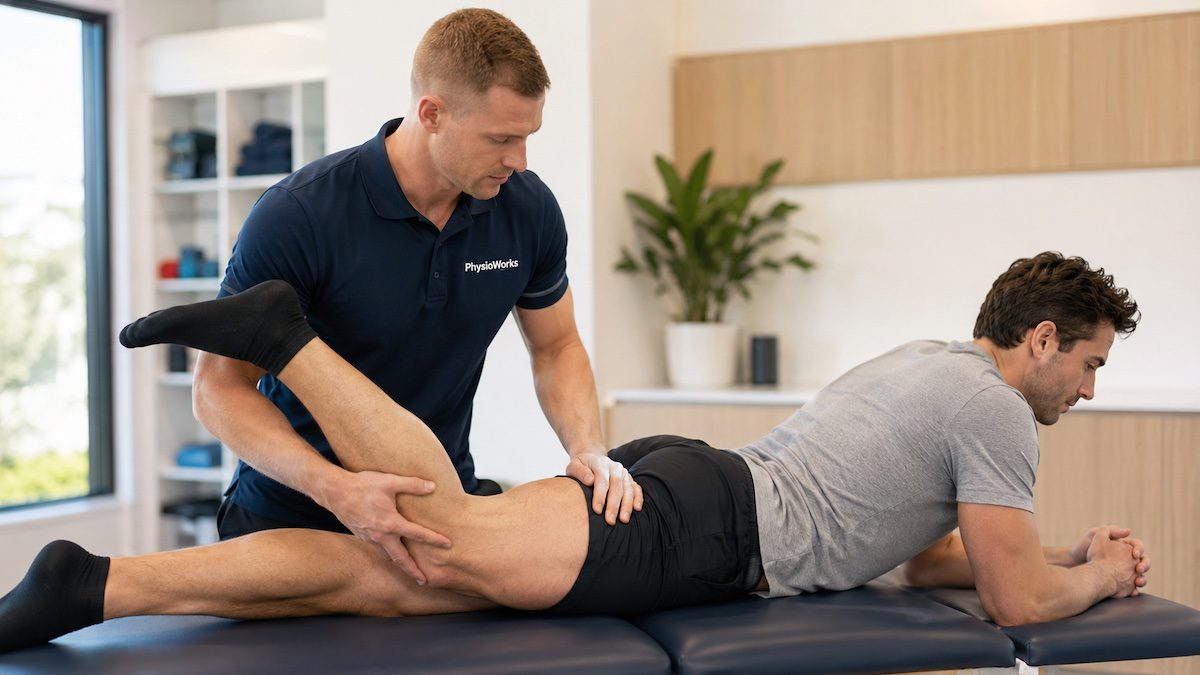
Common muscle injuries physiotherapist assessing quadriceps muscle strain during clinical physiotherapy examination
Physiotherapist Assessing A Quadriceps Muscle Injury During A Physiotherapy Examination.

Common muscle injuries can affect the neck, back, arms, and legs, and they often develop after overuse, sudden force, poor posture, or repeated strain. This guide explains common patterns of muscle pain, links to key injury pages such as muscle strain, back muscle pain, and delayed onset muscle soreness, and outlines when physiotherapy may help your recovery.

Common muscle injuries may include:

  • neck and back muscle strain
  • hamstring, thigh, groin, and calf injuries
  • overuse-related arm pain and tendon overload
  • delayed onset muscle soreness and cramps
  • widespread muscle pain linked to medical conditions

What are common muscle injuries?

Muscle injuries occur when muscle fibres or the surrounding soft tissues are overloaded, overstretched, bruised, or repeatedly irritated. Some injuries happen suddenly during sport, lifting, or awkward movement. Others build over time through poor posture, repetitive work, training errors, or inadequate recovery.

Many people use terms such as muscle strain, muscle tear, myalgia, or muscle pain interchangeably. However, the cause can vary significantly. For that reason, an accurate diagnosis helps guide the most suitable management plan.

Common neck and back muscle injuries

The neck and back are common sites for muscle overload because they work constantly to support posture, movement, lifting, and daily activity.

  1. Back Muscle Pain: Back muscle pain often develops from lifting, prolonged sitting, poor posture, or sudden overload. Treatment may include activity modification, manual therapy, and exercises to improve strength and movement control.
  2. Neck Sprain: A neck sprain can follow awkward movement, sleeping badly, or minor trauma. Early movement, simple exercises, and posture advice may help reduce stiffness and pain.
  3. Text Neck: Text neck is linked to prolonged mobile phone or screen use. It commonly causes neck pain, upper back tightness, and headaches, and may improve with posture changes, exercise, and workstation advice.
  4. Whiplash: Whiplash often occurs after motor vehicle accidents or sudden jolts. Recovery usually benefits from early guidance, controlled movement, and progressive rehabilitation.

Common lower limb muscle injuries

Lower limb muscle injuries are common in running, field sports, gym training, and change-of-direction activities.

  1. Hamstring Strain: Hamstring injuries are common in sprinting and sport. They often need a structured rehabilitation program that restores strength, flexibility, and running tolerance.
  2. Thigh Strain: Thigh muscle strains can affect the quadriceps or surrounding muscles and often occur with kicking, sprinting, or jumping. Early management followed by graded strengthening is usually important.
  3. Groin Strain: Groin pain commonly affects athletes involved in kicking, twisting, and fast direction changes. Recovery often requires careful load management and progressive strengthening.
  4. Calf Muscle Tear: Calf tears can occur during pushing off, sprinting, or sudden acceleration. A progressive return-to-walking and strengthening program is often needed before return to sport.

Common upper limb muscle and overuse injuries

The upper limb is often affected by repetitive gripping, lifting, racquet sports, throwing, desk work, and impact injuries.

  1. Golfer's Elbow and Tennis Elbow: These overuse injuries affect the forearm tendon attachments around the elbow and can cause pain with gripping, lifting, and repetitive hand use.
  2. Corked Thigh: Although more common in the lower limb, a corked thigh is included here as a common direct-impact soft tissue injury in sport. Immediate compression and early management can influence recovery.
  3. DOMS, fatigue-related cramps, and myalgia: These conditions may develop after new exercise, heavy loading, fatigue, or broader pain sensitivity issues.
  4. RSI: Repetitive strain injury may affect the forearm, wrist, shoulder, or neck and is often linked to repetitive work tasks, poor ergonomics, and insufficient breaks.

Medical and systemic causes of muscle pain

Not all muscle pain comes from a local strain or tear. In some cases, widespread or persistent symptoms can be linked to broader health conditions.

  1. Fibromyalgia: Fibromyalgia may cause widespread muscle pain, fatigue, and increased sensitivity. Management often involves education, pacing, exercise, and coordinated medical care.
  2. Rheumatoid Arthritis: Rheumatoid arthritis can contribute to muscular pain, joint stiffness, and reduced activity tolerance. Treatment often involves medical management plus physiotherapy support.

How to help prevent muscle injuries

Although not every injury is preventable, several habits may help reduce your risk of common muscle injuries.

  • Regular Exercise: Regular physical activity can improve muscle strength, tissue tolerance, and movement control.
  • Posture Improvement: Better posture during work, study, and training may reduce ongoing overload in the neck and back.
  • Proper Warm-up and Cool-down: A sensible warm-up may help prepare muscles for activity, especially before sprinting, jumping, or heavier exercise.
  • Ergonomic Adjustments: Workstation and task modifications may reduce repetitive strain and cumulative overload.
  • Load management: Gradually increasing training or workload is often safer than making sudden large jumps in intensity or volume.

When should you seek help for a muscle injury?

You should consider professional advice if your pain is severe, your function is limited, swelling or bruising is significant, or symptoms are not settling as expected. It is also worth getting assessed if the injury keeps recurring or stops you from work, exercise, or sport.

A physiotherapist may help identify whether the problem is a muscle strain, tendon issue, referred pain, nerve irritation, or a broader medical condition.

What to do next

If you have ongoing muscle pain, a recent strain, or repeated muscle injuries, an assessment can help clarify the diagnosis and guide your next steps. Early advice may help you return to normal activity sooner and reduce the risk of persistent or recurring symptoms.

Book your appointment - 24/7

Select your preferred PhysioWorks clinic.

Related articles

References

  1. Pollock N, James SLJ, Lee JC, Chakraverty R. British Athletics muscle injury classification: a new grading system. Br J Sports Med. 2014;48(18):1347-1351.
  2. Valle X, Alentorn-Geli E, Tol JL, Hamilton B, Garrett WE Jr, Pruna R, Til L, Gutierrez JA, Alomar X, Balius R, Malliaropoulos N, Monllau JC, Whiteley R, Witvrouw E, Samuelsson K, Rodas G. Muscle Injuries in Sports: A New Evidence-Informed and Expert Consensus-Based Classification with Clinical Application. Sports Med. 2017;47(7):1241-1253.
  3. Shield AJ, Bourne MN. Hamstring muscle strain injuries: what can we learn from history?. Br J Sports Med. 2015;49(19):1241-1242.
  4. Järvinen TAH, Järvinen TLN, Kääriäinen M, Kalimo H, Järvinen M. Muscle injuries: biology and treatment. Am J Sports Med. 2005;33(5):745-764.
  5. Cheung K, Hume P, Maxwell L. Delayed onset muscle soreness: treatment strategies and performance factors. Sports Med. 2003;33(2):145-164.
  6. Askling CM, Tengvar M, Saartok T, Thorstensson A. Acute first-time hamstring strains during high-speed running: a longitudinal study including clinical and magnetic resonance imaging findings. Am J Sports Med. 2007;35(2):197-206.
  7. Dupuy O, Douzi W, Theurot D, Bosquet L, Dugué B. An Evidence-Based Approach for Choosing Post-exercise Recovery Techniques to Reduce Markers of Muscle Damage, Soreness, Fatigue, and Inflammation: A Systematic Review With Meta-Analysis. Front Physiol. 2018;9:403.
  8. National Health Service. Sprains and strains. NHS. Accessed 2026.

Muscle & Soft Tissue Products

These muscle and soft tissue products are commonly used by our physiotherapists to relax or loosen muscles, improve strength, comfort, flexibility, and home exercise programs.

View all muscle & soft tissue products

Follow PhysioWorks

Get free physiotherapy tips, exercise videos, and recovery advice.

Facebook Instagram YouTube TikTok X (Twitter) Email

Frequently Asked Questions

What are the most common muscle injuries?

The most common muscle injuries include muscle strains in the hamstring, calf, groin, thigh, back, and neck. Overuse-related pain such as RSI, DOMS, and elbow tendon overload is also common. The exact pattern often depends on your work, sport, posture, and recent activity levels.

How long do common muscle injuries take to heal?

Recovery time varies based on the severity, location, and whether the injury is acute or repetitive. Mild muscle injuries may settle within days to a few weeks, while moderate or recurrent problems can take much longer. A proper assessment can help guide expected recovery time.

What does a muscle tear feel like?

A muscle tear may feel like a sudden sharp pain, pulling sensation, or popping feeling during activity. It can also cause bruising, weakness, swelling, or difficulty using the injured area. More significant tears usually need a proper assessment before returning to normal exercise or sport.

Should I exercise with muscle pain?

That depends on the cause and severity of the pain. In many cases, gentle movement and modified exercise can help. However, exercising too hard or too soon may aggravate a more significant strain or tear. A physiotherapist may help you judge what level of activity is appropriate.

When should I see a physiotherapist for common muscle injuries?

You should consider an assessment if the pain is severe, if there is bruising or weakness, if symptoms keep returning, or if the injury is not improving. Physiotherapy may help clarify the diagnosis and guide safe progression back to work, exercise, or sport.

Common Ligament Injuries

common ligament injuries
Common Ligament Injuries

Ligament Injury

Ligament injuries frequently occur in various body parts, leading to pain and restricted movement. The most common sites include the knee, ankle, shoulder, wrist, hand, and spine.

Notably, knee injuries like ACL, PCL, MCL, and LCL sprains are prevalent.

Shoulder injuries often involve the AC joint, while wrist and hand issues can include thumb and finger sprains.

Spinal ligament injuries, such as back and neck sprains, and whiplash, are also significant. Understanding these injuries helps in prevention, early detection, and effective treatment.

Ankle Ligament Injuries

Ankle injuries often result from sudden twists or rolls, leading to sprains and strains.

Knee Ligament Injuries

Knee ligament injuries are among the most common and can severely impact mobility and quality of life.

Shoulder Ligament Injuries

Shoulder ligament injuries can be debilitating, affecting a range of movements.

Wrist & Hand Ligament Injuries

Injuries in the wrist and hand are common, especially in sports and physical activities.

Spinal Ligament Injuries

Spinal ligament injuries can result from various causes, including posture issues and physical impacts.

Related Articles

  1. Ligament Tear - Common Ligament Injuries: Offers a comprehensive overview of ligament injuries across different body parts, including prevention, early detection, and effective treatment strategies​​.
  2. Knee Ligament Injury - A Physiotherapist's Guide & Tips: Provides insights into diagnosing knee pain, covering ligament issues among other concerns, and suggests pain relief methods through exercise and treatment​​.
  3. Common Ankle Ligament Injuries: A Physiotherapist's Guide: Discusses the treatment and prevention strategies for ankle ligament injuries, emphasising the importance of early intervention​​.
  4. Sprained Ankle Treatment & Recovery Guide: Offers detailed guidance on the recovery timelines for sprained ankles, highlighting the importance of restoring strength, motion, and function for a full recovery​​.
  5. Ankle Strapping: Complete Guide To Injury Prevention: Focuses on preventing ankle injuries through effective strapping techniques and discusses conditions like ankle arthritis and biomechanical issues​​.
  6. Sub-Acute Soft Tissue Injury: Explores the treatment and recovery process for various ligament injuries, including those affecting the knee, shoulder, wrist, hand, and spine​​.
  7. Sprained Thumb Treatment And Recovery Tips: Delivers practical tips for treating and recovering from a sprained thumb, along with general management strategies for wrist and hand pain​​.

Book your appointment - 24/7

Select your preferred PhysioWorks clinic.

Common Tendinopathies

An Overview of Tendon Injuries

Tendinopathies affect individuals across various age groups and physical activities, and these prevalent musculoskeletal conditions cause pain and impaired function, significantly impacting the quality of life. Active individuals, including athletes and those engaged in repetitive occupational tasks, are particularly susceptible to these overuse injuries.

This article aims to provide a comprehensive overview of common tendinopathies, focusing on their specific manifestations and management approaches. By exploring the intricate details of conditions ranging from Achilles Tendinopathy to de Quervain's Tenosynovitis, we aim to enhance understanding and promote effective treatment strategies for those affected.

Tendinitis vs Tendinopathy

It's important to note that "tendinitis" is often used interchangeably with tendinopathy, but the suffix "-itis" implies inflammation, which is not always present in tendinopathies. In many cases, the condition involves degeneration of the tendon rather than acute inflammation. As a result, the more accurate term used nowadays is "tendinopathy."

Tendinopathy Treatments

Treatment approaches for tendinopathies typically focus on managing pain, promoting healing, and addressing contributing factors (e.g., overuse, improper biomechanics). Additionally, treatment approaches have advanced to include more targeted therapies, such as eccentric exercises, physiotherapy, and sometimes regenerative medicine techniques, depending on the specific type and severity of the tendinopathy.

Tendinopathy Classifications

Tendinopathy classifications have evolved to encompass a more nuanced understanding of these conditions. The modern tendinopathy classifications now include the following:

  1. Tendinitis or Tendonitis is an acute tendon inflammation, usually resulting from overuse, injury, or repetitive strain. It involves the active inflammatory process, and the symptoms can include pain, swelling, and limited range of motion.
  2. Tendinosis is a chronic degenerative condition of the tendon that occurs when repetitive micro-injuries do not have sufficient time to heal and repair properly. Unlike tendinitis, tendinosis does not primarily involve active inflammation. Instead, it is associated with a breakdown of collagen fibres within the tendon, leading to its structure and composition changes.
  3. Paratendonitis and Tenosynovitis: These conditions involve inflammation or irritation of the paratendon (the outer layer of the tendon) or the tenosynovium (the sheath surrounding certain tendons). Paratendonitis and tenosynovitis can lead to pain and limited function of the affected tendon and are often associated with repetitive motions or friction.
  4. Insertional Tendinopathy: This type of tendinopathy occurs at the point where the tendon attaches to the bone (the insertion site). It can involve inflammation, degeneration, or a combination of both at the tendon-bone interface.
  5. Mid-Substance Tendinopathy: Mid-substance tendinopathy refers to conditions affecting the central portion of the tendon rather than the attachment points. This tendinopathy is often related to chronic overuse and may involve changes in the tendon's structure without significant inflammation.

It's important to note that the classification and understanding of tendinopathies continue to evolve with ongoing research. If you suspect you have tendinopathy, it's best to seek evaluation and advice from a healthcare professional, such as your physiotherapist, who is experienced in tendon conditions.

Seeking Professional Advice

Consult a physiotherapist with a special interest in tendinopathies for personalised advice and treatment.

Specific Tendinopathies

Foot & Ankle

Knee

Hip & Groin

Shoulder

Elbow

Wrist & Hand

Conclusion

Tendinopathy is a complex condition requiring careful diagnosis, treatment, and management. Understanding its phases, symptoms, and treatment options is vital for effective recovery.

What to Do?

If you suspect tendinopathy, consult a physiotherapist for a thorough assessment and tailored treatment plan. Remember, early intervention can significantly improve your prognosis and hasten recovery.

Book your appointment - 24/7

Select your preferred PhysioWorks clinic.

Related Articles

  1. Tendinopathy: Causes, Symptoms, And Effective Treatments - Discover a broad overview of tendinopathies, including causes, symptoms, and a variety of effective treatment options​​.
  2. Effective Tendinopathy Physiotherapy Treatment Strategies - Explore advanced physiotherapy treatment strategies for managing tendinopathies effectively​​.
  3. Biceps Tendinopathy: Causes, Symptoms, And Treatments - Gain insights into the specific causes, symptoms, and treatment options for biceps tendinopathy​​.
  4. Gluteal Tendinopathy: Causes, Symptoms, And Treatment - Learn about gluteal tendinopathy, its impact, causes, symptoms, and how it can be treated​​.
  5. Rotator Cuff Tendinopathy - Understand the specifics of rotator cuff tendinopathy, including its causes, symptoms, and various treatment methods​​.
  6. Proximal Hamstring Tendinopathy - Find detailed information on proximal hamstring tendinopathy, including prevention and treatment strategies​​.
  7. Peroneal Tendinopathy - We discuss the causes, symptoms, and rehabilitation processes for peroneal tendinopathy, and how to return to sports safely​​.
  8. Wrist Tendinopathy - Uncover the range of treatment options for wrist tendinopathy, from early injury treatment to physiotherapy modalities​​.
  9. Hip Adductor Tendinopathy - Effective Physio Solutions - Explore the causes, symptoms, and physiotherapy solutions for hip adductor tendinopathy​​.
You've just added this product to the cart: