
Sprained Thumb
Sprained Thumb


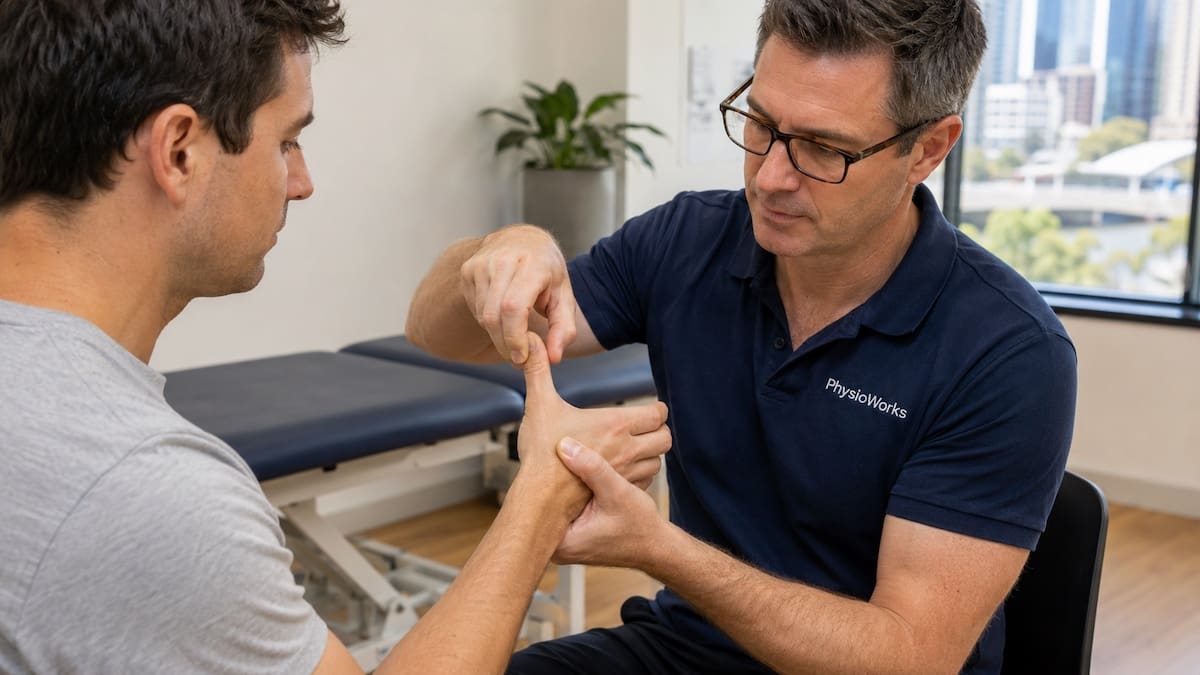
A sprained thumb is an injury to one or more ligaments that stabilise the thumb. These injuries commonly affect the metacarpophalangeal, or MCP, joint at the base of the thumb and may cause pain, swelling, bruising, weak pinch strength or a loose feeling.
Common site
The MCP joint at the base of the thumb is a frequent site of ligament injury.
Common symptoms
Pain, swelling, bruising, weak pinch strength and a loose or unreliable feeling can occur.
Important concern
Marked instability may indicate a complete ligament tear, fracture or other significant injury.
What Is a Sprained Thumb?
A sprained thumb occurs when one or more thumb ligaments stretch or tear. The most commonly injured structure is the ulnar collateral ligament, often shortened to UCL, on the inner side of the thumb MCP joint.
The thumb relies on these ligaments for gripping, pinching, lifting and weight-bearing through the hand. Injuries often follow a fall, collision, ball-sport injury, ski injury or forceful sideways or backwards movement of the thumb. A sprained thumb is one possible cause of hand and wrist pain.
A significant ligament injury that is missed or inadequately protected can leave the joint painful or unstable. This may affect writing, opening jars, gym exercises, ball handling, manual work and everyday grip. Some symptoms can overlap with other common wrist and hand injuries, so an accurate assessment can be helpful.
What Causes a Sprained Thumb?
A sprained thumb usually occurs when the thumb is forced too far sideways or backwards. This force stretches or tears the ligament that stabilises the joint.
Common mechanisms include falls onto the hand, skiing injuries, rugby and AFL tackles, basketball or netball contact, goalkeeping injuries, workplace accidents and awkward landings.
The UCL helps stabilise the thumb during pinch and grip. A mild injury may only stretch the ligament. A more significant injury may partially or completely tear it or pull a small piece of bone away from its attachment. A complete injury behaves more like a ligament tear than a minor sprain.
What Symptoms Suggest a Thumb Ligament Injury?
A thumb ligament injury often causes pain, swelling and weakness around the base of the thumb. Symptoms may become more noticeable with pinching, opening bottles, writing, gripping tools, lifting weights or catching a ball.
Common symptoms include:
- pain when bending, stretching or loading the thumb
- tenderness around the thumb MCP joint
- swelling or bruising near the base of the thumb
- reduced grip or pinch strength
- a loose or unstable feeling
- difficulty holding objects securely
How Serious Is a Sprained Thumb?
Thumb sprains are commonly described according to how much ligament damage and joint instability are present. The grading system is useful as a general guide, although treatment decisions also depend on the ligament involved, fracture findings, stability and functional demands.
Grade 1
A mild ligament stretch with pain and tenderness but little or no joint looseness.
Grade 2
A partial ligament tear that may cause swelling, pain and some loss of joint stability.
Grade 3
A complete ligament tear that may cause marked instability and poor pinch strength.
What Is Skier’s Thumb?
Skier’s thumb is an injury to the ulnar collateral ligament at the thumb MCP joint. It classically occurs when a skier falls while holding a ski pole and the thumb is forced away from the hand.
The same ligament injury can occur during AFL, rugby, basketball, netball, goalkeeping, martial arts and workplace falls. The important issue is not the name of the injury but whether the ligament and thumb joint remain stable enough to heal appropriately.
When Should a Sprained Thumb Be Checked Promptly?
Persistent weakness or a thumb that continues to give way after the initial injury also warrants reassessment. A significant UCL tear can occasionally develop a displaced ligament position called a Stener lesion, which may not heal adequately without specialist management.
How Is a Sprained Thumb Diagnosed?
Assessment usually considers how the injury occurred, where the pain is located and whether there is swelling, bruising, tenderness, weakness or instability.
A physiotherapist or doctor may assess thumb movement, grip and pinch strength and gently examine ligament stability. The injured thumb may also be compared with the other side.
X-rays can help identify a fracture or avulsion injury. Ultrasound or MRI may be considered when a complete ligament tear is suspected, the thumb remains unstable or symptoms do not match a straightforward sprain.
What Else Can Feel Like a Sprained Thumb?
Not every painful thumb following activity is caused by a ligament sprain. Pain on the thumb side of the wrist may have a different source.
For example, symptoms closer to the wrist rather than the thumb MCP joint may need to be compared with De Quervain’s tenosynovitis. Pain after a significant fall may also require consideration of a wrist fracture or another hand injury.
How Is a Sprained Thumb Treated?
Sprained thumb treatment depends on the severity and stability of the ligament injury. Mild injuries may improve with protection and progressive rehabilitation. More substantial injuries can require bracing, imaging, longer protection or surgical review.
-
Protect the injured ligament
A brace or splint may reduce movement that repeatedly stresses the healing ligament. Protection is often especially important during the early stages when gripping and pinching remain painful.
-
Settle pain and swelling
Relative rest and sensible activity modification may help. Ice or other short-term symptom-management strategies can also be useful when appropriate.
-
Restore thumb movement
Once the injury is stable enough, rehabilitation can gradually restore comfortable thumb movement without repeatedly stressing the healing ligament.
-
Rebuild pinch and grip strength
Exercises may progressively target thumb control, grip tolerance and functional stability. The loading should match the severity of the injury and the demands of work, sport and daily activities.
-
Return gradually to work, gym and sport
Gripping, catching, pushing, pulling and sport-specific tasks can be reintroduced in stages as stability, strength and confidence improve.
-
Refer when the thumb remains unstable
Complete ligament tears, displaced injuries, fractures, suspected Stener lesions or persistent instability may require specialist review.
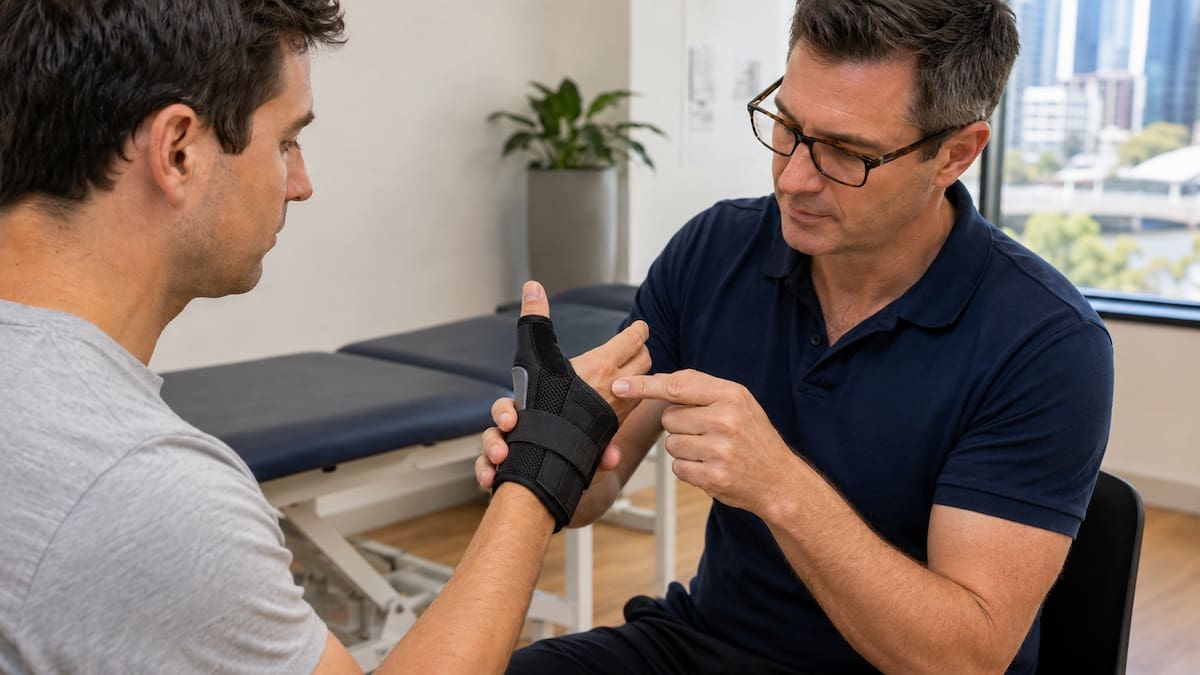
Supportive options are available through the PhysioWorks range of thumb braces and supports. The most suitable option depends on the injury and the amount of protection required.
When Might Surgery Be Needed?
Many mild and moderate thumb sprains can be managed without surgery. However, surgical review may be recommended when the ligament is completely torn, the joint remains markedly unstable, a displaced avulsion fracture is present or a Stener lesion is suspected.
Poor pinch strength or a joint that lacks a firm end point during stability testing can also increase concern about a substantial UCL injury.
How Long Does a Sprained Thumb Take to Heal?
Mild thumb sprains often improve over several weeks. More substantial ligament injuries commonly require a longer period of protection and rehabilitation.
As a broad guide, a mild sprain may settle in approximately four to six weeks, while a moderate injury can take six to twelve weeks or longer. These are only general ranges. Recovery depends on the ligament involved, joint stability, associated fracture, brace use, required treatment and the demands of work or sport.
Complete ligament tears usually require more time. If surgery is necessary, return to work or sport depends on the procedure, tissue healing, splinting requirements and staged rehabilitation.
When Can You Return to Work, Gym or Sport?
Return should be based on function rather than time alone. The thumb should tolerate the grip, pinch, lifting or impact demands required for the activity without significant pain or instability.
A gradual progression may include normal daily gripping, heavier lifting, gym exercises, catching or ball handling and then higher-load or contact activities. Athletes and manual workers may need temporary taping or bracing when returning to higher-risk tasks.
How Can You Reduce the Risk of Another Sprained Thumb?
Reducing the risk of another injury usually involves restoring thumb strength, grip control and tolerance to the activities that caused or aggravated the original injury.
- build thumb, wrist and grip strength gradually
- avoid heavy pinching before the ligament is ready
- use a brace or taping when recommended
- practise safe falling or hand-position strategies where relevant
- progress sport, gym and work tasks in stages
Related PhysioWorks Guides
Sprained Thumb FAQs
Can you move your thumb if it is sprained?
Yes. Many people can still move a sprained thumb, particularly when the injury is mild. Movement may still be painful, weak or limited, and being able to move the thumb does not rule out a significant ligament injury.
Is a sprained thumb the same as a broken thumb?
No. A sprained thumb affects ligaments, while a broken thumb involves bone. Symptoms can overlap after a fall or sporting injury, so imaging may be appropriate when there is marked swelling, bruising, deformity or major loss of function.
Do all thumb sprains need a brace?
No. Not every thumb sprain requires a rigid brace. However, many ligament injuries benefit from temporary support while pain and swelling settle. The appropriate level of support depends on stability, symptoms and activity demands.
Can a sprained thumb heal without surgery?
Yes. Many mild and moderate sprains can heal without surgery when they receive appropriate protection and rehabilitation. Surgery is more likely when the ligament is completely torn, a displaced fracture is present or the joint remains unstable.
When should you worry about a sprained thumb?
Arrange assessment if the thumb is badly swollen, bruised, unstable, deformed or too painful or weak to grip or pinch properly. Ongoing weakness or repeated giving way can also indicate a more significant injury.
How long does a sprained thumb take to heal?
Mild injuries may improve over several weeks, while moderate or complete ligament injuries can take longer. Healing time varies with the ligament involved, joint stability, associated fracture, treatment and the demands of work or sport.
What to Do Next
If you think you have a sprained thumb, an assessment can help determine whether the injury is a mild sprain, a more substantial UCL injury or a fracture-related problem.
Physiotherapy may help guide protection, restore thumb movement and grip strength, and plan a graded return to work, gym or sport. If the thumb feels markedly unstable or a complete ligament injury is suspected, further imaging or medical review may be recommended.
You can also choose one of our Brisbane physiotherapy clinics if you need help selecting the most suitable location.
Choose your clinic and appointment pathway
Select a PhysioWorks clinic to continue to live booking, an appointment request or reception assistance.
Hand Products
These hand products are commonly used by our physiotherapists to improve strength, movement, and home exercise programs.
-
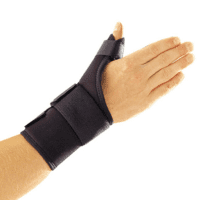 Braces & Supports, Hand, Thumb, Wrist
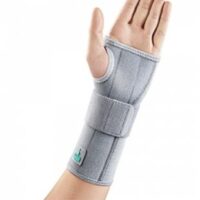
OPPO 1188 Wrist and Thumb Support
$30.00Select optionsQuick View -
-
-
-
-
-
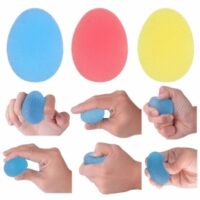
-
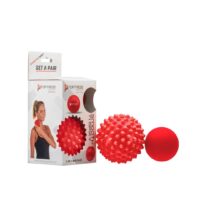 Exercise Equipment, Gift Ideas, Massage Tools
Smooth n Spiky Massage Balls (2 Pack)
$20.00Select optionsQuick View -
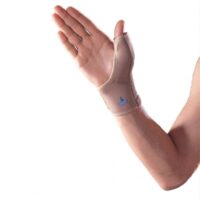 Braces & Supports, Hand, Thumb, Wrist
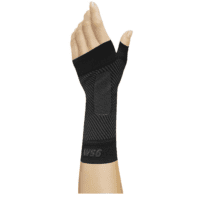
Wrist and Thumb Support – OPPO 1089
$44.00Select optionsQuick View -
-


-
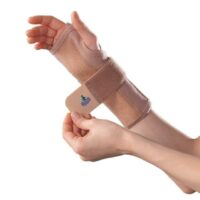 Braces & Supports, Hand, Wrist
Wrist Splint with Elastic Strap – OPPO 2182
$45.00Select optionsQuick View



References
- Mohseni M, Sina RE, Graham C. Ulnar Collateral Ligament Injury (Gamekeeper’s Thumb). In: StatPearls. Treasure Island (FL): StatPearls Publishing; updated February 1, 2024.
- Robinson DM, Kakar S, Jelsing E. Acute Thumb Metacarpophalangeal Joint Ulnar Collateral Ligament Injury: Diagnosis, Management, and Return to Sports Considerations. Curr Sports Med Rep. 2023;22(6):238-244. doi:10.1249/JSR.0000000000001079
- Knisely B, Noland SS, Melville DM. Ultrasound versus MRI in the Evaluation of the Thumb Metacarpophalangeal Joint. J Ultrason. 2023;23(95):e214-e222.
- Schumaier A, Zeng F, McCarthy C. Surgical Management of Thumb Ulnar Collateral Ligament Injuries: A Systematic Review and Meta-analysis of 614 Patients With a Minimum 1 Year Follow-up. JAAOS Glob Res Rev. 2025;9(5):e25.00082.