
Wrist & Hand Arthritis


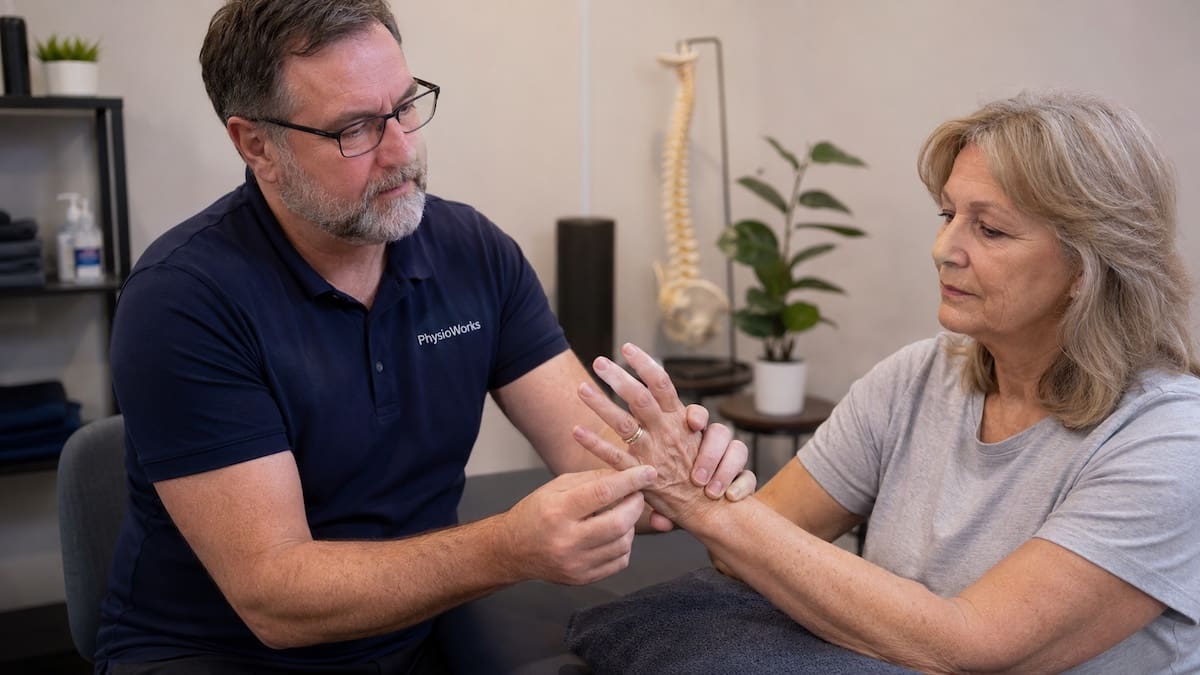
Assessment for wrist and hand arthritis.
Wrist and hand arthritis can cause aching, stiffness, swelling, reduced grip strength, and difficulty with daily tasks such as typing, lifting, opening jars, using tools, or pushing through your wrist. Symptoms often change with joint load, flare-ups, rest, and the type of arthritis involved.
Arthritis is a broad term for joint irritation and change. In the wrist and hand, symptoms may relate to osteoarthritis, rheumatoid arthritis, post-traumatic arthritis after a wrist fracture, or another inflammatory condition. A physiotherapist can assess your movement, strength, swelling, grip, and daily function, then guide a practical plan.
For broader context, see our arthritis overview. If your symptoms are not clearly arthritis-related, start with our hand and wrist pain physiotherapy guide.
Quick answer: wrist and hand arthritis often needs a staged plan, not complete rest.
- Calm painful flare-ups by reducing heavy gripping, twisting, or weight-bearing for a short time.
- Keep joints moving with gentle, regular range-of-motion work.
- Build grip, pinch, thumb, and wrist strength gradually once symptoms settle.
- Use splints, braces, heat, cold, or pacing when they match your symptom pattern.
- Seek prompt review if pain is rapidly worsening, swollen, hot, numb, or linked to trauma.
What Is Wrist and Hand Arthritis?
Wrist and hand arthritis describes joint pain, stiffness, swelling, or reduced function in the small joints of the fingers, thumb, or wrist. The pattern matters because thumb-base arthritis, finger-joint osteoarthritis, wrist arthritis, and inflammatory arthritis can behave differently.
Osteoarthritis often causes load-related aching, stiffness after rest, bony enlargement, and reduced grip or pinch strength. Inflammatory arthritis, such as rheumatoid arthritis, may cause more swelling, warmth, fatigue, and longer-lasting morning stiffness. Some people have more than one contributing factor.
What Are the Common Symptoms of Wrist and Hand Arthritis?
Symptoms vary by joint, arthritis type, and daily loading. Many people report:
- pain with gripping, twisting, lifting, pinching, or pushing through the wrist
- morning stiffness or stiffness after rest
- swelling, warmth, or a puffy feeling during flare-ups
- reduced grip strength, pinch strength, or thumb control
- clicking, grinding, or catching in the affected joint
- difficulty with buttons, keys, handwriting, tools, jars, or computer work
- pain that flares after heavier days, then settles with load reduction
Which Hand and Wrist Joints Are Commonly Affected?
Arthritis can affect different parts of the hand and wrist. Common patterns include:
- thumb-base arthritis: pain near the base of the thumb, often worse with pinching, jars, keys, or phone use
- finger-joint arthritis: stiffness, aching, swelling, or bony change in the finger joints
- wrist arthritis: pain with wrist extension, gripping, lifting, or weight-bearing through the hand
- post-traumatic arthritis: joint symptoms that develop after fracture, ligament injury, or repeated sprains
- inflammatory arthritis: swelling, heat, fatigue, and longer morning stiffness, often affecting several joints
What Age Does Hand Arthritis Start?
There is no single age. Hand osteoarthritis becomes more common with age, but symptoms can start earlier after injury, high hand-loading work, or sport. Rheumatoid arthritis and other inflammatory conditions may begin earlier in adult life. A clear assessment helps because each pattern needs a different management strategy.
What Can Trigger Wrist and Hand Arthritis Flare-Ups?
Flare-ups often follow a sudden change in load. Common triggers include heavy gripping, repeated twisting, tool use, gardening, lifting, prolonged typing, phone scrolling, gym work, or pushing through the wrist during floor-based exercise.
Other triggers can include poor sleep, stress, cold weather sensitivity, or inflammatory disease activity. If swelling, heat, or stiffness lasts longer than expected, your physiotherapist may recommend GP or rheumatology review.
How Does a Physiotherapist Assess Wrist and Hand Arthritis?
A physiotherapist will ask about your symptom pattern, work demands, hobbies, previous injury, flare-up behaviour, and goals. They will usually assess wrist and finger movement, thumb control, grip strength, pinch strength, swelling, tenderness, and how your hand copes with daily tasks.
They may also screen nearby areas such as the elbow, shoulder, or neck if your symptoms include pins and needles, weakness, or referred pain. If the pattern suggests fracture, inflammatory arthritis, nerve compression, or another medical issue, they may recommend imaging, blood tests, GP review, or specialist review.
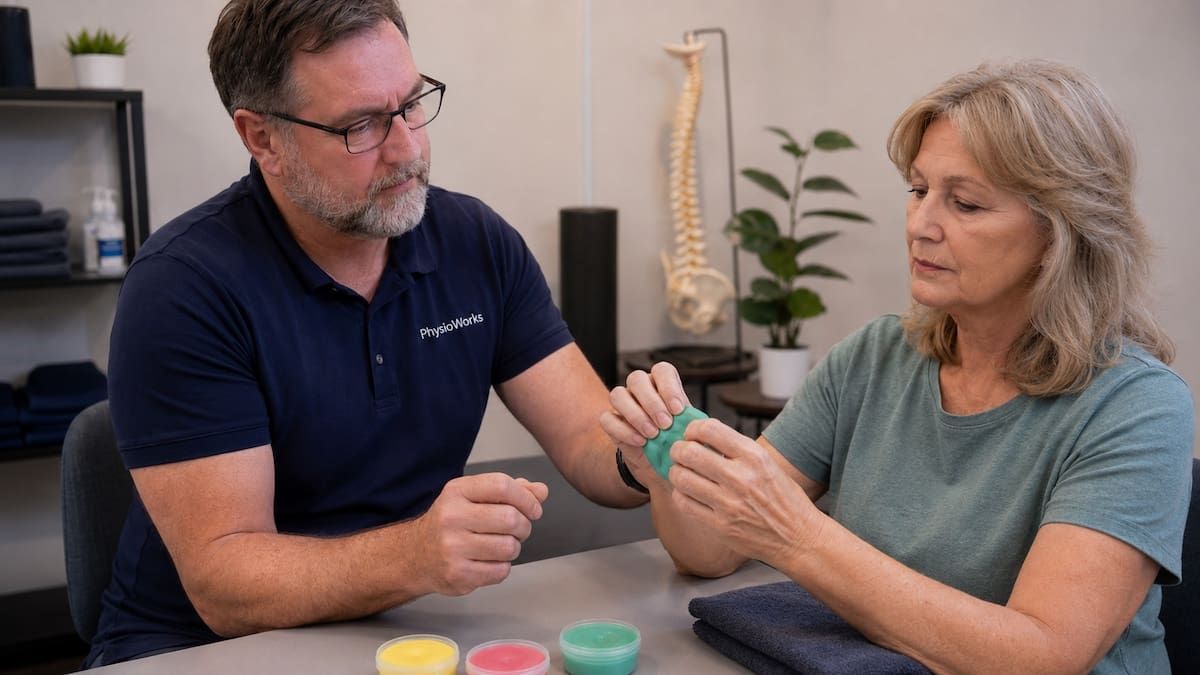
Guided hand strengthening exercise.
What Exercises Help Wrist and Hand Arthritis?
Exercise often helps maintain movement, build joint support, and improve confidence with daily tasks. The right starting point depends on your pain level, swelling, joint irritability, and hand demands.
Your physiotherapist may recommend:
- range drills: wrist circles, supported wrist bends, finger tendon glides, and gentle fist-to-open-hand movements
- thumb control: thumb opposition, web-space opening, and careful pinch-position practice for thumb-base arthritis
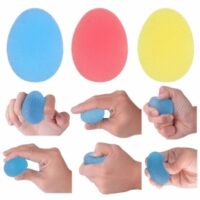
- graded strengthening: grip, pinch, wrist, and forearm progressions using putty, bands, or light weights
- load tolerance work: planned progressions for typing, tools, gym, gardening, sport, or work tasks
- flare-up adjustments: smaller range, lighter resistance, shorter sessions, and more rest breaks during painful phases
Should I Rest My Hand If It Hurts?
Short-term load reduction can help during a flare-up. However, complete rest often leads to more stiffness, weakness, and fear of movement. Most people do better with a brief calm-down phase, light movement, and a gradual return to normal hand use.
What Treatment Options May Help Wrist and Hand Arthritis?
Physiotherapy treatment aims to reduce flare-ups, protect sensitive joints, improve strength, and keep you active. Your plan may include:
- education and pacing: simple changes to reduce symptom spikes without stopping everything
- joint protection advice: tool, jar, keyboard, phone, and gym-load strategies
- hands-on care: joint or soft tissue techniques that may improve comfort and movement
- splints or braces: short-term support during painful phases or higher-load tasks
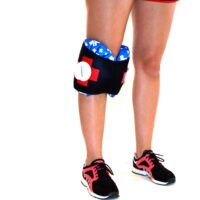
- heat or cold: heat for stiffness, cold for hot or swollen joints where suitable
- graded exercise: strength, grip, pinch, mobility, and control work matched to your symptoms
Some people also use short-term pain tools during flares. For example, a TENS machine may help selected people manage pain as part of a broader plan that includes movement, load planning, and exercise.
When Should You Seek Prompt Review?
Arrange prompt medical or physiotherapy review if you notice rapidly worsening pain, marked swelling, heat, redness, new numbness, progressive weakness, night pain that keeps worsening, major loss of grip, or pain after a fall or trauma.
Also seek review if your morning stiffness lasts longer than 30 minutes, several joints are swollen, or you feel generally unwell during joint flare-ups. These signs may suggest an inflammatory pattern that needs medical input.
Guidelines and Evidence-Based Care
Current hand arthritis care often focuses on education, self-management, exercise, joint protection, orthoses or splints where suitable, and medication advice through your GP or specialist. For a plain-language overview of osteoarthritis, Healthdirect Australia provides a helpful guide to osteoarthritis symptoms and treatment options.
Use general information as a starting point only. Your plan should match your joint pattern, flare behaviour, medical history, and the activities that matter most to you.
Related PhysioWorks Articles
- Hand and Wrist Pain – assessment tips and treatment pathways for common wrist and hand symptoms.
- Arthritis – broader information about arthritis types, symptoms, and management.
- Wrist Tendinopathy – tendon-related wrist pain with gripping, lifting, typing, or sport.
- De Quervain’s Tenosynovitis – thumb-side wrist pain with gripping, lifting, or wringing.
- Carpal Tunnel Syndrome – numbness, tingling, night symptoms, and hand weakness.
- Repetitive Strain Injury – repetitive load, typing, tool use, and upper-limb overload patterns.
FAQs About Wrist and Hand Arthritis
What are the first signs of wrist and hand arthritis?
Common early signs include aching with gripping or twisting, morning stiffness, reduced grip strength, and intermittent swelling. Symptoms often fluctuate with activity and load.
Is wrist and hand arthritis the same as osteoarthritis?
Not always. Osteoarthritis is common in the hands and wrist, but inflammatory arthritis, such as rheumatoid arthritis, can also affect these joints. Assessment helps clarify the pattern and best management plan.
What exercises help wrist and hand arthritis?
Many people benefit from gentle range-of-motion drills, tendon glides, thumb control work, and graded strengthening for grip and pinch. Progress should match symptoms and your daily demands.
Should I wear a brace or splint for hand arthritis?
A brace or splint may help during painful phases or higher-load tasks by reducing irritation and supporting the joint. Most people use splints short term alongside exercise and load planning.
When should I see a physiotherapist for wrist and hand arthritis?
Book an assessment if pain persists, keeps returning, or limits work, sleep, training, or daily tasks. Seek prompt review if you have rapidly increasing pain, marked swelling, new numbness, or pain after trauma.
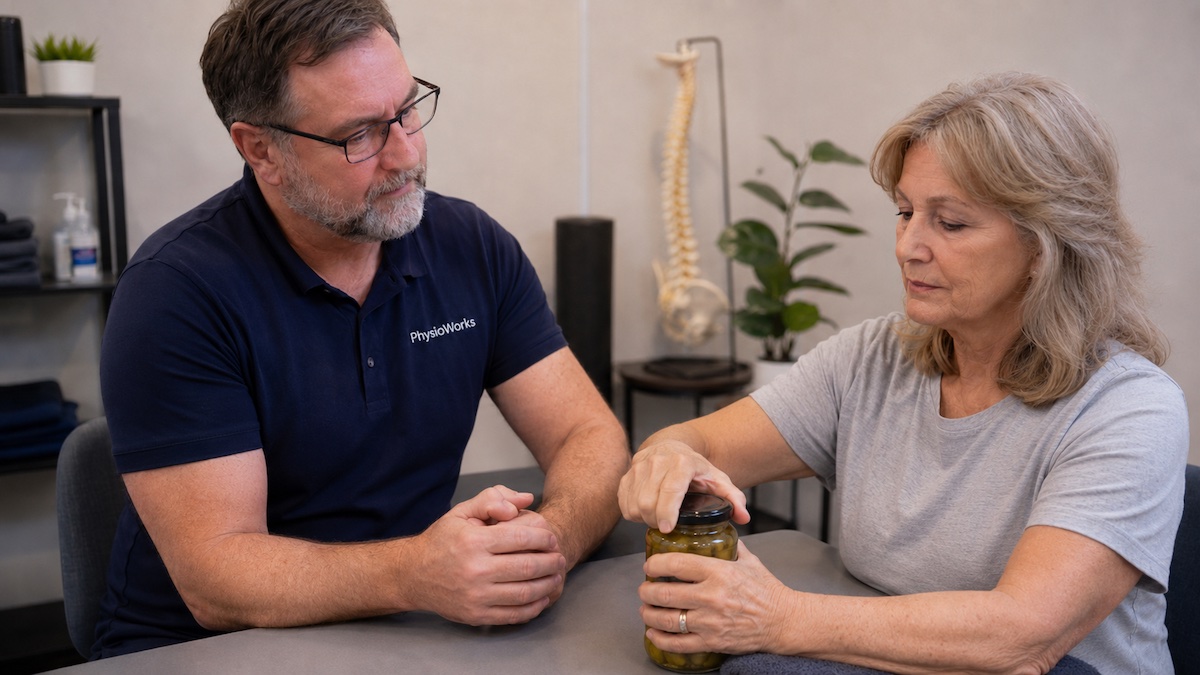
Functional grip practice for daily tasks.
What to Do Next
If wrist or hand pain is limiting work, training, sleep, or daily tasks, book an assessment. A clear diagnosis and staged plan can help you manage flare-ups, protect sensitive joints, and rebuild hand function safely.
If your symptoms include marked swelling, heat, rapidly worsening pain, new numbness, or pain after trauma, organise prompt review.
Choose your clinic and appointment pathway
Select a PhysioWorks clinic to continue to live booking, an appointment request or reception assistance.
Wrist Products
These wrist products are commonly used by our physiotherapists to improve comfort, strength, and home exercise programs.
-
-
 Braces & Supports, Thumb, Uncategorized, Wrist
Victor Neoprene Thumb Brace
$37.00Add to cartQuick View -


-
-

-

-
-
-

-

-

-
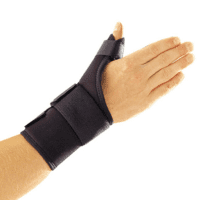 Braces & Supports, Hand, Thumb, Wrist
OPPO 1188 Wrist and Thumb Support
$30.00Select optionsQuick View -
- Liniments & Gels, Massage Liniments, Pain Management
Fisiocrem
$16.95 – $39.95Select optionsQuick View -










References
- Kloppenburg M, Kroon FPB, Blanco FJ, et al. 2018 update of the EULAR recommendations for the management of hand osteoarthritis. Ann Rheum Dis. 2019;78(1):16-24. doi:10.1136/annrheumdis-2018-213826
- Huang L, Zhang ZY, Gao M, et al. The effectiveness of exercise-based rehabilitation in people with hand osteoarthritis: a systematic review with meta-analysis. J Orthop Sports Phys Ther. 2024;54(7):457-467. doi:10.2519/jospt.2024.12241
- Magni N, McNair PJ, Rice DA. Six weeks of resistance training (plus advice) vs advice only in hand osteoarthritis: a single-blind, randomised, controlled feasibility trial. Musculoskelet Sci Pract. 2022;57:102491. doi:10.1016/j.msksp.2021.102491
- Karanasios S, Mertyri D, Karydis F, Gioftsos G. Exercise-based interventions are effective in the management of patients with thumb carpometacarpal osteoarthritis: a systematic review and meta-analysis of randomised controlled trials. Healthcare. 2024;12(8):823. doi:10.3390/healthcare12080823
