
Bursitis
Bursitis: Symptoms, Causes and Treatment
Bursitis is irritation or inflammation of a small fluid-filled sac called a bursa. It can cause local pain, tenderness and swelling, especially with pressure or movement around the affected area.


What is bursitis?
A bursa is a small fluid-filled sac that helps tissues glide over each other with less friction. Bursae sit near many joints where tendons, muscles, skin and bone move against one another.
When a bursa becomes irritated, it may become painful, tender or swollen. Symptoms vary because bursae in different parts of the body experience different loads and pressures.
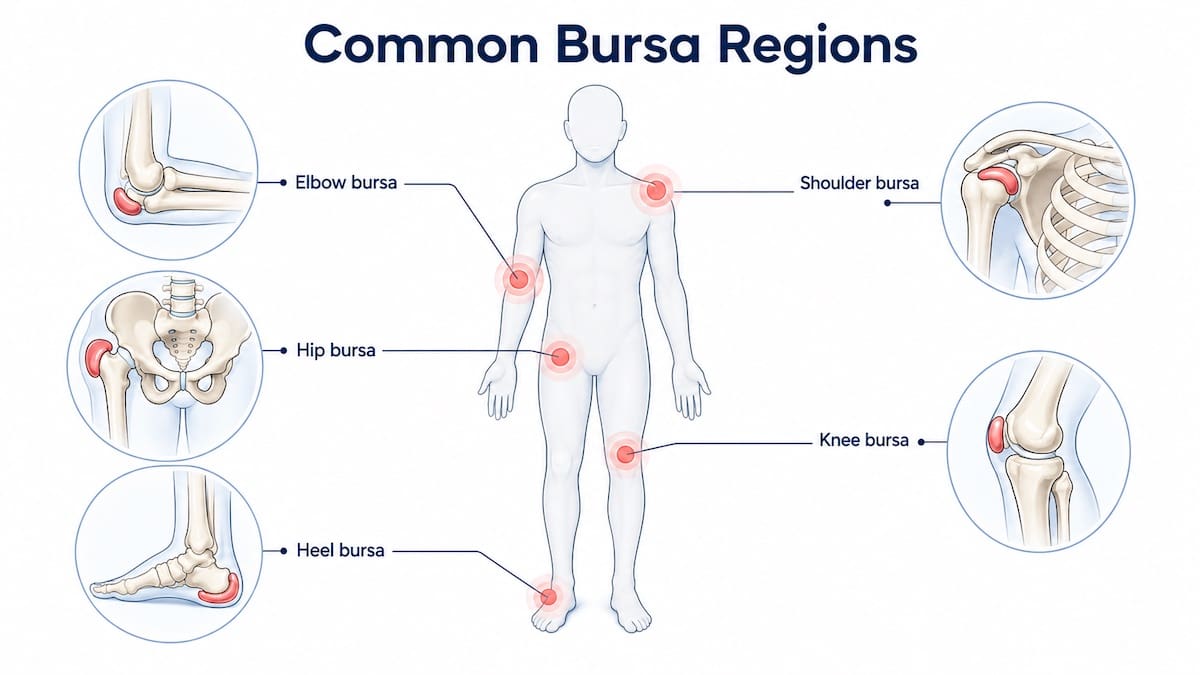
Common areas include the shoulder, outer hip, knee, elbow and heel.
What causes bursitis?
Bursitis does not have one single cause. Some cases develop after repeated pressure or movement. Others follow a direct injury or occur alongside an inflammatory condition. Infection can also affect some bursae.
- Repeated pressure: kneeling, leaning on an elbow, side-lying or pressure from footwear can irritate a superficial bursa.
- Repeated movement or increased activity: a rapid change in work, exercise or sport can increase stress around a bursa.
- Direct trauma: a fall, collision or knock can cause local inflammation and swelling.
- Nearby tendon or joint problems: some presentations involve several tissues rather than an isolated bursa.
- Inflammatory conditions: conditions such as rheumatoid arthritis or gout can contribute to bursitis.
- Infection: bacteria can enter a superficial bursa, sometimes after a cut, graze or wound.
What does bursitis feel like?
Symptoms depend on the location and cause. Pain may build gradually or appear after a particular activity or injury.
- Localised pain or tenderness
- Pain when pressure is placed on the area
- Pain with movements that load nearby tissues
- Visible or palpable swelling, especially around the elbow or kneecap
- Aching after activity
- Night pain when lying on an irritated hip or shoulder
- Reduced confidence using the affected area
A hot, red or rapidly enlarging swelling needs more caution because infection or another medical problem may be involved.
Can bursitis overlap with other conditions?
Yes. Pain near a bursa does not always mean the bursa is the only structure involved. Nearby tendons, muscles and joints can produce similar symptoms or become irritated at the same time.
For example, shoulder bursitis commonly sits within a broader pattern of rotator cuff-related shoulder pain. Likewise, pain over the outside of the hip may involve the gluteal tendons and is often described more broadly as greater trochanteric pain syndrome.
This overlap matters because treatment should address the main cause of your symptoms rather than simply treating the painful area.
How is bursitis assessed?
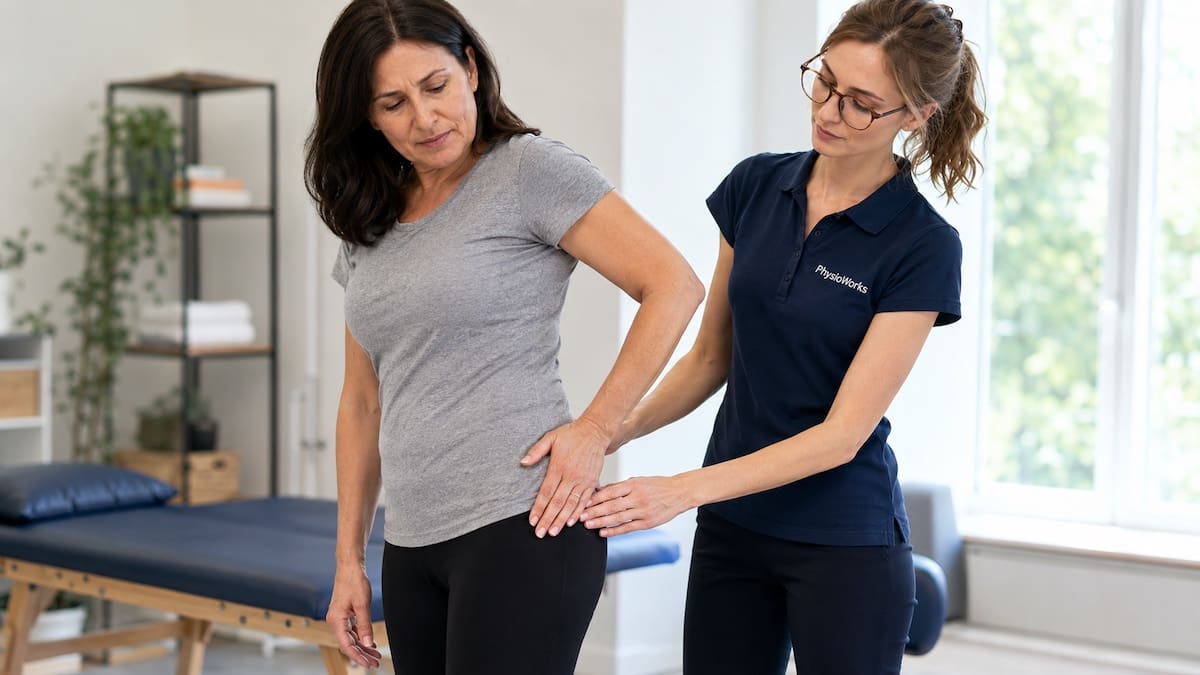
Assessment starts with the history of your symptoms. A physiotherapist may ask about recent changes in exercise, work, sport, sleeping positions, direct pressure, injury and medical history.
The physical assessment can include movement, strength, function and local tenderness. The aim is to understand which activities reproduce your symptoms and whether nearby tendons, joints or other structures may also be involved.
Not every case requires imaging. However, a doctor may arrange imaging or test fluid from a swollen bursa when the diagnosis is uncertain or when infection, crystals, significant trauma or another condition needs to be considered.
How is bursitis treated?
Treatment depends on the affected bursa and why it became irritated. For many non-infectious presentations, the first step is to reduce the main source of irritation while keeping the area moving within a comfortable range.
Reduce the main irritant
Temporarily modify the activities or positions that clearly increase pain or swelling. This may mean reducing kneeling, leaning on an elbow, side-lying, repetitive overhead work, hills, jumping or pressure from footwear.
Complete rest is not usually necessary for a simple mechanical flare. Comfortable movement can help maintain mobility while symptoms settle.
Manage short-term symptoms
- Use comfortable movement rather than repeatedly testing the painful activity.
- Consider a wrapped cold pack for short-term pain relief if it feels helpful.
- Use protective padding when direct pressure is unavoidable.
- Change sleeping or work positions if they repeatedly compress the area.
- Ask your GP or pharmacist whether pain-relief or anti-inflammatory medication is appropriate for you.
Rebuild strength and load tolerance
Once symptoms become easier to manage, rehabilitation can address the movements and loads that matter to you. Exercise should match the body region and your goals.
This may include shoulder and rotator cuff strengthening, hip and gluteal strengthening, lower-limb exercises or calf and ankle work. A gradual return to normal work, exercise and sport is usually more useful than jumping straight back to your previous load.
For a more detailed rehabilitation pathway, see our bursitis treatment guide.
Do corticosteroid injections help bursitis?
A corticosteroid injection may be considered for selected non-infectious bursitis presentations when pain remains troublesome despite appropriate conservative care.
The likely benefit depends on the bursa, the diagnosis and the other tissues involved. An injection is not suitable when infection is suspected and it does not replace rehabilitation when strength, movement or load tolerance also need attention.
If an injection is being considered, your physiotherapist and doctor can help decide whether it fits your presentation and how activity should progress afterwards.
Can bursitis settle without treatment?
Some mild bursitis episodes settle once repeated pressure or an unusual activity load is removed. However, symptoms can persist or return when the same trigger continues.
Assessment becomes more useful when pain keeps returning, limits normal activity, causes marked swelling or does not behave as expected.
How can you reduce the chance of bursitis returning?
- Increase exercise and training loads gradually.
- Avoid long periods of direct pressure on an irritated bursa.
- Use kneeling or elbow protection when work requires repeated pressure.
- Build strength and capacity around the affected joint.
- Adjust footwear when shoe pressure contributes to heel symptoms.
- Change positions regularly rather than staying in one compressed position.
- Address nearby tendon, joint or movement problems when they contribute to recurring symptoms.
What to do next
If symptoms are mild, begin by reducing the specific pressure or activity that clearly aggravates the area while maintaining comfortable movement.
If pain persists, keeps returning or limits normal work, exercise or sleep, a physiotherapy assessment can help clarify which tissues are involved and guide a practical rehabilitation plan.
Seek medical assessment sooner if you develop marked swelling, increasing heat or redness, fever, drainage, broken skin or feel unwell.
Choose your clinic and appointment pathway
Select a PhysioWorks clinic to continue to live booking, an appointment request or reception assistance.
References
- MedlinePlus. Bursitis. National Library of Medicine.
- Kjeldsen T, Hvidt KJ, Bohn MB, et al. Exercise compared to a control condition or other conservative treatment options in patients with greater trochanteric pain syndrome: a systematic review and meta-analysis of randomized controlled trials. Physiotherapy. 2024.
- Kaur IP, Mughal MS, Aslam F, et al. Non-surgical treatment of aseptic olecranon bursitis: a systematic review. Reumatol Clin (Engl Ed). 2023;19(9):482–487.
- Lafrance S, et al. Diagnosing, managing, and supporting return to work of adults with rotator cuff disorders: clinical practice guideline. J Orthop Sports Phys Ther. 2022.
- Darrieutort-Laffite C, Coiffier G, et al. 2023 French recommendations for diagnosing and managing prepatellar and olecranon septic bursitis. Joint Bone Spine. 2024;91(2):105664.
Frequently asked questions about bursitis
What is bursitis?
Bursitis is irritation or inflammation of a bursa, which is a small fluid-filled sac that helps reduce friction between moving tissues. Symptoms can include local pain, tenderness and swelling.
What does bursitis feel like?
Bursitis may cause an ache or tenderness around the affected area. Pain can increase with pressure or particular movements. Some bursae, especially around the elbow and knee, can become visibly swollen.
How long does bursitis take to settle?
There is no single recovery time for bursitis. A mild mechanical flare may settle relatively quickly once the main irritation is removed, while persistent, recurrent, traumatic or medically related bursitis can take longer and may need further assessment.
Should you rest completely with bursitis?
Complete rest is not usually needed for uncomplicated mechanical bursitis. Reduce activities and positions that clearly increase pain or swelling, but keep comfortable movement going where possible. Suspected infection or significant trauma needs medical assessment.
Do corticosteroid injections help bursitis?
A corticosteroid injection may reduce symptoms in selected non-infectious bursitis presentations. Its usefulness depends on the affected bursa and diagnosis. An injection should not replace rehabilitation when strength or load tolerance also needs attention.
When does bursitis need urgent medical review?
Seek prompt medical assessment if the area becomes hot, increasingly red or rapidly swollen, particularly if you also have fever, chills, drainage, broken skin or feel unwell. These signs may indicate infection or another condition requiring medical care.
