
Shoulder Bursitis
Shoulder Bursitis


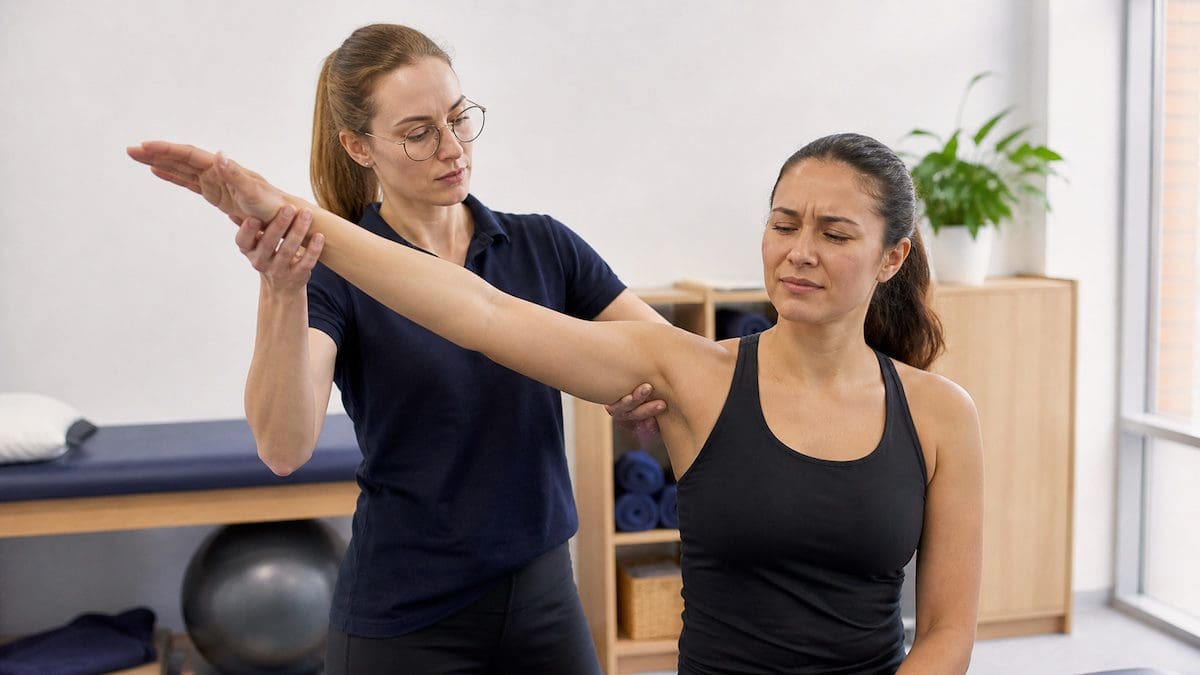
A guided arm-raising assessment can help identify a rotator cuff-related shoulder pain pattern.
Shoulder bursitis describes irritation involving the subacromial bursa. This small, fluid-filled structure helps the shoulder tendons glide beneath the shoulder arch. Symptoms can affect reaching, lifting, dressing, exercise and sleep.
Bursal irritation commonly occurs alongside rotator cuff-related shoulder pain. Therefore, symptoms and scan findings need to be considered with your movement, strength and daily activity rather than treated as an isolated problem.
Common pain area
The outer shoulder or upper arm.
Common trigger
Lifting or reaching between shoulder height and overhead.
Common night problem
Pain when lying on the affected side.
What does shoulder bursitis feel like?
Shoulder bursitis may cause a dull ache around the outer shoulder. Pain can feel sharper when you lift, reach, push or lie on the affected side. It may also travel into the upper arm.
Some people feel pain through the middle part of an arm raise. Clinicians often call this a painful arc. However, a painful arc cannot confirm bursitis by itself. Similar pain can occur with several rotator cuff and shoulder conditions.
Common shoulder bursitis symptoms
- Pain around the outer shoulder or upper arm.
- Pain when lifting the arm towards or above shoulder height.
- Night pain, especially when lying on the sore side.
- Discomfort when dressing, washing your hair or reaching into a cupboard.
- Pain during pushing, pressing, throwing or repeated overhead work.
- Reduced strength because pain limits effort.
What can cause or aggravate shoulder bursitis?
The bursa may become irritated when shoulder demand rises faster than the area can tolerate. Symptoms can begin after one unusual task or build over time.
- A sudden increase in lifting, pushing or gym training.
- Repeated overhead work or sport.
- Heavy pressing or throwing loads.
- A fall, direct impact or sudden shoulder strain.
- Reduced shoulder movement or strength.
- Changes in shoulder movement or load tolerance.
- Returning to activity too quickly after a period of rest.
General information about bursae in other body regions is available in our bursitis guide.
Is shoulder bursitis the same as a rotator cuff injury?
No. The bursa and rotator cuff are different structures. However, they sit close together and often become painful within the same shoulder presentation.
For this reason, clinicians commonly consider bursitis within the wider rotator cuff-related shoulder pain spectrum. Assessment may also consider rotator cuff tendinopathy, a rotator cuff tear, frozen shoulder, joint irritation or pain referred from the neck.
How is shoulder bursitis assessed?
A physiotherapist will ask how the pain started, which movements hurt and how the symptoms affect sleep, work, exercise and daily tasks.
Your assessment may include:
- comfortable and painful shoulder movement;
- shoulder and rotator cuff strength;
- reaching, lifting or task-specific tests;
- shoulder blade movement;
- neck movement and nerve-related symptoms; and
- checks for signs that need medical review.
No single movement test can prove that the bursa is the only source of pain. Instead, the assessment identifies the most likely pain pattern, contributing loads and suitable next steps.
Do you need a scan?
Many people do not need imaging at the start. An ultrasound, X-ray or MRI may be useful after significant trauma, when marked weakness is present, when progress is not as expected or when another condition is suspected.
Imaging findings must match the clinical picture. A scan can show bursal fluid or tendon changes in people who have few or no symptoms.
How long does shoulder bursitis take to improve?
Recovery time varies. Some people notice early improvement over several weeks. Others need longer, especially when symptoms have lasted for months or work, sport and sleep continue to place high demand on the shoulder.
Useful signs of progress include:
- better sleep;
- easier dressing and personal care;
- less pain during reaching;
- improving strength; and
- greater tolerance of work, exercise or sport.
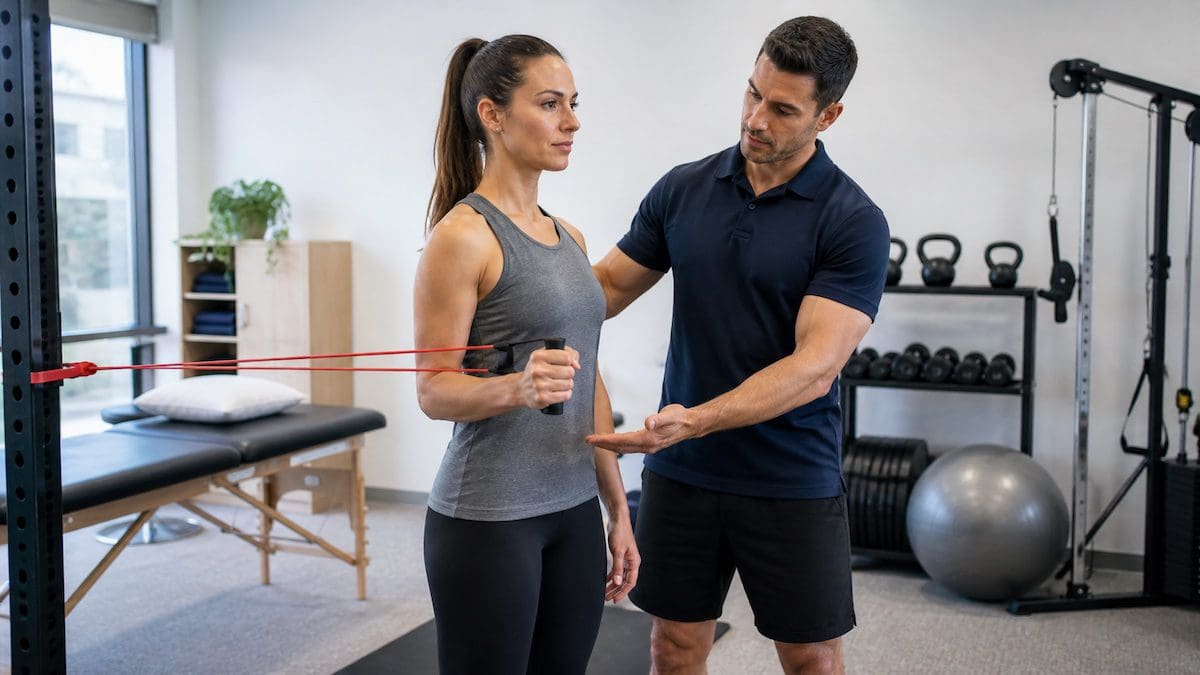
Graded shoulder exercise can rebuild movement control, strength and load tolerance.
How is shoulder bursitis treated?
Treatment usually starts by reducing the activities that repeatedly aggravate the shoulder. Complete rest is rarely needed. Instead, keep the shoulder moving within a manageable range and rebuild its capacity in stages.
Early symptom management
- Temporarily reduce painful overhead or heavy lifting.
- Keep gentle shoulder movement going within comfort.
- Change repeated tasks rather than stopping all activity.
- Try ice or heat if either provides relief.
- Support the arm with a pillow when sleeping.
- Avoid repeatedly testing the most painful movement.
What exercises help shoulder bursitis?
Shoulder bursitis exercises commonly focus on restoring comfortable movement, improving rotator cuff and shoulder strength, and gradually rebuilding tolerance for reaching, lifting and overhead activity.
The right starting point depends on which movements aggravate your shoulder, your current strength and the activities you need to return to. For this reason, there is no single exercise program that suits everyone.
Your rehabilitation may include:
- rotator cuff strengthening exercises;
- shoulder blade and upper-back exercises;
- shoulder mobility work;
- changes to lifting, work or gym technique;
- a gradual return to overhead activity; and
- progression towards work, gym or sporting demands.
What does shoulder bursitis rehabilitation involve?
-
Settle the flare
Reduce the most aggravating loads, improve sleep positioning and keep comfortable movement going.
-
Restore movement and strength
Build shoulder and rotator cuff capacity with exercises matched to your starting level.
-
Reload normal activity
Progress reaching, lifting, work, gym or sport tasks without large or lasting symptom flare-ups.
When might a corticosteroid injection help?
A corticosteroid injection may provide short-term pain relief for some people. It may be considered when pain remains high, affects sleep or prevents useful rehabilitation.
An injection does not rebuild shoulder strength or capacity. Therefore, graded movement and exercise usually remain important. Response varies, and repeated injections require careful medical consideration.
Read more about the benefits, limits and risks of a cortisone injection for shoulder bursitis.
Does shoulder bursitis need surgery?
Surgery is not usually needed for shoulder bursitis. Most people begin with non-surgical care, including activity changes and progressive rehabilitation.
Medical or surgical review may be considered when symptoms remain severe despite appropriate care or when assessment identifies another problem that may need different management.
Why does shoulder bursitis keep returning?
Repeated flare-ups often occur when shoulder demand remains higher than its current capacity. Rest may settle pain for a time, but symptoms can return when the same workload resumes.
A review can examine:
- recent changes in work, sport or training load;
- shoulder movement and rotator cuff strength;
- lifting, throwing or pressing technique;
- recovery between demanding sessions;
- workstation or overhead work demands; and
- whether another shoulder or neck condition is contributing.
Can you prevent another flare-up?
No strategy can prevent every episode. However, you can reduce avoidable load spikes and improve the shoulder’s ability to handle regular activity.
- Increase overhead activity in stages.
- Keep shoulder strength work in your regular program.
- Allow enough recovery after heavy sessions.
- Change work or exercise volume when early symptoms appear.
- Check technique if one movement repeatedly causes pain.
Shoulder bursitis FAQs
Can physiotherapy help shoulder bursitis?
Physiotherapy may help by guiding activity changes, restoring useful shoulder movement and gradually improving strength. Your program should match your symptoms, goals and current shoulder capacity.
When should you worry about shoulder bursitis?
Arrange an assessment when pain is worsening, affects sleep or limits your ability to lift the arm. Sudden weakness after an injury also needs timely review. Fever, marked redness, severe swelling or major trauma requires urgent medical assessment.
What commonly aggravates shoulder bursitis?
Repeated overhead activity, heavy lifting, pressing exercises and lying on the affected side can aggravate symptoms. A sudden increase in work, sport or gym load may also trigger a flare.
Can shoulder bursitis heal on its own?
Mild shoulder bursitis symptoms may settle as aggravating loads reduce and normal movement gradually returns. Arrange an assessment if symptoms persist, keep returning, follow an injury or continue to limit sleep, work, lifting or reaching.
Can shoulder bursitis improve without surgery?
Yes. Most people begin with non-surgical care. Management commonly includes load changes, comfortable movement, shoulder strengthening and a gradual return to normal activity.
Is shoulder bursitis the same as shoulder impingement?
No. Bursitis refers to irritation involving the bursa. Shoulder impingement is a broader term used for pain during certain shoulder movements. These presentations often overlap with rotator cuff-related shoulder pain.

Rehabilitation can gradually build tolerance for reaching and overhead activity.
What should you do next?
Start by reducing the loads that cause a strong or lasting pain flare. Keep the shoulder moving within a comfortable range and avoid repeatedly testing the most painful action.
Consider a physiotherapy assessment when pain is not settling, affects sleep or work, follows an injury, or continues to limit lifting and reaching. Your physiotherapist can assess the broader shoulder pattern and provide a staged plan for your daily activities and goals.
Choose your clinic and appointment pathway
Select a PhysioWorks clinic to continue to live booking, an appointment request or reception assistance.


References
- Faruqi T, Rizvi TJ. Subacromial bursitis. In: StatPearls. StatPearls Publishing; updated 2023.
- Pieters L, Lewis J, Kuppens K, et al. An update of systematic reviews examining the effectiveness of conservative physical therapy interventions for subacromial shoulder pain. Journal of Orthopaedic & Sports Physical Therapy. 2020;50(3):131–141. doi:10.2519/jospt.2020.8498.
- Hopewell S, Keene DJ, Marian IR, et al. Progressive exercise compared with best-practice advice, with or without corticosteroid injection, for rotator cuff disorders. British Journal of Sports Medicine. 2021;55(5):262–271. doi:10.1136/bjsports-2020-102672.
