When Might a Cortisone Injection Be Considered?
A corticosteroid injection may be considered when shoulder pain remains significant despite appropriate initial non-surgical care. Current clinical guidance does not recommend corticosteroid injection as first-line treatment for rotator cuff tendinopathy.
An injection discussion may be reasonable when:
- pain continues to restrict reaching, lifting or normal daily activities;
- night pain is significantly disrupting sleep;
- pain is preventing useful rehabilitation progression;
- appropriate early treatment has not provided enough relief; or
- your physiotherapist and medical practitioner consider an injection appropriate within the broader rehabilitation plan.
Which Shoulder Problems May Be Relevant?
Corticosteroid injection may be considered for selected people with pain involving the subacromial region. Similar shoulder symptoms can have different causes, so the diagnosis should not be based on pain location or one clinical test alone.
Are Shoulder Cortisone Injections Safe?
Shoulder corticosteroid injections are generally well tolerated when used appropriately, but they are not risk-free. The potential benefits and risks depend on the injection site, dose, frequency, your health and the condition of the surrounding tissues.
Clinicians generally avoid injecting corticosteroid directly into a rotator cuff tendon. Repeated exposure may adversely affect tendon tissue, so repeated injections require careful medical consideration.
For subacromial corticosteroid injection, current rotator cuff tendinopathy guidelines recommend ultrasound guidance where available. Greater placement accuracy, however, does not mean an injection will provide a better long-term outcome than rehabilitation.
Injection or Rehabilitation?
An Injection May Be Worth Discussing When
- pain remains high and significantly affects sleep or normal movement;
- rehabilitation cannot progress because pain is too limiting;
- appropriate initial conservative care has not provided enough relief; or
- a medical practitioner considers an injection reasonable within the broader management plan.
Rehabilitation Remains Central When
- strength, control or load tolerance needs to improve;
- symptoms are responding to exercise and activity modification;
- shoulder function is gradually improving; or
- short-term pain relief is being used to help progress exercise and normal activity.
What Happens During a Shoulder Cortisone Injection?
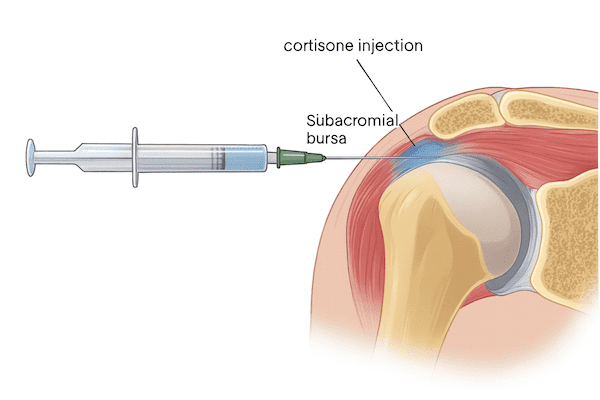
A medical practitioner cleans the skin and places a needle into the intended bursa or joint space. Corticosteroid medication is then injected, sometimes with local anaesthetic. Ultrasound may be used to guide needle placement.
Local anaesthetic can provide temporary numbness before its effect wears off. The corticosteroid effect, when helpful, may take longer to develop.
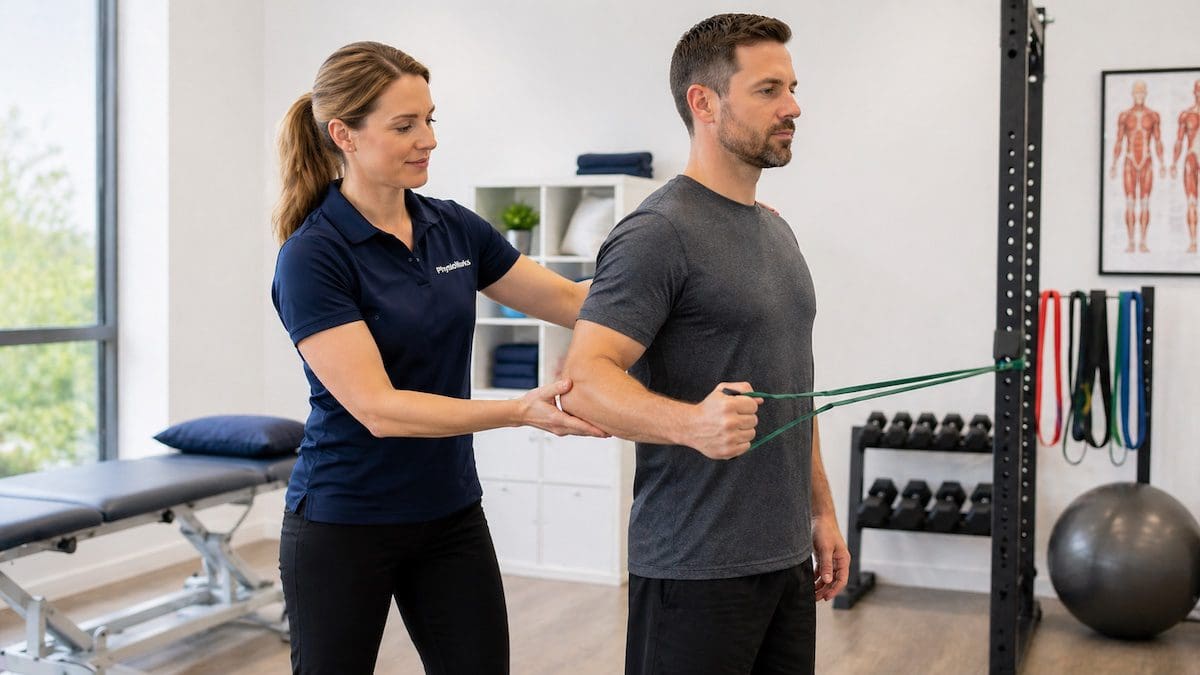
Your medical practitioner should provide advice about activity following the procedure. Rehabilitation can then be resumed and progressed according to your symptoms, shoulder function and the advice of the clinicians involved.
How Effective Are Cortisone Injections Compared With Physiotherapy?
A 2025 systematic review and meta-analysis of 15 randomised controlled trials involving 1,785 participants found that corticosteroid injection combined with physiotherapy interventions may provide small to moderate improvements in pain and function in the short term compared with physiotherapy alone.
However, corticosteroid injection alone was generally not more effective than physiotherapy interventions, and injections were not superior at medium- or long-term follow-up. The certainty of the evidence ranged from moderate to mostly very low.
This supports using an injection selectively for short-term symptom management rather than viewing it as a replacement for active rehabilitation.
Why Does Rehabilitation Still Matter After an Injection?
Rotator cuff tendinopathy guidelines support active rehabilitation as an initial treatment. Exercise can address strength, movement capacity and the shoulder’s ability to tolerate everyday, work and sporting loads.