
Shin Pain
Causes, warning signs, assessment, treatment and safe return-to-running guidance.


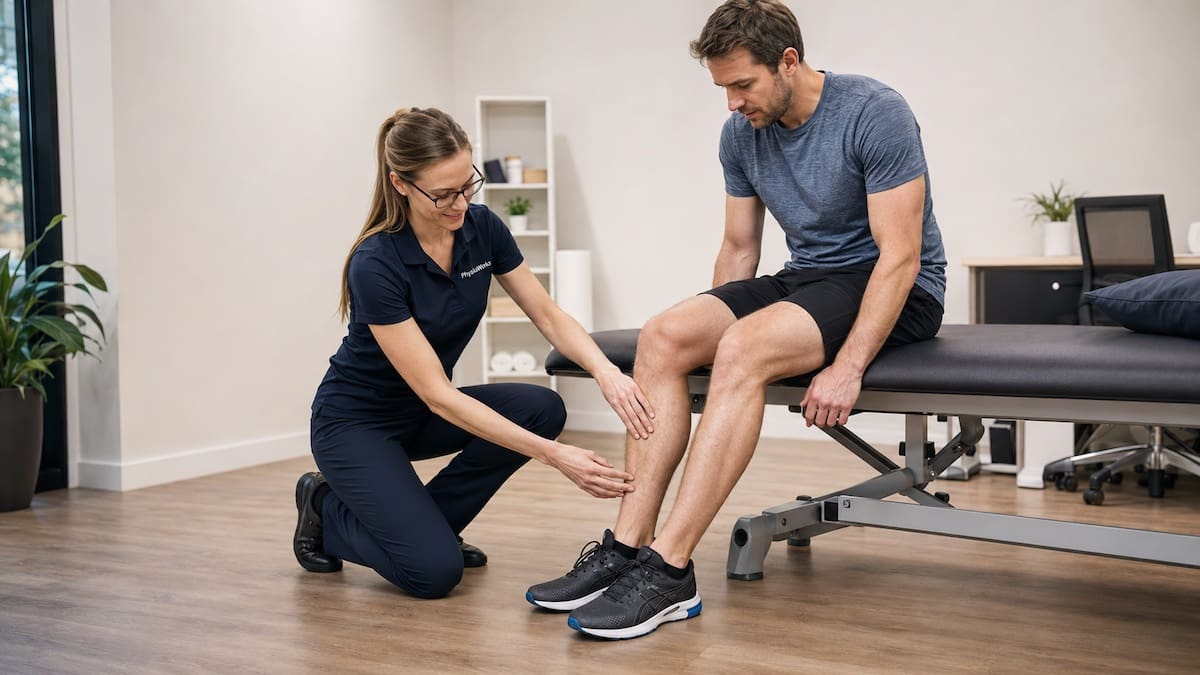
Targeted shin assessment helps guide safe loading decisions.
What is shin pain?
Shin pain is pain along the front, inside or outside of the lower leg. It often begins after a change in running, jumping, sport, walking load, footwear, hills or training surface.
Many people call all shin symptoms “shin splints”. However, shin pain can also relate to shin splints, a tibial stress fracture, compartment syndrome, calf or tendon overload, muscle soreness, or nerve-related symptoms from sciatica.
The pain location, timing and response to activity help identify the likely cause. Early assessment can also help prevent a manageable overload problem from becoming a longer-lasting injury.
Common shin pain signs
- Pain during or after running, jumping, walking or impact exercise
- Tenderness along the shin bone or inner lower leg
- Localised bone pain that may suggest increased bone stress
- Tightness, cramping or pressure that builds during exercise
- Burning, tingling or numbness when nerve irritation is involved
- Reduced tolerance for hopping, running or walking
What does the location of shin pain mean?
Shin pain often follows a recognisable pattern. However, the pain location alone cannot confirm a diagnosis. A clinician also considers when symptoms begin, how quickly they settle and whether pain continues after activity.
- A diffuse ache along the inner shin during or after activity often fits shin splints.
- Localised point tenderness over the bone may suggest a tibial bone stress injury.
- Predictable tightness or cramping during exercise that eases after stopping can fit chronic exertional compartment syndrome.
- Pain at the front of the lower leg may relate to anterior shin overload, muscle fatigue or altered ankle control.
- Burning, tingling or numbness can reflect local nerve irritation or referral from the lower back.
How do you know if shin pain is a stress fracture?
Stress fracture pain is usually more localised than shin splints. It often becomes sharper with running, hopping or repeated impact and may continue after exercise stops.
Shin splints usually cause a broader ache along the inner edge of the shin. Symptoms may settle more quickly once the activity stops or training load is reduced. However, the two conditions can overlap, particularly during the early stages of a bone stress injury.
Shin splints or stress fracture?
- Shin splints: pain usually spreads along a broader section of the inner shin.
- Stress fracture: pain is often focused over a smaller area of bone.
- Shin splints: symptoms commonly follow training spikes, hills, speed work or harder surfaces.
- Stress fracture: pain may linger after exercise or begin to affect walking.
- Shin splints: hopping may be uncomfortable but not always sharply painful.
- Stress fracture: hopping or impact may produce distinct focal pain.
A structured assessment looks at the exact pain location, hopping and walking tolerance, recent training changes, footwear and how long symptoms remain after activity. If the pattern suggests bone stress, reducing impact early is important because continuing to push through can worsen the injury.
What causes shin pain?
Shin pain can come from bone, muscle, tendon, fascia, nerves or pressure within the lower-leg compartments. The likely diagnosis depends on how the symptoms started and how they respond to exercise and rest.
Shin splints
Shin splints, also called medial tibial stress syndrome, cause pain along the inner border of the tibia. Symptoms usually build gradually with repeated running, jumping or marching.
Common contributors include sudden increases in training volume, hills, speed work, harder surfaces and inadequate recovery. Related patterns include posterior shin splints and anterior shin splints.
Tibial bone stress injury
A tibial bone stress injury develops when repeated loading exceeds the bone’s current ability to recover. Symptoms can range from an early stress reaction to a more established stress fracture.
Pain is commonly focal and worsens with impact. As the condition progresses, it may remain sore after training or begin to affect normal walking.
Compartment syndrome
Compartment syndrome involves increased pressure inside one of the lower-leg muscle compartments.
Chronic exertional compartment syndrome commonly causes predictable tightness, cramping, pressure, burning or altered sensation during exercise. Symptoms often ease after the activity stops.
Acute compartment syndrome is different. It may follow trauma and can progress quickly. It requires urgent medical assessment.
Muscle soreness and lower-leg overload
Delayed onset muscle soreness can cause short-term shin discomfort after unfamiliar or heavy exercise. It usually peaks within the first few days and gradually settles.
Overload of the calf or muscles at the front of the shin can also cause pain. These symptoms may follow repeated hills, speed work, jumping, long walks or a sudden return to sport.
Calf, Achilles and ankle contributors
Reduced calf strength, limited ankle movement or poor lower-limb control can change how force travels through the shin. Related problems may include Achilles tendinopathy, tibialis posterior overload or peroneal tendon irritation.
Foot posture and movement control
Foot posture does not automatically cause shin pain. However, reduced foot control, limited ankle mobility or a rapid change in footwear may contribute to overload in some people.
A physiotherapist may assess related conditions such as tibialis posterior tendinopathy, peroneal tendinopathy and flat feet when they fit the symptom pattern.
Referred pain and nerve-related symptoms
Burning pain, pins and needles, numbness or unusual sensitivity around the shin may come from nerve irritation rather than the shin tissues themselves.
Assessment may include the lower back, hip, nerve mobility and muscle strength when symptoms suggest referral from sciatica or another nerve source.
Factors that may increase bone stress risk
Bone stress can develop when training load rises faster than the bone can adapt. Risk can also increase when recovery or bone health is reduced.
- A sudden increase in running distance, speed, hills or impact
- A previous stress fracture or bone stress injury
- Low energy intake relative to exercise demands
- Menstrual disruption where relevant
- Low bone density or osteoporosis
- Low vitamin D or inadequate nutrition
- Limited recovery between demanding training sessions
- A rapid return to impact after illness, injury or time away from training
How is shin pain assessed?
A shin pain assessment combines the symptom history, exact pain location, load response and lower-limb movement testing. The aim is to determine whether symptoms are more consistent with bone stress, muscle overload, tendon irritation, compartment pressure or referred pain.
What your physiotherapist may check
- The exact pain location along the tibia and surrounding muscles
- Walking, hopping, calf-raise and balance tolerance
- Recent changes in running distance, speed, hills, surface or footwear
- Calf strength, ankle mobility, foot control and hip control
- Whether symptoms settle quickly or remain after activity
- Whether pain is present at rest, at night or during normal walking
- Whether the pattern suggests bone stress, compartment pressure or nerve referral
Do you need an X-ray or MRI for shin pain?
Imaging is not required for every case of shin pain. A clinician may recommend medical review or imaging when pain is highly localised, persists despite load reduction, affects walking, follows significant trauma or raises concern about a bone stress injury.
Early bone stress injuries may not appear clearly on a standard X-ray. Depending on the clinical findings, a doctor may consider MRI or another investigation. Imaging should support the clinical assessment rather than replace it.
How can physiotherapy help shin pain?
Physiotherapy for shin pain focuses on identifying the likely pain source, reducing aggravating load and rebuilding the capacity needed for walking, running, jumping or sport.
The treatment plan should match the diagnosis. A person with shin splints usually needs a different loading plan from someone with a stress fracture, nerve irritation or compartment-related symptoms.
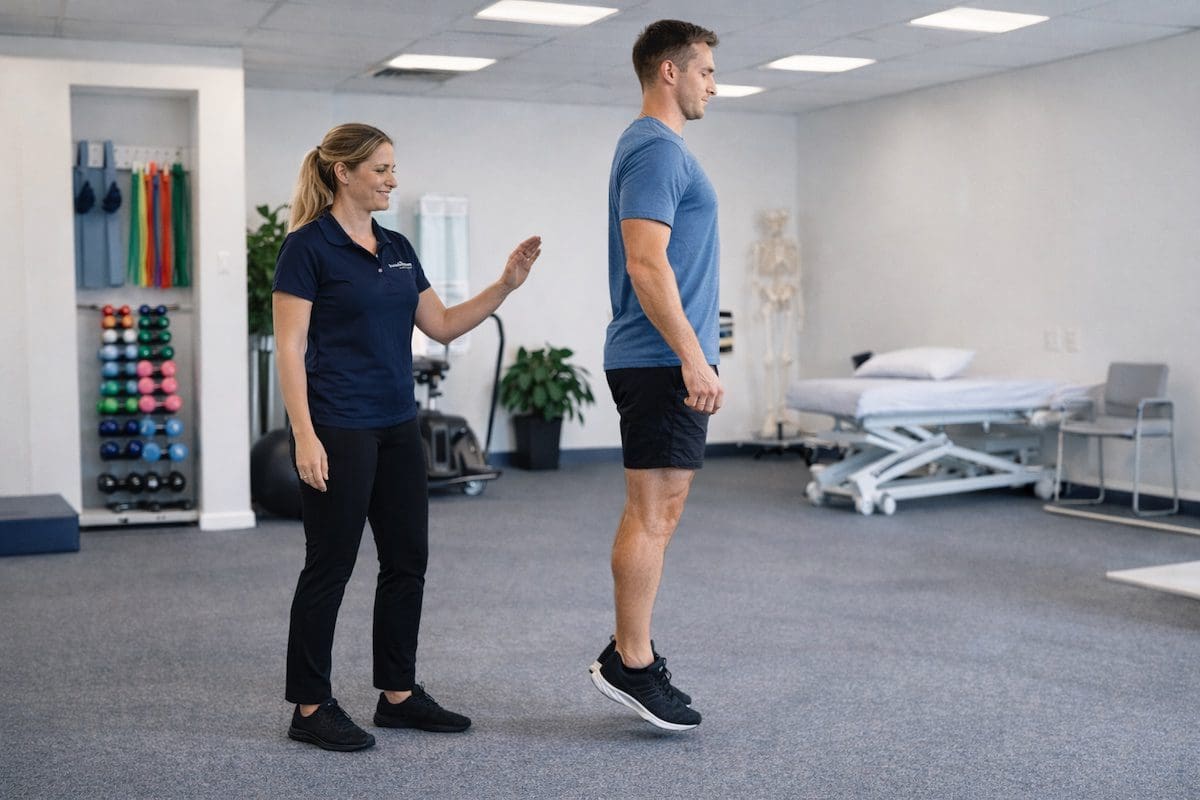
Progressive calf strength can improve lower-leg load tolerance.
Depending on the cause, treatment may include:
- Temporary reduction or modification of aggravating impact
- Calf, foot and lower-limb strengthening
- Ankle mobility and movement-control exercises
- Training-load and recovery planning
- Running or jumping technique review where relevant
- A staged return-to-running or return-to-sport program
- Referral for medical review or imaging when needed
People returning to sport may also benefit from sports physiotherapy to guide exercise progression and safe loading decisions.
Is physiotherapy the right next step?
Physiotherapy may help when shin pain keeps returning, limits exercise or feels unclear. Assessment can help distinguish shin splints from bone stress and other lower-leg problems, then provide a loading and exercise plan that matches the likely cause.
Can you keep running with shin pain?
You may need to stop or reduce impact exercise when shin pain is sharp, focal, worsening, affecting your stride or lingering after training. Continuing to run through possible bone stress symptoms can delay recovery and may allow the injury to progress.
A modified running plan may be suitable when pain is mild, spread over a broader area and settles quickly after reducing load. The plan may need changes to distance, speed, hills, surface, frequency and recovery days.
Running load decision guide
- Stop and seek advice: sharp focal pain, night pain, swelling, limping or pain during normal walking.
- Modify your load: symptoms appear during running or return later that day.
- Monitor carefully: mild symptoms settle quickly and do not worsen by the next morning.
- Build capacity first: calf raises, ankle control or lower-limb strength remain limited.
- Progress gradually: increase one training variable at a time rather than adding distance, speed and hills together.
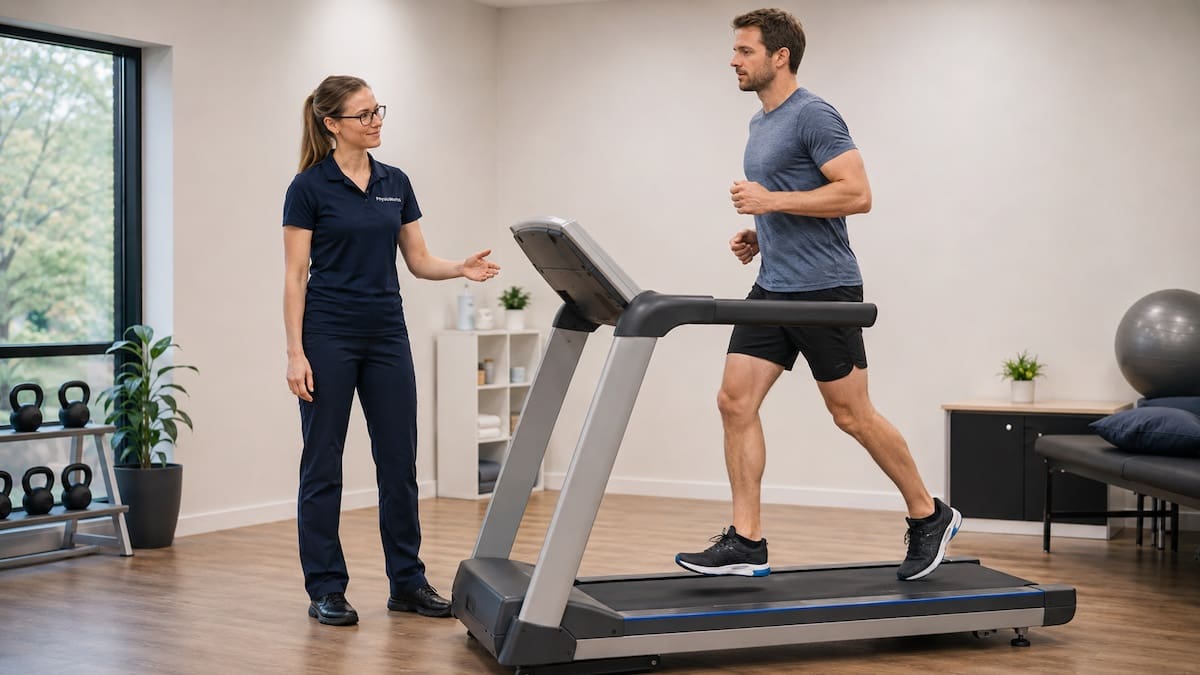
A graded return helps rebuild running tolerance safely.
How can you reduce the risk of recurring shin pain?
- Increase running and impact load gradually.
- Avoid sudden increases in distance, speed and hills at the same time.
- Build straight-knee and bent-knee calf strength.
- Include foot, ankle, knee and hip strength where needed.
- Allow enough recovery between demanding sessions.
- Check whether symptoms began after changing footwear or training surface.
- Maintain adequate nutrition and energy intake for your exercise load.
- Respond early when shin pain starts returning.
When should you worry about shin pain?
Seek prompt assessment when shin pain is severe, highly localised, worsening or stopping you from bearing weight. Night pain, major swelling or rapidly increasing tightness with numbness or weakness may indicate a more serious problem.
Seek urgent medical care
Urgent medical assessment is appropriate when shin or lower-leg pain occurs with:
- Severe or rapidly escalating pain, especially after trauma
- A tense, markedly swollen or increasingly painful lower leg
- New numbness, weakness or difficulty moving the foot
- Inability to bear weight after an injury
- Fever with redness, heat or significant swelling
- Unexplained one-sided calf or lower-leg swelling
- Chest pain, sudden breathlessness or coughing blood
Related shin and lower-leg articles
Use these guides to explore the pattern that most closely matches your symptoms.
- Shin splints – broader inner-shin pain associated with running and impact load.
- Posterior shin splints – pain along the posteromedial border of the tibia.
- Anterior shin splints – pain or overload at the front of the lower leg.
- Tibial stress fracture – focal bone pain requiring careful load management.
- Compartment syndrome – exercise-related pressure, tightness or altered sensation.
- Calf pain – muscle, Achilles, nerve and circulation-related pain patterns.
- Running injuries – common running problems, training load and return-to-running guidance.
Shin pain FAQs
What causes shin pain?
Shin pain may come from repeated loading of bone, muscle, tendon or nearby soft tissue. Common causes include shin splints, tibial bone stress injury, compartment syndrome, muscle overload, Achilles or calf problems, and nerve-related referral.
Is shin pain always shin splints?
No. Shin splints are one common cause, but shin pain may also come from bone stress, compartment pressure, muscle soreness, tendon overload or nerve irritation. The pain pattern and assessment findings help distinguish these problems.
How do you know if shin pain is a stress fracture?
A stress fracture usually causes more localised pain over the tibia. It often worsens with hopping or impact and may remain sore after exercise. Shin splints usually cause pain across a broader section of the inner shin.
Do you need an X-ray or MRI for shin pain?
Not every case requires imaging. Medical review or imaging may be considered when pain is focal, persistent, affects walking, follows trauma or suggests a bone stress injury. Early bone stress changes may not be visible on a standard X-ray.
Can shin pain come from the back or nerves?
Yes. Burning pain, tingling, numbness or unusual referral patterns may come from nerve irritation rather than the shin tissues. Assessment may include the lower back, hip and nerve mobility.
How is shin pain treated?
Treatment depends on the cause. Management may include load changes, strengthening, ankle mobility, movement retraining and a gradual return to activity. Bone stress, compartment syndrome and nerve-related symptoms need different treatment pathways.
Can you keep running with shin pain?
Running may need to stop when pain is sharp, focal, worsening, affects walking or remains after training. Modified running may be appropriate when symptoms are mild, settle quickly and do not worsen by the following day.
When should you get shin pain checked?
Arrange an assessment when shin pain is worsening, highly localised, affecting walking or running, or not settling after reducing load. Seek urgent care for rapidly escalating pain, marked swelling, numbness, weakness, fever or breathing symptoms.
What to do next
If shin pain persists, worsens or limits your training, a structured assessment can help clarify whether the problem relates to bone stress, shin splints, muscle overload, compartment pressure or nerve referral.
The right plan may include temporary load changes, targeted strengthening and a gradual return to running or sport. Early guidance can also reduce the risk of a smaller overload problem becoming a longer-lasting injury.
Choose your clinic and appointment pathway
Select a PhysioWorks clinic to continue to live booking, an appointment request or reception assistance.
Shin Products
These shin products are commonly used by our physiotherapists to improve comfort, flexibility, strength, and home exercise programs.
-
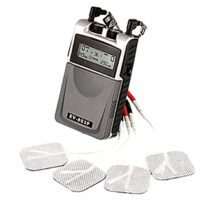
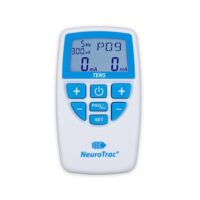
- Pain Management, Christmas Gift Ideas, Gift Ideas, TENS Machine, TENS Machine & EMS
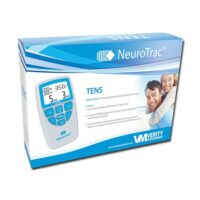
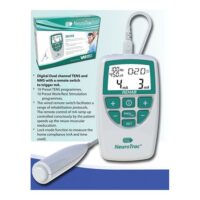
NeuroTrac TENS Machine
$219.00Add to cartQuick View -
-
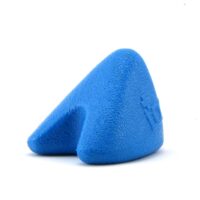
 Exercise Equipment, Back, Elbow, Foot, Massage Tools, Shoulder
Pocket Physio
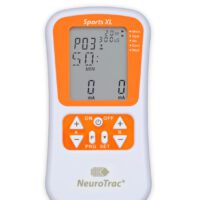
$14.95Select optionsQuick View - EMS Machines, Pain Management, TENS Machine, TENS Machine & EMS
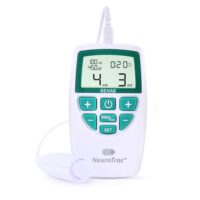
NeuroTrac Rehab (TENS Machine + EMS)
$285.00Add to cartQuick View - Christmas Gift Ideas, Exercise Equipment, Gift Ideas, Massage Tools, Pain Management
Pocket Physio MAX
$24.95Select optionsQuick View - Liniments & Gels, Massage Liniments, Pain Management
Fisiocrem
$16.95 – $39.95Select optionsQuick View -
-
-
-

-
-





References
- Saad MA, Jamal JM, Aldhafiri AT, Alkandari SA. Medial Tibial Stress Syndrome: A Scoping Review of Epidemiology, Biomechanics, and Risk Factors. Cureus. 2025;17(3):e81463. doi:10.7759/cureus.81463
- Correia CK, Machado JM, Dominski FH, de Castro MP, de Brito Fontana H, Ruschel C. Risk factors for running-related injuries: An umbrella systematic review. J Sport Health Sci. 2024;13(6):793-804. doi:10.1016/j.jshs.2024.04.011
- Tarabishi MM, Abuwarda KA, Younes A, et al. Chronic Exertional Compartment Syndrome in Athletes. Cureus. 2023;15(11):e48801. doi:10.7759/cureus.48801
- Torlincasi AM, Lopez RA, Waseem M. Acute Compartment Syndrome. StatPearls. Updated 2023.
- Healthdirect Australia. Shin splints. Accessed July 2026.
