
ACL Injury
ACL Injury Physiotherapy
An anterior cruciate ligament injury can cause rapid knee swelling, instability and reduced confidence after a twist, pivot or awkward landing. Early assessment can clarify the injury and guide safe rehabilitation, imaging or surgical review.


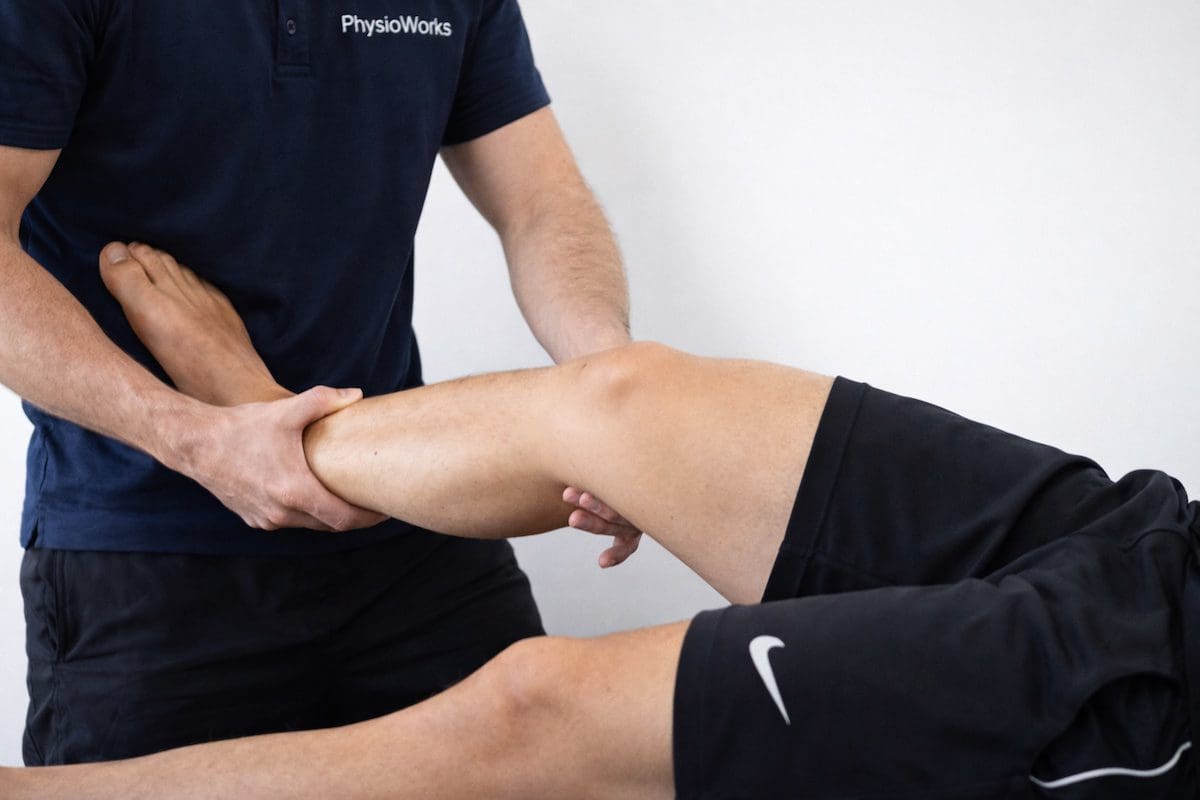
ACL injury physiotherapy assesses pain, swelling, movement loss, giving-way and reduced confidence in the knee. A structured knee physiotherapy assessment can help determine what to do next.
ACL tears may occur alone or with a meniscus tear, medial collateral ligament injury or damage to other knee structures. This page forms part of the knee ligament injury information cluster.
Common mechanism
A planted foot followed by twisting, cutting, sudden slowing or an awkward landing.
Common early signs
A pop, rapid swelling, pain, movement loss or reduced trust in the knee.
Next step
Protect the knee, reduce aggravating activity and arrange a clinical assessment.
What Is an ACL Injury?
The anterior cruciate ligament, or ACL, is one of the major stabilising ligaments inside the knee. It helps limit excessive forward movement and rotation of the shin bone relative to the thigh bone.
An ACL injury can range from a partial sprain to a complete rupture. A torn ACL may reduce knee stability during turning, landing, cutting and other fast changes of direction.
What Are the Symptoms of an ACL Injury?
Symptoms vary with the injury mechanism, associated damage and time since injury. Common features include:
- A pop or tearing sensation when the injury occurs
- Swelling that develops within the first few hours
- Pain with walking, turning or changing direction
- The knee buckling or giving way
- Difficulty fully bending or straightening the knee
- Reduced confidence during single-leg tasks
- Difficulty returning to running, jumping or pivoting sport
Some people can still walk after an ACL tear. Therefore, walking ability alone cannot confirm or exclude the injury.
How Do ACL Injuries Happen?
Many ACL injuries occur without a direct collision. The foot may remain planted while the body turns, slows or changes direction. The knee may also move inward during an awkward landing.
Common ACL injury mechanisms
- Cutting or side-stepping while running
- Sudden slowing with the foot planted
- Landing awkwardly from a jump
- Pivoting or turning rapidly
- A tackle or collision that twists the knee
- Falling while skiing or during another high-speed activity
Who Is More Likely to Injure Their ACL?
ACL injuries commonly occur in sports that involve jumping, landing, pivoting or rapid direction changes. Examples include football, netball, AFL, basketball, rugby, touch football, volleyball and skiing.
In several comparable pivoting and landing sports, female athletes experience a higher rate of non-contact ACL injury than male athletes. ACL injury risk is influenced by multiple interacting factors, including sporting exposure and individual physical and movement characteristics. No single factor predicts whether an athlete will tear their ACL.
Well-designed warm-up and neuromuscular exercise programs may reduce risk. These programs often include strength, balance, landing, running and direction-change drills. Learn more about ACL injury prevention.
How Is an ACL Injury Assessed?
A clinician combines the injury history with a physical examination. They may form a strong suspicion from the mechanism, swelling pattern, movement and stability tests. Acute pain, swelling and muscle guarding can sometimes limit the first examination, so reassessment may be useful.
Clinical examination
Your physiotherapist or doctor may assess:
- The injury mechanism and timing of swelling
- Walking and weight-bearing
- Knee bend and straightening
- Joint swelling and tenderness
- Ligament stability
- Signs of meniscus or other ligament injury
- Your work, exercise and sporting goals
The Lachman test and pivot-shift test are examples of clinical tests used to assess ACL stability. The chosen tests depend on pain, swelling and your ability to relax the leg.
What else can cause similar symptoms?
Not every swollen or unstable knee after a sporting injury is an isolated ACL tear. A meniscus tear, MCL injury, other ligament injury, patellar injury or fracture can cause overlapping symptoms. More than one structure may also be injured at the same time.
The injury mechanism, swelling pattern, tenderness, movement loss and stability tests help determine which structures may be involved and whether imaging or medical review is appropriate.
When is imaging used?
- MRI: may confirm ACL damage and identify associated meniscus, cartilage, ligament or bone injury.
- X-ray: does not show the ACL itself but may identify a fracture, avulsion injury or other bone problem.
Imaging supports clinical decision-making but should not replace a full assessment. A scan result must be considered alongside symptoms, stability, function and personal goals.
For additional medical information, see the MedlinePlus overview of anterior cruciate ligament injury.
What Are the Main ACL Treatment Options?
Treatment depends on knee stability, associated injuries, age, daily demands, work, sporting goals and personal preferences. Some people manage well with structured rehabilitation without reconstruction. Others choose ACL reconstruction followed by rehabilitation.
Rehabilitation without reconstruction
A rehabilitation-first pathway may suit people whose knee becomes stable enough for their daily, work and sporting goals.
- Settle pain and swelling
- Restore full knee movement
- Build quadriceps, hamstring, calf and hip strength
- Improve balance and single-leg control
- Progress running, landing and direction change
- Test function before unrestricted sport
ACL reconstruction and rehabilitation
Reconstruction may be considered when instability continues, pivoting-sport demands are high or associated injuries require surgery.
- Pre-operative rehabilitation where appropriate
- Post-operative swelling and movement management
- Progressive strength rehabilitation
- Running, jumping and agility progression
- Sport-specific conditioning
- Criteria-based return-to-sport testing
Selected specialist pathways
Some acute ACL tears may be considered for a healing-focused or cross-bracing pathway under specialist medical care.
- Early diagnosis and review are important
- Tear pattern and associated injuries must be assessed
- Bracing and movement restrictions require close supervision
- Imaging may monitor ligament continuity
- Long-term stability and function still require assessment
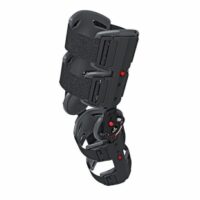
No single treatment is right for every ACL injury. See the detailed ACL treatment pathway, learn what may happen without ACL surgery, or read about the role of an ACL brace.
How Can Physiotherapy Help an ACL Injury?
Physiotherapy guides recovery from the early injury stage through strength, running and return to activity. Treatment should progress according to knee response and objective measures rather than using time alone.
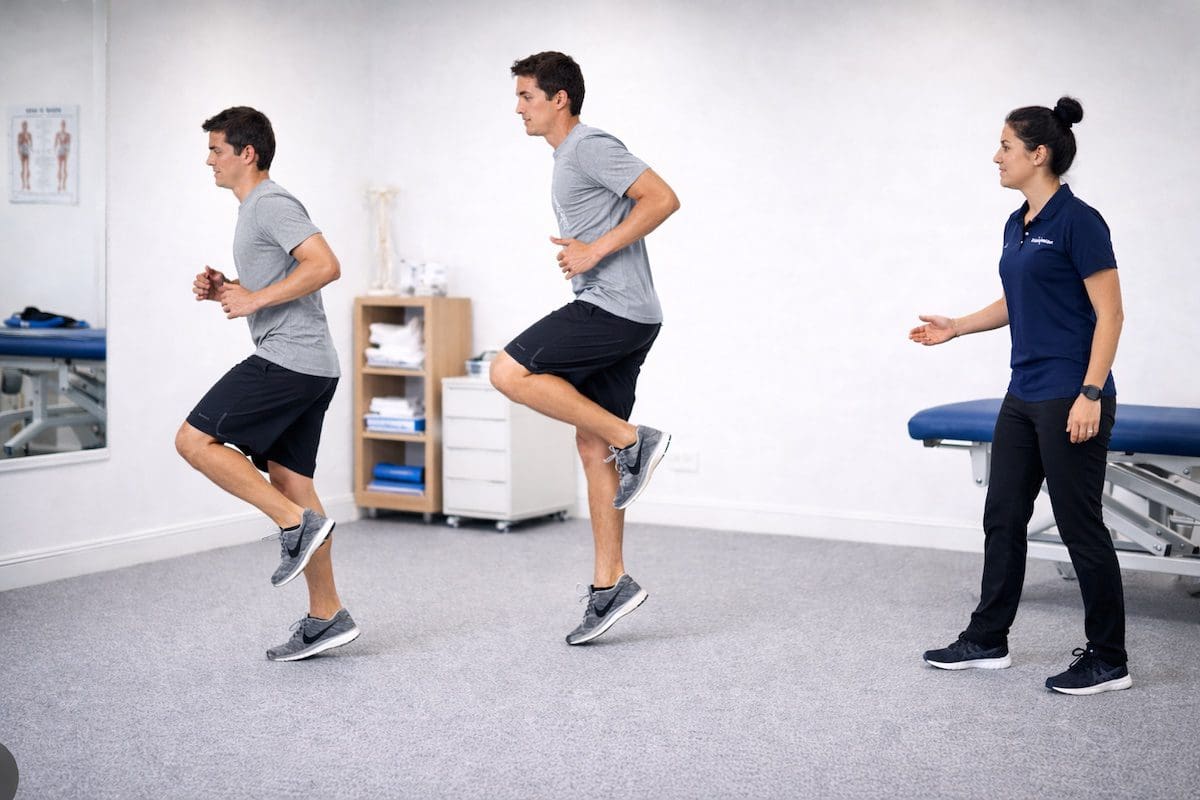
Common parts of ACL rehabilitation
- Swelling and movement: settle the joint and restore knee bend and straightening.
- Walking: regain a comfortable and controlled walking pattern.
- Strength: rebuild the quadriceps, hamstrings, calf, hips and trunk.
- Balance: improve single-leg control and awareness of joint position.
- Landing: develop controlled jumping, hopping and deceleration.
- Running: increase speed, duration and training load gradually.
- Agility: progress side-stepping, cutting and direction changes.
- Confidence: address fear, hesitation and trust in the knee.
- Testing: compare strength, hopping, movement and sport capacity.
Progressive strength training and return-to-sport testing can reduce guesswork during later rehabilitation.
What Does ACL Rehabilitation Usually Involve?
-
Settle the knee
Manage swelling, improve knee straightening and bending, activate the quadriceps and regain comfortable walking.
-
Rebuild strength and control
Progress lower-limb strength, balance and single-leg tasks while monitoring pain, swelling and movement quality.
-
Introduce running and impact
Add running, jumping and hopping when strength, knee response and movement control meet the required criteria.
-
Prepare for sport or demanding activity
Develop speed, agility, contact preparation, fatigue tolerance and sport-specific skills.
-
Complete return-to-sport testing
Review strength, hop performance, landing control, confidence, training exposure and the knee’s response to harder loads.
How Long Does ACL Recovery Take?
ACL recovery takes months rather than weeks. The timeframe depends on the injury, treatment pathway, associated damage, rehabilitation progress and activity goal.
After ACL reconstruction, return to pivoting sport commonly takes at least nine to twelve months and may take longer. Time alone does not show readiness. Strength, movement quality, sport exposure, confidence and knee response should also guide the decision.
A rehabilitation-without-reconstruction pathway also uses criteria rather than one fixed timetable. The knee should tolerate progressive running, jumping, turning and sport practice without repeated swelling or giving way.
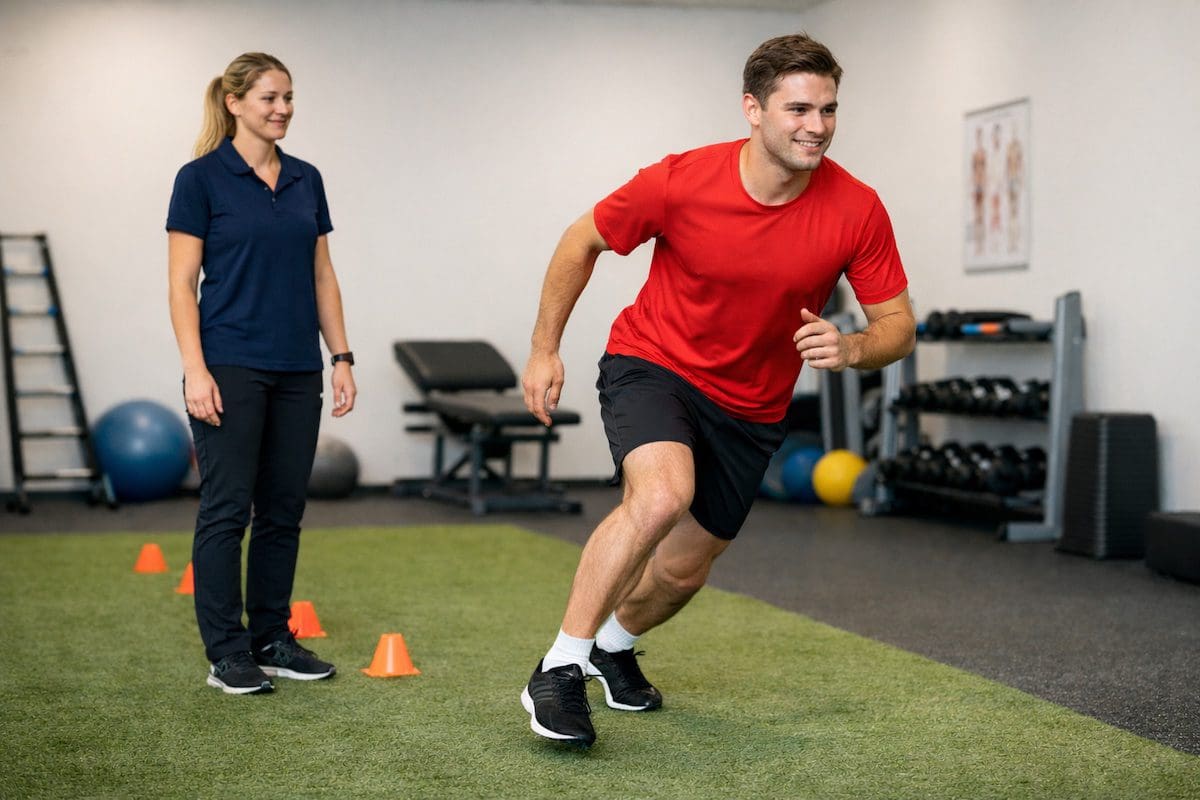
Return-to-sport decisions may consider
- No significant pain or joint swelling
- Full or near-full knee movement
- Lower-limb strength and power
- Hop and landing performance
- Running and direction-change capacity
- Confidence and psychological readiness
- Completion of progressive sport training
- Response to fatigue, contact and repeated high-speed work
See when you may return to sport for broader guidance.
Can ACL Injuries Be Prevented?
No program can prevent every ACL injury. However, regular neuromuscular training may reduce risk. Effective programs commonly combine several elements:
- Running and warm-up activities
- Lower-limb strength
- Balance and body control
- Jumping and landing technique
- Deceleration and direction-change drills
- Sport-specific practice
- Consistent participation throughout the season
The exercises should match the athlete’s age, training history, sport and current workload. Good adherence matters more than completing the program occasionally.
When Should You Arrange an ACL Assessment?
Arrange physiotherapy or medical review when:
- The knee swelled rapidly after a twist, pop or landing
- The knee repeatedly gives way or feels unstable
- You cannot regain full knee straightening
- The knee locks, catches or becomes stuck
- Walking remains difficult
- You are unsure whether to return to work, exercise or sport
- Symptoms fail to improve or become worse
Related ACL and Knee Information
ACL Injury FAQs
Can you walk with an ACL injury?
Some people can walk after an ACL injury. However, the knee may feel swollen, weak or unstable during turning. Walking ability does not rule out an ACL tear. Arrange an assessment if the knee swells rapidly, gives way or loses movement.
Does every ACL injury need surgery?
No. Some ACL injuries are managed with structured rehabilitation without reconstruction. Surgery may be considered when instability continues, pivoting-sport demands are high or other knee injuries require repair. The decision depends on your knee, goals and assessment findings.
Can an ACL heal without surgery?
Some ACL tears show continuity or signs of healing on later MRI after rehabilitation or selected bracing protocols. However, MRI appearance does not by itself prove normal ligament strength or knee function. Stability, symptoms, activity goals and long-term progress must also guide treatment decisions.
What sports commonly cause ACL injuries?
ACL injuries commonly occur during sports involving landing, pivoting, cutting or contact. Examples include football, netball, AFL, basketball, rugby, touch football, volleyball and skiing.
How long does it take to return to sport after ACL reconstruction?
Return to pivoting sport commonly takes at least nine to twelve months and may take longer. Time alone is not enough. Strength, hop performance, landing control, confidence, sport training and knee response should also guide the decision.
What is the difference between an ACL injury and a meniscus tear?
An ACL injury often causes rapid swelling and instability after a twist or landing. A meniscus tear may cause joint-line pain, catching, clicking, locking or difficulty fully straightening the knee. Both injuries can occur together.
What Should You Do Next?
If your knee swelled after a twist, pop or landing injury, arrange an assessment. A physiotherapist can assess movement and stability, guide early management and explain whether imaging, rehabilitation or medical review may be appropriate.
Early care can help restore movement, reduce swelling and establish a clear plan for work, exercise and sport.
Choose your clinic and appointment pathway
Select a PhysioWorks clinic to continue to live booking, an appointment request or reception assistance.
ACL Products
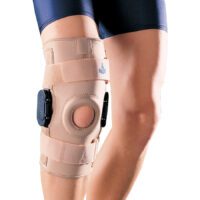
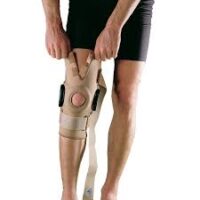
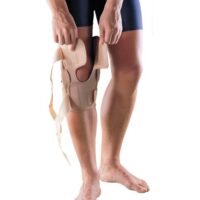
These ACL knee support products are commonly used by our physiotherapists to help reduce strain, improve stability, and support your ACL recovery at home.
-
-
-

-
-
-

-
 Exercise Balls, Back, Exercise Equipment, Knee, Shoulder
66fit Exercise Balls | Core & Rehab Stability Ball
$32.00 – $57.00Select optionsQuick View - Liniments & Gels, Massage Liniments, Pain Management
Fisiocrem
$16.95 – $39.95Select optionsQuick View -
-
-
-
-
-







References
- Filbay SR, Grindem H. Evidence-based recommendations for the management of anterior cruciate ligament rupture. Best Pract Res Clin Rheumatol. 2019;33(1):33–47.
- Kotsifaki R, Korakakis V, King E, et al. Aspetar clinical practice guideline on rehabilitation after anterior cruciate ligament reconstruction. Br J Sports Med. 2023;57(9):500–514.
- Grindem H, Snyder-Mackler L, Moksnes H, Engebretsen L, Risberg MA. Simple decision rules can reduce reinjury risk by 84% after ACL reconstruction: the Delaware-Oslo ACL cohort study. Br J Sports Med. 2016;50(13):804–808.
- Filbay SR, Dowsett M, Chaker Jomaa M, et al. Healing of acute anterior cruciate ligament rupture on MRI and outcomes following non-surgical management with the Cross Bracing Protocol. Br J Sports Med. 2023;57(23):1490–1497.
- Arundale AJH, Bizzini M, Giordano A, et al. Exercise-based knee and anterior cruciate ligament injury prevention. J Orthop Sports Phys Ther. 2023;53(1):CPG1–CPG34.
- Beischer S, Gustavsson L, Senorski EH, et al. Young athletes who return to sport before nine months after anterior cruciate ligament reconstruction have a rate of new injury seven times that of those who delay return. J Orthop Sports Phys Ther. 2020;50(2):83–90.
