Sports Massage Brisbane

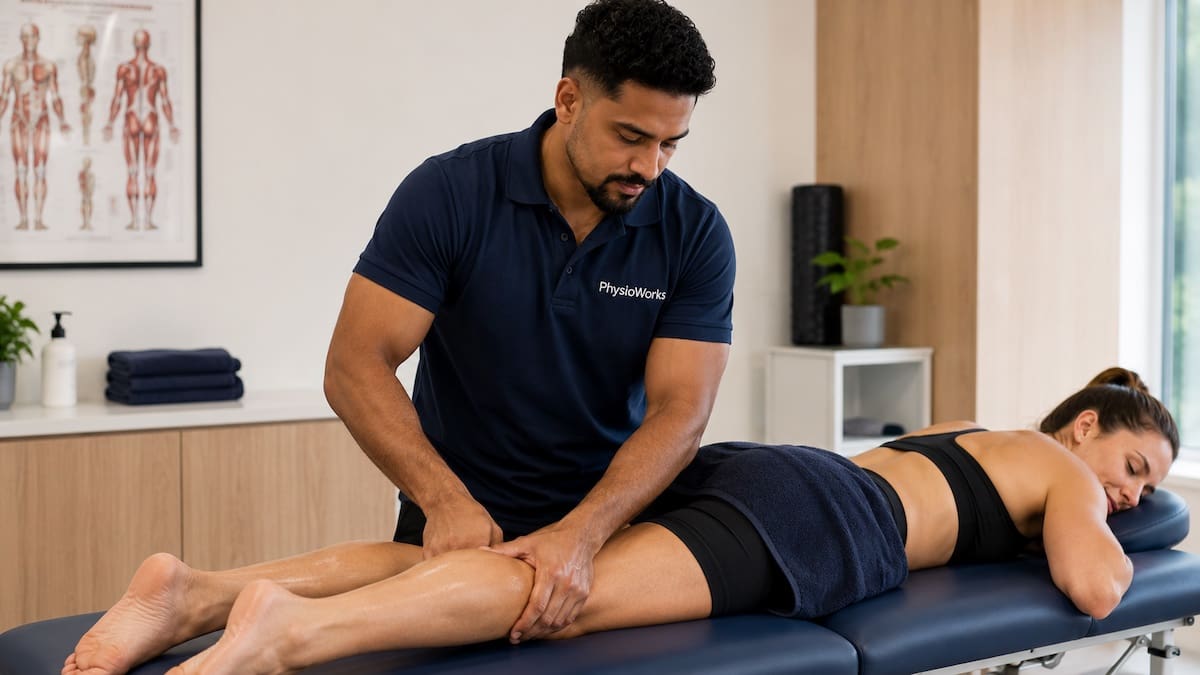
Sports massage in Brisbane targets muscles placed under repeated load during training, physical work and competition. It may suit runners, gym-goers, tradies and weekend athletes managing muscle tightness, post-training soreness or reduced movement comfort.
Massage does not reliably improve strength, speed or endurance by itself. However, research suggests it may support short-term flexibility, perceived recovery, delayed onset muscle soreness and comfort between training sessions.
Sports Massage Quick Guide
- May suit: training-related tightness, heavy legs, muscle soreness and recovery support.
- Common areas: calves, hamstrings, quadriceps, hips, glutes, back, neck and shoulders.
- Session style: purposeful hands-on treatment matched to your workload and comfort.
- Consider physiotherapy first: sharp pain, swelling, weakness, pins and needles or a new injury.
Unsure which massage style to choose? Visit our Brisbane massage services guide before booking.
Book a Massage Appointment
Massage is available at selected PhysioWorks clinics. Choose your preferred clinic to view current booking options.
Compare Related Massage Services
Sports massage overlaps with several other hands-on treatment styles. Choose the page that best matches your main goal.
Remedial Massage
Targeted care for muscle tension, restricted movement and recurring problem areas.
Deep Tissue Massage
Firmer treatment for deeper muscle tension where stronger pressure feels appropriate.
Trigger Point Therapy
Focused pressure for localised sensitive or tight muscle areas.
Recovery Massage
A recovery-focused session after heavy training, competition or increased workload.
What Is Sports Massage?
Sports massage uses hands-on techniques to work through tight, overworked or sensitive soft tissue. Your therapist may combine broader massage strokes with firmer deep-tissue techniques, local trigger-point pressure, cross-fibre work and short assisted stretches.
The session should reflect your sport, training week, symptoms and upcoming events. A pre-event appointment should feel different from a post-event recovery session or a maintenance treatment during a heavy training block.
When May Sports Massage Help?
Sports massage may help when muscle tightness, soreness or reduced flexibility affects your movement quality or training comfort.
- Heavy legs after running, gym training or field sport
- Calf, hamstring, quadriceps, hip or glute tightness
- Back, neck or shoulder tension linked to training or physical work
- Delayed onset muscle soreness after new or intense exercise
- Restricted movement affecting technique or comfort
- Early overload management alongside rehabilitation and strengthening
Pre-Event Sports Massage
A pre-event session often aims to reduce stiffness and help you feel ready to move. Timing varies. A pre-event sports massage may occur from around 30 minutes to 24 hours before an event, depending on your sport and previous response.
Pre-event treatment should usually remain lighter than a deep recovery session. Continue your normal warm-up and avoid trialling an unfamiliar treatment style immediately before an important competition.
Post-Event and Recovery Sports Massage
A post-event approach may help settle muscle tone, reduce perceived soreness and improve comfort as you return to training. Our recovery massage guide explains how a recovery-focused appointment can differ from other massage styles.
Some people prefer lighter treatment soon after an event. Others respond better once the early soreness has settled. Your therapist can adjust the timing, pressure and areas treated to match your recovery stage.
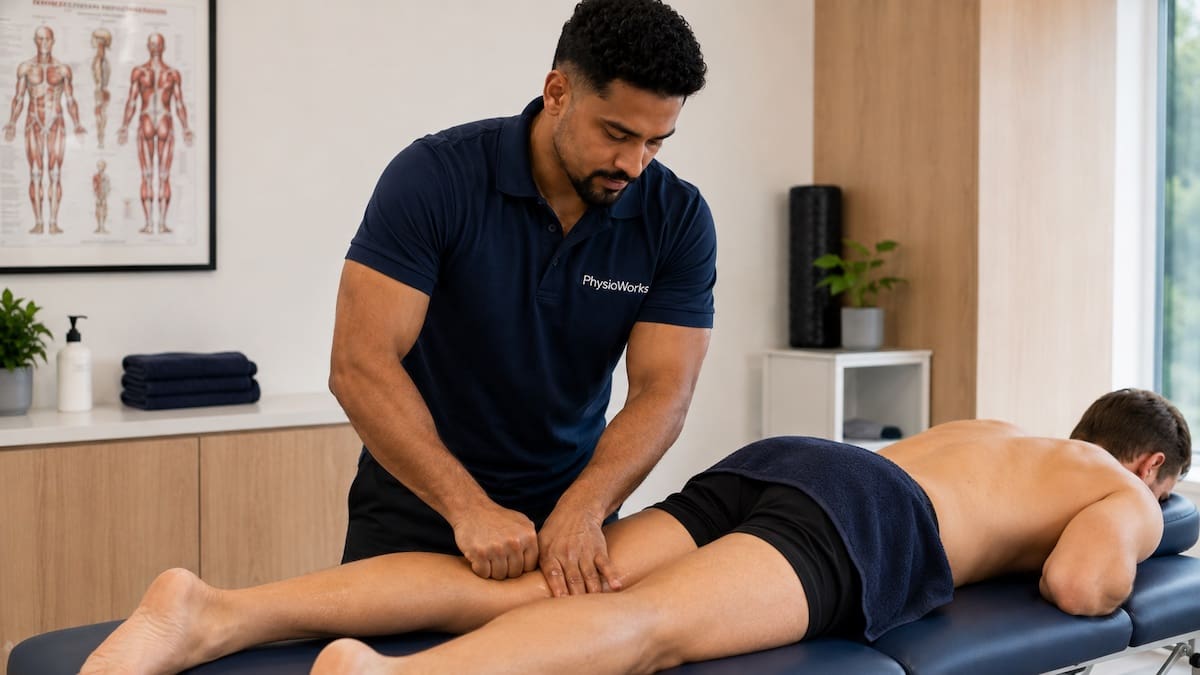
Which Sports Massage Techniques May Be Used?
Your therapist may adjust the treatment pressure, rhythm and technique according to your goals and feedback. Each technique should have a clear purpose.
- Trigger-point pressure: local pressure for sensitive or tight muscle areas.
- Cross-fibre techniques: targeted work across stubborn or restricted tissue.
- Longer massage strokes: broader treatment to settle muscle tone and improve comfort.
- Assisted stretching: short stretches where they improve movement without aggravating symptoms.
Some discomfort can occur during deeper work. However, it should remain tolerable and should not feel sharp, alarming or unsafe. Clear feedback helps your therapist adjust the pressure and pace.
How Does Sports Massage Fit Into Injury Care?
Sports massage may support recovery, but it rarely replaces a complete injury-management plan. Overload problems often improve more effectively when hands-on care sits alongside appropriate training changes and progressive exercise.
- Adjusting training volume, intensity or exercise selection
- Progressive strengthening through an exercise program
- Mobility work through flexibility training
- Sport-specific management for concerns such as running injuries
If pain is sharp, persistent or limiting your function, a physiotherapy assessment may help clarify what is contributing to your symptoms.
Sports Massage May Suit You If
- your main concern is muscle tightness or soreness
- symptoms relate to training or physical workload
- you want pre-event or post-event support
- you can move normally despite muscle discomfort
Consider Physiotherapy First If
- pain is sharp, severe or worsening
- you have new swelling or significant bruising
- you notice weakness, numbness or pins and needles
- pain keeps returning or limits normal movement
When Should You Avoid Sports Massage?
Avoid massage directly over infected skin, open wounds or new significant swelling. You may also require medical clearance if you have a suspected blood clot, uncontrolled bleeding condition, unexplained calf swelling or recent surgery.
For a practical Australian overview, read Healthdirect’s sports massage information.
What Happens During a Sports Massage Appointment?
Your appointment usually begins with a short discussion about your sport, training load, symptoms, goals and upcoming events. This helps your therapist choose suitable treatment areas and pressure.
- A brief review of training, work demands and relevant injury history
- Targeted treatment of the muscle groups linked to your symptoms
- Pressure adjusted according to your comfort and appointment goal
- Simple advice to manage soreness and reduce repeated flare-ups
Sports Massage FAQs
How often should I get sports massage?
Frequency depends on your training load, recovery and symptoms. Some people book weekly during demanding training periods. Others prefer a maintenance appointment every three to six weeks. Your therapist can help you choose an approach that suits your sport, event timing and budget.
Is sports massage meant to hurt?
Sports massage can feel intense during deeper techniques, but it should remain tolerable. It should not feel sharp, alarming or unsafe. Tell your therapist if the pressure feels too strong or causes unexpected symptoms.
Is sports massage better before or after training?
That depends on your goal. Pre-event massage usually stays lighter and shorter. Post-training treatment may focus more on reducing muscle tone and soreness. Timing should match your sport, training week and previous response to massage.
Can sports massage help delayed onset muscle soreness?
Research suggests massage may slightly reduce delayed onset muscle soreness and improve comfort after hard or unfamiliar exercise. Results vary. Massage works best alongside sensible training progression, sleep, nutrition, hydration and recovery habits.
Can sports massage prevent injuries?
Massage may help you identify tight or overloaded areas, but injury prevention usually depends more on training progression, strength, recovery and technique. Repeated problems may need a broader assessment and rehabilitation plan.
Should I book sports massage or physiotherapy?
Book sports massage when your main concern is training-related muscle tightness, soreness or recovery support. Consider physiotherapy when pain is sharp, persistent, linked to a clear injury, causing swelling or limiting sport, work or daily movement.
What to Do Next
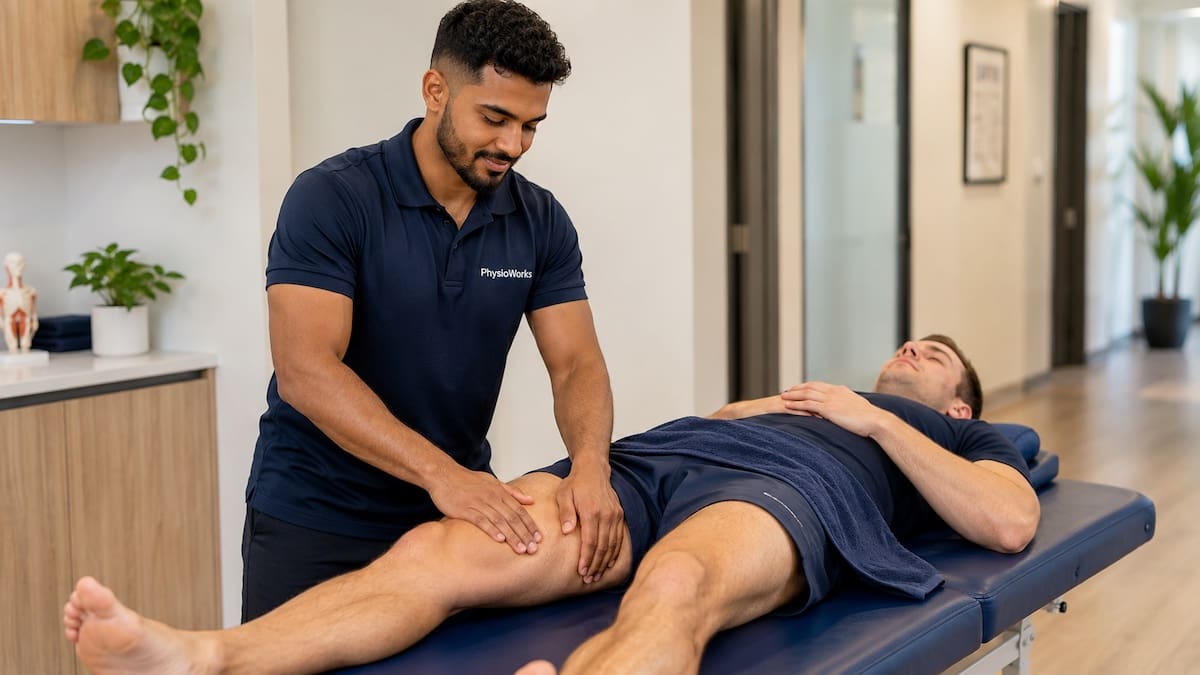
Choose a sports massage appointment that matches your goal: pre-event preparation, post-event recovery or maintenance between training blocks.
Bring details about your event date, weekly training load and the areas that feel restricted. If your symptoms feel more like an injury than general tightness, consider physiotherapy so your plan can also address strength, load management and return to sport.
Massage Satisfaction Promise
We aim to provide a consistently high standard of care. If, within the first 30 minutes of your massage, you feel the treatment is not meeting your expectations, please tell your massage therapist. You may choose to stop the session at that point, with no charge applied. This reflects our commitment to respectful, client-focused care.
References
- Dakić M, Toskić L, Ilić V, et al. The effects of massage therapy on sport and exercise performance: a systematic review. Sports (Basel). 2023;11(6):110. doi:10.3390/sports11060110
- Karadavut Ö, Acar G. Effects of sports massage on post-workout fatigue. International Journal of Turkish Sport and Exercise Psychology. 2024;4(1):15-29. doi:10.55376/ijtsep.1486062
- Trybulski R, Krzysztofik M, Wilk M, et al. Sports massage and blood flow restriction combined with cold therapy accelerate muscle recovery after fatigue in mixed martial arts athletes: a randomised controlled trial. Journal of Functional Morphology and Kinesiology. 2025;10(2):194. doi:10.3390/jfmk10020194
Brisbane Massage Therapists
Choose a Brisbane massage therapist who suits your goals, preferred treatment pressure and appointment schedule. Tell your therapist about upcoming events and the areas placed under the most training load.
Remedial Massage Therapists
Our remedial massage therapists help relieve muscle tension, improve flexibility, reduce soft tissue pain, and support recovery from training loads, desk posture, and everyday physical stress.
Debbie Cox

Ashish Shrestha
Courtney Burgin

Massage Products
These muscle and soft tissue products are commonly used by our remedial massage therapists and physiotherapists to relax or loosen muscles.
- Liniments & Gels, Massage Liniments, Pain Management
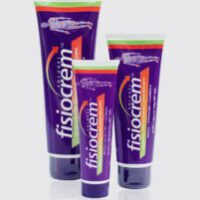
Fisiocrem
$16.95 – $39.95Select optionsQuick View - Christmas Gift Ideas, Exercise Equipment, Gift Ideas, Massage Tools, Pain Management
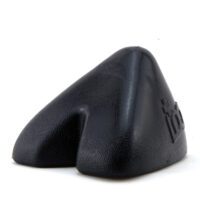
Pocket Physio MAX
$24.95Select optionsQuick View -
-
-

- Pain Management, Christmas Gift Ideas, Liniments & Gels, Product Search
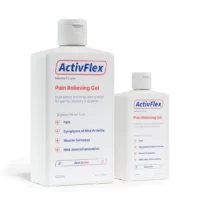
ActivFlex Pain Relief Gel
$27.95 – $42.95Select optionsQuick View -
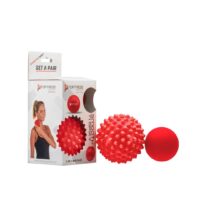 Exercise Equipment, Gift Ideas, Massage Tools
Smooth n Spiky Massage Balls (2 Pack)
$20.00Select optionsQuick View -
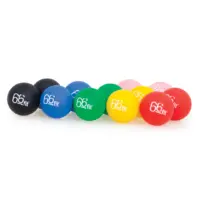
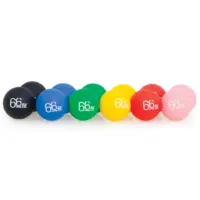
-
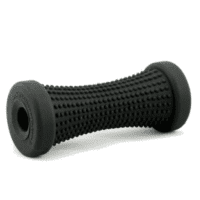
 Gift Ideas, Christmas Gift Ideas, Exercise Equipment, Foot, Knee, Massage Tools, Pain Management
Footeez Lockeroom
$45.00Add to cartQuick View -


-
 Exercise Equipment, Back, Elbow, Foot, Massage Tools, Shoulder
Pocket Physio
$14.95Select optionsQuick View