
Exercise Physiology
Exercise Physiology Brisbane
Accredited Exercise Physiology at PhysioWorks Ashgrove, Clayfield and Sandgate
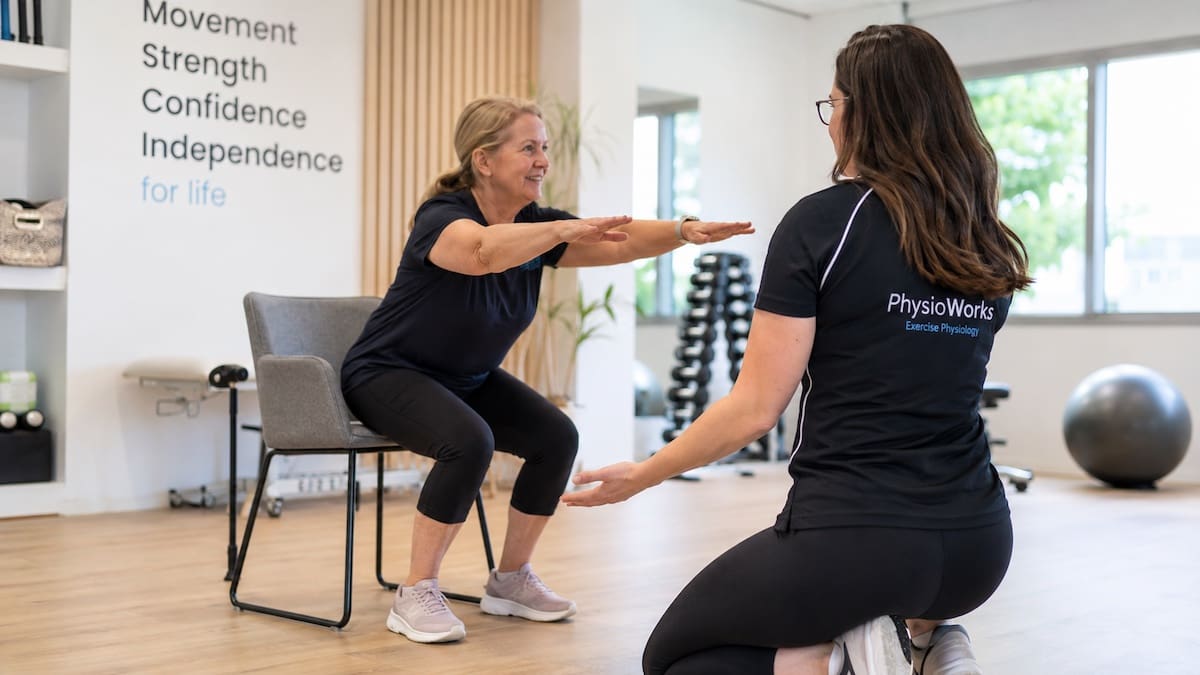
Exercise physiology supports strength, balance and daily movement confidence.
Exercise Physiology Brisbane services at PhysioWorks use tailored exercise to build strength, balance, mobility, fitness and confidence. Your plan is matched to your health, goals, current capacity and daily needs.
Start with Exercise Physiology if you need a safe exercise plan for strength, balance, chronic disease support, bone health, return to exercise, or long-term movement confidence. If pain is new, severe, worsening or unclear, physiotherapy may be the better first step.
Our Accredited Exercise Physiologist supports clients at Ashgrove, Clayfield and Sandgate. If you are unsure whether to choose physio, Exercise Physiology or massage, use our appointment choice guide.
Book Exercise Physiology
Choose the pathway that best matches what you need today.
Choose a Clinic
Exercise Physiology is available at Ashgrove, Clayfield and Sandgate.
PhysioWorks Exercise Physiology
Book Exercise Physiology
Exercise Physiology appointments are available at Ashgrove, Clayfield and Sandgate.
What Is Exercise Physiology?
Exercise Physiology is an allied health service that uses exercise to improve health, strength, function and confidence. Accredited Exercise Physiologists complete university training in anatomy, physiology, health behaviour and clinical exercise prescription.
At PhysioWorks, Exercise Physiology focuses on safe exercise plans, pacing, education and steady progress. It can suit people who are new to exercise, returning after injury, or limited by pain, fatigue, health conditions, reduced strength, balance concerns or fear of flare-ups.
Is Exercise Physiology Right for You?
Exercise Physiology may suit you if you need a safe and structured plan for pain, arthritis, surgery recovery, balance, fitness, chronic disease, bone health, neurological conditions, cancer recovery or a suitable group class pathway.
Exercise Physiology may suit you if:
- You want support after injury, surgery, illness or time away from exercise.
- You want to improve strength, balance, walking, mobility or fitness.
- You have a chronic health condition that affects daily activity.
- You feel unsure how to exercise without flaring symptoms.
- You want progress checks so you can see change over time.
Quick Guide: Physio or Exercise Physiology?
- Choose physiotherapy first for new pain, acute injury, diagnosis, hands-on treatment, unclear symptoms or early rehabilitation.
- Choose Exercise Physiology first for long-term exercise planning, strength, fitness, balance, chronic disease support or return-to-exercise confidence.
- Choose both when you need symptom care plus longer-term strength, health or capacity support.
How Can Exercise Physiology Help?
Exercise Physiology focuses on long-term improvement. Your program is built around your health history, current ability, goals and lifestyle. It can be completed at home, in a gym, during clinic sessions, or through a supervised class pathway.
Programs may support:
- Spinal pain, disc injuries and lower back pain
- Persistent pain and reduced exercise confidence
- Joint stiffness and osteoarthritis management
- Cardiovascular and metabolic health
- Neurological conditions such as Parkinson’s disease and stroke
- Neurological rehabilitation
- Exercise oncology and cancer recovery support
- Post-operative rehabilitation
- Return-to-gym conditioning and performance exercise
For national activity guidance, see the Australian Government’s physical activity and exercise information.
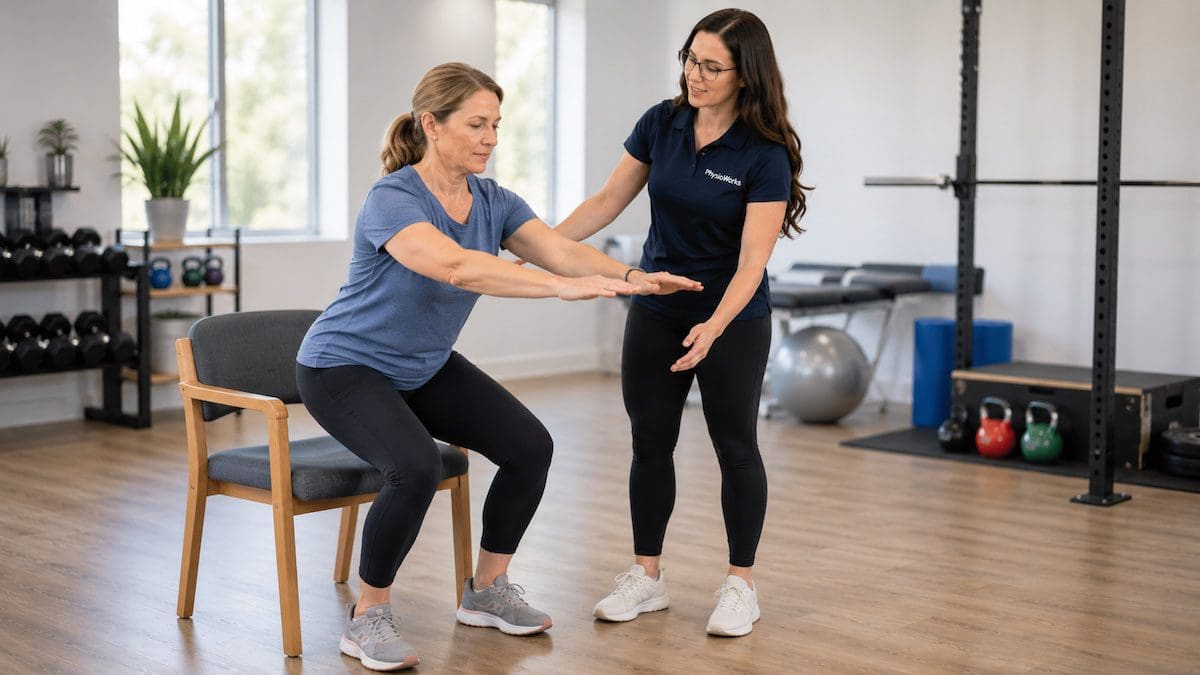
Coached movement helps improve exercise confidence and control.
Exercise Physiology at Ashgrove, Clayfield and Sandgate
PhysioWorks provides Exercise Physiology through our Ashgrove, Clayfield and Sandgate clinics. This gives Brisbane clients access to structured exercise support close to home, work, school or training.
Ashgrove
Exercise Physiology for strength, recovery, health and supervised exercise planning in Brisbane’s inner west.
Clayfield
Exercise Physiology close to Brisbane’s inner north, with pathways for strength, balance and health support.
Sandgate
Exercise Physiology near Sandgate Railway Station, with support for strength, balance, classes and hydrotherapy pathways.
Madison Stanley consults across Ashgrove, Clayfield and Sandgate. She supports people with spinal rehabilitation, persistent pain, balance concerns, older adult exercise, chronic health conditions and long-term strength goals. You can view Madison via our PhysioWorks team page.
What Happens in an Exercise Physiology Appointment?
Your first visit includes a review of your health history, symptoms, medications, scans, exercise background and goals. This helps your exercise physiologist choose safe starting points.
Simple checks may include strength tests, balance tasks, walking or step tests, mobility checks and movement screens. These checks create a baseline so progress can be tracked.
Your program may include strength work, resistance bands, cardio, walking drills, balance work, Pilates-style exercises, hydrotherapy or task-specific training. Follow-up sessions refine technique, load, pacing and your home plan.
Exercise Physiology Services at PhysioWorks
Use these related pages to choose the best pathway for your goals:
Exercise and Group Class Options
If you prefer supervised exercise in a small group, PhysioWorks offers class pathways for strength, balance, bone health, mobility and movement confidence. A one-to-one check may be recommended first so your class plan fits your health history and current ability.
- Balance & Falls Prevention Class: for people who feel unsteady, worry about falls, or want better leg strength and walking confidence.
- Physiotherapy Group Exercise Classes: small group exercise at Sandgate and Clayfield for strength, posture, balance and control.
- Bone Density Class: strength, balance and posture-focused exercise for people with osteoporosis, osteopenia, low bone density or falls risk.
- GLA:D® Australia Program: education and group exercise for suitable people with hip or knee osteoarthritis at Ashgrove.
- Hydrotherapy: warm water exercise at Sandgate for people who need a lower-load option after screening.
Not sure which option fits? Book an Exercise Physiology appointment or call your preferred clinic. We can help you choose one-to-one care, a group class, or both.
Which Group Class May Suit You?
The best class depends on your goal, health history and current ability. Your clinician may recommend one-to-one care first, especially if symptoms are changing or your confidence is low.
| Goal | Possible pathway |
|---|---|
| Improve balance and walking confidence | Balance & Falls Prevention Class |
| Build strength and control in a small group | Physiotherapy Group Exercise Classes |
| Support bone density, posture and falls risk | Bone Density Class |
| Manage hip or knee osteoarthritis | GLA:D® Australia Program |
| Exercise with less body-weight load | Hydrotherapy |
Funding and Rebates
Exercise Physiology appointments may be funded or rebated through several pathways. This depends on your eligibility, referral details and health cover.
- Private health insurance: check your extras cover for Exercise Physiology rebates.
- Medicare Chronic Disease Management plans: available for eligible patients with a GP referral.
- DVA: available for eligible clients with a valid referral.
- WorkCover or CTP: available when approved under your claim.
- NDIS: for participants whose plans include relevant exercise or capacity-building supports.
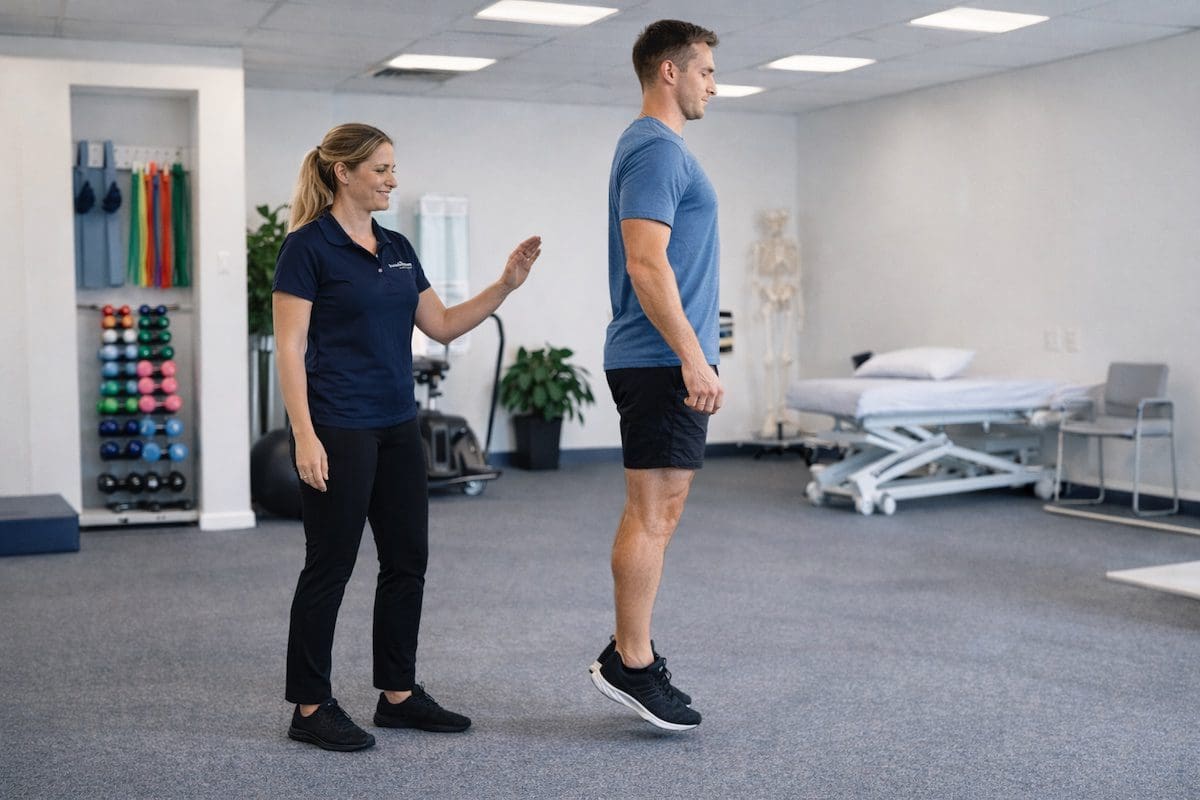
Strength progressions can be adjusted to match your current capacity.
Exercise Physiology Brisbane FAQs
Do I need a referral for Exercise Physiology?
You can book privately without a referral. A GP referral is only needed if you plan to use Medicare Chronic Disease Management items, DVA, WorkCover, CTP, NDIS or another funded pathway.
Do I need to be fit before starting Exercise Physiology?
No. Most people start where they are. Your exercise physiologist adjusts the plan to your current ability, then builds strength and confidence step by step.
What conditions may Exercise Physiology help?
Exercise Physiology may help people with spinal pain, arthritis, persistent pain, heart and metabolic conditions, neurological conditions, cancer recovery, surgery recovery and falls risk.
How many Exercise Physiology sessions will I need?
The number of sessions varies. Many people start with three to six sessions over several weeks so there is time to learn the program, adjust exercise, track progress and build confidence.
Is Exercise Physiology safe for older adults?
Yes. Programs are matched to your health, strength, balance, mobility and confidence. Sessions can be gentle, supervised and focused on daily independence.
Can Exercise Physiology include group classes?
Yes. Some people start with one-to-one Exercise Physiology, then move into a suitable group class for strength, balance, bone density, hydrotherapy or longer-term exercise confidence.
Should I see a physiotherapist or exercise physiologist first?
Start with physiotherapy if your pain is new, severe, worsening or unclear. Start with Exercise Physiology if you need a longer-term exercise plan for strength, health, balance or confidence.
Can Exercise Physiology help with persistent pain?
Exercise Physiology may help persistent pain through gradual, paced movement. The aim is to build tolerance, reduce fear of movement and improve function over time.
What Should You Do Next?
If you want a clear exercise plan that matches your current ability, book an Exercise Physiology appointment at PhysioWorks. Bring any reports, scans, referrals or medication details so your program can be tailored from day one.
If pain is new, worsening or unclear, start with a physiotherapy assessment first. Then, when the time is right, Exercise Physiology can help build longer-term strength, fitness and confidence.
PhysioWorks Exercise Physiology
Book Exercise Physiology
Choose Ashgrove, Clayfield or Sandgate to book an Exercise Physiology appointment online.
Classes and Specialised Exercise Services
Call reception for Bone Density classes, Hydrotherapy, Functional Capacity Evaluations, group exercise or help choosing the right Exercise Physiology appointment.


Useful Exercise Physiology Resources
- Healthdirect Australia – Exercise physiologists
- Australian Government – Physical activity and exercise
- Australian Government Department of Health – Medicare Benefits Schedule item 10953
References
- Fairag M, Alzahrani SA, Alshehri N, et al. Exercise as a therapeutic intervention for chronic disease management: a comprehensive review. Cureus. 2024;16(11):e74165. doi:10.7759/cureus.74165.
- Zouhal H, Granacher U, Hackney AC, Li S, Laher I. Exercise physiology and its role in chronic disease prevention and treatment-mechanisms and insights. Front Physiol. 2022;13:1038119. doi:10.3389/fphys.2022.1038119.
- Zouganeli V, Koutsianas C, Fanouriakis A, Sfikakis PP. The effects of exercise training on functional aerobic capacity and quality of life in patients with systemic lupus erythematosus: a systematic review of randomized controlled trials. J Clin Med. 2025;14(19):7031. doi:10.3390/jcm14197031.
