
Sports Physiotherapy
Sports Physiotherapy Brisbane


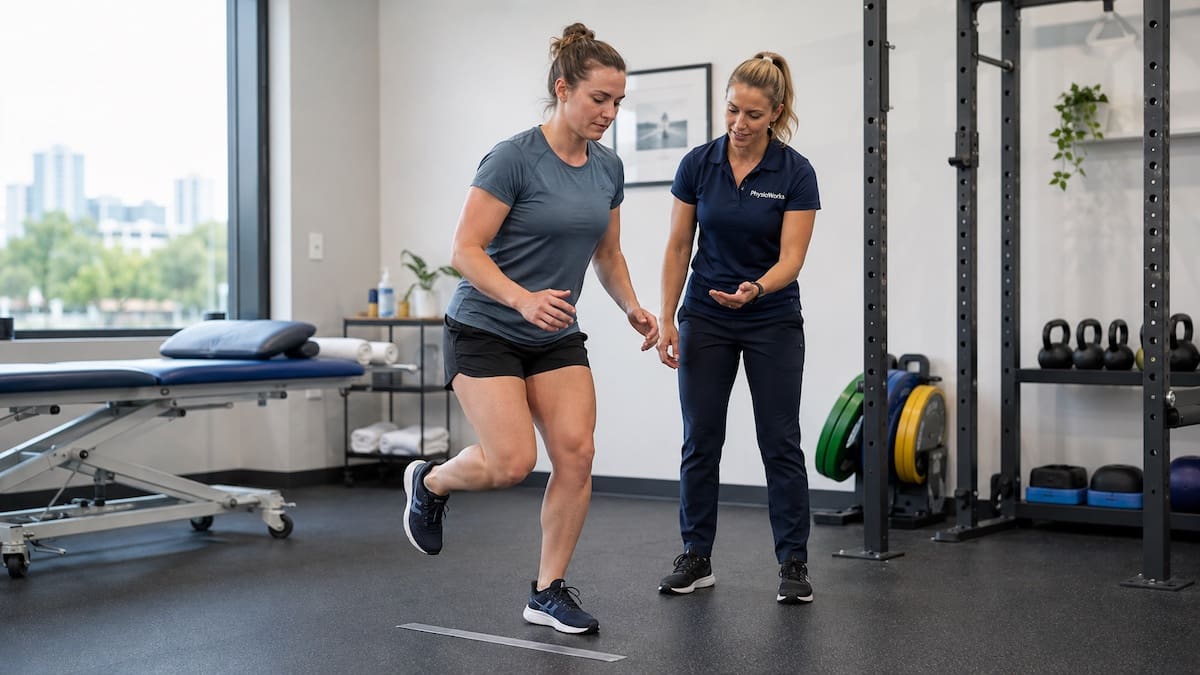
A controlled hop assessment can help guide return-to-sport rehabilitation.
Sports physiotherapy in Brisbane helps active people assess sports injuries, rebuild physical capacity and plan a staged return to training and competition. It can suit runners, gym users, weekend players, school athletes, masters athletes and people managing recurring sport-related pain.
Your physiotherapist considers your symptoms, sporting demands, recent training, strength and movement control. Rehabilitation can then progress from managing the early injury towards the strength, speed and sport-specific capacity you need.
When Could Sports Physiotherapy Help?
A sports physiotherapy assessment may be useful when an injury, recurring niggle or loss of confidence is affecting your normal training or sport.
New injury
Pain, swelling, stiffness, weakness or reduced movement after sport or training.
Recurring problem
The same symptoms return as your training volume, speed or intensity increases.
Return to sport
You need a structured progression back to running, jumping, contact, competition or another demanding activity.
What Is Sports Physiotherapy?
Sports physiotherapy focuses on injuries and movement problems related to sport, exercise, training load and performance demands. It combines clinical assessment with rehabilitation that reflects the movements and physical qualities required for your activity.
Your rehabilitation should match your injury stage, sport, position and current capacity. Early treatment may focus on symptoms and safe movement. Later rehabilitation may build strength, balance, power, speed, confidence and tolerance to repeated sporting loads.
What Happens at Your First Sports Physio Appointment?
Your appointment usually begins with a discussion about the injury, your sport, recent training, previous injuries, medical history and the activities you want to resume.
Your physiotherapist then examines the injured area and the movements relevant to your sport. Depending on your presentation, assessment may include:
- joint movement and muscle strength testing
- walking, squatting, stepping or single-leg control
- running, hopping, landing or change-of-direction tasks
- lifting, pushing, pulling or throwing movements
- balance, power or endurance testing
Preparing for Your Appointment
Wear comfortable clothing that allows the injured area to move. Bring relevant scans, specialist letters, operation reports or sporting footwear where useful. Knowing your recent training volume and the main activity you want to return to can also help.
You should leave with a practical plan explaining what you can keep doing, what you may need to modify temporarily and how rehabilitation can begin.
Common Sports Injuries We Assess
Sports physiotherapy can assist with injuries from running, field sports, court sports, swimming, cycling, gym training and school sport. Rehabilitation depends on the injured structure, your symptoms and the demands of your activity.
Muscle and Tendon Injuries
Hamstring, calf, thigh and groin strains, plus tendon problems such as patellar tendinopathy.
Knee and Lower-Limb Injuries
These may include ACL injuries, ankle sprains, joint pain and problems affecting running, landing or direction changes.
Shoulder and Upper-Limb Injuries
Throwing, racquet, gym and contact sports can place repeated demands on the shoulder, elbow, wrist and upper limb.
How Does Sports Rehabilitation Progress?
Pain settling can be useful, but it does not always mean you are ready for full sport. Rehabilitation usually needs to rebuild the physical capacity required for training and competition.
Your program may include progressive strength work, running, jumping, landing, change of direction, throwing, balance, power or endurance training depending on your injury and sport.
-
Settle the Early Injury
Manage symptoms, restore useful movement and identify activities you can continue safely.
-
Rebuild Strength and Control
Progress strength, balance, single-leg control and tolerance to increasing load.
-
Restore Sport-Specific Capacity
Add running, jumping, landing, cutting, throwing or other movements that match your activity.
-
Return to Training and Competition
Progress speed, fatigue, repeated efforts, contact and confidence where these demands are relevant.
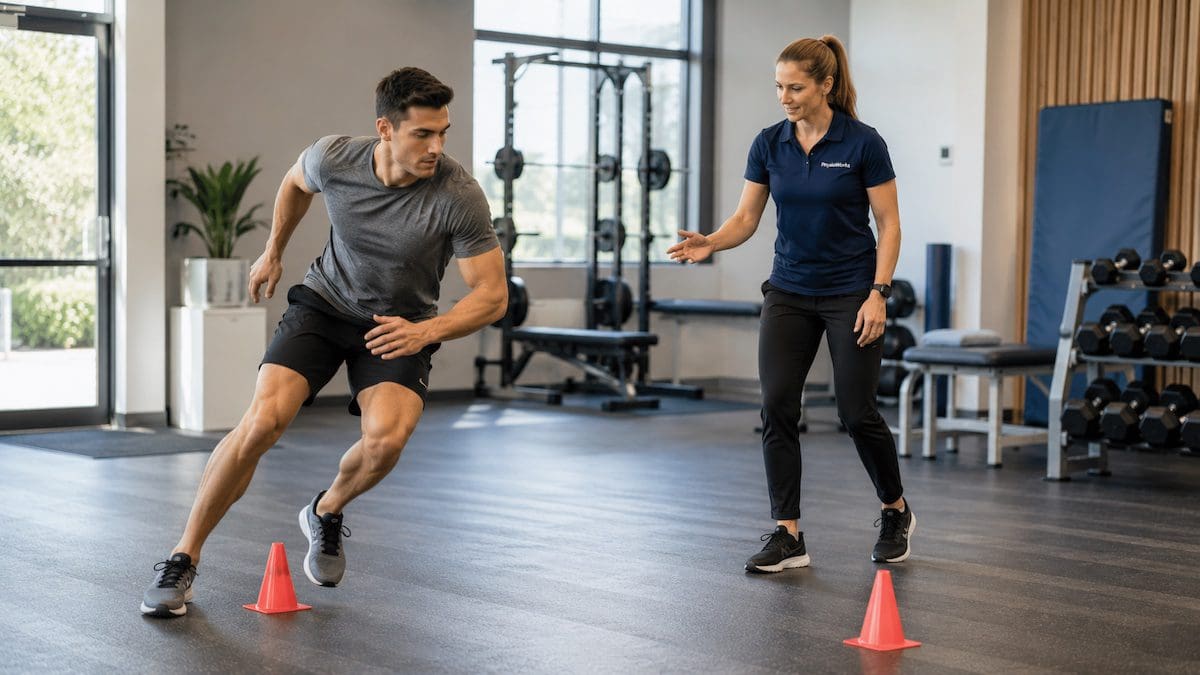
Sport-specific testing can help assess readiness for training and competition.
How Do We Assess Return-to-Sport Readiness?
There is rarely one test that decides whether you are ready. Your physiotherapist may consider symptoms, tissue healing, movement range, strength, balance, landing control, running tolerance, confidence and how you respond after training.
Higher-demand sport may require testing at greater speed or under fatigue. Depending on your activity, this can include repeated efforts, change of direction, jumping, throwing or contact drills.
How Long Does Return to Sport Take?
Recovery time varies with the injury, sport, training level and your response to rehabilitation.
Some injuries settle relatively quickly. Others take longer because tendons, ligaments, bones or surgical repairs require staged healing and loading. Your physiotherapist can explain the expected pathway and adjust the plan as your capacity changes.
When Should You See a Sports Physio?
Consider an assessment when pain, swelling, stiffness, weakness or a repeated niggle affects your normal training. It may also help when you are unsure whether to rest, modify training, keep moving or prepare for an upcoming event.
Arrange an assessment if you notice:
- pain after sport that is not settling as expected
- swelling, bruising, limping or loss of power
- repeated symptoms in the same area
- reduced confidence with sprinting, landing, jumping or contact
- difficulty returning to your usual training volume or intensity
- symptoms affecting work, sleep or everyday activity
Selected PhysioWorks clinics also provide an Acute Sports Injury Clinic.
Why Do Sports Injuries Keep Coming Back?
Sports injuries may recur when symptoms settle before strength, movement control, tissue capacity or tolerance to sporting load has recovered. Sudden increases in training, fatigue, recovery and returning too quickly may also contribute.
Good rehabilitation therefore looks beyond short-term symptom relief. It progressively tests whether your body can tolerate the load, speed, fatigue and repeated efforts required for your activity.
Can Sports Physiotherapy Help With Injury Prevention?
No program can prevent every sports injury. However, sports physiotherapy may help identify modifiable factors that influence your ability to tolerate training and competition.
- Warm-up and neuromuscular programs can develop balance, strength and movement control.
- Strength and plyometric exercises can prepare muscles, tendons and joints for sporting loads.
- Training-load planning can help avoid sudden increases in volume or intensity.
- Pre-season assessment may identify strength, movement or workload factors worth addressing before competition.
For further guidance, see Injury Prevention Programs and Injury Prevention Essentials.
Which Path Best Matches Your Situation?
New Sports Injury
Start with assessment, symptom management, safe movement and a plan for early rehabilitation.
Recurring Training Problem
Review strength, training load, recovery, movement control and relevant technique factors.
Post-Surgery Return to Sport
Follow your surgeon’s restrictions while progressing staged post-operative physiotherapy and sport-specific rehabilitation.
If you are preparing for a season or major event rather than managing an injury, prehabilitation and workload planning may also be useful.
Popular Sports Injury Guides
Choose the sport that most closely matches your training or competition demands:
Sports Physiotherapy FAQs
What is sports physiotherapy?
Sports physiotherapy focuses on pain and injury linked to sport, exercise and training. It combines assessment, rehabilitation, strength work, movement retraining and return-to-sport planning.
Do I need to be an elite athlete to see a sports physio?
No. Sports physiotherapy can suit runners, gym users, weekend players, school athletes, masters athletes and people returning to exercise after time away. Your rehabilitation should match your activity level and goals.
How is sports physiotherapy different from general physiotherapy?
Sports physiotherapy places additional emphasis on sporting demands, training load and return-to-sport progression. Rehabilitation may include running, jumping, landing, cutting, lifting, throwing or repeated high-speed efforts where relevant.
When should I book sports physiotherapy?
Consider booking if pain, swelling, stiffness, weakness or repeated niggles affect normal training. Assessment may help you decide whether to rest, modify training, keep moving or seek further investigation.
Can sports physiotherapy prevent injuries?
No program can prevent every sports injury. However, sports physiotherapy may help address modifiable strength, movement, workload and recovery factors that affect your ability to tolerate sport.
What treatments might a sports physiotherapist use?
Management may include education, activity changes, progressive exercise, movement retraining, taping, bracing and hands-on care where appropriate. Your plan should match your injury, sport, goals and stage of recovery.
What should I bring to my appointment?
Bring relevant scans, referral letters, operation reports and specialist instructions. Wear comfortable clothing and bring your sporting footwear if running, landing or movement testing may be useful.
What to Do Next
If a sports injury, recurring niggle or upcoming event is affecting your training, a sports physiotherapy assessment can help clarify the next step.
Your physiotherapist can assess your current capacity and develop a staged plan for exercise, training and return to sport. Choose your preferred PhysioWorks clinic below to access the appropriate appointment pathway.
Choose your clinic and appointment pathway
Select a PhysioWorks clinic to continue to live booking, an appointment request or reception assistance.
