
Cervicogenic Headache
Cervicogenic Headache: Symptoms, Causes & Physio Treatment
A cervicogenic headache is a headache associated with a problem in the neck. Pain commonly starts around the upper neck or base of the skull and can spread towards the temple, forehead or behind an eye. Neck movement or sustained positions may aggravate it.


What Is a Cervicogenic Headache?
A cervicogenic headache is a secondary headache. This means another problem contributes to the headache. In this case, the source is associated with structures in the cervical spine, or neck.
Pain signals from the upper neck and signals from parts of the head meet within related pathways in the nervous system. As a result, irritation arising from the neck can sometimes be experienced as pain in the head or face. This is called referred pain.
Importantly, having a sore neck during a headache does not automatically mean you have a cervicogenic headache. Migraine and tension headache can also include neck pain or stiffness.
Pain pattern
Pain often starts near the neck or back of the head and may travel towards the temple, forehead or area behind the eye.
Neck movement
Turning, looking up or maintaining some neck positions may reproduce or increase the familiar headache.
Assessment
The overall symptom pattern and neck examination are considered together rather than relying on one test or symptom.
What Does a Cervicogenic Headache Feel Like?
Symptoms vary between people. However, a cervicogenic headache may include:
- pain beginning around the upper neck or base of the skull;
- head pain that is more prominent on one side;
- pain spreading towards the temple, forehead or behind an eye;
- reduced or uncomfortable neck movement;
- headache aggravated by particular neck movements or positions;
- neck, shoulder or upper-back discomfort alongside the headache; and
- headache associated with prolonged desk work, driving or other sustained neck positions.
These features provide useful clues, but they are not unique to cervicogenic headache. A clinician should consider the entire headache pattern before deciding whether the neck is an important contributor.
How Is Cervicogenic Headache Different From Migraine or Tension Headache?
Headache types can overlap. In particular, migraine frequently includes neck discomfort, so neck pain alone cannot separate migraine from cervicogenic headache.
Cervicogenic headache
Pain often spreads from the upper neck or back of the head forwards. Reduced neck movement and a consistent relationship between neck movement or loading and the familiar headache can provide useful clues.
Migraine
Migraine is a neurological headache disorder. Headache may occur with nausea, light or sound sensitivity, visual symptoms or other migraine features. Neck pain can also occur during migraine attacks.
Tension headache
Tension-type headache commonly feels pressing or tightening and is often felt on both sides. Neck and shoulder tension may occur, but this does not necessarily mean the headache starts in the neck.
These patterns can help guide assessment, but symptoms alone do not always identify the headache type. If you are unsure which pattern fits, start with the broader headache and migraine relief guide or arrange an appropriate health assessment.
What Can Cause a Cervicogenic Headache?
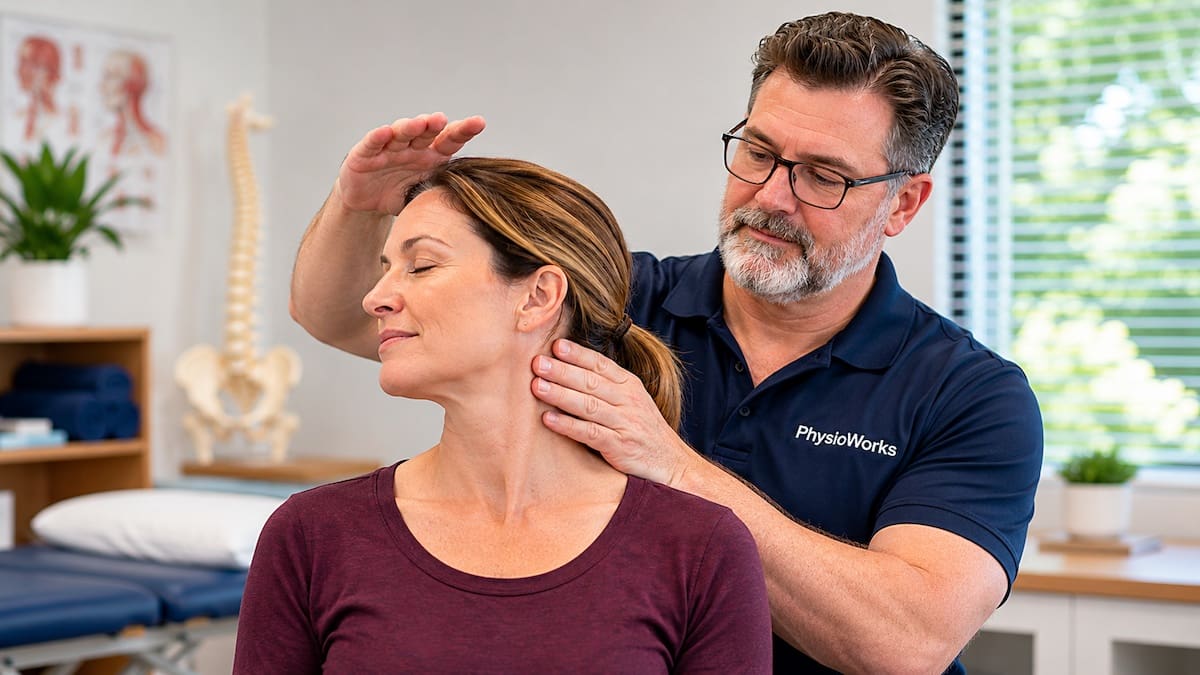
Cervicogenic headache may be associated with a disorder or injury affecting the cervical spine or surrounding tissues. The exact source varies between people.
Possible cervical contributors can include joint, disc, ligament or other neck disorders. A previous neck injury, including whiplash, may also be relevant in some presentations.
However, common age-related scan findings do not automatically explain headache. Imaging changes need to make sense when considered alongside your symptoms, history and physical examination.
How Is Cervicogenic Headache Assessed?
An assessment starts with your headache history. Your physiotherapist or doctor may ask where the pain begins, where it travels, how long it lasts and what activities or movements affect it.
They may also ask about nausea, visual symptoms, dizziness, light or sound sensitivity, recent illness, trauma and changes in your usual headache pattern. These details help identify presentations that may need medical assessment rather than, or in addition to, physiotherapy.
A physiotherapy examination may then assess:
- active neck movement;
- whether particular movements reproduce your familiar symptoms;
- upper-neck and general cervical mobility;
- neck and shoulder muscle function;
- movement control and strength;
- work, driving, sleep or activity positions that affect symptoms; and
- other relevant neurological or musculoskeletal findings.
No single movement test confirms every cervicogenic headache. Instead, your clinician considers whether the history and examination provide a consistent picture of cervical involvement.
Can Physiotherapy Help a Cervicogenic Headache?
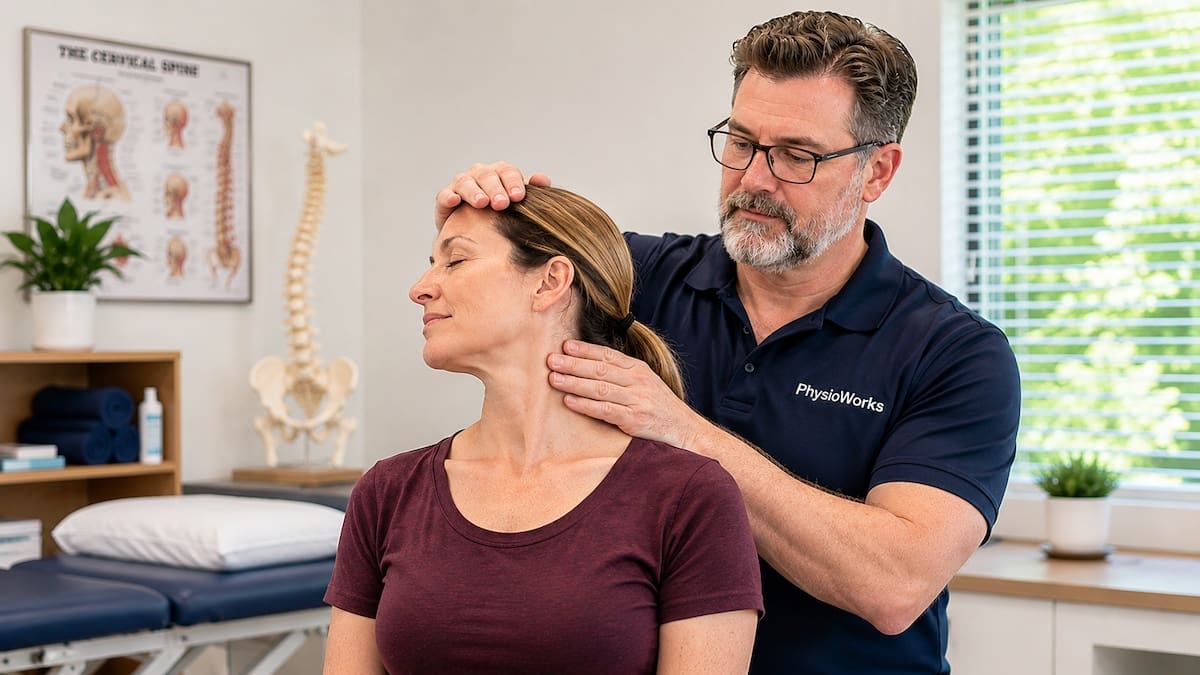
Physiotherapy may help some people with cervicogenic headache when assessment identifies relevant neck movement, joint, muscle or movement-control impairments.
Current research suggests that manual therapy and exercise can reduce headache intensity, frequency or disability for some people with cervicogenic headache. However, treatment response varies and no single technique suits everyone.
A physiotherapist should therefore match treatment to your presentation rather than applying the same neck treatment to every headache.
What Might Cervicogenic Headache Treatment Include?
Your management plan depends on the findings from your assessment. It may include a combination of:
-
Restore comfortable neck movement
Gentle mobility work may be used when restricted cervical movement contributes to your symptoms.
-
Build neck and shoulder control
Exercises may target the muscles that support the neck, shoulder blades and upper trunk.
-
Use manual therapy when appropriate
Joint mobilisation or other hands-on techniques may form part of care when assessment suggests they are suitable.
-
Adjust aggravating loads
Workstation setup, driving, reading, phone use, training loads or repeated sustained positions may need temporary modification.
-
Progress towards normal activity
Your plan should gradually build movement confidence and capacity rather than creating long-term dependence on treatment.
Do You Need to Correct Your Posture?
There is no single perfect posture that prevents headache. Staying in one position for long periods may aggravate some neck-related symptoms, but posture is usually only one part of the picture.
Instead of trying to hold yourself rigidly upright all day, it can be more practical to change position regularly, adjust your workstation when needed and build enough neck and upper-body capacity for the activities you perform.
For broader information about neck symptoms and movement, see the neck pain guide.
What Can You Do Between Appointments?
If your symptoms have been assessed and no concerning cause has been identified, simple strategies may help you manage your neck while treatment progresses.
- Change position regularly during desk work or prolonged sitting.
- Keep gently active rather than avoiding all neck movement.
- Break long driving, computer or phone sessions where practical.
- Use prescribed exercises at the agreed dose rather than repeatedly testing painful movements.
- Notice whether sleep, stress, activity load or prolonged positions influence your headache pattern.
- Keep a headache record if attacks are recurrent or difficult to classify.
A headache diary can also help identify patterns that suggest migraine or another headache disorder rather than a predominantly cervical presentation.
How Long Does a Cervicogenic Headache Take to Improve?
There is no reliable single recovery timeframe. Progress depends on the cause, how long symptoms have been present, other headache conditions, previous injuries, activity demands and how you respond to treatment.
Some people improve relatively quickly when a temporary neck problem settles. Others need a longer period of exercise and activity progression. Persistent or changing headaches should be reassessed rather than treated indefinitely as a simple mechanical neck problem.
Can Dizziness Occur With Neck-Related Headache?
Some people report headache, neck pain and dizziness together. However, dizziness has many possible causes and should not automatically be attributed to the neck.
If dizziness is an important part of your symptoms, read about cervicogenic dizziness and the broader vestibular differential. New severe dizziness with neurological symptoms needs urgent medical assessment.
What Should You Do Next?
If your headaches repeatedly occur with neck pain, restricted movement or neck-related triggers, a physiotherapy assessment can help determine whether the cervical spine is likely to be contributing.
Your physiotherapist can then explain the findings and develop a treatment and exercise plan that fits your work, sleep, sport and daily activities. If the headache pattern does not appear appropriate for physiotherapy alone, they can recommend medical review.
You can also read how to manage a neck headache or browse the broader headache physiotherapy information.
Choose your clinic and appointment pathway
Select a PhysioWorks clinic to continue to live booking, an appointment request or reception assistance.
Research & References
- Headache Classification Committee of the International Headache Society.
11.2.1 Cervicogenic headache.
International Classification of Headache Disorders, 3rd edition. - Bini P, Hohenschurz-Schmidt D, Masullo V, Pitt D, Draper-Rodi J.
The effectiveness of manual and exercise therapy on headache intensity and frequency among patients with cervicogenic headache: a systematic review and meta-analysis.
Chiropr Man Therap. 2022;30(1):49. - Demont A, Lafrance S, Gaska C, Kechichian A, Bourmaud A, Desmeules F.
Efficacy of physiotherapy interventions for the management of adults with cervicogenic headache: a systematic review and meta-analyses.
PM R. 2023;15(5):613-628. - Becher B, et al.
Effectiveness of therapeutic exercise for the management of cervicogenic headache: a systematic review.
Musculoskelet Sci Pract. 2023;67:102822. - American Migraine Foundation.
What Is Cervicogenic Headache?.
Reviewed headache education resource.
Frequently Asked Questions About Cervicogenic Headache
What is a cervicogenic headache?
A cervicogenic headache is a secondary headache associated with a disorder or problem in the neck. Pain is referred from cervical structures and felt in the head. Assessment is important because migraine and tension-type headache can also involve neck pain.
How can you tell if a headache may be coming from your neck?
Clues can include reduced neck movement, headache aggravated by particular neck movements or positions, and pain travelling from the neck or back of the head forwards. These features suggest cervical involvement but do not prove the diagnosis on their own.
Can a cervicogenic headache cause pain behind the eye?
Yes. Referred pain from the upper neck can sometimes spread towards the forehead, temple or area behind an eye. However, migraine and other headache disorders can produce similar pain, so the overall symptom pattern matters.
What is the difference between cervicogenic headache and migraine?
Cervicogenic headache is a secondary headache associated with a cervical disorder, while migraine is a neurological headache disorder. Migraine commonly includes features such as nausea or sensitivity to light and sound, although symptoms can overlap and migraine can also involve neck pain.
Can physiotherapy help cervicogenic headache?
Physiotherapy may help when assessment identifies relevant neck movement, joint, strength or movement-control impairments. Treatment may include exercise, activity advice and manual therapy where appropriate. Response varies between people.
What exercises help cervicogenic headache?
The most suitable exercises depend on your assessment. A program may include gentle neck mobility, neck muscle control, shoulder-blade exercises and progressive strengthening. Exercises should be adjusted if they repeatedly increase your headache.
When should you seek medical care for a headache?
Seek urgent medical assessment for a sudden severe or unusual headache, particularly when it occurs with new weakness or numbness, speech difficulty, confusion, fainting, seizure, major visual changes, severe illness, fever with marked neck stiffness or significant recent trauma.