Severe Headache Symptoms: When Should You Seek Urgent Help?
Severe Headache Symptoms: When Should You Seek Urgent Help?John Miller2026-08-11T19:50:26+10:00
Severe Headache Symptoms: When Should You Seek Urgent Help?
Severe headache symptoms need urgent attention when the headache is sudden, unusually severe, clearly different from your normal pattern, or linked with concerning neurological or systemic symptoms.
Severe headache symptoms checklist showing red, orange and green flags.
Most headaches are not caused by a dangerous medical problem. However, recognising warning signs matters because some headache patterns need medical assessment before physiotherapy or self-management is appropriate.
If your headache is recurring, familiar and medically safe to manage conservatively, factors such as migraine, neck stiffness, jaw tension, sleep disruption and sustained postures may contribute. For a broader overview, see our Headache Physiotherapy guide.
Which severe headache symptoms are warning signs?
Headache warning signs are often described as red flags. They do not diagnose a serious condition by themselves. Instead, they indicate that medical assessment may be needed to exclude a secondary cause of headache.
Red flags: seek urgent medical assessment
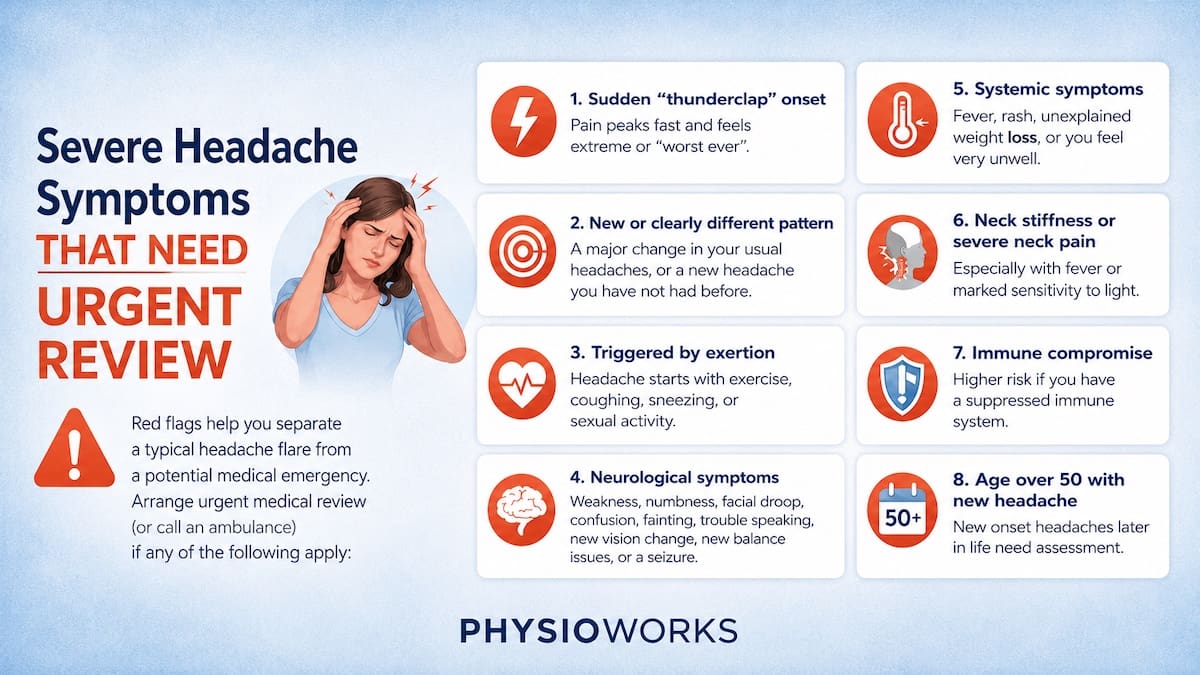
Sudden or thunderclap onset: the headache reaches severe intensity very quickly or feels like the worst headache you have experienced.
New neurological symptoms: weakness, numbness, facial droop, confusion, trouble speaking, fainting, seizure, major vision changes or new significant balance problems.
Fever or significant illness: particularly when combined with marked neck stiffness, rash, light sensitivity or feeling very unwell.
New or substantially different headache: your headache pattern changes markedly or you develop a type of headache you have not experienced before.
Headache after injury: particularly when symptoms worsen after a head or neck injury or occur with drowsiness, confusion, vomiting or neurological symptoms.
Headache triggered by exertion: particularly a new headache that begins suddenly with exercise, coughing, sneezing, straining or sexual activity.
Progressive deterioration: headaches become increasingly frequent, intense or difficult to manage.
Relevant medical risk: a new headache during pregnancy or after childbirth, with immune suppression, cancer history or other significant medical change.
New headache later in life: a new or substantially changed headache after age 50 warrants medical assessment.
If dizziness or balance symptoms remain after urgent medical concerns have been assessed, our vertigo and dizziness information may also be useful. For persistent non-urgent neck symptoms, see our neck pain guide.
What do red, orange and green headache flags mean?
The colour system is a simple way to organise the next step. It is not a diagnosis and the categories can overlap.
Red flags
Symptoms that may indicate a serious secondary headache and require urgent or emergency medical assessment.
Orange flags
Changes that are not necessarily an emergency but deserve a prompt medical review rather than simply continuing self-management.
Green flags
Features that can be more consistent with an established primary or recurring headache pattern, provided significant red flags are absent.
Orange flags: arrange a medical review soon
Progressively worsening headaches: frequency or intensity is steadily increasing over days or weeks.
New persistent daily headache: a new headache becomes continuous or occurs every day.
New headaches waking you regularly: particularly when this represents a change from your previous pattern.
Repeated exertion-related headaches: headaches repeatedly occur with coughing, straining, lifting or exercise even without thunderclap onset.
Unexpected response: your usual headache management is no longer helping as expected.
Important medical change: a new headache occurs with pregnancy, the post-partum period, cancer history, immune suppression or increased clotting risk.
Green flags: features of a more stable recurring pattern
Some features can be more reassuring when significant red flags are absent. They include:
A familiar pattern: you have experienced similar headaches before without a major change in their character.
Recognisable triggers: episodes may follow stress, disrupted sleep, missed meals, dehydration, neck or jaw tension or prolonged screen use.
No new neurological symptoms: there is no new weakness, speech difficulty, collapse, seizure or loss of vision.
Recovery between episodes: you return to your usual health and function between headache episodes.
A predictable response: symptoms behave in a way that is familiar to you and respond to your established management strategy.
Green flags do not guarantee that a headache is harmless. A new, changing, persistent or concerning headache still warrants medical advice.
Yes. Severe headache describes the intensity of pain rather than one specific diagnosis. Some secondary headaches occur because of another medical condition, which is why red flags require appropriate assessment.
Recurring headaches can also occur with primary headache disorders or musculoskeletal contributors. Symptom patterns overlap, so the features below should not be used to diagnose yourself.
Cervicogenic headache is associated with the neck and may relate to neck pain, stiffness, movement or sustained loading.
Jaw symptoms may also contribute to some headache presentations. Clenching, chewing pain, jaw stiffness or facial tension may warrant assessment for a possible TMJ-related headache.
A medical practitioner should assess a new, unusual or progressively worsening headache before physiotherapy management begins.
When can physiotherapy help recurring headaches?
Physiotherapy may be appropriate when urgent medical causes have been excluded and the headache presentation appears to involve the neck, jaw, movement or musculoskeletal loading.
Upper cervical spine assessment during physiotherapy for recurring headache symptoms.
A physiotherapist may assess how your headache relates to:
Neck movement and joint function, including whether particular movements or sustained positions reproduce your symptoms.
Muscle loading and control around the upper neck, shoulders and surrounding regions.
Jaw symptoms, including whether clenching, chewing or jaw tension appears to contribute.
Work and screen demands, particularly when prolonged positions aggravate neck or headache symptoms. See our text neck guide for related information.
Movement and activity tolerance, including how symptoms respond to exercise, work, recreation and daily activity.
Depending on the assessment findings, management may include exercise, movement retraining, pacing, ergonomic changes, education and selected hands-on treatment. Physiotherapy does not replace medical assessment when headache warning signs are present.
Severe headache symptoms FAQs
What are severe headache symptoms?
Severe headache symptoms include intense head pain that may occur alone or with other symptoms. Seek urgent medical help when severe head pain is sudden, new or clearly different from your normal pattern, particularly when it occurs with confusion, weakness, speech difficulty, fainting, seizure, major vision change or other concerning neurological symptoms.
What are red flags for headaches?
Headache red flags include sudden or thunderclap onset, new neurological symptoms, fever with marked neck stiffness, significant pattern change, progressive worsening, headache after injury, relevant immune or cancer history, pregnancy or the post-partum period, and some new exertion-triggered headaches. A red flag indicates that medical assessment may be required to exclude a secondary headache.
Should I call 000 for a severe headache?
Call 000 in Australia for a sudden and severe headache or when a severe headache occurs with concerning symptoms such as confusion, collapse, seizure, weakness, trouble speaking, significant vision change or other rapidly developing neurological symptoms. Healthdirect also advises emergency care for sudden severe headache or headache accompanied by symptoms such as vomiting, confusion, neck stiffness or vision changes.
What are orange flags for headaches?
Orange flags are changes that warrant prompt medical review but may not represent an immediate emergency. Examples include progressively worsening headaches, a new persistent daily headache, repeated exertion-related headaches, a significant change from your usual headache pattern or headaches that no longer respond as expected to your usual management.
When is a recurring headache less likely to be an emergency?
A familiar recurring pattern, recognisable triggers, feeling well between episodes and no new neurological symptoms can be more reassuring. These features do not guarantee that a headache is harmless, so seek medical advice if the headache changes, becomes persistent or causes concern.
Can physiotherapy help headaches?
Physiotherapy may help some recurring headaches when assessment identifies neck, jaw, movement or musculoskeletal contributors. Management may include exercise, movement strategies, pacing, ergonomic advice and selected hands-on treatment. New, unusual or concerning headaches should receive appropriate medical assessment first.