Headache or Migraine Relief: Can Physiotherapy Help?
Headaches and migraines can affect work, sleep, exercise and everyday life. The right treatment depends on the type of headache and the factors contributing to it. Physiotherapy can be particularly useful when neck, jaw, movement or musculoskeletal factors are involved.
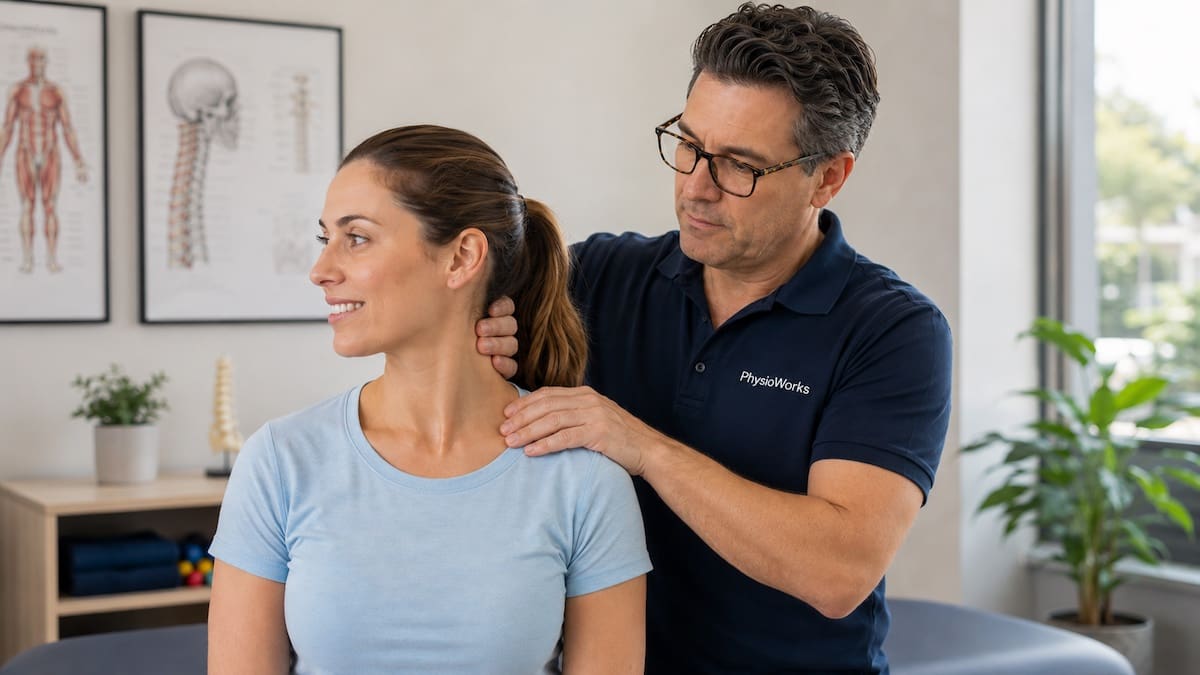
A physiotherapy assessment can identify whether neck, jaw or movement factors are contributing to headache symptoms.
Different headache types can overlap, so symptoms alone do not always confirm the cause. A useful first step is recognising the main pattern and deciding whether medical or physiotherapy assessment is appropriate.
A neck-related headache may start around the upper neck or base of the skull and spread towards the temple, forehead or eye. Neck movement or sustained positions may influence symptoms.
Tension-type headaches are often described as pressure, tightness or a band-like ache. Neck and shoulder tension, stress, sleep and prolonged screen use may occur alongside symptoms.
Migraine is a neurological headache disorder. Symptoms may include head pain, nausea and sensitivity to light, sound or movement, with or without aura.
Jaw-related headache may occur alongside jaw pain, clicking, clenching, grinding or altered jaw movement. Neck and jaw symptoms can also occur together.
For a broader overview of headache presentations and physiotherapy management, visit our headache physiotherapy guide.
When Should You Seek Medical Help for a Headache?
Most headaches are not caused by serious disease. However, some headache patterns require urgent or prompt medical assessment rather than physiotherapy first.
Medical review is also appropriate when headaches are progressively worsening, have changed significantly from your usual pattern or occur with other unexplained symptoms.
Most headaches do not automatically require imaging. A doctor may recommend investigations such as CT or MRI when your history or examination suggests that further investigation is appropriate.
A physiotherapist first looks for factors that may be contributing to your symptoms rather than assuming that every headache comes from the neck.
Assessment may consider:
neck movement and upper cervical joint function
neck and shoulder muscle function
posture and tolerance to prolonged positions
jaw movement, clenching or associated TMJ symptoms
work, driving and screen-related loads
exercise tolerance and activity patterns
dizziness or balance symptoms when relevant
If musculoskeletal factors appear relevant, management may include movement and strengthening exercises, manual therapy, load management, posture or workstation advice, and strategies to improve tolerance to normal activity.
Some people may also use treatments such as dry needling or acupuncture as part of an individual treatment plan when appropriate.
The aim is to address relevant contributors and improve function. Physiotherapy does not replace appropriate medical management of migraine or other primary headache disorders.
Can Physiotherapy Help Migraine?
Physiotherapy does not treat migraine as though it is simply a neck problem. Migraine is a neurological condition and may require management with your GP, specialist or other healthcare providers.
However, some people with migraine also experience neck pain, jaw symptoms, reduced movement, dizziness, screen sensitivity or difficulty returning to exercise. Physiotherapy may help assess and manage these additional factors as part of a broader migraine plan.
If dizziness, visual sensitivity or balance symptoms are prominent, read about vestibular migraine.
What Happens During a Headache Physiotherapy Assessment?
Your physiotherapist will ask about the location, behaviour and history of your headaches. They may also ask about migraine features, neck symptoms, jaw symptoms, dizziness, previous injuries, work demands, sleep, exercise and other possible triggers.
The physical assessment may include neck movement, upper cervical function, muscle control, posture tolerance, jaw movement and functional activities that relate to your symptoms.
The assessment is also used to decide whether physiotherapy appears appropriate or whether medical review should come first.
Why Do Some Headaches Keep Coming Back?
Recurring headaches often involve more than one contributing factor. For example, a person may have migraine alongside neck sensitivity, while another may experience tension-type headache together with prolonged screen use, poor sleep and jaw clenching.
Symptoms can also fluctuate as work demands, stress, exercise, sleep and general health change. For this reason, management often works better when it considers the overall symptom pattern rather than relying on one treatment technique.
Where neck or jaw factors are relevant, gradually improving movement, strength, load tolerance and daily habits may help reduce their contribution to recurring symptoms.
What Can You Do Between Appointments?
Simple strategies may help while you are identifying your headache pattern. Choose approaches that suit your symptoms rather than pushing through a significant flare.
Take regular movement breaks during long periods of computer work or sitting.
Change positions rather than trying to maintain one “perfect” posture all day.
Build exercise gradually if sudden increases in activity aggravate symptoms.
Notice whether jaw clenching, grinding or chewing influences symptoms.
Keep sleep, meals and hydration reasonably consistent, particularly if migraine is part of your pattern.
Record significant headache changes or triggers if this helps your doctor or physiotherapist understand the pattern.
If headaches are recurring, changing or interfering with normal activities, start by making sure any medical warning signs have been assessed.
If your symptoms appear linked with neck movement, stiffness, posture, jaw function or activity, a physiotherapy assessment can help determine whether musculoskeletal factors are contributing and guide an appropriate management plan.
Choose your clinic and appointment pathway
Select a PhysioWorks clinic to continue to live booking, an appointment request or reception assistance.
Learn about migraine presentations involving dizziness, movement or visual sensitivity.
Headache and Migraine FAQs
Can neck problems cause headaches?
Yes. Some headaches arise from structures in the upper neck. These are called cervicogenic headaches. Neck movement, joint function and sustained positions may influence symptoms, although not every headache or migraine is caused by the neck.
How can I tell if my headache may be coming from my neck?
A neck-related headache may occur with neck pain or stiffness and may change with neck movement or sustained positions. Pain can begin around the upper neck or base of the skull and spread towards the head. An assessment helps distinguish this pattern from migraine and other headache types.
Can physiotherapy help with migraine?
Physiotherapy may help manage neck pain, jaw symptoms, dizziness, movement limitations or exercise factors that occur alongside migraine. Migraine itself is a neurological disorder and may also require medical management.
What treatment may a physiotherapist use for headaches?
Treatment depends on the assessment findings. It may include movement and strengthening exercises, manual therapy, load management, posture or workstation advice, and strategies to improve activity tolerance. Treatment should match the factors that appear relevant to your headache pattern.
When should I seek medical help for a headache?
Seek urgent medical care for a sudden severe headache, new weakness or numbness, difficulty speaking, fainting, confusion, major new vision changes, significant head injury, fever with marked illness, or a major change from your usual headache pattern.
Do I need a scan for recurring headaches?
Not everyone with recurring headaches needs imaging. A doctor may recommend CT, MRI or other investigations when the history or examination suggests that further investigation is appropriate.
References
Ashina M. Migraine. N Engl J Med. 2020;383(19):1866-1876. doi:10.1056/NEJMra1915327.