
Pillow height should keep your neck level.
What Is the Best Pillow for Neck Support?



The best pillow for neck support keeps your head and neck in line with your spine. It should support the natural curve of your neck without pushing your head up or letting it drop. Sleep position, shoulder width, mattress firmness and comfort all matter.
This guide explains how to choose a pillow for neck support, when to change it, and when ongoing neck pain may need a physiotherapy assessment. For broader causes and treatment options, see our Neck Pain guide.
Short answer: Choose one pillow that keeps your neck neutral. Side sleepers often need more height than back sleepers. Stomach sleepers usually need a very low pillow or a change in position.
Why Pillow Support Matters
Your neck has a natural curve. During sleep, your pillow should help keep that curve in a relaxed position. A pillow that is too high may bend your neck forward or sideways. A pillow that is too low may let your head drop.
Either setup can add load to joints, muscles and nerves overnight. A better pillow will not fix every cause of neck pain. However, it can reduce one common trigger: poor overnight position.
How to Choose Pillow Height
Start with your usual sleep position. Then check whether your nose, chin and breastbone stay roughly in line when you lie down.
- Side sleepers: usually need a higher pillow because it must fill the space between the ear and shoulder.
- Back sleepers: usually need a medium-height pillow that supports the neck curve without lifting the chin.
- Stomach sleepers: usually need a very low pillow because this position keeps the neck turned for long periods.
Simple Pillow Fit Test
- Lie in your normal sleep position.
- Ask someone to check your head from behind or side-on.
- Your neck should look level, not tipped up or down.
- Stay there for a few minutes because some pillows sink after the first minute.
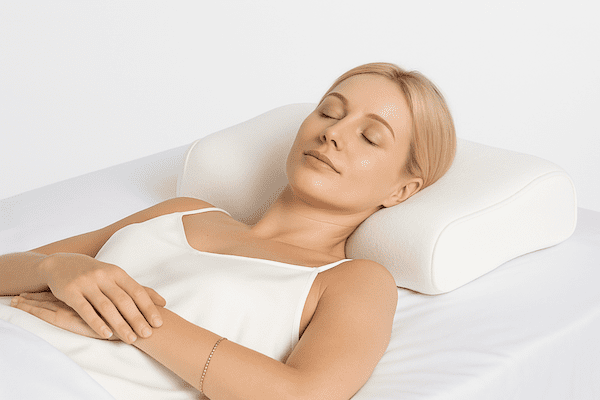
Back sleepers usually need medium pillow height.
Which Pillow Material Is Best?
There is no single best material for everyone. The right pillow is the one that keeps its shape, suits your body and feels comfortable enough for sleep.
- Memory foam: moulds to your shape and may suit people who want steady support.
- Latex: feels firmer and springs back well.
- Adjustable fill: lets you change height as your comfort needs change.
- Feather or down: feels soft but may flatten and lose support.
- Buckwheat: feels firm and adjustable, with good airflow for some people.
- Cooling designs: may help if heat affects your sleep.
What Should You Check Before Buying?
Check support before brand. A good pillow should match your body, mattress and sleep habits. Shoulder width, mattress firmness and your usual symptoms all affect pillow choice.
Before You Buy, Check These Points
- Side-sleep gap: does the pillow fill the space between your shoulder and head?
- Chin position: does your chin stay relaxed rather than tucked down?
- Morning symptoms: do you wake with stiffness, headache, pins and needles or arm pain?
- Mattress firmness: does your shoulder sink into the mattress or stay high?
- Shape retention: does the pillow keep support after several minutes?
A soft mattress may let your shoulder sink more, so a side sleeper may need a different pillow height. A firm mattress may increase the gap between your shoulder and head. For more detail, read our Best Pillow for Sleep guide.
How Often Should You Replace Your Pillow?
Replace a pillow when it loses shape, feels lumpy, smells stale despite washing, or no longer supports your neck. Many pillows need changing every one to two years. Higher quality options may last longer, but support still changes over time.
Signs of poor support include waking stiff, needing to fold the pillow, using two pillows to feel supported, or noticing that the pillow looks flat in the centre. Our Unsupportive Pillow Signs article explains these warning signs in more detail.
When Is Pillow Choice Not Enough?
Pillow choice may help comfort, but it is not the whole story. Neck pain can also relate to desk posture, stress, training load, joint stiffness, muscle weakness, headaches or nerve irritation.
Seek advice sooner if neck pain is severe, worsening, follows trauma, or comes with arm weakness, numbness, pins and needles, dizziness, fever, chest pain, balance problems, speech changes, vision changes, or bladder or bowel symptoms.
Need Help Matching Pillow and Neck Symptoms?
A physiotherapist can check your neck movement, strength, posture, sleep setup and daily load. This may help if you keep waking sore despite changing your pillow.
Pillow FAQs
Can the wrong pillow contribute to neck pain?
Yes. An unsupportive pillow may contribute to neck strain if it holds your neck in a poor position for hours. This is more likely if the pillow is too high, too low, too soft, or no longer keeps its shape.
What pillow height is best for side sleepers?
Side sleepers often need a higher pillow that fills the space between the ear and shoulder. The aim is to keep the neck level, not tilted toward the mattress or pushed upward.
What pillow height is best for back sleepers?
Back sleepers usually need a medium-height pillow. It should support the neck curve without pushing the chin toward the chest. A pillow that is too high may increase morning stiffness.
Is memory foam good for neck support?
Memory foam may suit some people because it moulds to shape and can hold steady support. However, fit matters more than material. Latex, contour and adjustable-fill pillows may also work well when the height suits your body.
Should I use two pillows?
Two pillows often push the head too far forward, especially for back sleepers. One supportive pillow usually works better for neutral alignment. A second pillow may be useful between the knees for some side sleepers, but not usually under the head.
What if I still wake with neck stiffness?
If you still wake with stiffness, headaches or arm symptoms, pillow choice may not be the only issue. Neck movement, strength, posture, workload, stress and sleeping position can all contribute. A physiotherapy assessment may help identify the main drivers.
Helpful PhysioWorks Guides
- Neck Pain – common causes, symptoms and treatment options.
- Best Pillow for Sleep – a broader guide to sleep support and pillow choice.
- Unsupportive Pillow Signs – signs your pillow may no longer suit you.
- Best Sleeping Positions for Back and Neck Health – sleep-position tips for spinal comfort.
- Neck Strengthening Exercises – exercises that may help support the neck.
- Physiotherapy – how physiotherapy may help with pain, movement and recovery.
ABC Radio Interview Regarding Pillow Selection
Listen: What Pillow Is the Best for You?
What To Do Next
Choose a pillow that keeps your neck neutral first. Then give your body a few nights to adjust. If you still wake with stiffness, headaches or arm symptoms, book a physiotherapy assessment.
For pillow options, view our Perfect Pillow range or browse pillow support products.
Choose your clinic and appointment pathway
Select a PhysioWorks clinic to continue to live booking, an appointment request or reception assistance.
Pillow Support Products
- Neck, Christmas Gift Ideas, Gift Ideas, Pillows/Cushions, Posture
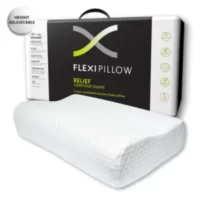
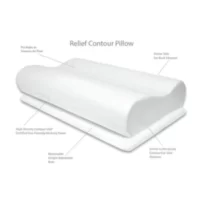
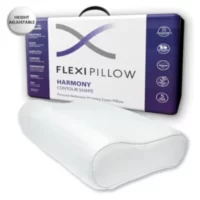
FlexiPillow Relief Contour Pillow
$109.95Add to cartQuick View - Christmas Gift Ideas, Neck, Pillows/Cushions
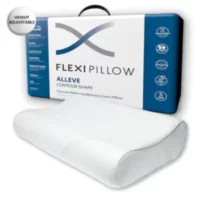
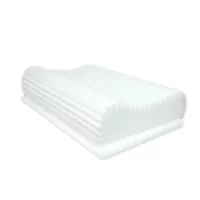
FlexiPillow Alleve Pillow
$109.95Add to cartQuick View -



References
- Pang JCY, Tsang SMH, Fu ACL. The effects of pillow designs on neck pain, waking symptoms, neck disability, sleep quality and spinal alignment in adults: a systematic review and meta-analysis. Clin Biomech (Bristol, Avon). 2021;85:105353. doi:10.1016/j.clinbiomech.2021.105353
- Lei JX, Yang PF, Yang AL, Gong YF, Shang P, Yuan XC. Ergonomic consideration in pillow height determinants and evaluation. Healthcare (Basel). 2021;9(10):1333. doi:10.3390/healthcare9101333
- Blanpied PR, Gross AR, Elliott JM, et al. Neck pain: revision 2017 clinical practice guidelines linked to the International Classification of Functioning, Disability and Health. J Orthop Sports Phys Ther. 2017;47(7):A1-A83. doi:10.2519/jospt.2017.0302
- Healthdirect Australia. Neck pain. Last reviewed May 2024.
