
Core Stability


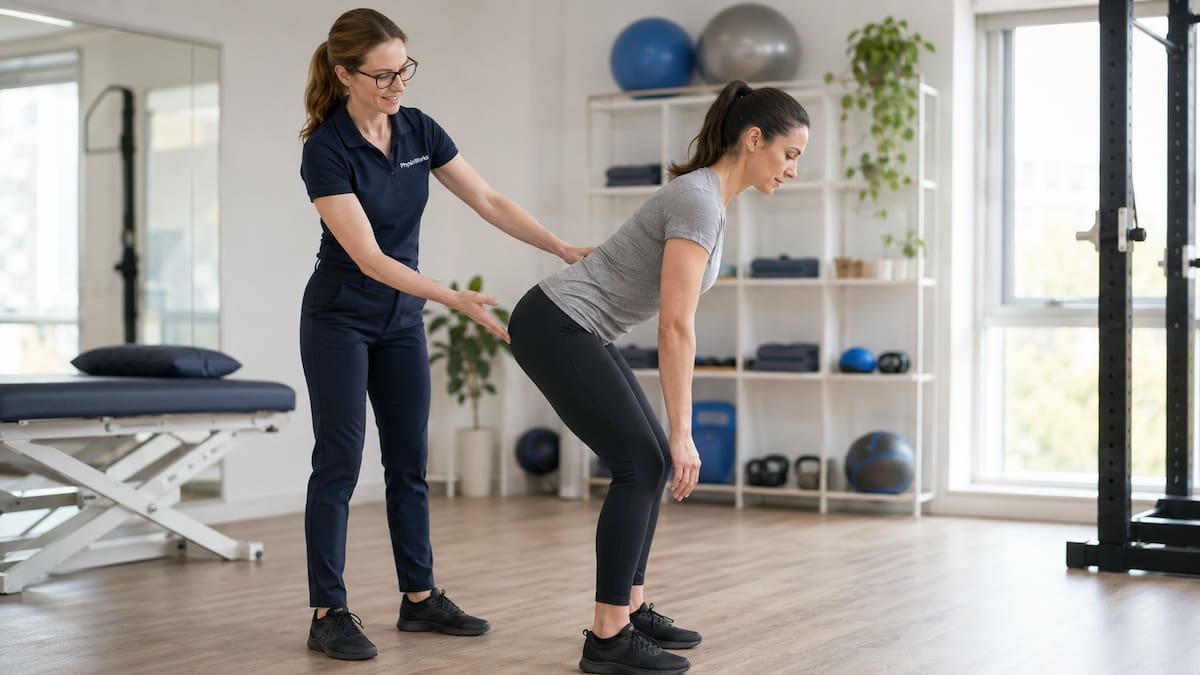
Lumbar control during hip hinge assessment.
Core stability is your body’s ability to control your trunk, spine and pelvis during movement. It helps with lifting, walking, sport, posture and exercise. It may also support back pain management, especially when your program matches your symptoms, strength and goals.
Good core control is not just strong abs. It includes timing, breathing, endurance, pelvic control and load transfer. For many people with lower back pain, the first step is control before harder strength work.
Quick Summary
- Core stability supports the spine, pelvis and trunk during daily movement.
- It uses deep support muscles and larger movement muscles.
- Breathing, pelvis control and exercise form matter as much as strength.
- A physiotherapist may help match your program to your symptoms and goals.
What Is Core Stability?
Core stability means controlling your trunk, spine and pelvis while you move. It helps your body keep a steady base when you bend, lift, carry, run, squat or change direction.
Your core should respond to the task. Light tasks need gentle control. Heavy lifting, sport and fast movement need more trunk stiffness and better timing.
Which Muscles Help Core Stability?
The lumbar spine sits above the sacrum and works with the pelvis, ribs and hips. Several muscle groups help control this region. Some provide fine support. Others create movement and manage load.
Common deep support muscles
- Multifidus
- Transversus abdominis
- Pelvic floor
- Diaphragm
- Internal oblique
Common movement muscles
- Erector spinae
- Latissimus dorsi
- Quadratus lumborum
- Psoas
- Rectus abdominis
- External oblique
Why Does Core Stability Matter?
Your core helps share load through your back, pelvis and hips. When timing or endurance is poor, your body may compensate with gripping, breath-holding or overusing larger muscles.
This can make some movements feel stiff, heavy or hard to control. Core stability can matter during lifting, sitting, desk work, gym training, running and sport.
How Can Core Stability Help Back Pain?
Core stability exercises may help some people with non-specific low back pain. They usually work best when they match the person. A 2022 systematic review reported that core stability exercises can improve pain and function in some people with non-specific low back pain.
However, a one-size-fits-all core workout can miss the point. Some people need motor control first. Others need strength, mobility, walking tolerance or load-management advice.
For example, planks may suit one person but flare another. Some people do better with back exercises that build tolerance slowly.
Should You Keep Training Your Core if Your Back Hurts?
If symptoms are mild and settle quickly, gentle core exercises may still be useful. Stop or reduce the exercise if pain increases, spreads down the leg, causes weakness, or lasts into the next day.
A safer option is to reduce load, slow the movement, shorten the hold time, or choose an easier exercise. A physiotherapist can help decide whether you need control work, strength work, mobility or a different back pain plan.
How Do You Activate Core Muscles More Effectively?
Effective core training often starts with breathing, posture and awareness. Aim for a comfortable spine position, quiet breathing and steady rib and pelvis control.
Avoid excessive gripping or breath-holding unless you are doing a heavy lift that needs a stronger brace. From there, exercises can progress into bridges, squats, deadlifts, step-ups, carries and single-leg work.
Some people use physio balls to add balance and coordination when the exercise suits their stage.
Core Stability Exercises: A Simple Progression
Core exercises should progress from simple control to useful strength. The right level should feel challenging but controlled. Symptoms should not keep rising during or after the session.
| Stage | Main Goal | Example Exercises |
|---|---|---|
| Early control | Improve breathing and pelvis control | Breathing drills, pelvic tilts, low-load activation |
| Strength base | Build trunk endurance | Bridges, bird dogs, side holds, light carries |
| Functional loading | Link control to daily tasks and sport | Squats, step-ups, deadlifts, running drills, lifting practice |
What Is the Role of the Pelvic Floor and Diaphragm?
The pelvic floor and diaphragm help control pressure inside your abdomen. They work with the abdominal wall and spinal muscles during breathing, lifting and trunk control.
If these muscles do not coordinate well, your body may rely on breath-holding, gripping or over-bracing. This can matter if symptoms increase with lifting, sitting, coughing, postural strain or return to gym exercise.
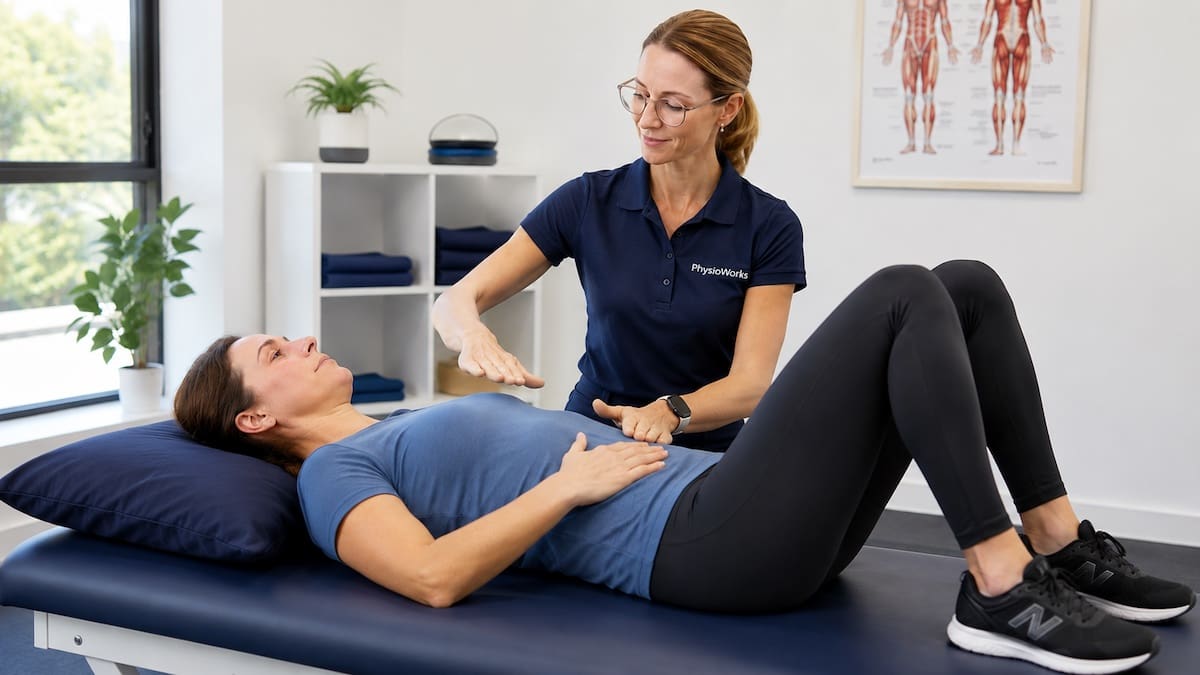
Breathing control supports core activation.
Does Pilates Help Core Stability?
Pilates-based core exercises may help some people improve control, body awareness and movement confidence. The benefit depends on exercise choice, technique, load and how well the program matches the person.
Pilates is not the only option. Many people also improve with gym-based strength, walking plans, real-time ultrasound retraining, or a simple home program that builds capacity over time.
How Physiotherapy May Help
A physiotherapist may assess spinal movement, strength, endurance, balance, breathing, pelvic control and exercise technique. This can help identify whether your issue relates to motor control, strength, endurance, technique, load tolerance or another source of back pain.
Useful next-step guides include Deep Core Muscles Guide, Core Stability Training, and Pelvic Floor Exercises.
When Should You Book a Core Stability Assessment?
You may benefit from an assessment if your back keeps flaring with lifting, sitting, gym work, running or sport. It may also help if you are unsure which core exercises are safe for your back.
The aim is to find the right starting point, then build strength and confidence without guessing.
Related Articles
Core Stability Guides
- Which Are the Deep Core Stability Muscles?
- Core Stability Training for Low Back Pain
- How Does Real-Time Ultrasound Retraining Help Core Stability?
- How Do Pelvic Floor Exercises Support Core Control?
- What’s the Link Between Pilates and Core Stability?
Back Pain Guides
Frequently Asked Questions
Is core stability the same as abdominal strength?
No. Abdominal strength is only one part of core stability. Core stability also involves timing, endurance, breathing, pelvis control and how well your trunk manages load during movement.
Can core stability exercises help lower back pain?
Core stability exercises may help some people with lower back pain, especially when poor control, low endurance or poor lifting form contributes to symptoms. Your program should match your pain pattern, strength and goals.
What are good beginner core stability exercises?
Good beginner options often include breathing control, gentle pelvis control, bridges, bird dogs, side holds and light carries. The best choice depends on your pain, confidence and exercise history.
Should core exercises hurt?
Core exercises should feel controlled and manageable. Mild effort is normal. Increasing pain, spreading symptoms, numbness, weakness or next-day flare-ups suggest the exercise may need to change.
How often should I do core stability exercises?
Many people start with short sessions three to five times per week. Others need more recovery between sessions. Quality matters more than volume, especially early in a back pain program.
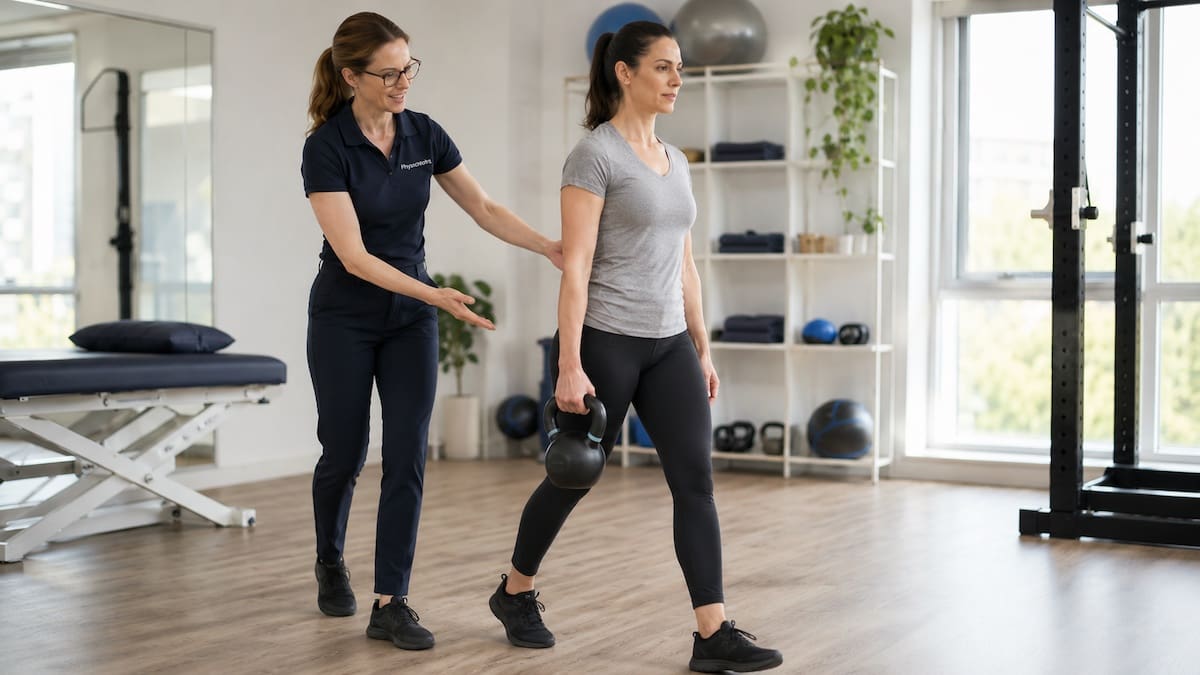
Loaded carries build trunk control.
What to Do Next
If you have ongoing back pain, poor exercise control, or trouble returning to lifting, running or sport, it may be worth having your core stability assessed.
A physiotherapist can help identify whether your issue relates to control, strength, endurance, technique, load tolerance or another source of back pain. From there, they can guide a safer and more useful exercise plan.
Choose your clinic and appointment pathway
Select a PhysioWorks clinic to continue to live booking, an appointment request or reception assistance.
Back Support Products
These back support products are commonly used by our physiotherapists to help reduce back pain, improve comfort, and support your recovery at home.
-
 Back, Braces & Supports, Maternity, SIJ
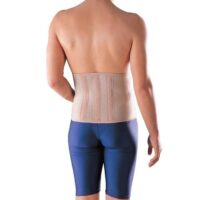
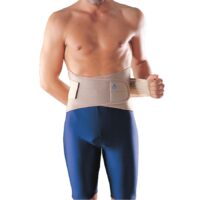
Core Stability Support – OPPO 3462
$54.00Select optionsQuick View -
 Back, Braces & Supports, Maternity, Posture
Maternity Back Support – OPPO 2062
$60.00 – $64.00Select optionsQuick View -
 Braces & Supports, Back, Maternity, SIJ
Maternity Support Belt – OPPO 4062
$37.00Select optionsQuick View - Braces & Supports, Back, Maternity, SIJ
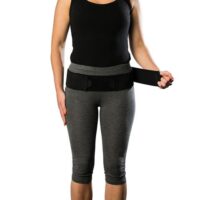
AOM38 AllCare Ortho Core Stability Belt
$49.95Select optionsQuick View -
-
-

 Back, Braces & Supports, Maternity, Posture
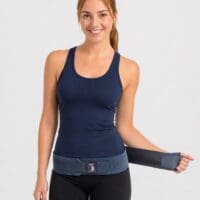
Pregnancy Belly Band & C-Section 3-in-1
$94.99Select optionsQuick View -
Back Pain Tips: 7 Evidence-Based Ways to Move Better, Hurt Less & Recover Faster
A Physiotherapist’s Guide to a Stronger, Healthier Back
Discover practical, research-based strategies to ease back pain, move with confidence, and build long-term strength. Written by physiotherapist John Miller, this concise guide blends science and decades of clinical experience to help you recover faster and stay active for life.
- Clear, actionable advice grounded in current research
- Whole-person approach: movement, sleep, mindset and care team
- Includes a quick flare-up plan, FAQs and daily habits


References
- Smrcina Z, Teeramatwanich W, Braitman LE. A systematic review of the effectiveness of core stability exercises in patients with non-specific low back pain. Int J Sports Phys Ther. 2022;17(7):1242-1255.
- Wong AYL, Parent EC, Funabashi M, Stanton TR, Kawchuk GN. Do various baseline characteristics of transversus abdominis and lumbar multifidus predict clinical outcomes in nonspecific low back pain? A systematic review. Pain. 2013;154(12):2589-2602.
- Finta R, Nagy E, Bender T. The effect of diaphragm training on lumbar stabilizer muscles: a new concept for improving segmental stability in the case of low back pain. J Pain Res. 2018;11:3031-3045.
- Kazeminia M, Rajati F, Azami M, et al. The effect of pelvic floor muscle-strengthening exercises on low back pain: a systematic review and meta-analysis on randomized clinical trials. Neurol Sci. 2023;44(2):609-619.
- Studnicka K, Ampat G. Lumbar Stabilization. In: StatPearls. StatPearls Publishing; 2023.