
Hip Labral Tear Physiotherapy


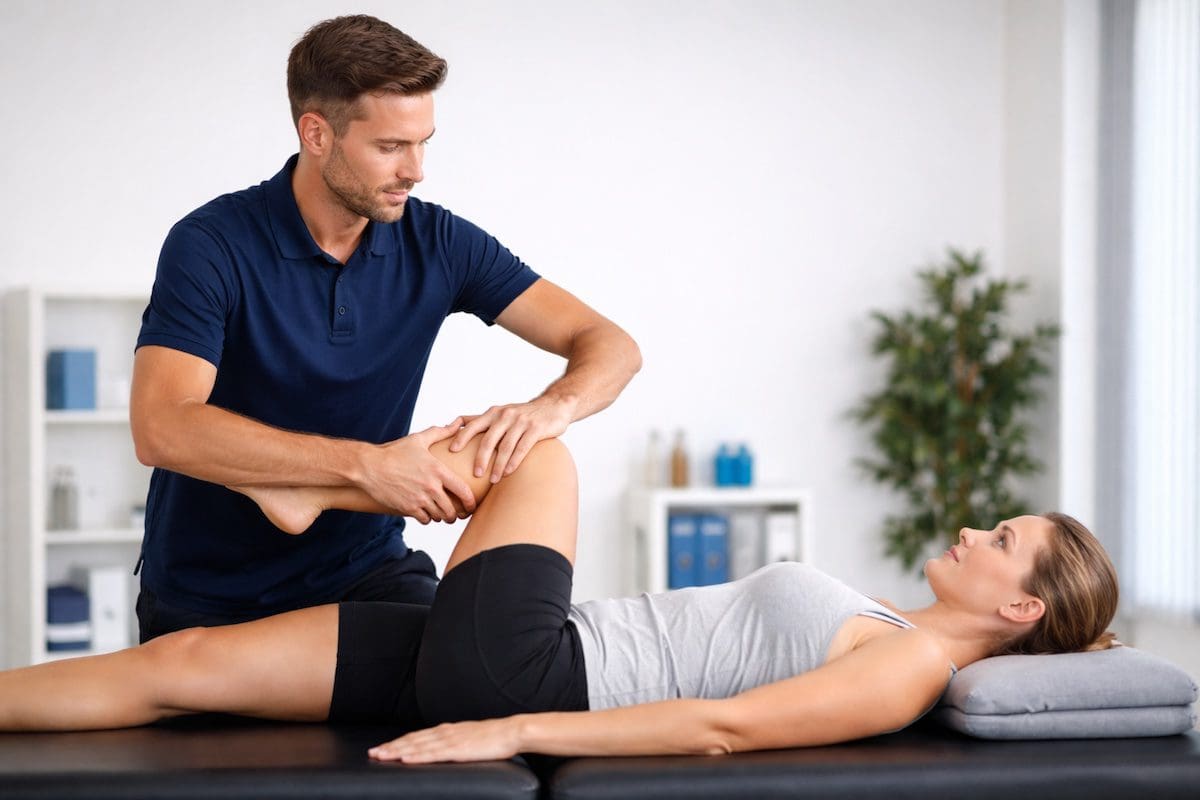
Hip labral tear physiotherapy helps reduce hip and groin pain, improve hip control, and build load tolerance for daily activity, work, gym and sport. A labral tear may appear on MRI, but symptoms usually depend on how the hip joint handles movement, strength, rotation and repeated load.
Hip labral tear symptoms can overlap with hip pain, groin pain, Femoroacetabular Impingement Syndrome (FAIS), hip flexor pain, and early hip arthritis. A physiotherapy assessment helps match your symptoms, movement pattern and activity goals to the right plan.
Quick Guide: Hip Labral Tear Symptoms
- Deep hip or groin pain, often near the front of the hip
- Pinching with sitting, squatting, lunging or getting in and out of a car
- Clicking, catching or locking sensations
- Stiffness with hip rotation or deep hip bending
- Reduced confidence with running, cutting, stairs or single-leg tasks
What Is a Hip Labral Tear?
The hip labrum is a ring of cartilage around the rim of the hip socket, called the acetabulum. It helps deepen the socket, supports smooth hip motion and helps the hip manage load. A tear or irritation of the labrum may contribute to pain, stiffness, clicking, catching or pinching, especially in deep hip positions.
A labral tear can occur after a clear injury, such as a tackle, fall or awkward twist. It can also develop with repeated hip loading, hip shape factors, or joint changes over time. Some people have labral changes on imaging without pain, so your symptoms and physical assessment matter.
What Does Hip Labral Tear Pain Feel Like?
Hip labral tear pain often feels deep in the front of the hip or groin. Some people describe a pinch, ache, catch or sharp pain during hip flexion and rotation. Symptoms may appear during sport, gym training, running, cycling, prolonged sitting, squats, lunges or car transfers.
Pain outside the hip, buttock pain or thigh pain may point to other conditions as well. Related problems can include gluteal tendinopathy, hip bursitis, groin strain or referred pain from the lower back.
Why Do Hip Labral Tears Occur?
Hip labral tears usually relate to one or more contributing factors rather than one isolated scan finding.
- Twisting or impact injury: Falls, tackles, awkward landings or sudden rotation can stress the labrum.
- Hip shape and joint contact: FAIS may increase earlier contact between the femoral head-neck region and the hip socket during deep hip movement.
- Training load: Rapid increases in running, gym volume, kicking, skating or cutting can exceed current hip capacity.
- Movement pattern: Poor hip, pelvis or trunk control may increase hip joint irritation during repeated tasks.
- Joint changes over time: Hip osteoarthritis or previous childhood hip conditions such as Perthes Disease or SCFE may affect hip load tolerance.
How Is a Hip Labral Tear Assessed?
Your physiotherapist will listen to your symptom story, then assess hip range, strength, gait, squat control, single-leg control and movements that reproduce your pain. This helps identify whether your symptoms behave like hip joint pain, groin overload, tendon pain, lower back referral or another hip condition.
Imaging such as X-ray, MRI or MRA may help when symptoms persist, mechanical catching is prominent, or surgery is being considered. However, imaging should be interpreted with your symptoms and clinical findings, not used alone.
Hip Labral Tear or FAIS?
Hip labral tears and FAIS often overlap. FAIS describes hip shape and joint-contact factors that may irritate the labrum during deep hip flexion, rotation or impact activity.
Rehab often addresses the same practical targets: pain control, hip strength, trunk control, movement options and gradual return to the activities that matter to you.
Can a Hip Labral Tear Improve Without Surgery?
Many people with hip labral tear symptoms improve with a structured physiotherapy plan. Rehab usually focuses on education, activity modification, hip and trunk strengthening, movement control, and a graded return to walking, running, gym or sport.
Surgery may be discussed if symptoms stay limiting despite a well-progressed rehabilitation program, especially when mechanical symptoms, activity restriction or significant pain remain. Post-operative physiotherapy is still important if surgery goes ahead.
Hip Labral Tear Physiotherapy Treatment
Hip labral tear physiotherapy should match your symptoms, your hip irritability and your activity goals. The plan may include education, load management, targeted strengthening, hip mobility work where appropriate, manual therapy, movement retraining and return-to-sport planning.
| Rehab phase | Main goal | Common focus |
|---|---|---|
| Phase 1 | Calm pain and irritation | Modify deep hip positions, reduce painful pivoting, start low-irritation strength |
| Phase 2 | Build strength and control | Hip, gluteal and trunk strengthening; walking, stairs and single-leg control |
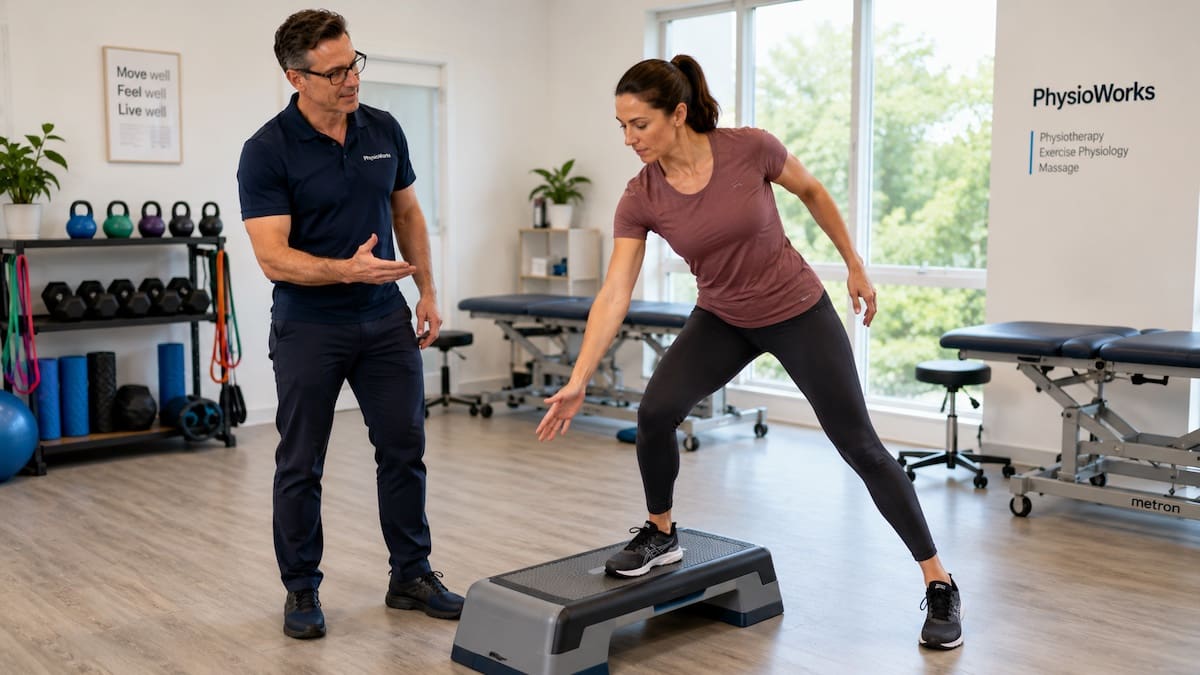
| Phase 3 | Return to activity | Running, gym, kicking, change of direction and sport-specific load progression |
Phase 1 – Reduce Pain and Joint Irritation
- Modify aggravating activities such as deep squats, pivoting or painful cutting.
- Avoid prolonged low sitting if it causes pinching or catching.
- Use short-term load changes rather than complete rest where possible.
- Start low-irritation hip, gluteal and trunk exercises.
Phase 2 – Restore Strength and Movement Control
- Progress hip abductor, hip extensor, adductor and trunk strength.
- Improve single-leg control for walking, stairs, gym and sport.
- Restore hip range where useful, while avoiding repeated pinching.
- Address nearby contributors such as lower back, pelvis, groin or running mechanics.
Phase 3 – Return to Activity or Sport
- Gradually rebuild running, jumping and change-of-direction tolerance.
- Progress gym loading using symptom-based rules.
- Prepare for sport-specific demands through the sports injuries pathway where relevant.
- Use objective strength and function markers before returning to high-speed or contact activity.
What Should You Avoid With a Hip Labral Tear?
Avoid repeatedly forcing the hip into painful pinching positions. Common triggers include deep squats, low chairs, aggressive hip stretches, heavy pivoting, repeated kicking or sudden increases in running and gym load.
You usually do not need to avoid all exercise. The better goal is to find a tolerable starting point, reduce the main irritants, then rebuild strength and capacity in stages.
When Should You Seek Further Review?
Seek medical or physiotherapy review if hip or groin pain is worsening, you cannot walk comfortably, the hip locks repeatedly, symptoms follow a fall or high-force injury, or pain does not improve with sensible activity changes.
Further review may also be useful if you have persistent night pain, fever, unexplained weight loss, major loss of hip movement, or a history that raises concern for non-musculoskeletal causes.
Related Hip and Groin Conditions
Hip labral tear symptoms can look similar to other hip and groin conditions. These related guides may help you compare symptom patterns:
- Hip Pain
- Groin Pain
- Femoroacetabular Impingement Syndrome (FAIS)
- Hip Arthritis
- Hip Flexor Pain
- Hip Adductor Tendinopathy
Hip Labral Tear FAQs
What are the most common hip labral tear symptoms?
Common hip labral tear symptoms include deep hip or groin pain, stiffness, clicking, catching, locking, and pain with sitting, squats, lunges, running, pivoting or getting in and out of a car.
Can hip labral tear physiotherapy help without surgery?
Hip labral tear physiotherapy may help many people reduce pain, improve hip control and rebuild activity tolerance. A structured program usually includes education, load management, strength work and graded return to activity.
How long does hip labral tear rehab take?
Timelines vary. Some people improve over several weeks, while higher-load sport, running or gym goals may take a few months. Progress depends on pain irritability, strength, hip shape factors, training load and your activity goals.
Is walking okay with a hip labral tear?
Walking is often okay if it does not increase pain, catching or next-day symptoms. Your physiotherapist may adjust walking distance, pace, hill exposure or stride length while hip strength and tolerance improve.
When is hip labral tear surgery considered?
Surgery may be discussed when pain, catching or activity limits persist despite a well-progressed rehabilitation program. Age, joint health, hip shape, arthritis changes, sport demands and personal goals all influence that decision.
What To Do Next
If you suspect a hip labral tear, book a physiotherapy assessment. Your physiotherapist can help clarify the likely pain drivers, identify activity limits, guide imaging decisions if needed, and build a staged rehab plan.
If you are planning a series of appointments, booking ahead can help you secure the day and time you prefer. Peak times often book out early, and it is usually easier to move an appointment than find one at the last minute.
Choose your clinic and appointment pathway
Select a PhysioWorks clinic to continue to live booking, an appointment request or reception assistance.
Groin Products
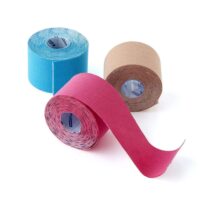
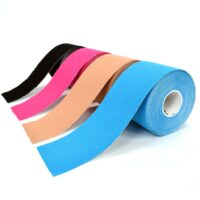
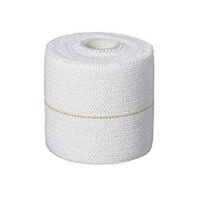
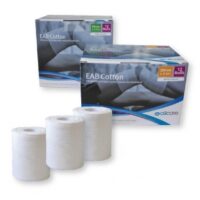
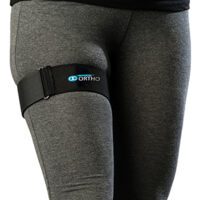
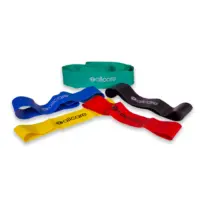
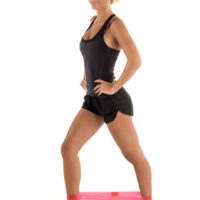
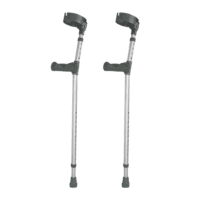
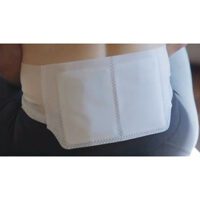
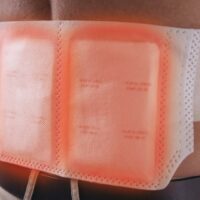
These groin products are commonly used by our physiotherapists to improve groin pain, strength, balance, proprioception, endurance and flexibility, plus assist home exercise programs.
-
-
-
-
-
-
- Exercise Equipment, Resistance Band
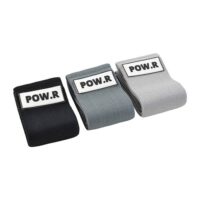
POW.R Wide Fabric Loop Resistance Band
$14.95 – $49.95Select optionsQuick View -
-
 Ankle, Back, Braces & Supports, Calf, Foot, Groin, Heel, Hip, Knee, Thigh, Walking
Forearm Crutches
$64.00Select optionsQuick View - Liniments & Gels, Massage Liniments, Pain Management
Fisiocrem
$16.95 – $39.95Select optionsQuick View -
 Exercise Equipment, Resistance Band
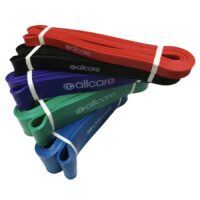
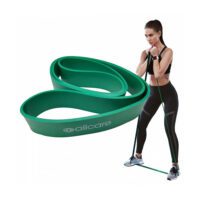
AllCare Powerloop Bands
$22.00 – $65.00Select optionsQuick View -
 Exercise Equipment, Knee, Resistance Band
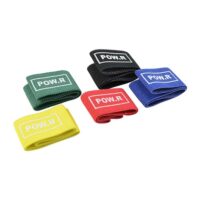
POW.R Fabric Mini Loop Bands
$12.00 – $55.00Select optionsQuick View -
-

-






Research References
- Kawai M, et al. The Short-term Outcomes of Physiotherapy for Patients with Acetabular Labral Tears. Hip Pelvis. 2022;34(1):45-52. doi:10.5371/hp.2022.34.1.45
- Enseki KR, Bloom NJ, Harris-Hayes M, et al. Hip Pain and Movement Dysfunction Associated With Nonarthritic Hip Joint Pain: A Revision. J Orthop Sports Phys Ther. 2023;53(7):CPG1-CPG70. doi:10.2519/jospt.2023.0302
- Matache BA, et al. Management of Labral Tears in the Hip: A Consensus Statement. Orthop J Sports Med. 2025;13(1):23259671241305409. doi:10.1177/23259671241305409
- Martin SD, et al. Hip Arthroscopy Versus Physical Therapy for the Treatment of Symptomatic Acetabular Labral Tears in Patients Older Than 40 Years: 24-Month Results From a Randomized Controlled Trial. Am J Sports Med. 2024.
