
Gluteal Tendinopathy
Gluteal Tendinopathy
Gluteal tendinopathy is a common cause of pain over the outer hip. It affects the gluteus medius or gluteus minimus tendons near the greater trochanter. Pain often worsens with side-lying, walking, stairs, hills and single-leg activities.


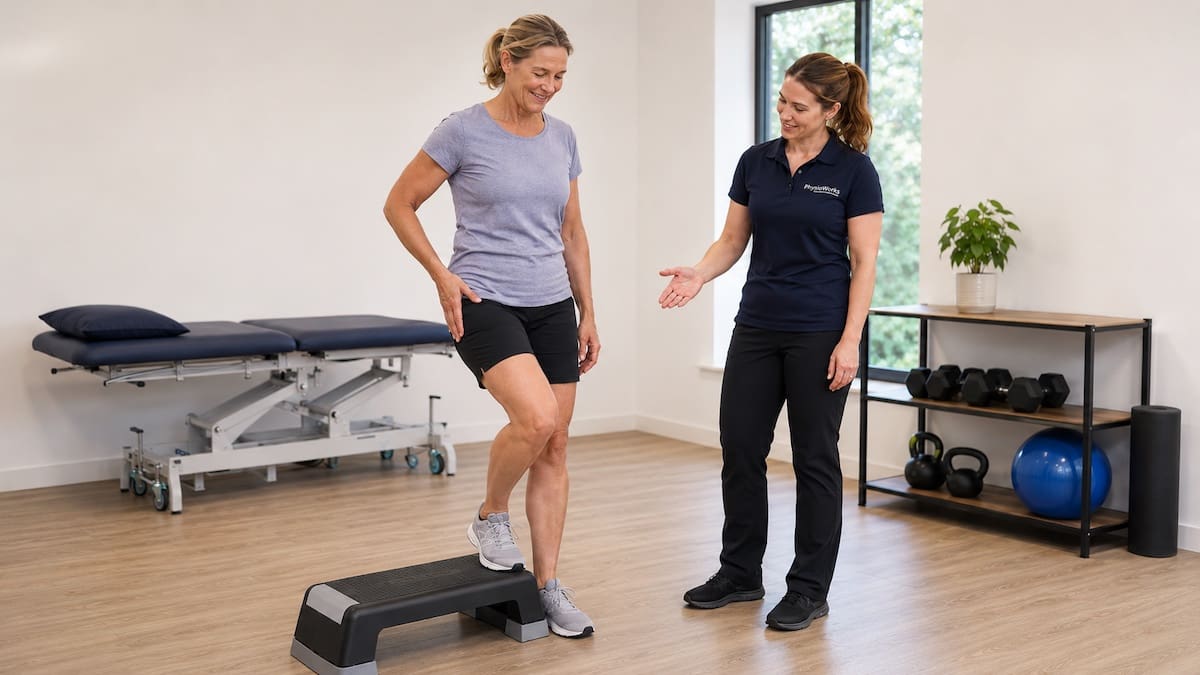
Assessing outer hip control during a step-down.
Management usually focuses on reducing tendon compression, improving hip strength and gradually rebuilding load tolerance. Gluteal tendinopathy sits within the broader hip pain cluster and is a common contributor to greater trochanteric pain syndrome.
Common symptoms
Outer hip pain, tenderness, pain with side-lying, walking, stairs, hills or single-leg activities.
Common aggravating positions
Side-lying, crossing the legs, standing with weight dropped into one hip and sudden increases in walking or running.
Rehabilitation focus
Reduce aggravating compression, rebuild hip strength and progressively restore walking, exercise or sporting load.
What Is Gluteal Tendinopathy?
Gluteal tendinopathy is irritation or reduced load tolerance of the gluteus medius or gluteus minimus tendons. These tendons attach near the bony point on the outer hip and help control the pelvis during walking, stairs, running and single-leg movement.
Symptoms may develop when tendon load rises faster than the tissue can adapt. The tendon can then become sensitive to both compression and activity. This does not mean that all movement is harmful. Instead, rehabilitation aims to find a level of activity the tendon can tolerate and then build from it.
The condition is particularly common in middle-aged women, although it can affect adults of any age. It may also occur alongside other forms of tendinopathy.
Gluteal Tendinopathy, GTPS and Bursitis: What Is the Difference?
Gluteal tendinopathy affects the gluteal tendons, while greater trochanteric pain syndrome (GTPS) is a broader term for pain arising from structures around the outer hip. Gluteal tendinopathy is one of the most common contributors to GTPS.
The nearby trochanteric bursa may also become irritated. This is commonly called trochanteric bursitis. Tendon and bursal symptoms can occur together, so outer hip pain should not automatically be assumed to be bursitis.
An assessment can help determine whether the gluteal tendons, bursa, hip joint, lumbar spine or a combination of structures may be contributing to your symptoms.
Why Does Gluteal Tendinopathy Hurt When Lying on Your Side?
Lying directly on the painful side compresses the gluteal tendons against the greater trochanter. This can increase pain, particularly after a day involving longer walks, stairs, standing or exercise.
The upper hip may also become compressed when lying on the opposite side if the painful leg falls across the body. Placing a pillow between the knees can support the upper leg and reduce this compression.
What Causes Gluteal Tendinopathy?
Gluteal tendinopathy usually develops when activity or compression increases faster than the tendon can adapt. Common triggers include:
- A rapid increase in walking or running
- Adding hills, stairs or speed work
- Repeated single-leg loading
- Prolonged standing with weight shifted onto one hip
- Repeated side-lying compression
- A sudden return to exercise after a quieter period
Hip weakness, reduced pelvic control and changes in walking or running load may also contribute. Nearby problems such as lower back pain can alter how the hip handles movement and load.
What Are the Symptoms of Gluteal Tendinopathy?
Most people feel pain over the outside of the hip. The area may be tender when pressed, and symptoms often worsen with side-lying, prolonged walking, hills, stairs or standing on one leg.
Some people notice stiffness when first getting up, pain after longer activity or difficulty finding a comfortable sleeping position. Symptoms may remain local to the outer hip or spread a short distance down the outside of the thigh.
Pain travelling well below the knee, marked numbness or new weakness may suggest another source and should be assessed.
How Is Gluteal Tendinopathy Diagnosed?
Gluteal tendinopathy is usually diagnosed through a clinical assessment. Your physiotherapist considers your symptom pattern, aggravating activities, tenderness, hip strength and response to movements that load the gluteal tendons.
No single test confirms the condition. Instead, the assessment combines several findings and checks for other possible sources of hip or leg pain. Your physiotherapist may also assess your walking pattern, lumbar spine, hip joint movement and single-leg control.
Do You Need an Ultrasound or MRI?
Imaging is not always required when the clinical pattern is clear. An ultrasound or MRI may be considered when symptoms remain uncertain, progress does not match expectations, marked weakness suggests a larger tendon tear or another hip condition needs investigation.
Imaging findings also need to match your symptoms. Tendon changes can appear on scans in people who do not have pain.
What Else Can Cause Outer Hip Pain?
Other conditions can produce similar symptoms. These may include:
- Greater trochanteric pain syndrome
- Trochanteric bursitis
- Hip labral tear
- Piriformis syndrome
- Referred lower back pain
- Hip arthritis
How Do You Treat Gluteal Tendinopathy?
Gluteal tendinopathy treatment usually combines load education, exercise and a gradual return to activity. The aim is not simply to settle pain temporarily. Rehabilitation also needs to rebuild the tendon’s ability to tolerate walking, stairs, work, exercise or sport.
Your program may include changes to sleeping and standing positions, temporary modification of aggravating activity, hip strengthening, pelvic-control exercises and progressive functional loading.
A structured physiotherapy exercise program can help match the starting load to your symptoms and progress it as your capacity improves.
A Simple Gluteal Tendinopathy Rehabilitation Pathway
1. Settle Irritation
Reduce painful compression and temporarily modify aggravating loads such as hills, long walks or repeated stairs.
2. Build Capacity
Use progressive hip-strength and pelvic-control exercises at a suitable starting level and increase the load as tolerance improves.
3. Return to Activity
Gradually restore walking, hills, stairs, gym exercise, running or sport-specific loads according to your goals.
Load Management for Gluteal Tendinopathy
Good load management follows a simple process: reduce the most aggravating loads, rebuild strength and then progress activity in measured steps.
Complete rest is rarely the long-term answer. Too much activity may keep symptoms irritated, while avoiding load for too long may reduce tendon and muscle capacity. The goal is to maintain useful activity without repeatedly provoking a significant flare-up.
What Should You Avoid During a Flare-Up?
Temporary changes may include avoiding prolonged lying on the painful side, crossing the legs, hanging into one hip while standing and aggressive stretches that pull the leg across the body.
You may also need to reduce hills, stairs, running distance or long walks for a period. These activities can usually be reintroduced as symptoms and strength improve.
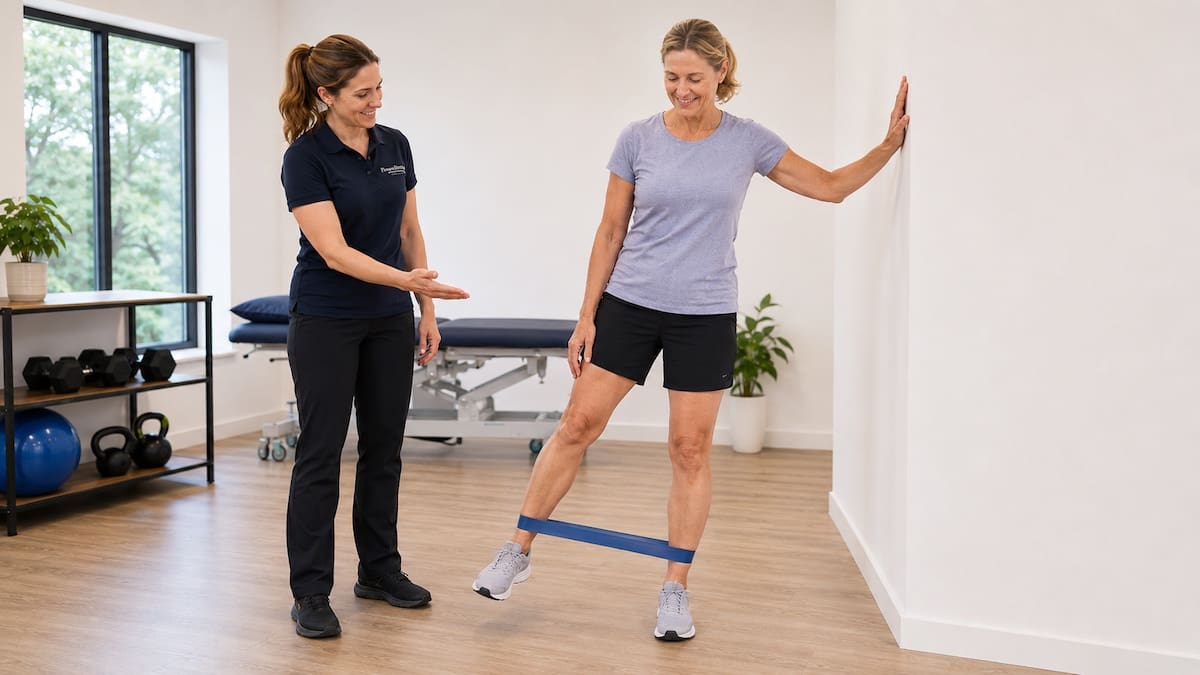
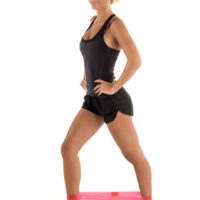
Controlled outer hip strengthening with resistance.
Can Physiotherapy Help Gluteal Tendinopathy?
Physiotherapy may help by improving gluteal tendon load tolerance, hip strength, pelvic control and movement confidence. An assessment can also identify other possible contributors to outer hip pain.
Your physiotherapist may help you:
- Understand which positions and loads are aggravating the tendon
- Modify sleep, walking and standing habits
- Choose an appropriate starting level for exercise
- Progress strength without repeatedly flaring symptoms
- Plan a gradual return to work, running, gym exercise or sport
How Long Does Gluteal Tendinopathy Take to Improve?
Some people notice reduced pain within 6 to 12 weeks after changing aggravating loads and beginning rehabilitation. However, this is not a fixed recovery timeframe. Building enough strength and tolerance for unrestricted walking, hills, running or sport often takes several months.
Recovery varies with symptom duration, tendon capacity, general health, sleep, activity demands and consistency with rehabilitation. Long-standing symptoms may take longer.
Progress is rarely perfectly linear. A temporary flare-up does not always mean that damage has occurred, but it may indicate that the recent load increase was too large.
Are Injections or Shockwave Therapy Used?
Some people consider corticosteroid injections or shockwave therapy when symptoms persist. Their suitability depends on the diagnosis, symptom duration, previous treatment and individual health factors.
An injection may provide short-term relief for some people, but it does not rebuild tendon capacity. Education and progressive exercise remain important when the goal is a durable return to activity.
Your physiotherapist or doctor can discuss whether another treatment option is appropriate and how it fits within a broader rehabilitation plan.
Gluteal Tendinopathy FAQs
Can gluteal tendinopathy go away on its own?
Mild symptoms may settle after reducing aggravating activity. However, many people benefit from progressive strengthening and load management, especially when pain affects sleep, walking or exercise or keeps returning.
Is it OK to stretch gluteal tendinopathy?
Aggressive stretching may increase compression of the gluteal tendons, particularly when the leg moves across the body. Rehabilitation usually gives greater priority to comfortable positioning, strength and gradual loading.
What activities should I avoid with gluteal tendinopathy?
During a flare-up, reduce prolonged side-lying on the painful hip, leg crossing, standing with weight dropped into one hip and sudden increases in hills, stairs or walking distance. These activities can usually return gradually.
Can I run with gluteal tendinopathy?
Some people can continue modified running when pain remains controlled and settles by the next day. Hills, speed work and longer distances often need temporary reduction before being progressed again.
Is gluteal tendinopathy the same as bursitis?
No. Gluteal tendinopathy affects the tendons, while bursitis affects a nearby fluid-filled bursa. They can occur together and both sit within the broader outer hip presentation known as greater trochanteric pain syndrome.
How should I sleep with gluteal tendinopathy?
Avoid lying directly on the painful hip. When lying on the opposite side, place a pillow between the knees to support the upper leg and reduce compression across the outer hip.
How long does gluteal tendinopathy take to heal?
Some people notice improvement within 6 to 12 weeks, but restoring full strength and activity tolerance often takes several months. Long-standing or more severe symptoms may take longer.
When should I see a physiotherapist?
Consider an assessment when outer hip pain affects sleep, walking, stairs or exercise, lasts longer than two weeks or repeatedly returns when activity increases.
What to Do Next
If outer hip pain is affecting sleep, walking, stairs, exercise or sport, a physiotherapy assessment can help clarify the likely source and establish an appropriate starting point.
Your rehabilitation plan may include symptom management, sleep-position advice, hip strengthening, load progression and a gradual return to your normal activities.
Choose your clinic and appointment pathway
Select a PhysioWorks clinic to continue to live booking, an appointment request or reception assistance.
Hip Products
These hip products are commonly used by our physiotherapists to improve strength, posture, movement, plus assist home exercise programs.
-
 Exercise Equipment, Knee, Resistance Band
POW.R Fabric Mini Loop Bands
$12.00 – $55.00Select optionsQuick View -
-
-

-
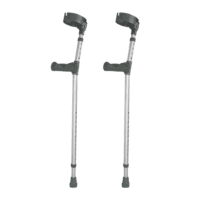 Ankle, Back, Braces & Supports, Calf, Foot, Groin, Heel, Hip, Knee, Thigh, Walking
Forearm Crutches
$64.00Select optionsQuick View -
-
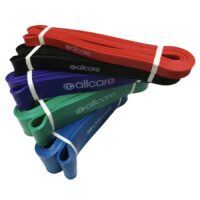
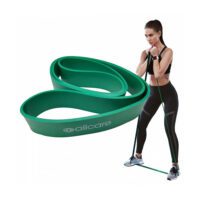 Exercise Equipment, Resistance Band
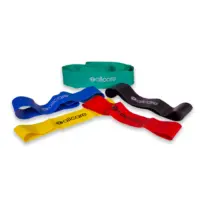
AllCare Powerloop Bands
$24.95 – $79.95Select optionsQuick View -
-
-
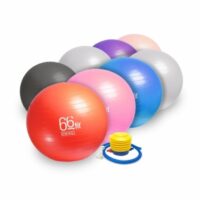
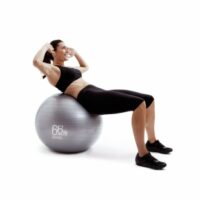 Exercise Balls, Back, Exercise Equipment, Knee, Shoulder
66fit Exercise Balls | Core & Rehab Stability Ball
$32.00 – $57.00Select optionsQuick View -
- Liniments & Gels, Massage Liniments, Pain Management
Fisiocrem
$16.95 – $39.95Select optionsQuick View -
-






References
- Mellor R, Bennell K, Grimaldi A, et al. Education plus exercise versus corticosteroid injection use versus a wait and see approach on global outcome and pain from gluteal tendinopathy. BMJ. 2018;361:k1662. doi:10.1136/bmj.k1662
- Ladurner A, Fitzpatrick J, O’Donnell JM. Treatment of gluteal tendinopathy: A systematic review and stage-adjusted treatment recommendation. Orthop J Sports Med. 2021;9(7):23259671211016850. doi:10.1177/23259671211016850
- Cordeiro TTP, Rocha EAB, Scattone Silva R. Effects of exercise-based interventions on gluteal tendinopathy: Systematic review with meta-analysis. Sci Rep. 2024;14(1):3343. doi:10.1038/s41598-024-53283-x
- Bremer T, Nicklen P, Fearon A, Morrissey D. The efficacy of gluteal tendinopathy treatments: A systematic review. Clin Rehabil. 2025;39(5):600-617. doi:10.1177/02692155251327298
