
Pre-Employment Functional Assessment


Pre-employment functional assessment assessing safe lifting technique during role-specific testing.
Pre-employment functional assessment compares a person’s physical capacity with the real demands of a role. Employers use it to support safer onboarding, reduce manual handling injury risk, and improve job-task matching for physically demanding work.
PhysioWorks delivers role-matched screening as part of our ergonomics services, and it often complements a Functional Capacity Evaluation (FCE) when you need deeper work capacity data. You can also combine screening with ergonomic workstation assessment support for office-based or hybrid roles.
Across Australia, work-related musculoskeletal injuries remain a major cause of time off work, which is why job-specific capacity testing matters for higher-risk roles. See Safe Work Australia’s overview here: Work-related injuries in Australia.
What is a pre-employment functional assessment?
A pre-employment functional assessment is a practical, job-relevant screening process. We test the movements and tolerances that matter for the role, then compare performance with the role’s inherent requirements. The aim is simple: clearer decisions, safer placement, and fewer “surprises” once work starts.
What happens in the assessment?
We assess job-relevant physical capacity using safe, structured tasks. Testing may include lifting, carrying, pushing, pulling, reaching, squatting, stairs, ladder simulation, and time-on-task tolerance. When the role demands it, we also include fitness screening and repeated-effort capacity.
Common testing elements
- Posture and postural fatigue tolerance
- Joint range of motion and muscle flexibility
- Strength and endurance measures relevant to the role
- Movement quality during lifting, reaching, squatting, stairs, and ladder tasks
- Tolerance to repetition and sustained work positions
- Fitness screening when higher work capacity is required
Why pre-employment assessments matter
These assessments may help identify whether a person faces a higher or lower risk of work-related injury in a specific role. They also support fair, consistent discussions about job demands, and they reduce “guesswork” when the work is physically challenging.
If testing shows a mismatch, employers often consider graded duties, task redesign, equipment changes, or alternative placement. For broader prevention planning, you may also like our Workplace Wellness Programs or Corporate Wellness options.
Jobs that commonly use pre-employment functional assessments
Functional screening is common for roles involving frequent manual handling or sustained physical demands. Examples include warehousing and logistics, construction and trades, manufacturing, healthcare and disability support, and emergency services.
Employers also request screening for jobs with repetitive lifting, prolonged standing, overhead work, ladder use, or high-volume pushing and pulling. Importantly, testing should reflect the inherent requirements of the role, not a generic checklist.
How results are interpreted and used
Reports commonly classify outcomes as suitable, suitable with recommendations, or not currently suitable for the role’s inherent requirements. Recommendations may include graded exposure, task redesign, equipment changes, team lifting strategies, or simple conditioning targets.
A “not currently suitable” result does not mean “never suitable”. Often, it flags a need for staged return-to-work planning, targeted conditioning, or a different role match. When a worker returns after injury, an FCE can provide added detail on work tolerances and staged progression.
People Also Ask: Are pre-employment functional assessments legal in Australia?
Yes. In Australia, employers commonly use pre-employment functional assessments when they relate directly to the inherent requirements of the job. Employers should apply testing consistently, use role-specific criteria, and manage decisions in line with workplace and anti-discrimination obligations.
What to do next
First, list the real tasks of the role (weights, heights, distances, repetitions, and time-on-task). Next, match the assessment to those tasks so results stay practical. Finally, use recommendations to guide onboarding, suitable duties, or conditioning goals rather than relying on assumptions.
Choose your clinic and appointment pathway
Select a PhysioWorks clinic to continue to live booking, an appointment request or reception assistance.
Muscle & Soft Tissue Products
These muscle and soft tissue products are commonly used by our physiotherapists to relax or loosen muscles, improve strength, comfort, flexibility, and home exercise programs.
-
-
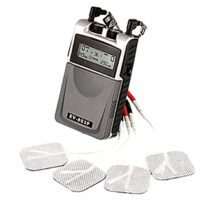
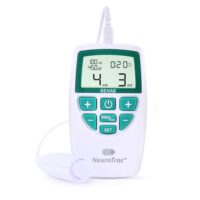
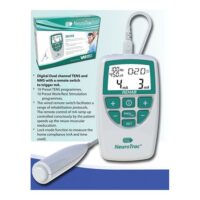
- EMS Machines, Pain Management, TENS Machine, TENS Machine & EMS
NeuroTrac Rehab (TENS Machine + EMS)
$285.00Add to cartQuick View -
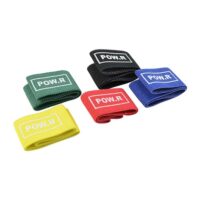 Exercise Equipment, Knee, Resistance Band
POW.R Fabric Mini Loop Bands
$12.00 – $55.00Select optionsQuick View -
-
-
-
-
- Liniments & Gels, Massage Liniments, Pain Management
Fisiocrem
$16.95 – $39.95Select optionsQuick View -
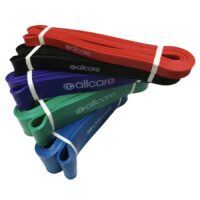
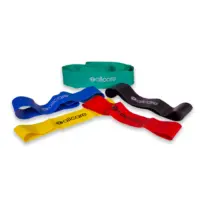
 Exercise Equipment, Resistance Band
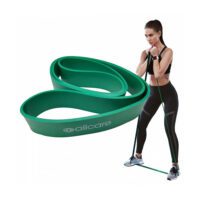
AllCare Powerloop Bands
$24.95 – $79.95Select optionsQuick View -
 Exercise Balls, Back, Exercise Equipment, Knee, Shoulder
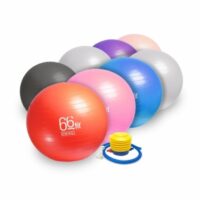
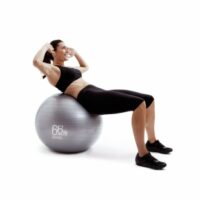
66fit Exercise Balls | Core & Rehab Stability Ball
$32.00 – $57.00Select optionsQuick View -
-







References
- Kuijer PPFM, van der Wilk S, Evanoff B, Viikari-Juntura E, Coenen P. Risk assessment and interventions to prevent work-related musculoskeletal disorders and support work participation. Scand J Work Environ Health. 2024;50(5):317–328.
- Swart L, et al. Mapping the evidence on the assessment of fitness to work: a scoping review. BMJ Open. 2025;15:e093525.
- Jenkins N, Smith G, Stewart S, Kamphuis C. Pre-employment physical capacity testing as a predictor of musculoskeletal injury in Victorian paramedics. Work. 2021;70(1):263–270.
- Roberts R, Slade T, Voaklander D, et al. The effectiveness of workplace musculoskeletal injury risk factor screening tools for reducing injury: a systematic review. Int J Environ Res Public Health. 2023;20(3):2762.
